
Martin Pollack
Illustration — Martin Pollack in 2019 Martin Pollack (23 May 1944 – 17 January 2025) was an Austrian journalist, book author, translator, Slavist and historian. "One of Austria's most distinguished public intellectuals", Pollack propagated fact-based truth and reconciliation in Austria for WWII crimes, which he saw as lacking in public discourse. Martin Pollack was born into a family of devout Nazi supporters and war criminals at the end of World War II, Pollack managed to free himself from the beliefs of his family by way of his secondary schooling in the late 1950s in Salzburg.
Martin Pollack

Amrei-Marie · CC BY-SA 3.0
- Born
- 1944 · Bad Hall.
- Died
- 2025 · Vienna.
- Nationality
- Austria
- Occupation
- journalist · translator · writer · historian · slavist · editing staff
- Fields
- Eastern Europe · journalism · translation · creative and professional writing
- Known for
- Der Tote im Bunker
- Honours
- Translatio · Buch.Preis · Ehrenpreis des österreichischen Buchhandels für Toleranz in Denken und Handeln · Georg Dehio Book Prize · Leipzig Book Award for European Understanding · culture award of Upper Austria
- Languages
- German · Polish
VALÉORINE Encyclopedia
VALÉORINE documentary reading
Documentary summary
Illustration — Martin Pollack in 2019 Martin Pollack (23 May 1944 – 17 January 2025) was an Austrian journalist, book author, translator, Slavist and historian. "One of Austria's most distinguished public intellectuals", Pollack propagated fact-based truth and reconciliation in Austria for WWII crimes, which he saw as lacking in public discourse. Martin Pollack was born into a family of devout Nazi supporters and war criminals at the end of World War II, Pollack managed to free himself from the beliefs of his family by way of his secondary schooling in the late 1950s in Salzburg.
Admitted source layer · organised and presented by VALÉORINE
Reference Check
Propose documentary evidence for Martin Pollack. A contribution is never written directly as fact: identity, source, rights and evidence gates still decide.
Sign in to contribute
Documentary evidence
Documentary basis
Authority files
wikidata · Q327734 · wikipedia · Martin Pollack
In this article
Background
Background
Pollack's 2004 bestselling account of his father Gerhard Bast's violent death in the wake of World War II in 1947 near the Brenner border of Austria with Italy created a new genre of WWII truth and reconciliation non-fiction literature in German. Pollack often linked historical research with his own family history. Pollack's father, SS-Sturmbannführer Gerhard Bast, was found dead while on the run in 1947 near the Brenner border of Austria with Italy. Pollack's uncle was involved in the deportation of the Slovenes from Upper Carniola, for which Eberhard Kranzmayer's dialectological "studies" were used as rationales between "Re-Germanization" and extermination.
The recorded working language is German and Polish. The field of work recorded is Eastern Europe, journalism and translation. Subjects and genres recorded for the work are prose. Employment is recorded with Spiegel-Verlag. Works named in the authority record are Der Tote im Bunker. Distinctions recorded are Translatio, Buch.Preis, Ehrenpreis des österreichischen Buchhandels für Toleranz in Denken und Handeln and Georg Dehio Book Prize.
Pollack was born in Bad Hall, Upper Austria, but grew up in his grandparents' town of Amstetten, Lower Austria. He was born into a family of pan-German Nazi supporters, who celebrated that ideology largely unbridled past 1945. He said that his grandmother tried to bribe him not to enrol in Slavic Studies. If he signed up for Germanistik 'German Studies' instead, she would pay for his degree up to the doctorate but that he would get no cent, "keinen Groschen" otherwise. Pollack refused and specialized during his time at the University of Vienna in Polish Studies. He referred to his family members as "one of his Nazi aunts" ("eine meiner Nazi-Tanten") and resigned at the end of his life that "they would never change". Pollack died on 17 January 2025, at the age of 80.
Family history and reconciliation
Family history and reconciliation
Pollack's 2004 bestselling account of his father Gerhard Bast's violent death in the wake of World War II in 1947 near the Brenner border of Austria with Italy created a new genre of WWII truth and reconciliation non-fiction literature in German. Pollack often linked historical research with his own family history, which was rife with Nazi perpetrators and collaborators. Pollack's father, SS-Sturmbannführer Gerhard Bast, was found dead while on the run in 1947 near the Brenner border of Austria with Italy. Pollack's uncle was involved in the deportation of the Slovenes from Upper Carniola, for which Eberhard Kranzmayer's dialectological "studies" were used as rationales between "Re-Germanization" and extermination. Pollak, viewing since his high school days radically different from his family members in relation to Nazism, offered through his lived research and reconciliation experience, a different model to overcoming war and racist trauma, thus "shaping" this debate in most constructive ways.
Further material
Further material
Talk by Martin Pollack [in English] at the Institute for Human Sciences in Vienna, 14 June 2024, entitled The Long Shadow of a Sinister Past: A Never-Ending Story. Michalski Memorial Lecture, with the President of Austria, Alexander Van der Bellen, and Past President of Austria, Heinz Fischer, in attendance. In 2016 Pollack delivered the Dylynsky Memorial lecture in Toronto on "The Myth of Galicia."

österreichischer Schriftsteller
Amrei-Marie
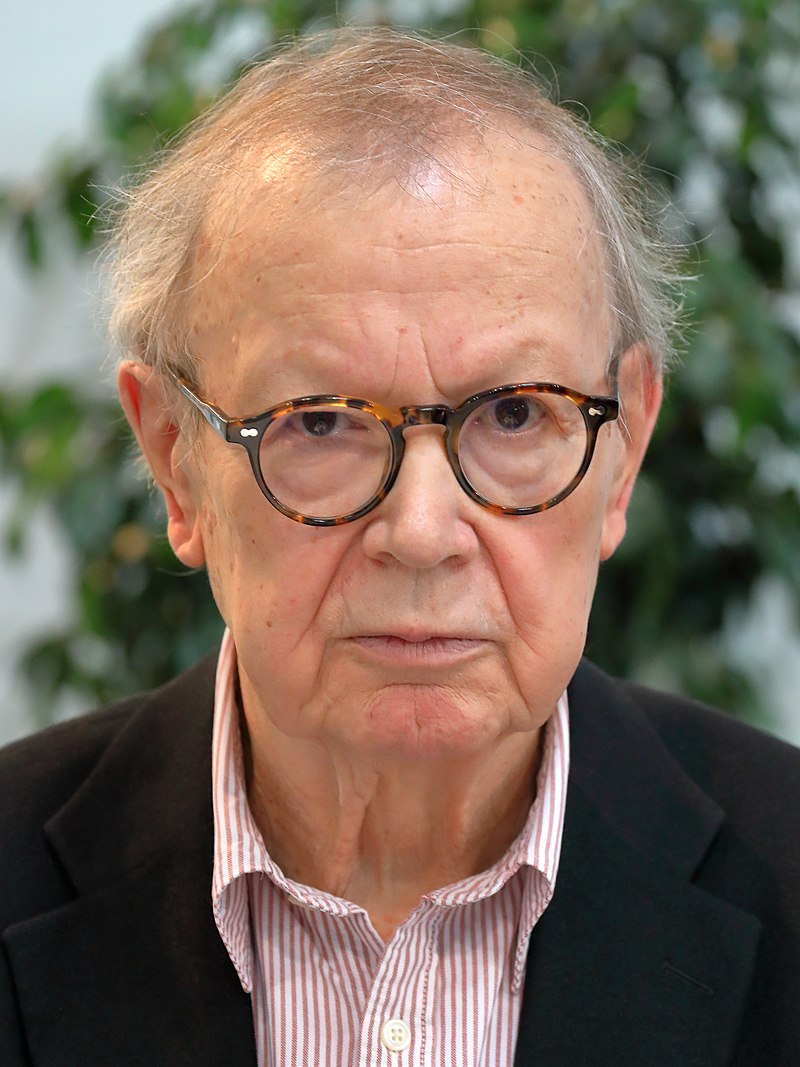
Der österreichische Journalist, Schriftsteller und Literaturübersetzer Martin Pollack auf der Wiener Buchmesse 2019.
C.Stadler/Bwag
Life and career
Dated record
Life and career
The full dated record · 2 entries
1944
Martin Pollack born at Bad Hall.
2025
Martin Pollack died at Vienna.
Places
Named by the record
Places
Only places the record itself states, plotted where the house gazetteer settles their coordinates. Nothing is inferred from a name or a nationality.
Bad Hall.
Birth place
Vienna.
Death place
Published works
• Nach Galizien. Von Chassiden, Huzulen, Polen u. Ruthenern. Eine imaginäre Reise durch die verschwundene Welt Ostgaliziens und der Bukowina. Edition Christian Brandstätter, Wien 1984, pp. 208, (Insel Verlag, Frankfurt am Main 2001) • Des Lebens Lauf. Jüdische Familienbilder aus Zwischeneuropa. Christian Brandstätter Verlagsgesellschaft, Wien 1987,. • Martin Pollack, Karl-Markus Gauß (Hrsg.): Das reiche Land der armen Leute. Literarische Wanderungen durch Galizien. Jugend und Volk (J&V), Wien 1992, pp. 262. • Anklage Vatermord. Der Fall Philipp Halsmann. Zsolnay, Wien 2002,. • Der Tote im Bunker. Bericht über meinen Vater. Zsolnay, Wien 2004,. • Martin Pollack (Hrsg.): Sarmatische Landschaften. Nachrichten aus Litauen, Belarus, der Ukraine, Polen und Deutschland. S. Fischer, Frankfurt am Main 2005,. • Martin Pollack (Hrsg.): Von Minsk nach Manhattan. Polnische Reportagen. Zsolnay, Wien 2006 (übersetzt von Martin Pollack, Joanna Manc, Renate Schmidgall), pp. 268. • Warum wurden die Stanislaws erschossen? Reportagen. Zsolnay, Wien 2008, pp. 229. • Martin Pollack u. a.: Mythos Czernowitz. Eine Stadt im Spiegel ihrer Nationalitäten. In: Ariane Afsari (Hrsg.): Potsdamer Bibliothek östliches Europa – Geschichte. Deutsches Kulturforum östliches Europa, Potsdam 2008, pp. 263. • Kaiser von Amerika. Die große Flucht aus Galizien. Zsolnay, Wien 2010,. • In Your Face. Bilder aus unserer jüngeren Geschichte. Mit einem Essay von Martin Pollack und Fotos von Chris Niedenthal. edition. fotoTAPETA, Warschau/ Berlin 2011,. • Die Wolfsjäger. Drei polnische Duette. (Zusammen mit Christoph Ransmayr). S. Fischer Verlag, Frankfurt am Main 2011,. • Kontaminierte Landschaften. Residenz Verlag, St. Pölten und Wien 2014, (Print), (E-Book), pp. 120. • Topografie der Erinnerung. Residenz Verlag, Salzburg und Wien 2016, (Print), (E-Book), pp. 172. • Nachwort zur Neuauflage von W. St. Reymont: Die Empörung. Westhafen Verlag, Frankfurt am Main 2017,. • Die Frau ohne Grab: Bericht über meine Tante, Zsolnay, Wien 2019,.
Primary material
Documents and archives
scholarly publication
- „Martin Pollack i polsko-austriacki transfer kulturowy (Martin Pollack und der polnisch-österreichische Kulturtransfer)“, 12. Dezember 2021, Universität Wrocław, Germanica Wratislaviensia, 2022
Scholarly · Crossref registry · 2022
- The difficult legacy and the obligation to remember in the "Topography of Remembrance" by Martin Pollack, Colloquia Germanica Stetinensia, 2021
Scholarly · Crossref registry · 2021
reference work
- Wikidata, structured authority record Q327734: Martin Pollack
Reputable secondary · Wikimedia Foundation
- “Martin Pollack”, English Wikipedia, consulted as further reading
Reputable secondary · Wikipedia
Citations
References
Each reference names the institution holding it, so a reader may go to the document itself.
scholarly publication
Institutional witnessscholarly publication
The difficult legacy and the obligation to remember in the "Topography of Remembrance" by Martin Pollack, Colloquia Germanica Stetinensia, 2021Crossref registry
Institutional witnessreference work
Wikidata, structured authority record Q327734: Martin PollackWikimedia Foundation
Secondary witnessreference work
Secondary witness
The Encyclopedia exists whether or not anything is for sale. Corrections are recorded rather than overwritten, and every version of this record is kept. Published 14 August 2026.
Elsewhere in Books
39,389 published records in this field, each with its sources named.
- Martin of LeonAuthor
- Martin OpitzAuthor
- Martin P. NilssonAuthor
- Martin PetiškaAuthor
- Martin R. DelanyAuthor
- Mártin RakovszkyAuthor
- Martin RázusAuthor
- Martin RobertsonAuthor
Best supported in this field
For owners
Own a work by Martin Pollack?
A specialist will read what you send and tell you what the house can establish, what it cannot, and whether the object is suited to sale. There is no charge and no obligation. The object stays with you throughout; nothing is shipped to us unless it is arranged in writing beforehand.