
Manuel Tolsá
Manuel Vicente Tolsá Sarrión (Enguera, Valencia, Spain, May 4, 1757 – Mexico City, December 24, 1816) was a prolific Neoclassical architect and sculptor in Spain and New Spain. He served as the first director of the Academy of San Carlos.
Also recorded as Manuel Tolsá Sarrión · Manuel Tolsa Sarrion · Manuel Tolsa · Manuel Vicente Tolsá Sarrión
Manuel Tolsá
Manuel Tolsá · The Cleveland Museum of Art · Gift of Mr. and Mrs. J. H. Wade · CC0
- Name
- Manuel Tolsá
- Born
- 4 May 1757
- Birthplace
- Enguera, Spain
- Died
- 24 December 1816
- Place of death
- Mexico City, Viceroyalty of New Spain
- Nationality
- Spain · Mexico · New Spain
- Occupation
- architect · sculptor · painter · university teacher
- Education
- Reial Acadèmia de Belles Arts de Sant Carles de València · Royal Academy of Fine Arts of San Fernando
- Known for
- Hospicio Cabañas · El Caballito · Palacio de Minería
- Languages
- Spanish
VALÉORINE Encyclopedia
VALÉORINE documentary reading
Documentary summary
Manuel Vicente Tolsá Sarrión (Enguera, Valencia, Spain, May 4, 1757 – Mexico City, December 24, 1816) was a prolific Neoclassical architect and sculptor in Spain and New Spain. He served as the first director of the Academy of San Carlos.
Admitted source layer · organised and presented by VALÉORINE
Reference Check
Propose documentary evidence for Manuel Tolsá. A contribution is never written directly as fact: identity, source, rights and evidence gates still decide.
Sign in to contribute
World of VALÉORINE
Documentary connections
Only confirmed graph relationships appear here. Images are shown only when their identity and reuse rights both pass the documentary gate.
Documentary evidence
Documentary basis
Authority files
wikidata · Q1374668 · wikipedia · Manuel Tolsá
In this article
Biography
Biography
Manuel Tolsá studied at Reial Acadèmia de Belles Arts de Sant Carles de València and Royal Academy of Fine Arts of San Fernando. The recorded working language is Spanish. Vicent Gascó i Massot and Antoni Gilabert Fornés are recorded as an influence. Residence is recorded at Veracruz. Works named in the authority record are Hospicio Cabañas, El Caballito and Palacio de Minería. Work by Manuel Tolsá is recorded in the collections of Museo Nacional de Arte.
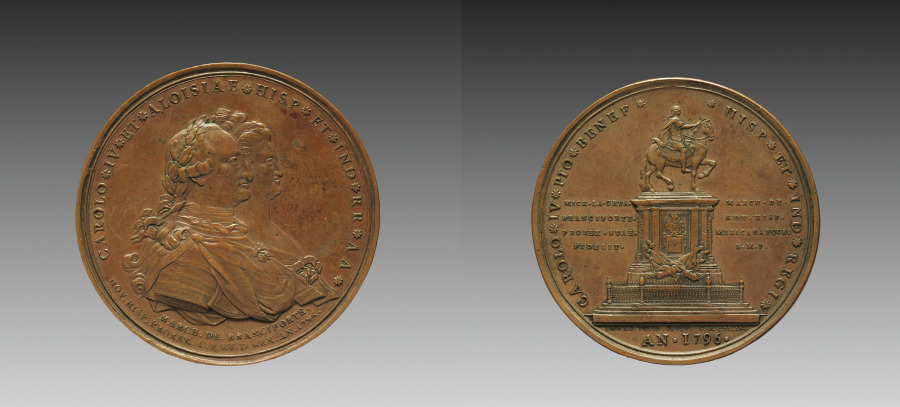
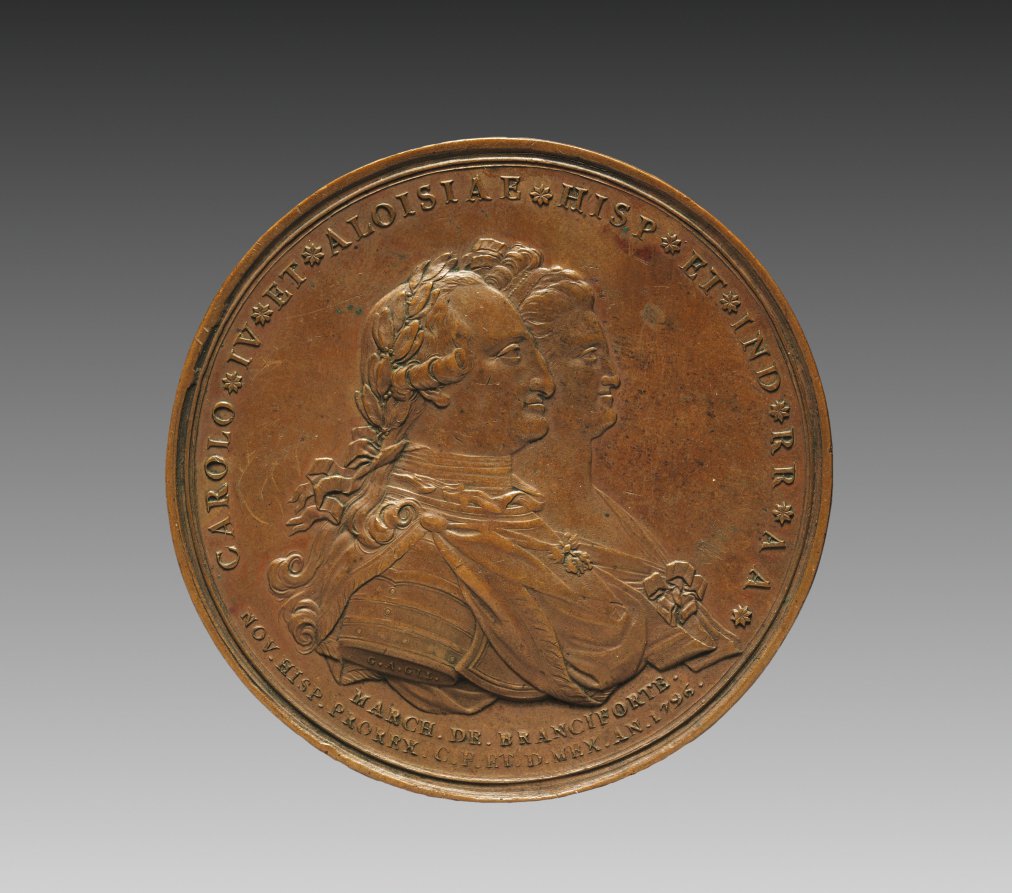
Portrait of Charles IV, King of Spain, and María Luisa, Queen Consort of Charles IV, 1796, by Manuel Tolsá
Manuel Tolsá · The Cleveland Museum of Art · Gift of Mr. and Mrs. J. H. Wade
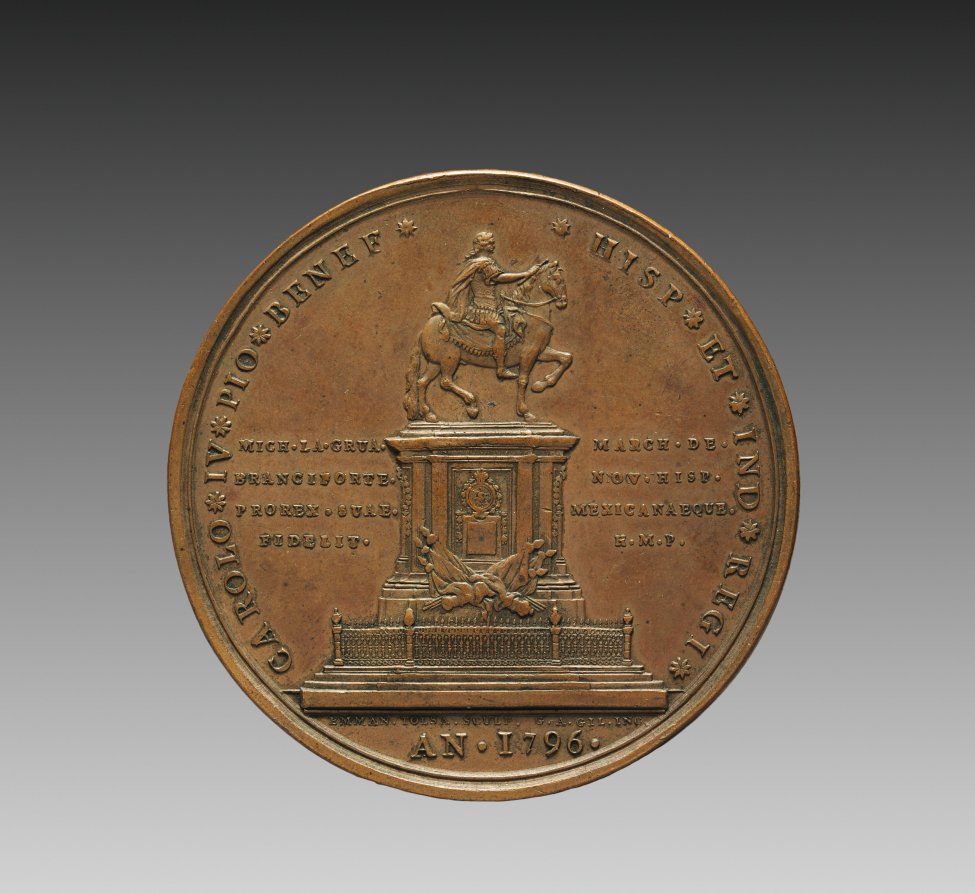
Portrait of Charles IV, King of Spain, and María Luisa, Queen Consort of Charles IV (reverse), 1796, by Manuel Tolsá
Manuel Tolsá · The Cleveland Museum of Art · Gift of Mr. and Mrs. J. H. Wade
Key facts
Key facts
• Name — Manuel Tolsá • Born — 4 May 1757 • Birthplace — Enguera, Spain • Died — 24 December 1816 • Place of death — Mexico City, Viceroyalty of New Spain • Notable Works — Palacio de Minería, El Caballito
Biography
Biography
Tolsá studied at the Royal Academy of San Carlos in Valencia and the Royal Academy of San Fernando in Madrid. He was a student of José Puchol in sculpture and of Ribelles, Gascó and Gilabert in architecture. In Spain he was the sculptor of the king's chamber, minister of the Supreme Junta of Commerce, Minting and Mines, and an academic in San Fernando. In 1790 he was named director of sculpture at the recently created Academy of San Carlos in Mexico City. He sailed from Cádiz in February, 1791, bringing with him to New Spain, in accordance with the king's instructions, books, instruments of his profession, and plaster copies of classic sculptures from the Vatican Museum. He married María Luisa de Sanz Téllez Girón y Espinosa in the port of Veracruz. On his arrival in Mexico City the ayuntamiento (city government) made him supervisor of the drainage and water supply systems of the city and assigned him the tasks of the replanting the Alameda park in the center of the city and the grounds of the coliseum. For these services he did not receive compensation. Thereafter he dedicated himself to the artistic and civil works for which he is now remembered. He also built furniture, made adornments for altars (candelabra, crucifixes, etc.), cast cannons, opened a bathhouse, built coaches and established a kiln. He donated a collection of molds and figures and 300 medals and coins to the Academy of San Carlos. Tolsá died in 1816 of a gastric ulcer. His remains were interred in the church of Santa Veracruz, and later transferred to San Fernando.
Tolsá's works in Mexico
Tolsá's works in Mexico
• Illustration — Statue of Manuel Tolsá in the square named after him, located in his hometown of Enguera, Valencia, Spain. • Conclusion of the work on the Mexico City Metropolitan Cathedral, including statuary (cupola and facade). This was finished in 1813. • The Palacio de Minería, Mexico City (1797–1813) • Equestrian statue of Charles IV (known as El Caballito) (1796–1803; cast on August 4, 1802). Alexander von Humboldt wrote of this statue, "M. Tolsa, professor of sculpture at Mexico, was even able to cast an equestrian statue of King Charles the Fourth; a work which, with the exception of the Marcus Aurelius at Rome, surpasses in beauty and purity of style everything which remains in this way in Europe." • The old palace of Buenavista (today the Museum of San Carlos). • The palace of the marqués del Apartado, in front of the Templo Mayor, Mexico City (1810). This is where King Ferdinand VII would have stayed if he had arrived in Mexico. • Main altar principal of the Cathedral of Puebla and an extant statue of the Virgin in wood, also at Puebla. • Main altar of the church of Santo Domingo. • Main altar of the church of La Profesa. The face of the Virgin seen on the right was apparently modeled on that of "La Güera" Rodríguez (María Ignacia Rodríguez de Velasco y Osorio Barba). • Altar "La Purísima Concepción" in the church of La Profesa. • Main altar of the Carmelite convent dedicated to San Felipe de Jesús (not extant). • The fountain at the beginning of the Camino Real to Toluca — an obelisk and a pyramid (not extant). • Bust of for the tomb of Hernán Cortés, in the Hospital de Jesús. • Bronze statues of Jesus in the Cathedral of Morelia. • Design of the Neoclassical part of the Church of Loreto. • Plans of the Hospicio Cabañas in Guadalajara. • Plans of the convent of the Propaganda Fide in Orizaba. • Unrealized projects for a bull ring, the palace of the governor of Durango, a cemetery, a convent, etc. • Celda de la Marquesa de Selva Nevada in the Ex convento de Regina Porta Coeli. Now is the Celda Contemporánea in to Universidad del Claustro de Sor Juana (Cloister of Sor Juana University) in Mexico City. • Illustration — Bust of Manuel Tolsá (1853), by Martín Soriano • Illustration — The Mexico City Metropolitan Cathedral • Illustration — Palace of the Marqués del Apartado • Illustration — Hospicio Cabañas was declared a World Heritage Site in 1997 • Illustration — Equestrian statue of Charles IV of Spain on Plaza Manuel Tolsá
Identity
Identity
Manuel Tolsá is recorded as having studied at Reial Acadèmia de Belles Arts de Sant Carles de València and Royal Academy of Fine Arts of San Fernando.
Life and career
Dated record
Life and career
Explore 1757–1816
The full dated record · 4 entries
1757
Manuel Tolsá born at Enguera.
1802
El Caballito is dated 1802.
1810
Hospicio Cabañas is dated 1810.
1816
Manuel Tolsá died at Mexico City.
Places
Named by the record
Places
Only places the record itself states, plotted where the house gazetteer settles their coordinates. Nothing is inferred from a name or a nationality.
Veracruz
Residences
Enguera.
Birth place
Mexico City.
Death place
References
Citations
References
Each reference names the institution holding it, so a reader may go to the document itself.
reference work
Wikidata, structured authority record Q1374668: Manuel TolsáWikimedia Foundation
Secondary witnessreference work
Secondary witness
Further particulars
Held on the record
Further particulars
Open the remaining particulars
His recorded language was Spanish. Formation and teaching. Tolsá studied at Reial Acadèmia de Belles Arts de Sant Carles de València and Royal Academy of Fine Arts of San Fernando. His recorded influences include Vicent Gascó i Massot and Antoni Gilabert Fornés.
Identity and origins
The Encyclopedia exists whether or not anything is for sale. Corrections are recorded rather than overwritten, and every version of this record is kept. Published 14 August 2026.
Elsewhere in Paintings
18,717 published records in this field, each with its sources named.
- Manuel Rivera-OrtizArtist
- Manuel Rodríguez LozanoArtist
- Manuel RoséArtist
- Manuel Ruiz GuerreroArtist
- Manuel VilarinhoArtist
- Manuela BoscoArtist
- Mao LiziArtist
- Mara DevereuxArtist
Best supported in this field
For owners
Own a work by Manuel Tolsá?
A specialist will read what you send and tell you what the house can establish, what it cannot, and whether the object is suited to sale. There is no charge and no obligation. The object stays with you throughout; nothing is shipped to us unless it is arranged in writing beforehand.