
Ludovico Gimignani
Illustration — Portrait of Cardinal Felice Rospigliosi Ludovico Gimignani (1643 – 26 June 1697) was an Italian painter, who is mainly known for his altarpieces for churches in Rome.
Also recorded as Ludovico Gemignani · Lodovico Geminiani · Lodovico Gimignani · Ludovico Geminiani
Ludovico Gimignani
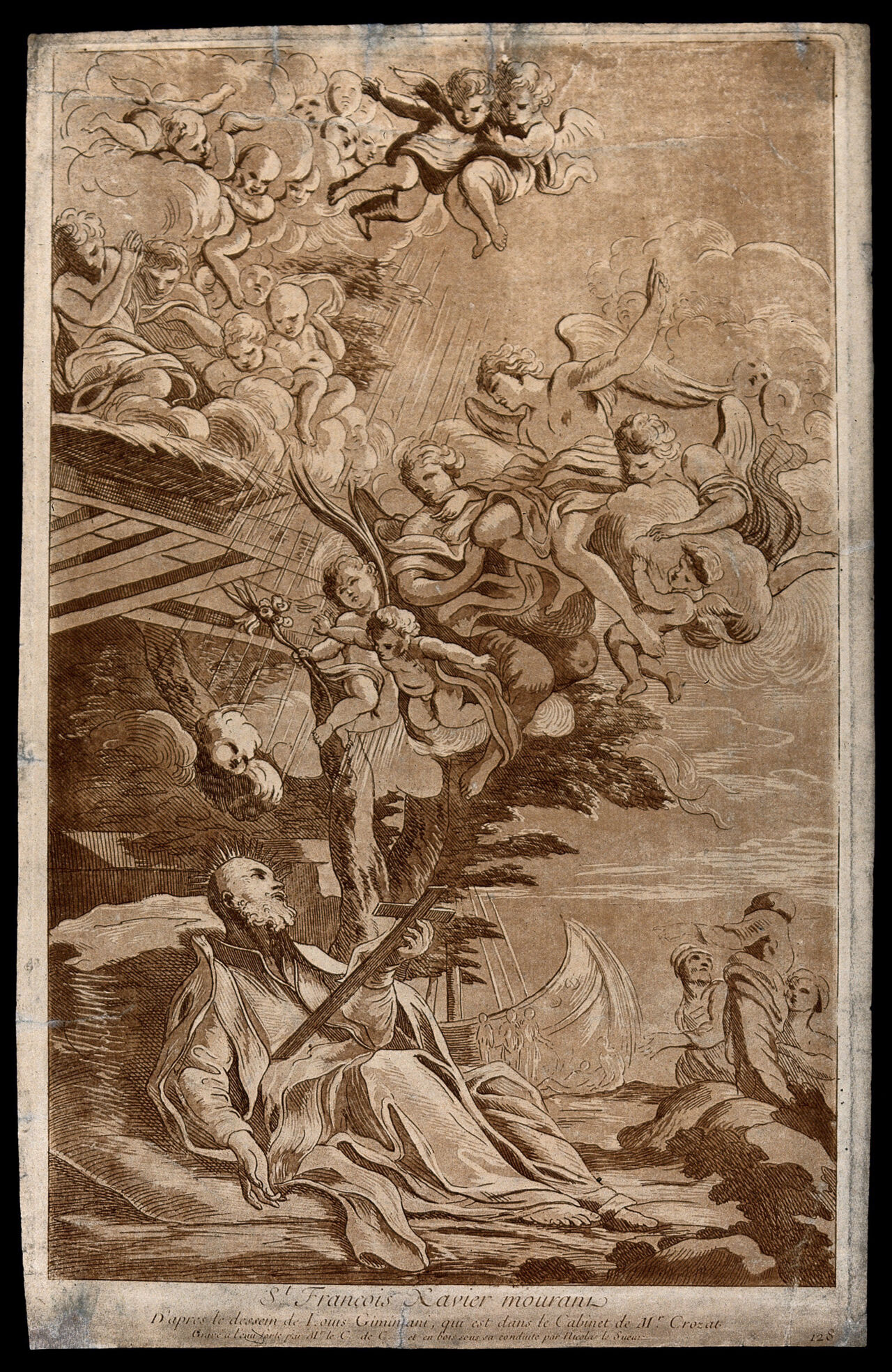
Ludovico Gimignani · Wellcome Collection, London · Wellcome Collection · Public Domain Mark
- Died
- 1697 · Zagarolo.
- Occupation
- painter
VALÉORINE Encyclopedia
VALÉORINE documentary reading
Documentary summary
Illustration — Portrait of Cardinal Felice Rospigliosi Ludovico Gimignani (1643 – 26 June 1697) was an Italian painter, who is mainly known for his altarpieces for churches in Rome.
Admitted source layer · organised and presented by VALÉORINE
Reference Check
Propose documentary evidence for Ludovico Gimignani. A contribution is never written directly as fact: identity, source, rights and evidence gates still decide.
Sign in to contribute
Documentary evidence
Documentary basis
Authority files
wikidata · Q3839112 · wikipedia · Ludovico Gimignani
In this article
Biography
Biography
Places of work recorded in the authority are Venice and Rome. Work by Ludovico Gimignani is recorded in the collections of Nationalmuseum, Philadelphia Museum of Art, Royal Museums of Fine Arts of Belgium, J. Paul Getty Museum and Lamport Hall.
Ludovico was born in Rome as the son of the painter Giacinto (1611–1681). His father was one of the main pupils emerging from the loose "studio" of painters working for Pietro da Cortona and who also received patronage from his fellow Pistoia native, the cardinal Rospigliosi. Ludovico's mother was the daughter of the painter Alessandro Turchi. Ludovico appears to have received encouragement from Gianlorenzo Bernini. He was very active in painting altarpieces for churches in Rome, including a Baptism of Constantine and a History of San Silvestro for the church of San Silvestro in Capite. He also painted a Guardian Angel for the church of San Crisogono, a portrait of a Boy and a Greyhound in the Palazzo Pallavicini-Rospigliosi in the Quirinal Hill, and an altarpiece for the baptistery in Sant'Andrea delle Fratte. Among his masterpieces is the altarpiece depicting the Miracle of Saint Mary Magdalene de' Pazzi. His father had painted the companion piece for the Temptation; both paintings are found in the second chapel (Chapel of St. Mary Magdalene de' Pazzi, who had been canonized in 1669) on the left of the Carmelite church of Santa Maria in Montesanto. Ludovico also painted the vault frescoes (1685). In 1672, he joined the Accademia di San Luca, a prestigious association of artists in Rome. He was named curator of the Gallery of the Palazzo Quirinale by pope Alexander VII. He died in Zagarolo.
Places
Named by the record
Places
Only places the record itself states, plotted where the house gazetteer settles their coordinates. Nothing is inferred from a name or a nationality.
Rome.
Birth place
Zagarolo.
Death place
Notes from the source article
Cited by Wikipedia
Notes from the source article
These works are cited by the source article, in its own numbering. They are recorded as its citations, not as sources VALÉORINE has verified.
References
Citations
References
Each reference names the institution holding it, so a reader may go to the document itself.
reference work
Secondary witnessreference work
Secondary witness
The Encyclopedia exists whether or not anything is for sale. Corrections are recorded rather than overwritten, and every version of this record is kept. Published 18 August 2026.
Elsewhere in Paintings
18,623 published records in this field, each with its sources named.
- Ludovico BreaArtist
- Ludovico ButiArtist
- Ludovico CavaleriArtist
- Ludovico DondiArtist
- Ludovico LanaArtist
- Ludovico SeitzArtist
- Ludovico SternArtist
- Ludovico TrasiArtist
Best supported in this field
For owners
Own a work by Ludovico Gimignani?
A specialist will read what you send and tell you what the house can establish, what it cannot, and whether the object is suited to sale. There is no charge and no obligation. The object stays with you throughout; nothing is shipped to us unless it is arranged in writing beforehand.