
Lothar de Maizière
Lothar de Maizière (born 2 March 1940) is a German former politician of the Christian Democratic Union. In 1990, he served as the head of the first and only democratically elected government of East Germany, holding this office during the final months before German reunification. Subsequently he briefly served as a minister in the new government of the unified Federal Republic of Germany until his past as a Stasi informant was revealed.
Lothar de Maizière
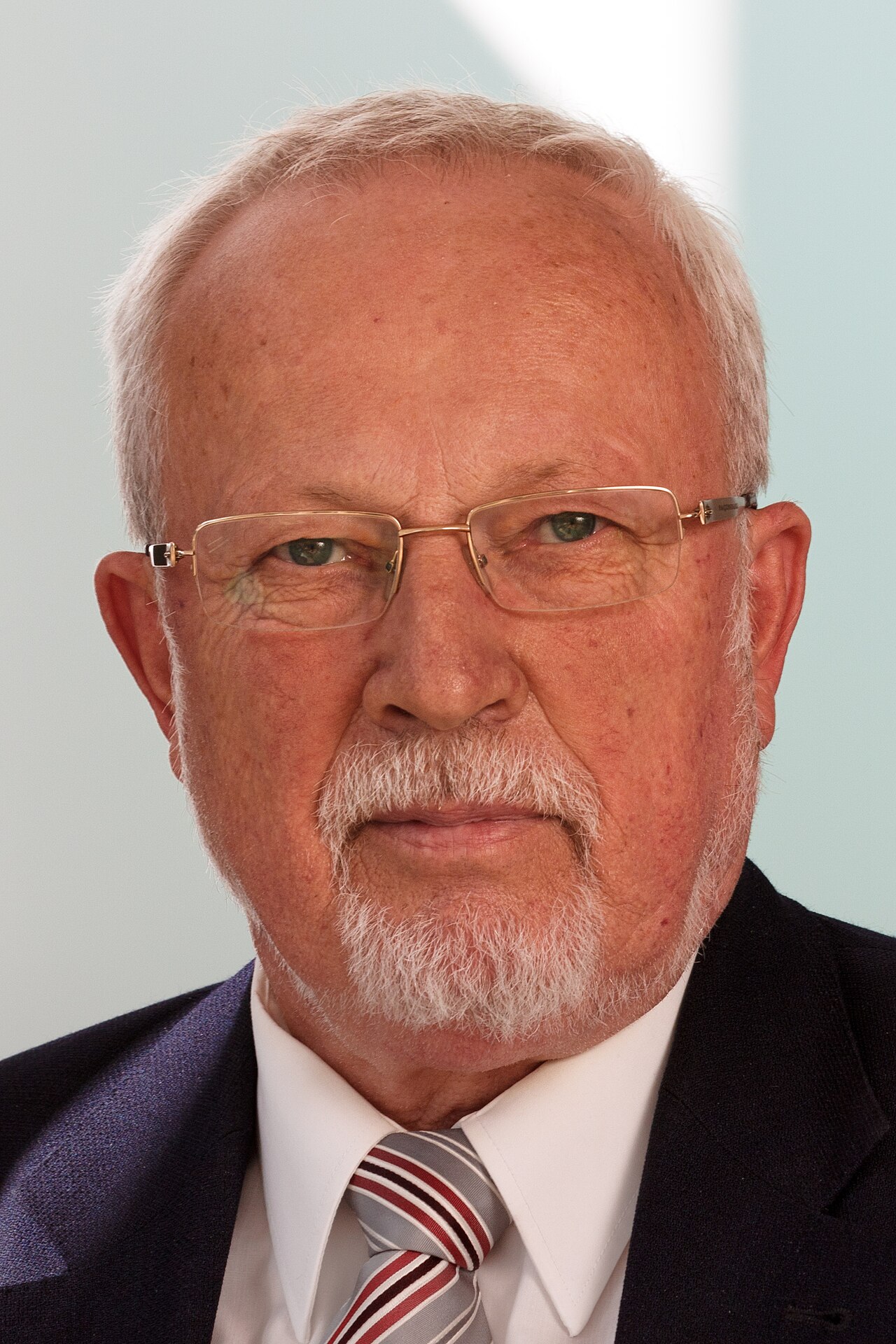
Henryk Plötz · CC BY-SA 3.0
- Name
- Lothar de Maizière
- Born
- 2 March 1940
- Birthplace
- Nordhausen, Germany
- Occupation
- * Politician
- Education
- Hochschule für Musik Hanns Eisler Berlin Humboldt University of Berlin
- Nationality
- Germany · German Democratic Republic
- Honours
- Order of Friendship · German National Prize
- Languages
- German
VALÉORINE Encyclopedia
VALÉORINE documentary reading
Documentary summary
Lothar de Maizière (born 2 March 1940) is a German former politician of the Christian Democratic Union. In 1990, he served as the head of the first and only democratically elected government of East Germany, holding this office during the final months before German reunification. Subsequently he briefly served as a minister in the new government of the unified Federal Republic of Germany until his past as a Stasi informant was revealed.
Admitted source layer · organised and presented by VALÉORINE
Reference Check
Propose documentary evidence for Lothar de Maizière. A contribution is never written directly as fact: identity, source, rights and evidence gates still decide.
Sign in to contribute
World of VALÉORINE
Documentary connections
Only confirmed graph relationships appear here. Images are shown only when their identity and reuse rights both pass the documentary gate.

Documentary evidence
Documentary basis
Authority files
wikidata · Q57412 · wikipedia · Lothar de Maizière
In this article
Biography
Biography
Lothar de Maizière studied at Hanns Eisler Music School Berlin and Humboldt-Universität zu Berlin. The recorded working language is German. Places of work recorded in the authority are Bonn and East Berlin. Positions recorded include Prime Minister of East Germany and member of the German Bundestag. Distinctions recorded are Order of Friendship and German National Prize.

For documentary purposes the German Federal Archive often retained the original image captions, which may be erroneous, biased, obsolete or politically extreme. ADN-ZB/ Uhlemann/ 21/5/90 - BRD/Bonn: Staatsvertrag DDR-Ministerpräsident Lothar de Maiziere (l) und Bundeskanzler Helmut Kohl zogen sich nach Unterzeichnung des Staatsvertrages zu einem angeregten Gespräch in den Park des Bundeskanzlera
Uhlemann, Thomas · Bundesarchiv, Bild 183-1990-0521-414 / Uhlemann, Thomas / CC-BY-SA 3.0 · This image was provided to Wikimedia Commons by the German Federal Archive (Deutsches Bundesarchiv) as part of a cooperation project. The German Federal Archive guarantees an authentic representation

For documentary purposes the German Federal Archive often retained the original image captions, which may be erroneous, biased, obsolete or politically extreme. ADN- Wolfgang Kluge Tele 28.8.90
Wolfgang Kluge · Bundesarchiv, Bild 183-1990-0828-030 / Kluge, Wolfgang / CC-BY-SA 3.0 · This image was provided to Wikimedia Commons by the German Federal Archive (Deutsches Bundesarchiv) as part of a cooperation project. The German Federal Archive guarantees an authentic representation
Key facts
Key facts
• Name — Lothar de Maizière • Office — Minister for Special Affairs • Chancellor — Helmut Kohl • Alongside — Rudolf Seiters, Hans Klein, Sabine Bergmann-Pohl, Günther Krause, Rainer Ortleb, Hansjoachim Walther • Term Start — 3 October 1990 • Term End — 17 December 1990 • Predecessor — Position established • Successor — Position abolished • Office1 — Minister-President of East Germany • 1blankname1 — Head of state • 1namedata1 — Sabine Bergmann-Pohl (interim) • Deputy2 — Peter-Michael Diestel • Term Start1 — 12 April 1990 • Term End1 — 2 October 1990 • Predecessor2 — Hans Modrow (as Chairman of the Council of Ministers) • Successor2 — Helmut Kohl (as Chancellor of Germany) • Office3 — Minister of Foreign Affairs • Status3 — Acting • 1blankname3 — Minister-President • 1namedata3 — himself • Term Start3 — 20 August 1990 • Term End3 — 2 October 1990 • Predecessor3 — Markus Meckel • Successor3 — Position abolished Modrow Government Parliamentary constituencies • Born — 2 March 1940 • Birthplace — Nordhausen, Germany • Party — Christian Democratic Union (1990–present) • Other Party — Christian Democratic Union (East Germany) (1956–1990) • Children — 3 • Occupation — * Politician • Lawyer • Musician • Education — Hochschule für Musik Hanns Eisler Berlin Humboldt University of Berlin
Family background
Family background
Maizière is of French ancestry, descending from a Huguenot family that fled religious persecution in France during the late 17th century. The family took its name from the town of Maizières-lès-Metz and sought refuge in Prussia, where they became part of a broader Huguenot community that integrated into Berlin society while retaining French cultural ties. For generations, the Maizières attended French-language schools and worshipped in Huguenot churches in the capital, a tradition that lasted well into the early 20th century. Lothar is the son of Clement de Maizière, a lawyer, and part of a prominent family with deep roots in both East and West German public life. His uncle, Ulrich de Maizière, served as Inspector General of the Bundeswehr, the highest-ranking military officer in West Germany. His cousin, Thomas de Maizière, became a key political figure in unified Germany, serving as a close advisor to Chancellor Angela Merkel and holding several ministerial positions, most notably as Federal Minister of the Interior from 2013 to 2018 in Merkel’s third cabinet.
Early life and education
Early life and education
Maizière was born in Nordhausen, Thuringia, and attended the ancient Berlinisches Gymnasium zum Grauen Kloster, where he was one of the last pupils before the school closed in 1958. He next studied viola at the Hanns Eisler College of Music in East Berlin from 1959 to 1965. He played in the Berlin Symphony Orchestra before studying law by distance learning through the Humboldt University of Berlin from 1969 to 1975.
Career
Career
A longtime member of the East German Christian Democratic Union (CDU), Maizière rose to national prominence during the political upheavals that followed the fall of the Berlin Wall. In late 1989, he played a key role in removing the party's pro-Communist leadership, helping to steer the CDU away from its long-standing subordination to the ruling Socialist Unity Party of Germany (SED). He was elected party chairman in November of that year and became one of the leading figures in the transition to democracy. In the historic March 1990 election, the first and only free election in the German Democratic Republic (GDR), the CDU and its allies emerged victorious, positioning Maizière to take on a leading role in the new government. • Illustration — de Maizière in the aftermath of the 1990 East German general election giving a peace hand sign Following the CDU's electoral victory, Maizière was elected to the Volkskammer and, one month later, succeeded Hans Modrow as Premier of East Germany, a role he held from 12 April to 2 October 1990 as head of the de Maizière cabinet. His government focused almost exclusively on reunification, working closely with the West German government led by Helmut Kohl. As Premier, Maizière signed the Treaty on the Final Settlement with Respect to Germany, also known as the "Two Plus Four Agreement", which formally ended the postwar rights of the Allied powers in Germany and laid the legal groundwork for reunification. This agreement, combined with a series of political, legal and economic steps, led to the dissolution of the GDR on 3 October 1990, with its territory becoming part of the Federal Republic of Germany (FRG).
Resignation
Resignation
After reunification, Maizière joined the federal government as Minister for Special Affairs in Chancellor Kohl's cabinet, a post meant to provide representation for the newly incorporated eastern states. However, his political career came to an abrupt end just months later. On 17 December 1990, Maizière resigned after allegations surfaced that he had served as an informant for the East German secret police, the Stasi, under the codename "IM Czerni". Though Maizière initially denied any wrongdoing, reports from the Stasi Records Agency indicated that he had provided information to the Stasi. The revelations caused widespread disillusionment, particularly in light of his prominent role in the democratic transition.
Career and activity
Career and activity
Recorded positions include Prime Minister of East Germany, member of the German Bundestag, member of the Volkskammer and Minister for Foreign Affairs (German Democratic Republic). He belonged to German-Russian Forum. He worked at Bonn and East Berlin.
Identity
Identity
Lothar de Maizière is recorded with the occupation politician. Maizière worked at East Berlin. Maizière worked at Bonn. Recorded as having studied at Hanns Eisler Music School Berlin and Humboldt-Universität zu Berlin.
Life and career
Dated record
Life and career
The full dated record · 1 entries
1940
Lothar de Maizière was born on 2 March 1940.
Places
Named by the record
Places
Only places the record itself states, plotted where the house gazetteer settles their coordinates. Nothing is inferred from a name or a nationality.
Lothar de Maizière was born at Nordhausen.
Birthplace
Nordhausen.
Birth place
Primary material
Documents and archives
reference work
- “Lothar de Maizière”, English Wikipedia, consulted as further reading
Reputable secondary · Wikipedia
authority record
- Wikidata, structured authority record Q57412: Lothar de Maizière
General reference · Wikidata
Notes from the source article
Cited by Wikipedia
Notes from the source article
These works are cited by the source article, in its own numbering. They are recorded as its citations, not as sources VALÉORINE has verified.
- 1.kas.de. Lothar de Maizière, Geschichte der CDU, Konrad-Adenauer-Stiftung. March 1940.
- 2.Dempsey, Judy. Merkel is Quick to Fill Open Cabinet Position. The New York Times. 2 March 2011.
- 3.Evangelisches Gymnasium zum Grauen Kloster. www.graues-kloster.de.
- 4.Who is Lothar de Maiziere?. 22 November 2011.
- 5.Lothar de Mazière. www.bakuforum2016.com.
- 6.Derek Lewis & Ulrike Zitzlsperger. Historical Dictionary of Contemporary Germany. Rowman & Littlefield, 18 October 2016. p. 412
- 7.ZEIT ONLINE. Die Zeit. 24 January 1992.
- 8.Biography: Lothar de Maizière - Biographies - Chronik der Wende. www.chronikderwende.de.
References
Citations
References
Each reference names the institution holding it, so a reader may go to the document itself.
reference work
Secondary witnessauthority record
General reference
People, houses and institutions
Knowledge graph
People, houses and institutions
Teachers, collaborators, publishers and institutions recorded against this person, each on a stated basis.
Studied at
1- Humboldt-Universität zu BerlinOrganisation
Established from a fact already recorded on a verified source.
Further particulars
Held on the record
Further particulars
Open the remaining particulars
His recorded language was German. He was the child of Clemens de Maizière and Christine Rathje. He married Marianne Strodt. Other recorded relations include Thomas de Maizière and Ulrich de Maizière. Connected to 1 other published record in the VALÉORINE Encyclopedia.
Identity and origins
Within the Encyclopedia
The Encyclopedia exists whether or not anything is for sale. Corrections are recorded rather than overwritten, and every version of this record is kept. Published 17 August 2026.
Elsewhere in Music memorabilia
42,375 published records in this field, each with its sources named.
- Loten NamlingPerson
- Lotfi BouchnakPerson
- Lotfi MansouriPerson
- Lothar BrühnePerson
- Lothar HenselPerson
- Lothar KempterPerson
- Lothar KochPerson
- Lothar VoigtländerPerson
Best supported in this field
For owners
Own a work by Lothar de Maizière?
A specialist will read what you send and tell you what the house can establish, what it cannot, and whether the object is suited to sale. There is no charge and no obligation. The object stays with you throughout; nothing is shipped to us unless it is arranged in writing beforehand.