
kannel
Illustration — Traditional small 6-stringed kannel • Illustration — Large chromatic kannel from the Estonia Piano Factory in 1988 Kannel (pron) is an Estonian plucked string instrument (chordophone) belonging to the Baltic box zither family known as the Baltic psaltery along with Finnish kantele, Latvian kokles, Lithuanian kanklės, and Russian gusli. The Estonian kannel has a variety of traditional tunings. In Estonia, studying the kannel has made a resurgence after some years of decline.
kannel
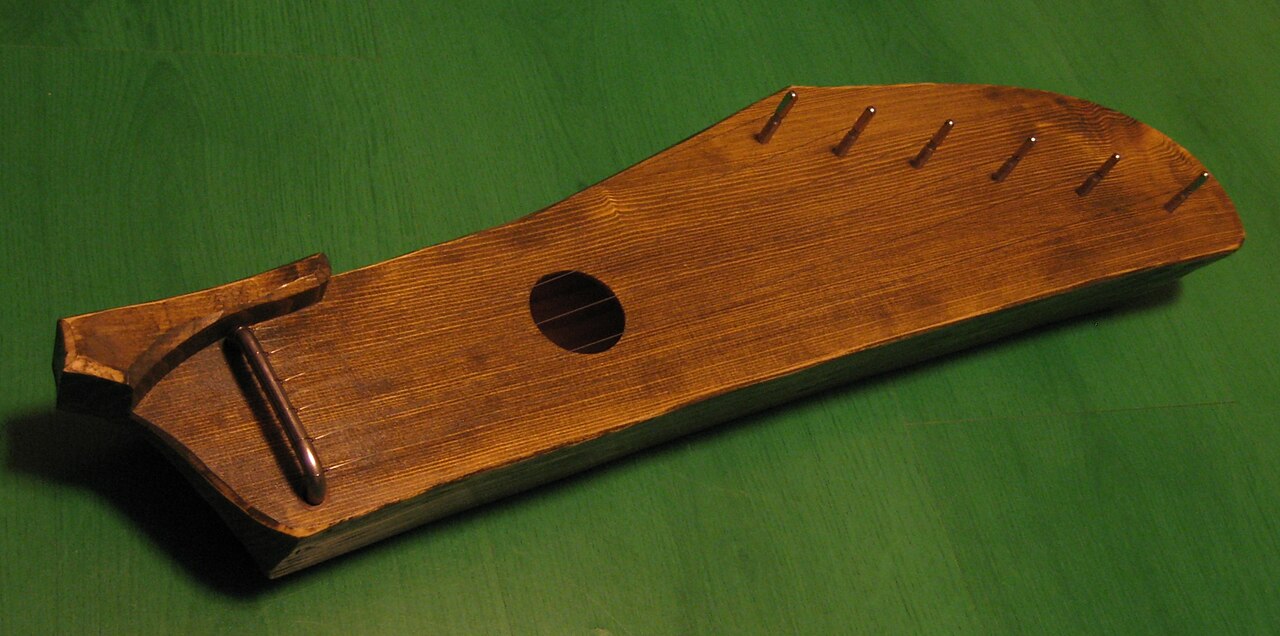
Adeliine · CC BY-SA 3.0
- Field
- plucked string instrument
- Region
- Estonia
VALÉORINE Encyclopedia
VALÉORINE documentary reading
Documentary summary
Illustration — Traditional small 6-stringed kannel • Illustration — Large chromatic kannel from the Estonia Piano Factory in 1988 Kannel (pron) is an Estonian plucked string instrument (chordophone) belonging to the Baltic box zither family known as the Baltic psaltery along with Finnish kantele, Latvian kokles, Lithuanian kanklės, and Russian gusli. The Estonian kannel has a variety of traditional tunings. In Estonia, studying the kannel has made a resurgence after some years of decline.
Admitted source layer · organised and presented by VALÉORINE
Note VALÉORINE
No house-authored Note is published until its assertions and sources pass the VALÉORINE evidence contract. The documentary article remains available in full while that enrichment is being consolidated.
Documentary enrichment in progress · no unsupported statement published
Reference Check
Propose documentary evidence for kannel. A contribution is never written directly as fact: identity, source, rights and evidence gates still decide.
Sign in to contribute
World of VALÉORINE
Documentary connections
Only confirmed graph relationships appear here. Images are shown only when their identity and reuse rights both pass the documentary gate.

Documentary evidence
Evidence Panel
wikipedia incomplete · checked 25 September 2026
- Identity
- resolved
- Independent source families
- 0
- Admitted assertions
- 0
- Open conflicts
- 0
Authority files
wikidata · Q3732881
In this article
Etymology
Etymology
According to Finnish linguist Eino Nieminen, the name of the instrument, along with the names of most of its neighbouring counterparts (Finnish fi, Livonian kāndla, Latvian lv and Lithuanian kanklės), possibly comes from the Proto-Baltic form *kantlīs/*kantlēs, which originally meant 'the singing tree', ultimately deriving from the Proto-European root ine-x-proto ('to sing, to sound'). However, Lithuanian ethnologist Romualdas Apanavičius believes lv could be derived from the Proto-European root ine-x-proto, meaning 'a vessel; a haft (of a sword)', suggesting that it may be related to the Russian word gusli.
History
History
• Illustration — A kannel player in Järvepää, Setomaa, Estonia ca. 1912. The kannel became rare in the early 20th century, though surviving in some parts of the Estonian diaspora, until cultural movements under the Soviets encouraged the development and playing of larger chromatic kannels. However, influence from neighboring traditional Finnish kantele players supported the playing of the traditional smaller kannels.
Social role
Players
Players
• Kristi Mühling • Anna-Liisa Eller • Mari Kalkun • Eva Väljaots • Duo Ruut
Places
Named by the record
Places
Only places the record itself states, plotted where the house gazetteer settles their coordinates. Nothing is inferred from a name or a nationality.
Estonia
Country
kannel is associated with Estonia.
Country
Citations
References
Each reference names the institution holding it, so a reader may go to the document itself.
reference work
Partially resolved
The Encyclopedia exists whether or not anything is for sale. Corrections are recorded rather than overwritten, and every version of this record is kept. Published 14 August 2026.
Elsewhere in Collectables
20,755 published records in this field, each with its sources named.
- Kanji Sonomama Rakubiki Jiten DSWork
- kanjiraTerminology
- kankara sanshinTerminology
- kanklėsTerminology
- Kanojo × Kanojo × KanojoWork
- KanonWork
- Kantai CollectionWork
- Kantanka AutomobileOrganisation
Best supported in this field
For owners
Own an object connected with kannel?
A specialist will read what you send and tell you what the house can establish, what it cannot, and whether the object is suited to sale. There is no charge and no obligation. The object stays with you throughout; nothing is shipped to us unless it is arranged in writing beforehand.
Social role
• Illustration — A golden kannel pictured in the coat of arms of Petseri County The kannel serves as a national symbol of Estonia; Jakob Hurt's 1875-1876 publication of Estonian folksongs was even titled Vana Kannel (The Old Kannel). The kannel was legendarily played by the Estonian god of song Vanemuine, and the Estonian national epic Kalevipoeg (published in the 1850s) begins with the line: Laena mulle kannelt, Vanemuine! ("Vanemuine, lend me your kannel!").