
Jūzō Itami
Juzo Itami, born May 15, 1933 – December 20, 1997, was a Japanese actor, screenwriter and film director. He directed eleven films (one short and ten features), all of which he wrote himself. He is the namesake of the Juzo Itami Award, founded in 2009 to honor his legacy.
Jūzō Itami

Gorup de Besanez · CC BY-SA 4.0
- Name
- Juzo Itami
- Birth Name
- Yoshihiro Ikeuchi
- Born
- 15 May 1933
- Birthplace
- Kyoto, Japan
- Died
- 20 December 1997
- Place of death
- Tokyo, Japan
- Occupation
- * Film director
- Full name
- 池内 義弘.
- Nationality
- Japan and Empire of Japan.
- Known for
- The Funeral, A Taxing Woman, Minbo, Supermarket Woman and Woman in Witness Protection.
- Honours
- Mainichi Film Award for Best Screenplay, Blue Ribbon Awards for Best Director and Mainichi Film Award for Best Director.
- Languages
- Japanese.
Enciclopedia VALÉORINE
Il dossier documentario
Ogni enunciato è letto negli archivi di autorità delle istituzioni nominate. Scegliete «Prova» accanto a un enunciato per vedere la scheda da cui è tratto, il punto esatto e la data di lettura.
Jūzō Itami compare negli archivi di autorità della Bibliothèque nationale de France e della Deutsche Nationalbibliothek come attore e regista cinematografico (5 maggio 1933 – 20 dicembre 1997).
Vita
Jūzō Itami nacque il 5 maggio 1933 a Kyoto e morì il 20 dicembre 1997. Per il luogo di morte di Jūzō Itami, Tokyo è registrato dalla Bibliothèque nationale de France e Tokio dalla Deutsche Nationalbibliothek.
Istituzioni citate
Bibliothèque nationale de France · Deutsche Nationalbibliothek
Catena di lettura completa (JSON)Reference Check
Propose documentary evidence for Jūzō Itami. A contribution is never written directly as fact: identity, source, rights and evidence gates still decide.
Sign in to contribute
World of VALÉORINE
Documentary connections
Only confirmed graph relationships appear here. Images are shown only when their identity and reuse rights both pass the documentary gate.
Documentary evidence
Documentary basis
Authority files
wikidata · Q1325171
In this article
Biography
Biography
The recorded working language is Japanese. Works named in the authority record are The Funeral, A Taxing Woman, Minbo, Supermarket Woman and Woman in Witness Protection. Work by Jūzō Itami is recorded in the collections of Itami Jūzō Museum. Distinctions recorded are Mainichi Film Award for Best Screenplay, Blue Ribbon Awards for Best Director and Mainichi Film Award for Best Director.
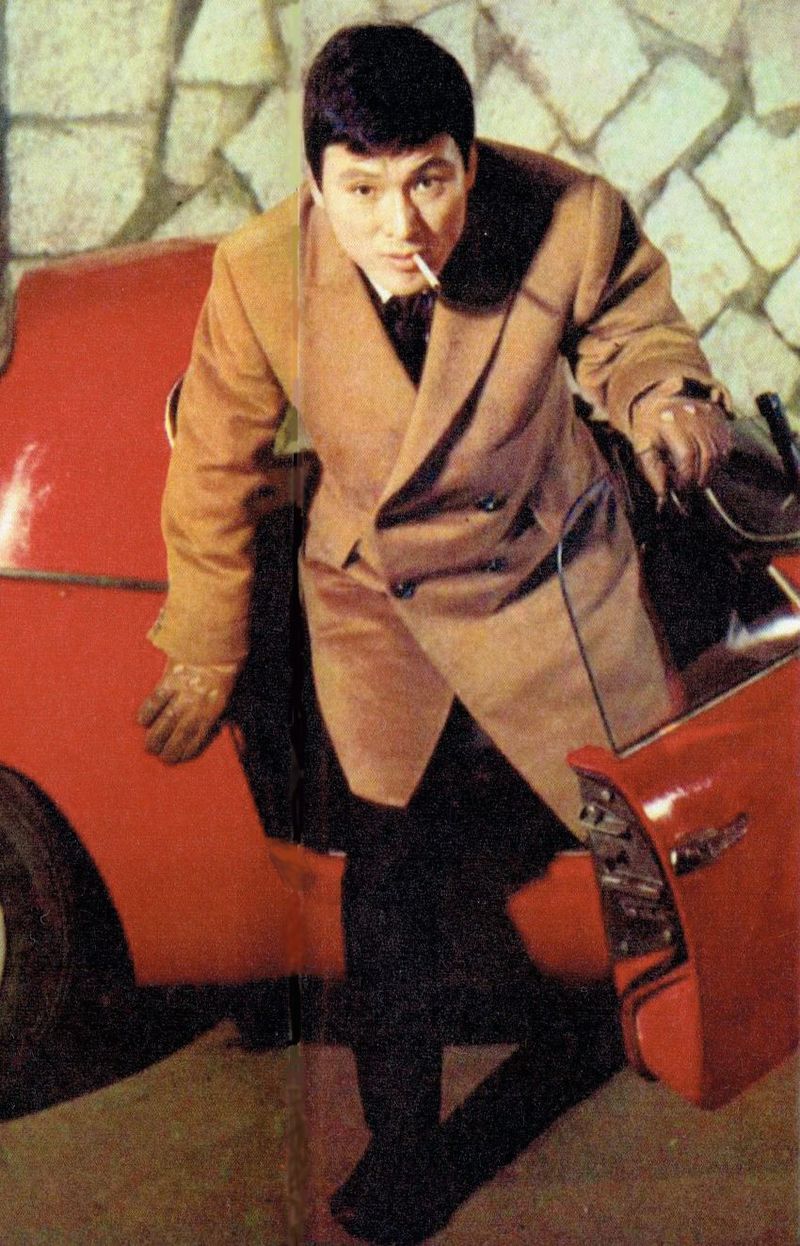
Jūzō Itami
婦人生活社 撮影者不明 · 婦人生活社『婦人生活』2月号(1966)より

Juzo Itami and Nobuko Miyamoto
Gorup de Besanez
Key facts
Key facts
• Name — Juzo Itami • Birth Name — Yoshihiro Ikeuchi • Born — 15 May 1933 • Birthplace — Kyoto, Japan • Died — 20 December 1997 • Place of death — Tokyo, Japan • Occupation — * Film director • screenwriter • actor • Years Active — 1960–1997 • Children — Mansaku Ikeuchi (son) • Father — Mansaku Itami • Relatives — Hikari Ōe (nephew)
Early life
Early life
Itami was born Yoshihiro Ikeuchi in Kyoto. The name Itami was passed on from his father, Mansaku Itami, a renowned satirist and film director before World War II. In his childhood, he went by the name Takehiko Ikeuchi (池内 岳彦). At the end of the war, in Kyoto, Itami was chosen as a prodigy and educated in a Tokubetsu Kagaku Gakkyū ("special scientific education class"), where he began to be trained as a future scientist who was expected to defeat the Allied powers. Among his fellow students were the sons of Hideki Yukawa and Sin-Itiro Tomonaga. The program was abolished in March 1947. He moved from Kyoto to Ehime Prefecture when he was a high school student. He attended the prestigious Matsuyama Higashi High School, where he was known for being able to read works by Arthur Rimbaud in French. Due to his poor academic record, he had to remain in the same class for two years; it was here that he became acquainted with Kenzaburō Ōe, who later married his sister. When he was unable to graduate from Matsuyama Higashi High School, he transferred to Matsuyama Minami High School and graduated thereafter. After failing the entrance exam for the College of Engineering at Osaka University, Itami worked at times as a commercial designer and writer, illustrator, television reporter, and essayist. He was also the editor-in-chief for the 1980s psychoanalytic magazine Mon Oncle. In his early acting days, Itami lived in London. By the time he became a director, he spoke English near-flawlessly, although preferred to use an interpreter during interviews. Itami was the brother-in-law of Kenzaburō Ōe and an uncle of Hikari Ōe.
Acting career
Acting career
• Illustration — Itami and Miyamoto in 1992 Itami studied acting at a drama school called Butai Geijutsu Gakuin in Tokyo. In January 1960 he joined Daiei Film, where president Masaichi Nagata gave him the stage name Itami Ichizō, the surname from his father and the given name from industrialist Ichizō Kobayashi. In May 1960, Itami married Kazuko Kawakita, the daughter of film producer Nagamasa Kawakita. He first acted on screen in Ginza no Dora-neko (1960). The following year, he left Daiei and started to appear in foreign-language films such as 55 Days at Peking. In 1965, Itami appeared in the big-budget Anglo-American film Lord Jim, and also published a book of essays which became a hit, titled 4="Diary of Boredom in Europe". In 1966, he and Kawakita agreed to divorce. Itami met and co-starred with actress Nobuko Miyamoto in the 1965–66 NHK TV drama Ashita no Kazoku, and the two again acted alongside each other on the set of the 1967 film Sing a Song of Sex. He and Miyamoto married in 1969 and had two sons in the following years. In April 1967, he changed his stage name to "伊丹 十三" (Itami Jūzō) – with the kanji "十" (ten) rather than "一" (one), and with 十三 meaning "thirteen" – with the meaning of "changing a minus into a plus". In 1968 he played Saburo Ishihara, the father of Takeshi and Koji during the second season of the children's series Cometto-san. He became well known for this role in many Spanish-speaking countries, along with Yumiko Kokonoe who played the lead role. In the 1970s, he joined the television production company TV Man Union, working as a producer of and presenter on television documentaries, which influenced his later career as a film director. He also worked as a reporter for a TV program called Afternoon Show. In 1983, Itami played the father in both Yoshimitsu Morita's The Family Game and in Kon Ichikawa's The Makioka Sisters, roles for which he won the Hochi Film Award and Best Supporting Actor at the Yokohama Film Festival respectively. Along with his acting career, he translated several English books into Japanese, including Papa, You're Crazy by William Saroyan, The Kitchen Sink Papers: My Life as a Househusband by Mike McGrady, and The Potato Book by Myrna Davis and Truman Capote.
Director
Director
Itami's debut as director was the movie The Funeral (Osōshiki) in 1984, at the age of 51. This film proved popular in Japan and won many awards, including Japanese Academy Awards for Best Picture, Best Director, and Best Screenplay. However, it was his second movie, the 1985 comedy film, or self-described "noodle western" Tampopo, that earned him international exposure and acclaim. His following film A Taxing Woman (1987) was again highly successful. It won six major Japanese Academy awards and spawned a sequel A Taxing Woman's Return in 1988. The central character, played by his wife Nobuko Miyamoto who appeared in all his films, became a pop culture heroine. This was followed by his fifth film A-Ge-Man: Tales of a Golden Geisha. Itami directed the anti-yakuza satire Minbo: the Gentle Art of Japanese Extortion as his sixth feature. On May 22, 1992, six days after the release of the film, Itami was attacked, beaten, and slashed on the face by five members of the Goto-gumi, a Shizuoka-based yakuza clan, who were angry at Itami's film's portrayal of gang members. In an interview with the New York Times, he described the attack, saying, "They cut very slowly; they took their time. They could have killed me if they wanted." This attack led to a government crackdown on the yakuza. His subsequent stay in a hospital inspired his next film Daibyonin (1993), a grim satire on the Japanese health system. During a showing of this film in Japan, a cinema screen was slashed by a right-wing protester. Before his death, he directed another three films: A Quiet Life (based on the Kenzaburō Ōe novel), Supermarket Woman, and Woman in Witness Protection.
Recurring cast members
Recurring cast members
Itami frequently re-cast actors whom he had worked with on previous films. Recurring cast members in Juzo Itami's works • Nobuko Miyamoto — Masahiko Tsugawa — Chōei Takahashi — Yoshihiro Katō — Hideji Ōtaki — Noboru Mitani — Tsutomu Yamazaki — Akio Tanaka — Takehiro Murata — Yasuo Daichi — Shirō Itō — Akira Takarada — Kinzō Sakura — Haruna Takase — Mansaku Fuwa — Nobuto Okamoto — Mihoko Shibata — Tetsu Watanabe — Koichi Ueda — Yoriko Doguchi • The Funeral • Tampopo • A Taxing Woman • A Taxing Woman's Return • Tales of a Golden Geisha • Minbo • The Last Dance • Shizuka na Seikatsu • Supermarket Woman • Marutai no Onna
Death
Death
Itami died on December 20, 1997, in Azabudai, Tokyo after falling from the roof of the building where his office and Itami Productions were located. On his desk was found a suicide note written on a word processor stating that he had been falsely accused of an affair and was taking his life to clear his name. Two days later, a tabloid magazine, FLASH (写真週刊誌), published a report of such an affair. A toxicology report also noted that he was intoxicated at the time of his death. However, no one in Itami's family, including his wife, Nobuko Miyamoto, believed that he would have taken his life, or that he would have been mortally embarrassed by a real or alleged affair. Film director Nagisa Ōshima and rakugo performer Tatekawa Danshi, who knew Itami well, also stated that they believed he would not kill himself for this reason. In addition, as one of Japan's leading lettering designers – his handwritten typefaces were given the nickname "Itami Mincho" for being so precise – some felt Itami's computer-typed suicide note to be incongruous with his love of handwritten design. Despite the official ruling as a suicide, Miyamoto remained under police protection for over a decade following Itami's death. In 2008, a former member of the Goto-gumi yakuza group told reporter Jake Adelstein: "We set it up to stage his murder as a suicide. We dragged him up to the rooftop and put a gun in his face. We gave him a choice: jump and you might live or stay and we'll blow your face off. He jumped. He didn't live." The attack is thought to have been due to the topic of Itami's next film, which was rumored to have been focusing on connections between the Goto-gumi and the cult-like Soka Gakkai new religious group.
As an actor
As an actor
• Year — Title — Role — Notes • 1960 — Ginza no dora-neko • 1961 — A False Student — Soratani (as Ichizō Itami) • 1961 — Her Brother — Son of Factory Owner — Uncredited • 1961 — The Big Wave — Toru • 1961 — Ten Dark Women — Hanamaki • 1963 — Onna no tsuribashi — Saburō Ōki — Episode 2 • 1963 — 55 Days at Peking — Col. Shiba • 1964 — Shūen — Takuji Yoshii • 1965 — Lord Jim — Waris • 1966 — By a Man's Face Shall You Know Him — Shunji Amamiya • 1967 — Sing a Song of Sex — Ōtake • 1967 — Choueki juhachi-nen: kari shutsugoku • 1968 — Shōwa genroku Tokyo 196X-nen • 1968 — Ah kaiten tokubetsu kogekitai • 1968 — Ah, yokaren — Miyamoto • 1969 — Kinpeibai — Hsi Men Ching • 1969 — Eiko e no 5,000 kiro • 1969 — Heat Wave Island — Iino • 1970 — Hiko shonen: Wakamono no toride — Ishizaka • 1971 — Yasashii Nippon jin • 1973 — Kunitori Monogatari — Ashikaga Yoshiaki — TV series • 1973 — Shinsho Taikōki — Araki Murashige — TV series • 1974 — Lady Snowblood: Love Song of Vengeance — Ransui Tokunaga • 1974 — Imôto — Kazuo Wada • 1974 — Waga michi • 1975 — Wagahai wa neko de aru — Meitei • 1979 — Collections privées — (segment "Kusa-Meikyu") • 1979 — No More Easy Life — Takamizawa (Landlord) • 1979 — Grass Labyrinth — Principal / Priest / Old man — Short • 1980 — Yūgure made — Sasa • 1981 — Slow na boogie ni shitekure — Lawyer • 1981 — Shikake-nin Baian — Sahei Oumiya • 1981 — Akuryo-To — Ryuhei Ochi • 1982 — Kiddonappu burûsu (Kidnap Blues) • 1983 — The Makioka Sisters — Tatsuo Makioka, Tsuruko's husband • 1983 — The Family Game — Mr. Numata, the father • 1983 — Meiso chizu — Itakura • 1983 — Izakaya Chōji — Kawara • 1984 — Make-up — Kumakura • 1984 — MacArthur's Children — Hatano • 1985 — The Excitement of the Do-Re-Mi-Fa Girl — Professor Hirayama • 1985 — Haru no Hatō — Itō Hirobumi — TV series • 1989 — Sweet Home — Yamamura — (final film role)
As director
As director
• Year — Title — Notes • 1962 — Rubber Band Pistol — Short film • 1984 — The Funeral • 1985 — Tampopo • 1987 — A Taxing Woman • 1988 — A Taxing Woman's Return • 1990 — Tales of a Golden Geisha • 1992 — Minbo • 1993 — The Last Dance • 1995 — Shizuka na Seikatsu — "A Quiet Life" • 1996 — Supermarket Woman • 1997 — Marutai no Onna — "Woman in Witness Protection"
Places
Named by the record
Places
Only places the record itself states, plotted where the house gazetteer settles their coordinates. Nothing is inferred from a name or a nationality.
Kyoto.
Birth place
Tokyo.
Death place
Tributes
• Illustration — Itami Juzo Museum in Matsuyama, Ehime Itami's brother-in-law and childhood friend Kenzaburō Ōe wrote The Changeling (2000) based on their relationship. There is a Juzo Itami memorial museum in Matsuyama, Ehime Prefecture, opened in May 2007 by his wife Nobuko Miyamoto. The museum was designed by architect 中村好文 and features a special exhibition, rotating its displays and theme every few years, a permanent exhibition, divided up into thirteen sections to reflect the "thirteen" meaning of Itami's name, and an outdoor courtyard. It also houses a cafe named "Café Tampopo" after the film. Itami's films and legacy have long been supported by 玉置泰, CEO of Matsuyama-based confectionary company 一六本舗. Tamaoki invested heavily into Itami's first film, and all subsequent films, with Itami acting in and narrating (in Ehime dialect) commercials for the company's regional specialty "Ichiroku Tart". Tamaoki also served as president of Itami Productions, and is chairman of the ITM Itami Memorial Foundation, which operates the memorial museum and presents the annual Juzo Itami Award.
Awards
• 1985 Japan Academy Prize for Director of the Year—The Funeral • 1988 Japan Academy Prize for Director of the Year—A Taxing Woman
Text attribution
Licensing
Text attribution
Part of the biographical narrative on this page reuses licensed material. Its origin, revision and licence are recorded here.
The biographical narrative on this page is based on the Wikipedia article Juzo Itami, revision 1374501797 (EN edition), by its contributors. VALÉORINE has edited that text and built its own documentary record around it. The reused material is available under CC BY-SA 4.0, and this page's reuse of it is offered under the same licence. Everything else on this page — the chronology, the holdings, the evidence, the plates and the connections — is VALÉORINE's own record. Sources and licences.
References
Citations
References
Each reference names the institution holding it, so a reader may go to the document itself.
reference work
Secondary witness
The Encyclopedia exists whether or not anything is for sale. Corrections are recorded rather than overwritten, and every version of this record is kept. Published 15 August 2026.
Elsewhere in Film memorabilia
38,713 published records in this field, each with its sources named.
- Jutta LampePerson
- Jutta RabePerson
- Jutta SpeidelPerson
- Juwan ChungPerson
- Jūzō YamasakiPerson
- Jyllian GuntherPerson
- Jyothi KrishnaPerson
- JyothirmayiPerson
Best supported in this field
For owners
Own a work by Jūzō Itami?
A specialist will read what you send and tell you what the house can establish, what it cannot, and whether the object is suited to sale. There is no charge and no obligation. The object stays with you throughout; nothing is shipped to us unless it is arranged in writing beforehand.