
Juste-Aurèle Meissonnier
Juste-Aurèle Meissonier (1695 – 31 July 1750) was a French goldsmith, sculptor, painter, architect, and furniture designer. • Illustration — Juste-Aurèle Meissonier • Illustration — Juste-Aurèle Meissonnier, engraved design for a side table, c. 1730, engraving He was born in Turin, Savoyard state, but became known as a worker in Paris, where he died. His Italian origin and training were probably responsible for the extravagance of his decorative style.
Also recorded as Juste Aurele Meissonnier · Juste-Aurèle Meisonnier · Juste Aurèle Meissonnier · Justin Aurèle Meissonnier
Juste-Aurèle Meissonnier
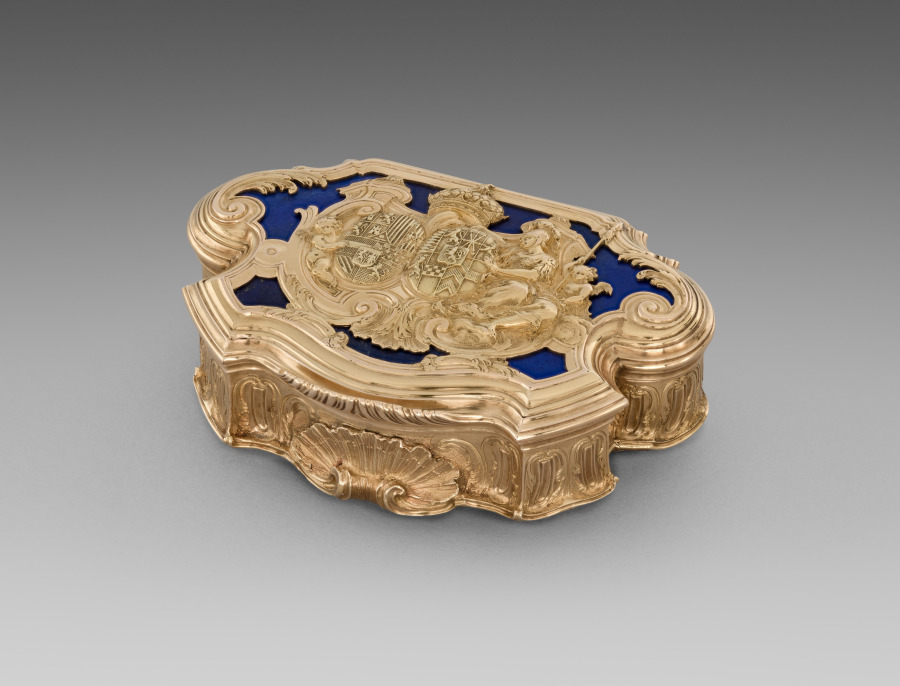
Juste-Aurèle Meissonnier · The Cleveland Museum of Art · Purchase from the John L. Severance Fund, the Dudley P. Allen Fund, by exchange, and the Sundry Art - Miscellaneous Fund · CC0
- Born
- 1695.
- Died
- 1750.
- Nationality
- France.
- Occupation
- architect, sculptor, painter, decorator, goldsmith and visual artist.
VALÉORINE Encyclopedia
VALÉORINE documentary reading
Documentary summary
Juste-Aurèle Meissonier (1695 – 31 July 1750) was a French goldsmith, sculptor, painter, architect, and furniture designer. • Illustration — Juste-Aurèle Meissonier • Illustration — Juste-Aurèle Meissonnier, engraved design for a side table, c. 1730, engraving He was born in Turin, Savoyard state, but became known as a worker in Paris, where he died. His Italian origin and training were probably responsible for the extravagance of his decorative style.
Admitted source layer · organised and presented by VALÉORINE
Reference Check
Propose documentary evidence for Juste-Aurèle Meissonnier. A contribution is never written directly as fact: identity, source, rights and evidence gates still decide.
Sign in to contribute
Documentary evidence
Documentary basis
Authority files
wikidata · Q1364279 · wikipedia · Juste-Aurèle Meissonnier
In this article
Identity
Identity
He shared, and perhaps distanced, the meretricious triumphs of Oppenord and Germain, since he dealt with the Rococo in its most daring and flamboyant developments. Rarely did he leave a foot or two of undecorated space; Meissonier carried the style of his day to its extreme and thus achieved great popularity. Like the Scottish brothers Adam at a later day he not only as an architect built houses but as a painter and decorator, covered their internal walls; he designed the furniture and the candlesticks, the silver and the decanters for the table; he was as ready to produce a snuff-box as a watch case or a sword hilt. Not only in France, but for the nobility of Poland, Portugal and other countries who took their fashions and their taste from Paris, he made designs. His work in gold and silver plates was often graceful and sometimes bold and original. His furniture features strong rocaille elements. He was appointed by Louis XV Dessinateur de la chambre et du cabinet du roi; the post of designer pour les pompes funèbres et galantes was also held along with that of Orfèvre du roi. For our knowledge of his work we are considerably indebted to his own books of design: Livres d'ornements en trente pièces and Ornements de la carte chronologique. His works are held in the collection of the Cooper-Hewitt, National Design Museum.
Juste-Aurèle Meissonnier is recorded as architect, sculptor, painter and decorator.
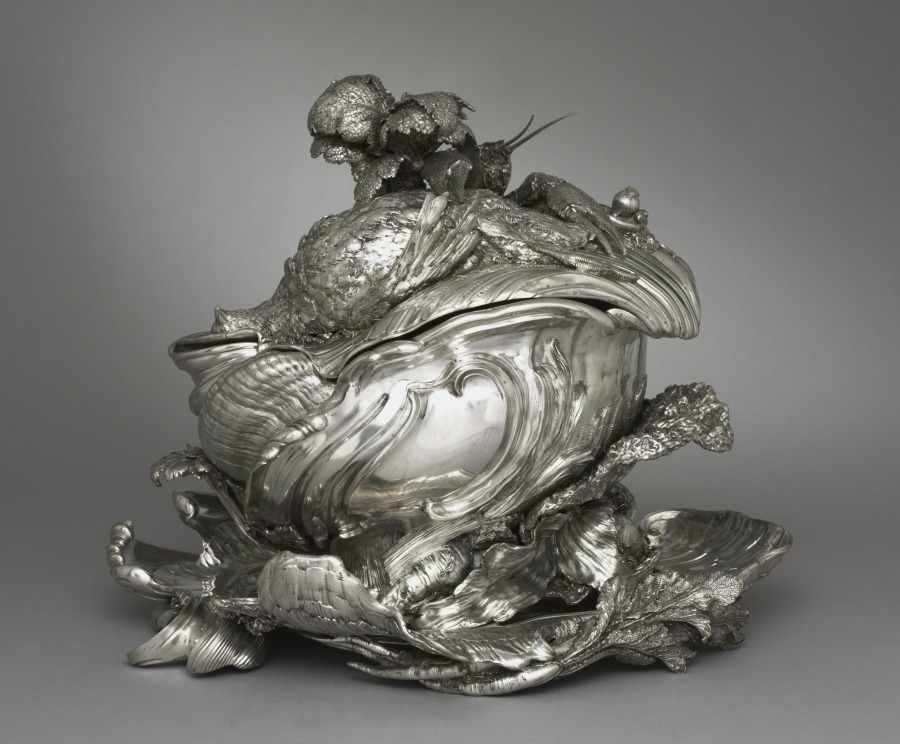
Covered Tureen on Stand (Pot-à-oille), 1735–38, by Juste-Aurèle Meissonnier
Juste-Aurèle Meissonnier · The Cleveland Museum of Art · Leonard C. Hanna Jr. Fund
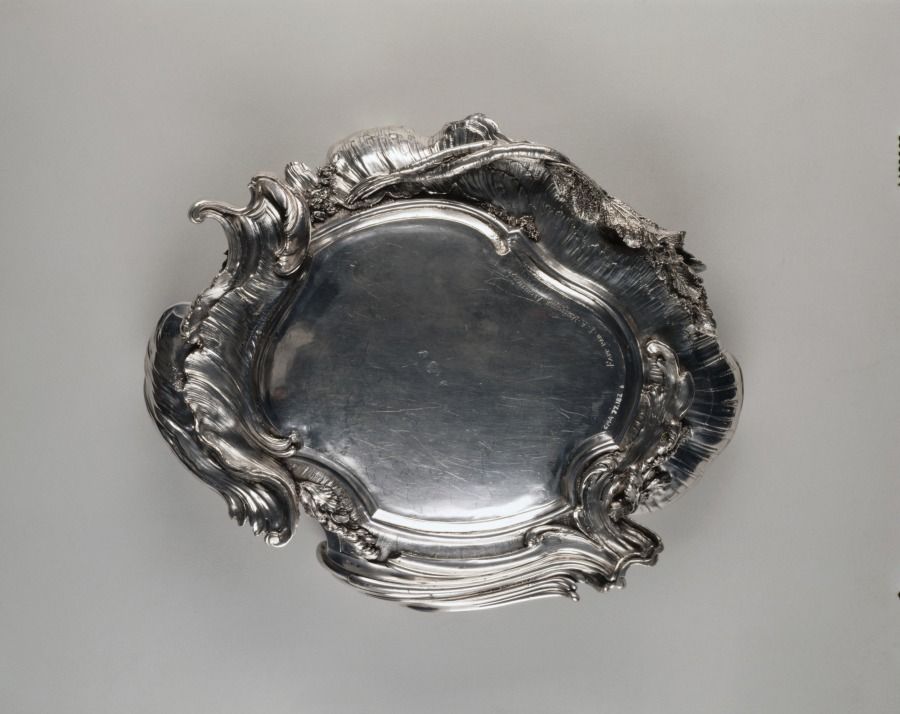
Stand for a Covered Tureen, 1735–38, by Juste-Aurèle Meissonnier
Juste-Aurèle Meissonnier · The Cleveland Museum of Art · Leonard C. Hanna Jr. Fund
Life and career
Dated record
Life and career
Explore 1695–1750
The full dated record · 4 entries
1695
Juste-Aurèle Meissonnier was born in 1695.
1742
Projet d'une grande Pendule, from 'Oeuvre de Juste Aurele Meissonnier' (1742) is digitised and catalogued by Internet Archive.
1742
Projet d'une grande Pendule, from 'Oeuvre de Juste Aurele Meissonnier' digitised by Internet Archive.
1750
Juste-Aurèle Meissonnier died at Paris.
Primary material
Documents and archives
reference work
- Wikidata, structured authority record Q1364279: Juste-Aurèle Meissonnier
Reputable secondary · Wikimedia Foundation
- “Juste-Aurèle Meissonnier”, English Wikipedia, consulted as further reading
Reputable secondary · Wikipedia
scholarly publication
- Juste-Aurèle Meissonnier, The Emergence of Modern Architecture, 2004
Scholarly · Crossref registry · 2004
Literature
Literature
Literature
Juste-Aurèle Meissonnier, The Emergence of Modern Architecture, 2004
Juste Aurele Meissonnier and the Rococo Style, The Metropolitan Museum of Art Bulletin, 1941
Scholarly footprint
Literature
Scholarly footprint
A count of publications is evidence of attention, not of standing, and is given here only as a measure.
Notes from the source article
Cited by Wikipedia
Notes from the source article
These works are cited by the source article, in its own numbering. They are recorded as its citations, not as sources VALÉORINE has verified.
- 1.Désiré Guilmard. Les maîtres ornemanistes. Dessinateurs, peintres, architectes, sculpteurs et graveurs, Paris, 1880, 2vol. Lire en ligne : https://gallica.bnf.fr/ark:/12148/bpt6k6122798r Meissonnier. Article 16. Page 155. Rechercher la page avec le déroulement mosaïque.
- 2.Coll Célébrations nationales 2000, Juste-Aurèle Meissonnier Direction des archives de France, Ministère de la culture et de la communication, Paris, 1999, .
- 3.Dans son Offre de concours à MM. Les Orfèvres, François-Thomas Germain, faisant le bilan de l’œuvre de son père, souligne que ce dernier et J.A. Meissonnier avaient tous deux influencé profondément l'art décoratif de leur temps en inventant ce qu'on appelait alors "le genre pittoresque" ; c'est en effet par cette expression que les contemporains désignaient le "rocaille/rococo"
- 4.Annonce d'une première publication par le Mercure de France en mars 1734, .
- 5.Les gravures étaient vendues, d'une part, à la feuille pour les "grandes pièces" in folio ; d'autre part, au cahier pour les gravures de modèles regroupés par thème : "Les feuilles ne se détachent pas des Cahiers, il faut prendre le Cahier entier qui se vend ordinairement à raison du nombre des feuilles qui y sont comprises, in Supplément à l'Art du Peintre, Doreur, Vernisseur par le Sieur Watin, in-8°, seconde Edition, 1773, p.355.
- 6.La chose est signifiée dans le Mercure de France de mars 1734, p.559 et de juin 1734, p.1405 .
- 7.Exemple pris dans l'oeuvre gravé : gravure de Desplaces, "Chandeliers de scuplture (sic) en argent. Invanté (sic) par J. Maissonnier (sic) Architecte en 1728.
- 8.Comte de Caylus. Mémoire sur M. Meissonier. Salon de 1750. "Il (Meissonnier) voulait trouver du nouveau, paraître singulier, produire du piquant, en un mot devenir original, et surtout ne ressembler à personne."
- 9.Voir en ligne : https://madparis.fr/Juste-Aurele-Meissonnier-1695-1750-et-Claude-Duvivier-v-1688-1747-Candelabre.
- 10.Voir en ligne : Œuvres de Juste-Aurèle Meissonnier-INHA/Bibliothèque numérique. https://bibliotheque-numerique.inha.fr/collection/item/10415-oeuvre-de-juste-aurele-meissonnier
- 11.Le mot "rococo" ayant gardé une connotation péjorative en France, on y parle ordinairement de "la rocaille". Par contre, nos voisins européens ne connaissent que le mot "rococo" pour désigner le style que nous nommons "rocaille". A. Blunt : Neapolitan Baroque and Rococo Architecture, Londres, 1975. C. Gurlitt : Das Barock-und-Rokoko Ornament Deutschlands, Berlin, 1883. O. Kurz : Manierismo, barroco, rococo, concetti e termini, Rome, 1960.
- 12.Article du Mercure de France de mars 1934.
- 13.Guillaume Janneau, Les ateliers parisiens d'ébénistes et de menuisiers aux , Paris 1975, chap. Du classicisme à la rocaille, .
- 14.Jacques de Lajoüe, Livres d'Architecture, Paisage et Perspectives, Paris, en feuilles et cahiers, c. 1740-50 ; et ; Cartouches de guerre, idem, c.1740-50 ; à voir sur /bibliothèque numérique.inha.fr/
- 15.À la clef de l'arc décorée, il substitua de petits cartels enrichis de mille gentillesses et posés de travers"(...), Nicolas Cochin, Mercure de France, février 1755, p.158.
- 16.Peter Furhing. en bibliographie. p.197. Maison de Léon Brethous à Bayonne, 1729.
Bibliography printed in the source article · 2
- Peter Fuhring, Juste-Aurèle Meissonnier : un génie du rococo 1695-1750, Turin, U. Allemandi, 1999
- François-Xavier de Feller, Biographie universelle, , Lyon ; Paris, J.B. Pélagaud, 1867, 9.
References
Citations
References
Each reference names the institution holding it, so a reader may go to the document itself.
scholarly publication
Juste-Aurèle Meissonnier, The Emergence of Modern Architecture, 2004Crossref registry
Institutional witnessreference work
Wikidata, structured authority record Q1364279: Juste-Aurèle MeissonnierWikimedia Foundation
Secondary witnessreference work
Secondary witness
The Encyclopedia exists whether or not anything is for sale. Corrections are recorded rather than overwritten, and every version of this record is kept. Published 14 August 2026.
Elsewhere in Silver
384 published records in this field, each with its sources named.
- Joseph-Charles RoettiersArtist
- Juan de Arphe y VillafañeArtist
- Jules Paul BrateauArtist
- Jüri LossmannArtist
- Karel SluijtermanArtist
- Karl FritschArtist
- Karl Gustaf Hjalmar ArmfeldtArtist
- Karl StorckArtist
Best supported in this field
For owners
Own a work by Juste-Aurèle Meissonnier?
A specialist will read what you send and tell you what the house can establish, what it cannot, and whether the object is suited to sale. There is no charge and no obligation. The object stays with you throughout; nothing is shipped to us unless it is arranged in writing beforehand.