
Julius Caesar Ibbetson
Julius Caesar Ibbetson (29 December 1759 – 13 October 1817) was a British 18th-century landscape and watercolour painter.
Also recorded as Julius Caesar Ibbottson · Julius Caesar Ibbetson the Elder · Julius Caesar, the elder Ibbetson · Julius Caesar Ibbertson
Julius Caesar Ibbetson
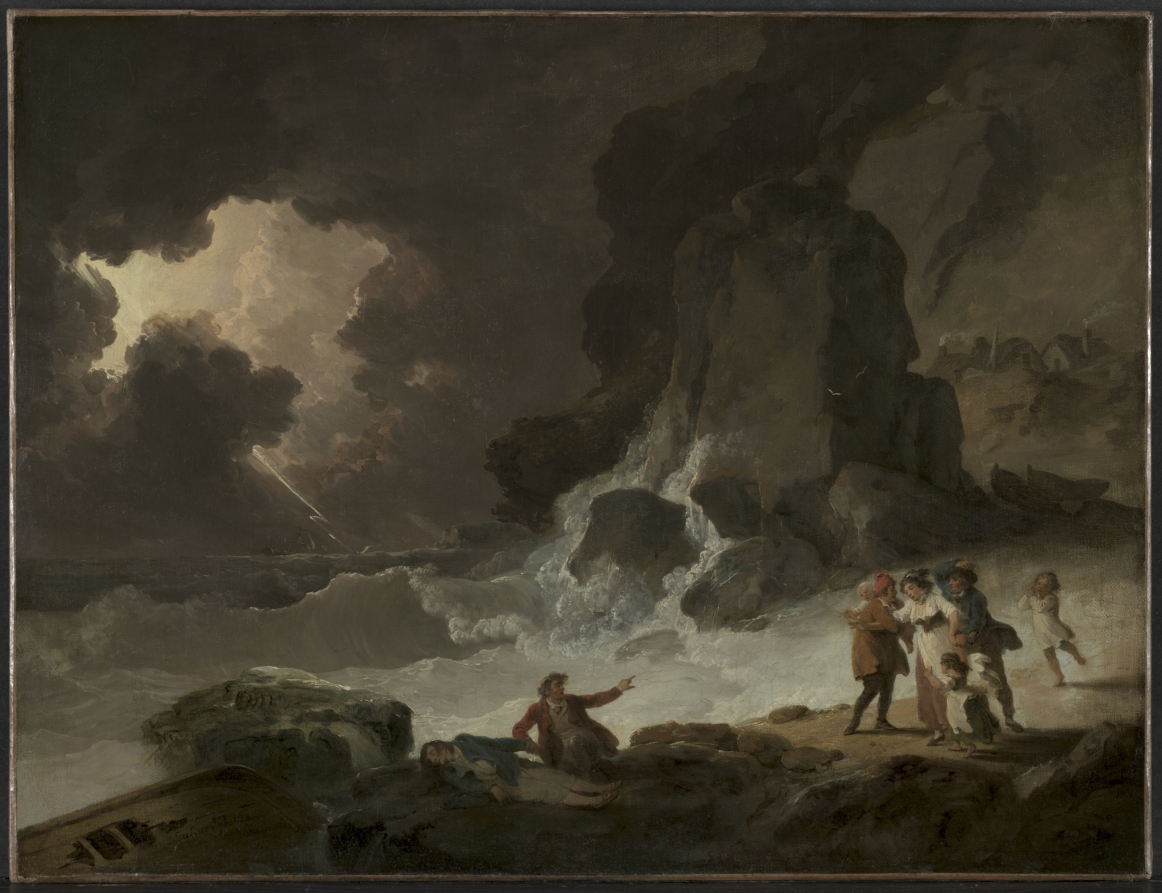
Julius Caesar Ibbetson · The Cleveland Museum of Art · Bequest of Henry W. Kent · CC0
- Name
- Julius C.
- Born
- 29 December 1759
- Died
- 13 October 1817
- Nationality
- United Kingdom of Great Britain and Ireland · Kingdom of Great Britain
- Occupation
- painter
- Fields
- landscape
- Languages
- English
VALÉORINE Encyclopedia
VALÉORINE documentary reading
Documentary summary
Julius Caesar Ibbetson (29 December 1759 – 13 October 1817) was a British 18th-century landscape and watercolour painter.
Admitted source layer · organised and presented by VALÉORINE
Reference Check
Propose documentary evidence for Julius Caesar Ibbetson. A contribution is never written directly as fact: identity, source, rights and evidence gates still decide.
Sign in to contribute
World of VALÉORINE
Documentary connections
Only confirmed graph relationships appear here. Images are shown only when their identity and reuse rights both pass the documentary gate.
Documentary evidence
Documentary basis
Authority files
wikidata · Q12060656 · wikipedia · Julius Caesar Ibbetson
In this article
Biography
Biography
The recorded working language is English. Subjects and genres recorded for the work are landscape. Work by Julius Caesar Ibbetson is recorded in the collections of National Gallery of Victoria, Auckland Art Gallery, Tate, Australian National Maritime Museum and Royal Museums Greenwich.
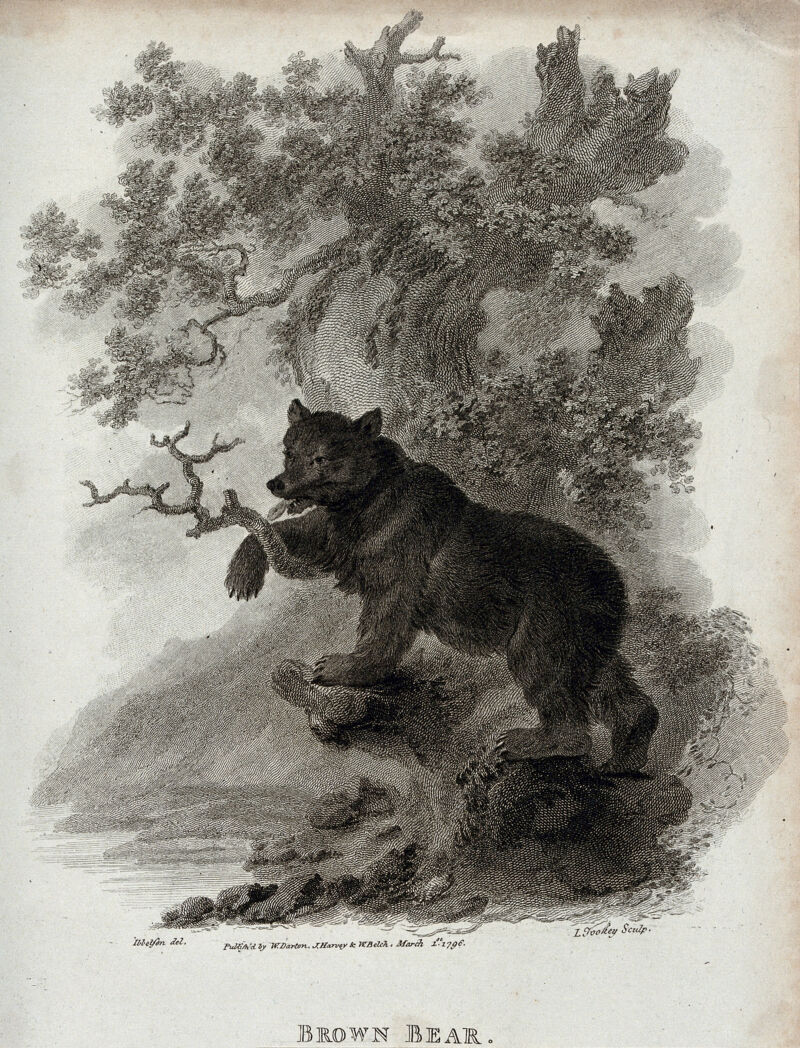
A brown bear climbing up a tree. Etching by J. Tookey after J. C. Ibbetson., 1 March 1796, by Julius Caesar Ibbetson
Julius Caesar Ibbetson · Wellcome Collection, London · Wellcome Collection
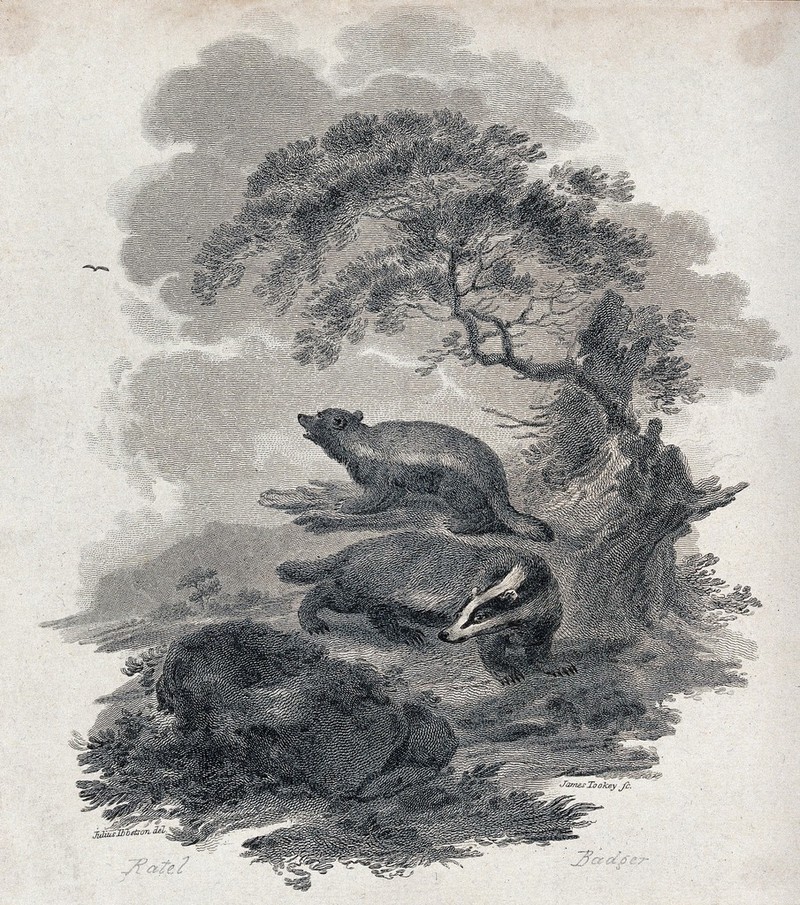
A badger and a ratel on a nocturnal hunt for prey in the forest. Etching by J. Tookey after J. C. Ibbetson., by Julius Caesar Ibbetson
Julius Caesar Ibbetson · Wellcome Collection, London · Wellcome Collection
Key facts
Key facts
• Name — Julius C. Ibbetson • Born — 29 December 1759 • Died — 13 October 1817
Early life and education
Early life and education
Ibbetson was born at Farnley Moor, Leeds. He was the second child of Richard Ibbetson, a clothier from Yorkshire. According to his Memoir, his mother fell on the ice and went into premature labour, causing him to be delivered by caesarean section and resulting in a middle name he attempted to hide throughout his life. Ibbetson was probably educated at a local Moravian community and then by Quakers in Leeds. According to James Mitchell in the Oxford Dictionary of National Biography, the "unusual thoroughness" of his education "is reflected in the fluent prose, both of his published painting manuals and of his regular, often entertaining, and rewarding correspondence with patrons". Ibbetson was apprenticed to John Fletcher, a ship painter in Hull, from 1772 to 1777. He then moved to London, where for the next ten years he was primarily a picture restorer for a Clarke of Leicester Fields. In 1782 wrote an account of his life, and sent it to the artist Benjamin West which was transcribed by Joseph Farington in 1805. Around 1780, Ibbetson married his first wife, Elizabeth.
Early work
Early work
In 1785, Ibbetson began exhibiting at the Royal Academy with View of North Fleet. Mitchell calls George Biggin (1783), which is one of his earliest known works, "an accomplished full-length portrait in the Gainsborough tradition, [which] should be considered as a milestone in the development of an artist who was entirely self-taught". Through the efforts of Captain William Baillie in 1787, Ibbetson was made draughtsman to Colonel Charles Cathcart on the first British embassy to Peking (Beijing); he made many watercolor drawings of the animals and plants on the journey. While he was away, his Ascent of George Biggin, esq. from St. George's Fields, June 29th 1785 was exhibited at the Royal Academy to great critical and popular acclaim. The painting depicted the ascent of a balloon, designed by Vincenzo Lunardi, from St George's Fields in London.
Later work
Later work
• Illustration — An 1803 portrait of Ibbetson's second wife, Bella, by Ibbetson himself In 1789, Ibbetson visited the Viscount Mountstuart at Cardiff Castle in Wales. He spent decades drawing the scenery there and, according to Mitchell, "[h]is detailed watercolours of iron furnaces, coal staithes, and copper mines foreshadow the work of Joseph Wright of Derby and J. M. W. Turner and constitute an important record of the early industrial developments in that region, but are less well known than his more numerous scenes of folk life and picturesque scenery." After a visit to the Isle of Wight in 1790, he began painting shipwrecks and smugglers. David Murray, 2nd Earl of Mansfield, and his wife commissioned Ibbetson to decorate Kenwood House, in 1794. This distracted him from the death of his wife and caring for their three children. Her death had "provoked a minor nervous breakdown, exacerbated by near destitution", but the Kenwood project relieved that stress. Four years later, he moved to Liverpool to work for Thomas Vernon. In 1801 he married his second wife, Bella Thompson in Grasmere, Westmorland. They settled in Ambleside and became friendly with the Lake Poets including William Wordsworth and Samuel Taylor Coleridge who became godfather to their daughter Caroline Bella Ibbetson. There are paintings by Ibbetson at Dove Cottage, Grasmere. Ibbetson acquired several generous patrons in Liverpool and in Edinburgh: William Roscoe, Sir Henry Nelthorpe, and the Countess of Balcarres. The last prompted him to write and publish his instruction manual An Accidence, or Gamut, of Painting in Oil (1803). In 1803, he met the Yorkshire philanthropist William Danby and in 1805 moved to Masham to be near him. The next 14 years of his life were the most settled of his life.
Selected gallery
Selected gallery
• Illustration — George Biggins' Ascent in Lunardi' Balloon (1785), Neue Pinakothek • Illustration — A beached collier unloading into carts (1790), Royal Museums Greenwich • Illustration — Phaëton in a Thunderstorm (1798), Leeds Art Gallery • Illustration — View of Skiddaw from the Head of Derwentwater (1798), Museum of the Shenandoah Valley • Illustration — Sailors Carousing (1802), National Maritime Museum
Places
Named by the record
Places
Only places the record itself states, plotted where the house gazetteer settles their coordinates. Nothing is inferred from a name or a nationality.
Leeds.
Birth place
Masham.
Death place
Death and legacy
Ibbetson died on 13 October 1817 and was buried in the churchyard of St Mary's, Masham. Benjamin West described Ibbetson as the "Berchem of England" in recognition of his debt to the Dutch 17th century landscape painters. According to Mitchell, "[h]is watercolours are prized for their delicacy and sureness of line." Many were engraved for projects such as John Church's A Cabinet of Quadrupeds and John Boydell's Shakespeare Gallery. Samuel Haslem Scott described him as "a portly, jovial person."
Primary material
Documents and archives
reference work
- “Julius Caesar Ibbetson”, English Wikipedia, consulted as further reading
Reputable secondary · Wikipedia
authority record
- Wikidata, structured authority record Q12060656: Julius Caesar Ibbetson
General reference · Wikidata
Citations
References
Each reference names the institution holding it, so a reader may go to the document itself.
reference work
Secondary witnessauthority record
General reference
The Encyclopedia exists whether or not anything is for sale. Corrections are recorded rather than overwritten, and every version of this record is kept. Published 18 August 2026.
Elsewhere in Paintings
19,183 published records in this field, each with its sources named.
- Júlio PomarArtist
- Julio Romero de TorresArtist
- Julio VieraArtist
- Julio Vila y PradesArtist
- Julius DöringArtist
- Julius ExnerArtist
- Julius FriedlænderArtist
- Julius GeertzArtist
Best supported in this field
For owners
Own a work by Julius Caesar Ibbetson?
A specialist will read what you send and tell you what the house can establish, what it cannot, and whether the object is suited to sale. There is no charge and no obligation. The object stays with you throughout; nothing is shipped to us unless it is arranged in writing beforehand.