
Philips Koninck
Philips Koninck (5 November 1619 – 4 October 1688), also spelled Philip de Koninck, was a Dutch landscape painter and younger brother of Jacob Koninck. Koninck was the son of the jeweler Aert Koninck. He was married twice; in 1641 with Cornelia, a sister of Abraham Furnerius, living in Rotterdam, and in 1657 with Margaretha van Rhijn from Amsterdam.
Also recorded as Philips de Koening · Philips de Krowning · Philips de Conigne · Philips Aertsz. Koninck
Philips Koninck
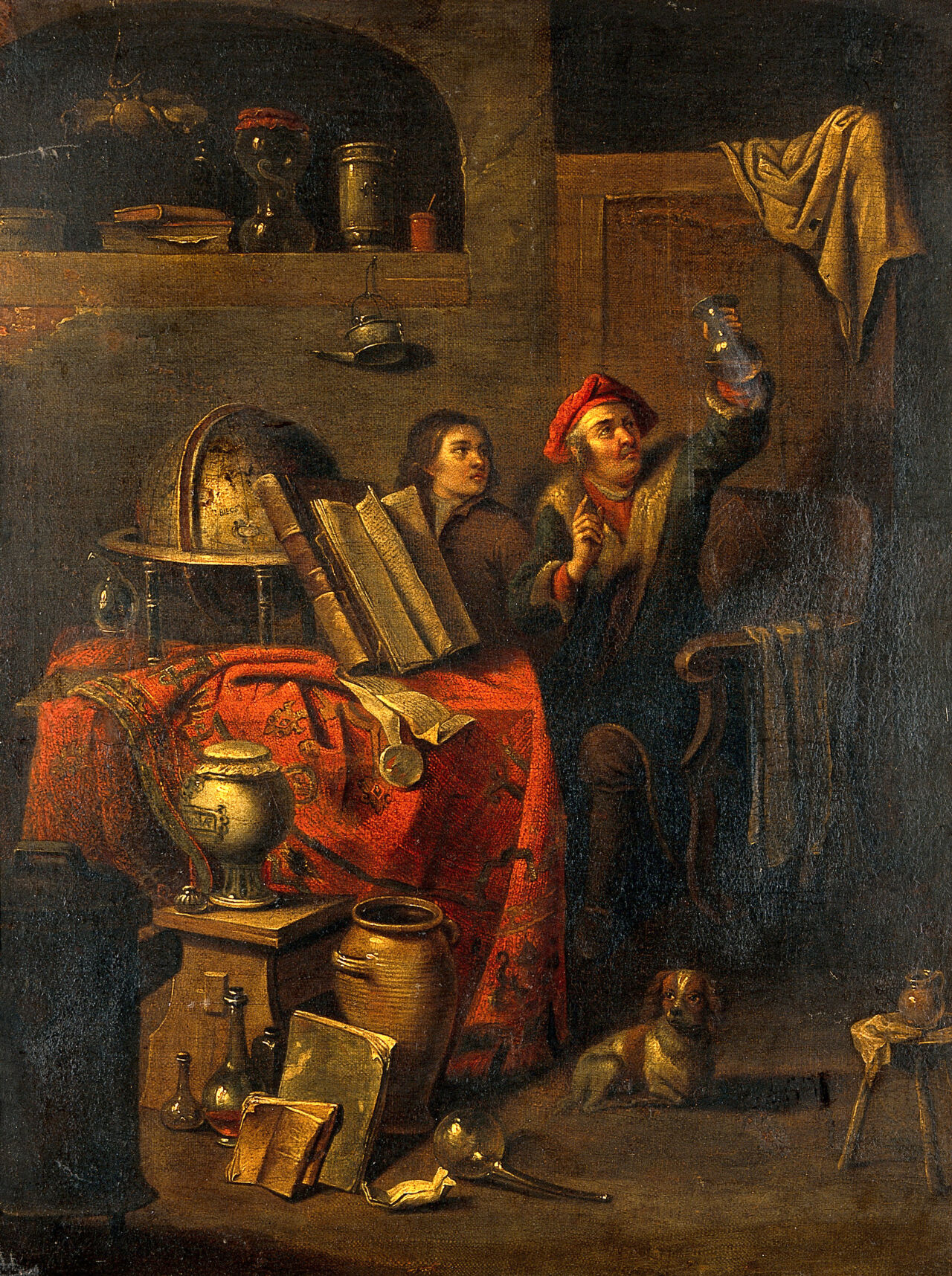
Philips Koninck · Wellcome Collection, London · Wellcome Collection · Public Domain Mark
- Name
- Philips Koninck
- Born
- 5 November 1619
- Birthplace
- Amsterdam
- Died
- 4 October 1688
- Nationality
- Dutch Republic
- Occupation
- painter
- Fields
- landscape
- Teachers
- Rembrandt
- Known for
- River landscape · The entrance to the woods · Joost van den Vondel (1587–1679). Poet · The Feast of Bacchus
- Languages
- Dutch
VALÉORINE Encyclopedia
VALÉORINE documentary reading
Documentary summary
Philips Koninck (5 November 1619 – 4 October 1688), also spelled Philip de Koninck, was a Dutch landscape painter and younger brother of Jacob Koninck. Koninck was the son of the jeweler Aert Koninck. He was married twice; in 1641 with Cornelia, a sister of Abraham Furnerius, living in Rotterdam, and in 1657 with Margaretha van Rhijn from Amsterdam.
Admitted source layer · organised and presented by VALÉORINE
Note VALÉORINE
Philips Koninck was a painter, of Dutch nationality. The painter was born in Amsterdam and died in Amsterdam. Philips Koninck worked in Amsterdam and Rotterdam.
Among the works are River landscape, The entrance to the woods and The Feast of Bacchus. The work spans landscape. Languages used include Dutch. Works are held at Museum Boijmans Van Beuningen, National Gallery of Canada and Nationalmuseum, among others.
Composed from admitted, traceable facts · 01 October 2026
VALÉORINE
Reference Check
Propose documentary evidence for Philips Koninck. A contribution is never written directly as fact: identity, source, rights and evidence gates still decide.
Sign in to contribute
World of VALÉORINE
Documentary connections
Only confirmed graph relationships appear here. Images are shown only when their identity and reuse rights both pass the documentary gate.
Documentary evidence
Documentary basis
Authority files
wikidata · Q166379 · wikipedia · Philips Koninck
In this article
Biography
Biography
Philip studied painting under his brother Jacob in Rotterdam. After his second marriage he moved to Amsterdam. According to the Dutch writer on art Arnold Houbraken, Koninck completed his training in Rembrandt’s studio in Amsterdam. In the late 1640s, Koninck, began to paint panoramas, his canvases divided in half, horizontally, between equal measures of earth and sky. Koninck was evidently much affected by Rembrandt etchings like 'The Goldweigher's Field', which looked across a broad sweep of country layered with bands of shade and light. Also the style of Hercules Segers is to be detected in his work. Impressionable and single-minded, Philips Koninck began to paint like this for the next decade, almost all his panoramas pieced together as if narrow ribbons of darkness and brightness had been laid across the canvas. He was a great success, enough of one, at any rate, to buy and operate a barge line that ran between Amsterdam and Rotterdam via Leiden, so that his business could travel through his own landscapes. He painted chiefly broad, sunny landscapes, full of space, light and atmosphere; they are seen from a high perspective, allowing a prominent view of the sky. Portraits by him, somewhat in the manner of Rembrandt, also exist (e.g. see Joost van den Vondel); there are examples of these in the galleries at Copenhagen and Oslo. Koninck, a prosperous businessman, living on Reguliersgracht, appears to have painted only a few pictures during the last decade of his life. Several of his works have been falsely attributed to Rembrandt and many more to his nephew Salomon de Koninck (1609–1656), a disciple of Rembrandt, whose paintings and etchings consist mainly of portraits and biblical scenes. He was also the uncle of the painters Jacob II and Daniel de Koninck. All of these painters are to be distinguished from David Koninck (1636?–1687), also known as Rammelaar. David Koninck was born in Antwerp and studied there under Jan Fyt. He later settled in Rome, where he is stated to have died in 1687; this, however, is doubtful. His pictures are chiefly landscapes with animals and still life.
Training under Rembrandt is recorded. The recorded working language is Dutch. Subjects and genres recorded for the work are landscape. Places of work recorded in the authority are Rotterdam and Amsterdam. Works named in the authority record are River landscape, The entrance to the woods, Joost van den Vondel (1587–1679). Work by Philips Koninck is recorded in the collections of Museum Boijmans Van Beuningen, Städel Museum, The Nelson-Atkins Museum of Art, Thyssen-Bornemisza Museum and J. Paul Getty Museum.
Key facts
Key facts
• Name — Philips Koninck • Born — 5 November 1619 • Birthplace — Amsterdam • Died — 4 October 1688 • Place of death — Amsterdam
Gallery
Gallery
• Illustration — An Extensive Landscape, with a River, 1664 • Illustration — The Feast of Bacchus, 1654
Life and career
Dated record
Life and career
The full dated record · 2 entries
1619
Philips Koninck was born on 13 November 1619.
1688
Philips Koninck died on 4 October 1688.
Places
Named by the record
Places
Only places the record itself states, plotted where the house gazetteer settles their coordinates. Nothing is inferred from a name or a nationality.
Philips Koninck was born at Amsterdam.
Birthplace
Philips Koninck died at Amsterdam.
Deathplace
Amsterdam.
Birth place
Primary material
Documents and archives
reference work
- “Philips Koninck”, English Wikipedia, consulted as further reading
Reputable secondary · Wikipedia
authority record
- Wikidata, structured authority record Q166379: Philips Koninck
General reference · Wikidata
Notes from the source article
Cited by Wikipedia
Notes from the source article
These works are cited by the source article, in its own numbering. They are recorded as its citations, not as sources VALÉORINE has verified.
- 1.Netherlands Institute for Art History, RKD. Philips Koninck.
- 2.Liedtke, Walter. Dutch Paintings in The Metropolitan Museum of Art. Metropolitan Museum of Art. 404. 2007.
- 3.Indexen.
- 4.Thyssen-Bornemisza Museum. Philips Koninck.
- 5.Schama, Simon. Rembrandt's Eyes. Alfred A. Knopf. 562. 1999. 978-0-6794-0256-5.
References
Citations
References
Each reference names the institution holding it, so a reader may go to the document itself.
reference work
Secondary witnessauthority record
General reference
Further particulars
Held on the record
Further particulars
Open the remaining particulars
The authorities additionally record the headings Philips de Koening, Philips de Krowning, Philips de Conigne, Philips Aertsz. His recorded language was Dutch. Work and production. His recorded genre is landscape. Recorded as a citizen of Dutch Republic. Classed in the genre landscape painting. Recorded with the occupation painter.
Identity and origins
Koninck and Philips de Conink
Poet and The Feast of Bacchus
Recognition and collections
Work by Philips Koninck is
Museum Boijmans Van Beuningen, Städel Museum, The Nelson-Atkins Museum of Art and Thyssen-Bornemisza Museum
The Encyclopedia exists whether or not anything is for sale. Corrections are recorded rather than overwritten, and every version of this record is kept. Published 17 August 2026.
Elsewhere in Paintings
18,792 published records in this field, each with its sources named.
- Philippe-Auguste JeanronArtist
- Philippe-Jacques van BreeArtist
- Philips AngelArtist
- Philips de MarlierArtist
- Philomé ObinArtist
- Philotheos SkoufosArtist
- Philoxenus of EretriaArtist
- Phoebe Amelia WatsonArtist
Best supported in this field
For owners
Own a work by Philips Koninck?
A specialist will read what you send and tell you what the house can establish, what it cannot, and whether the object is suited to sale. There is no charge and no obligation. The object stays with you throughout; nothing is shipped to us unless it is arranged in writing beforehand.