
John Wootton
John Wootton (c. 1686 – 13 November 1764) was an English painter of sporting subjects, battle scenes and landscapes, and illustrator. • Illustration — George II at the Battle of Dettingen, 1743 • Illustration — A View of Henley-on-Thames, 1743 • Illustration — The Duke of Hamilton's Grey Racehorse, 'Victorious,' at Newmarket, c.
Also recorded as T. Wootton · John Woorton · John Woston · John Wootten
John Wootton
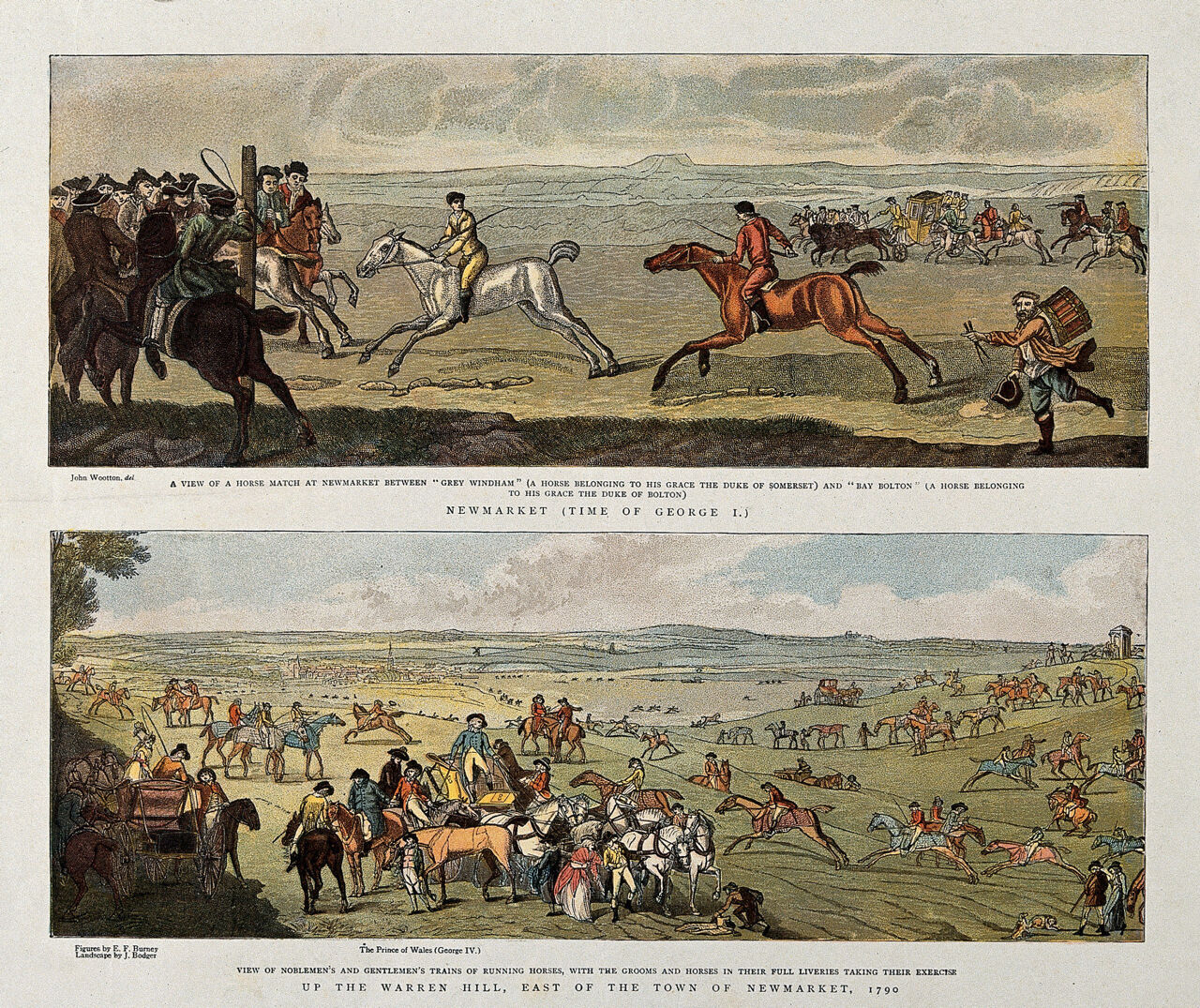
John Wootton · Wellcome Collection, London · Wellcome Collection · Public Domain Mark
- Name
- John Wootton
- Born
- c. 1686
- Birthplace
- Snitterfield, Warwickshire, England
- Died
- 13 November 1764
- Place of death
- London, England
- Field
- Painting
- Nationality
- Kingdom of Great Britain.
- Occupation
- painter and illustrator.
- Fields
- painting.
- Movements
- realism.
- Languages
- English.
Reference Check
Propose documentary evidence for John Wootton. A contribution is never written directly as fact: identity, source, rights and evidence gates still decide.
Sign in to contribute
World of VALÉORINE
Documentary connections
Only confirmed graph relationships appear here. Images are shown only when their identity and reuse rights both pass the documentary gate.

Documentary evidence
Documentary basis
Authority files
wikidata · Q600088 · wikipedia · John Wootton
In this article
Biography
Biography
The recorded working language is English. The field of work recorded is painting. Subjects and genres recorded for the work are portrait and landscape. Places of work recorded in the authority are London and Rome. Work by John Wootton is recorded in the collections of Tate, Metropolitan Museum of Art, Fine Arts Museums of San Francisco, Minneapolis Institute of Art and Hermitage Museum.
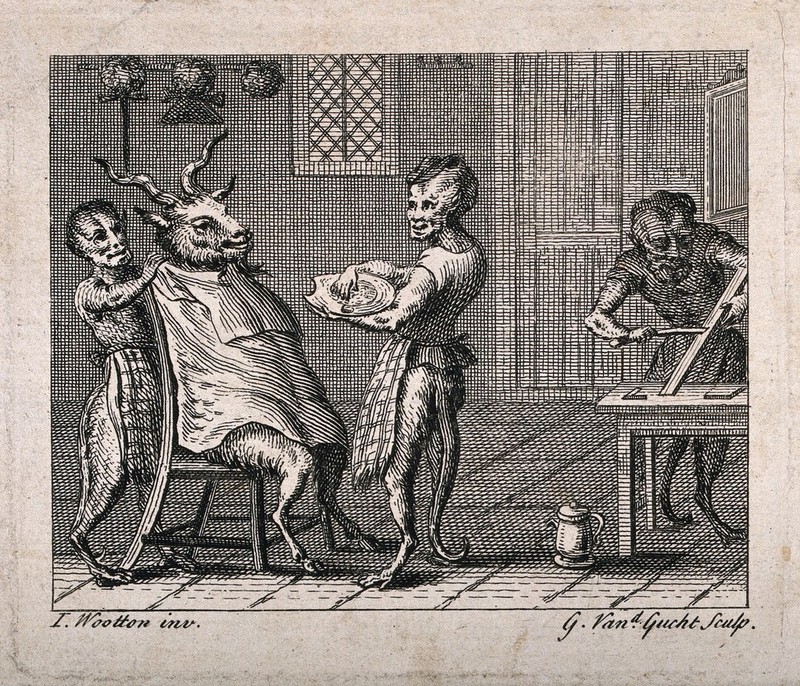
Half-human, half-monkey barbers shaving a goat. Etching by G. van der Gucht after J. Wootton., 1700-1799, by John Wootton
John Wootton · Wellcome Collection, London · Wellcome Collection
Key facts
Key facts
• Name — John Wootton • Born — c. 1686 • Birthplace — Snitterfield, Warwickshire, England • Died — 13 November 1764 • Place of death — London, England • Field — Painting
Life
Life
Born in Snitterfield, Warwickshire (near Stratford-upon-Avon), he is best remembered as a pioneer in the painting of sporting subjects – together with Peter Tillemans and James Seymour – and was considered the finest practitioner of the genre in his day. As such, his paintings were very fashionable and were sought after by those among the highest strata of the British society. These included figures such as George II of Great Britain, Frederick, Prince of Wales, and the Duke of Marlborough. It is likely that he received artistic training from Jan Wyck before 1700. Wootton may have begun life as a page to the family of the Dukes of Beaufort. His earliest surviving dated work is the equine portrait Bonny Black (1711). He remained active until his death in 1764, based in the capital of English horse racing at Newmarket, and producing large numbers of portraits of horses and also conversation pieces with a hunting or riding setting. He acquired a classicising landscape style based on that of Gaspard Dughet, which he used in some pure landscape paintings, as well as views of country houses and equine subjects. This introduced an alternative to the various Dutch and Flemish artists who had previously set the prevailing landscape style in Britain, and through intermediary artists such as George Lambert, the first British painter to base a career on landscape subjects, was to greatly influence other British artists such as Gainsborough. He is now somewhat eclipsed in the field of animal paintings by the later George Stubbs (1724–1806), who is considered technically superior. John Wootton died in London on 13 November 1764. Examples of his animal painting can be found in the Tate Gallery, London, the Virginia Museum of Fine Arts, Richmond, the Yale Center for British Art, in the Elizabethan Great Hall at Longleat and in The Portland Collection at the Harley Gallery and Foundation. • Illustration — Frederick, Prince of Wales in the Hunting Field, 1734 • Illustration — The Siege of Lille, 1742
Life and career
Dated record
Life and career
The full dated record · 2 entries
1682
John Wootton born at Snitterfield.
1764
John Wootton died at London.
Places
Named by the record
Places
Only places the record itself states, plotted where the house gazetteer settles their coordinates. Nothing is inferred from a name or a nationality.
Snitterfield.
Birth place
London.
Death place
Text attribution
Licensing
Text attribution
Part of the biographical narrative on this page reuses licensed material. Its origin, revision and licence are recorded here.
The biographical narrative on this page is based on the Wikipedia article John Wootton, revision 1370438635 (EN edition), by its contributors. VALÉORINE has edited that text and built its own documentary record around it. The reused material is available under CC BY-SA 4.0, and this page's reuse of it is offered under the same licence. Everything else on this page — the chronology, the holdings, the evidence, the plates and the connections — is VALÉORINE's own record. Sources and licences.
References
Citations
References
Each reference names the institution holding it, so a reader may go to the document itself.
reference work
Wikidata, structured authority record Q600088: John WoottonWikimedia Foundation
Secondary witnessreference work
Secondary witness
The Encyclopedia exists whether or not anything is for sale. Corrections are recorded rather than overwritten, and every version of this record is kept. Published 16 August 2026.
Elsewhere in Illustration
5,224 published records in this field, each with its sources named.
- John van DykeIllustrator
- John Vernon LordIllustrator
- John VinycombIllustrator
- John Woodhouse AudubonIllustrator
- John Wykeham ArcherIllustrator
- John ZeleznikIllustrator
- Johnny CraigIllustrator
- Joke van LeeuwenIllustrator
Best supported in this field
For owners
Own a work by John Wootton?
A specialist will read what you send and tell you what the house can establish, what it cannot, and whether the object is suited to sale. There is no charge and no obligation. The object stays with you throughout; nothing is shipped to us unless it is arranged in writing beforehand.