
John Murray Anderson
Illustration — Anderson c. 1915–20 John Murray Anderson (September 20, 1886 – January 30, 1954) was a Canadian theatre director and producer, songwriter, actor, screenwriter, dancer and lighting designer, who made his career in the United States, primarily in New York City and Hollywood. He worked in almost every genre of show business, including vaudeville, Broadway, and film.
John Murray Anderson
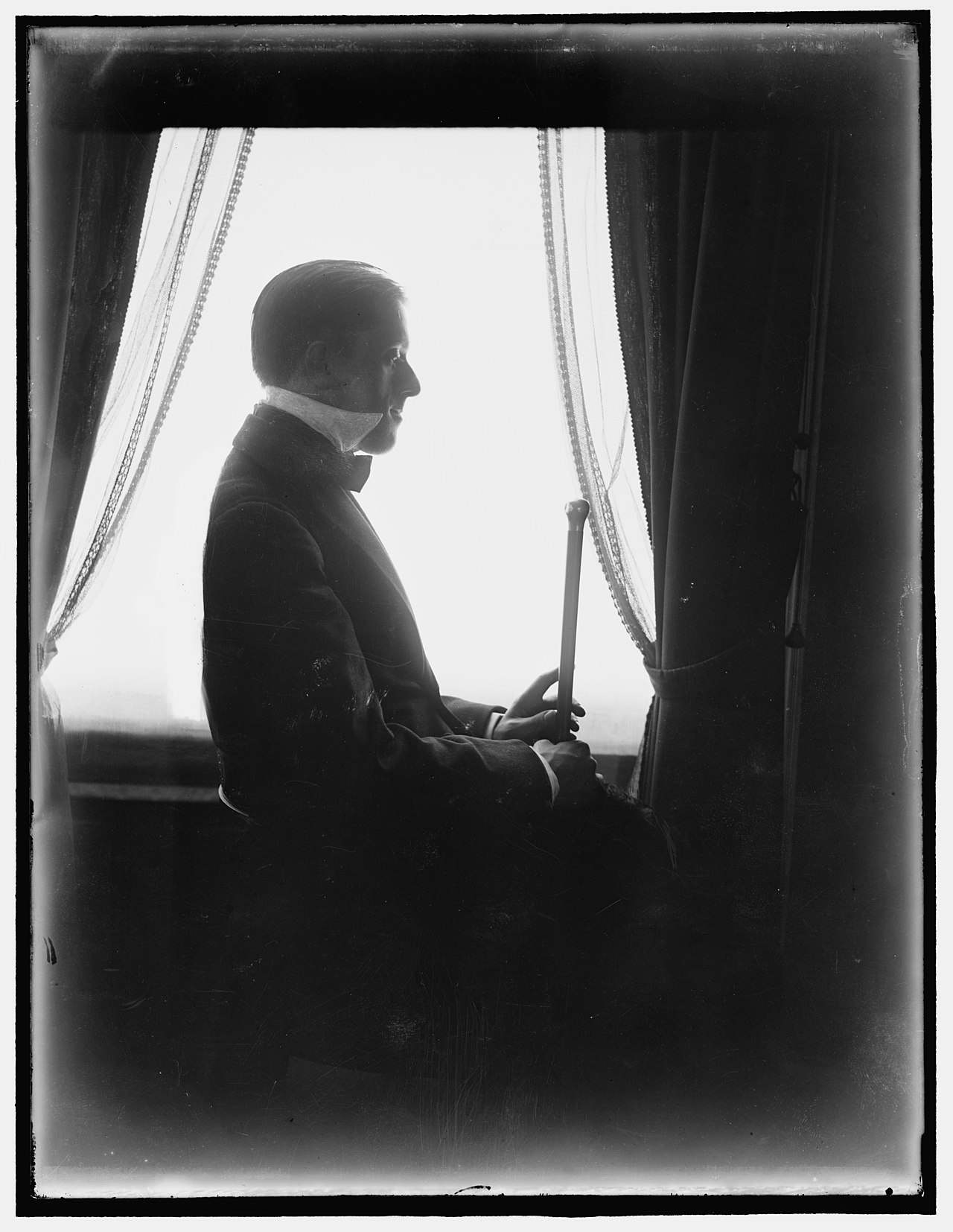
Gertrude Käsebier · This image is available from the United States Library of Congress 's Prints and Photographs division under the digital ID ppmsca.12074. This tag does not indicate the copyright status of the attache · Public domain
- Born
- 1886 · St. John's.
- Nationality
- Canada
- Occupation
- screenwriter · librettist · songwriter · lighting designer · director
- Education
- Bishop Feild College · University of Lausanne
VALÉORINE Encyclopedia
VALÉORINE documentary reading
Documentary summary
Illustration — Anderson c. 1915–20 John Murray Anderson (September 20, 1886 – January 30, 1954) was a Canadian theatre director and producer, songwriter, actor, screenwriter, dancer and lighting designer, who made his career in the United States, primarily in New York City and Hollywood. He worked in almost every genre of show business, including vaudeville, Broadway, and film.
Admitted source layer · organised and presented by VALÉORINE
Reference Check
Propose documentary evidence for John Murray Anderson. A contribution is never written directly as fact: identity, source, rights and evidence gates still decide.
Sign in to contribute
World of VALÉORINE
Documentary connections
Only confirmed graph relationships appear here. Images are shown only when their identity and reuse rights both pass the documentary gate.
Documentary evidence
Documentary basis
Authority files
wikidata · Q6249965 · wikipedia · John Murray Anderson
In this article
Early life and education
Early life and education
He also directed plays in London.
John Murray Anderson was born in 1886 in St. John's, Newfoundland, the son of Hon. John Anderson and his wife. His brother was Hugh Abercrombie Anderson. Anderson received his early education at Bishop Feild College in St. John's. He was sent to Europe for additional studies at Edinburgh Academy in Scotland, where he studied to be a chartered accountant. He entered college at the University of Lausanne in Switzerland. Later, he also studied singing with Sir Charles Santley and art with Sir Herbert Beerbohm Tree in London.
Career
Career
After completing studies in Europe, Anderson moved to New York City, where he became an antiques dealer. He sold collections he had accumulated in Newfoundland. This lasted a year; as Anderson said, he had "everything but customers" in his store. In New York, Anderson quickly became involved in theatre, first as a dance instructor. He later became a writer and producer. He made his Broadway debut in 1919 wearing three hats, as writer, director, and producer of The Greenwich Village Follies of 1919. He subsequently produced new editions of The Greenwich Village Follies in each of the five succeeding years. In 1929, he would direct Murray Anderson's Almanac (1929). In the 1920s and early 1930s, with Robert Milton, Anderson ran an acting school in Manhattan, teaching Bette Davis and Lucille Ball, among others. He and Davis remained good friends. • Illustration — Anderson in 1918 Anderson produced the Ziegfeld Follies in 1934, 1936, and 1943, the Harold Arlen-Ira Gershwin-E. Y. Harburg revue Life Begins at 8:40 (1934), Billy Rose's Jumbo (1935), the series by Nancy Hamilton of One for the Money (1939), Two for the Show (1940), and Three to Make Ready (1946). When his former student form his acting academy, Bette Davis, had to deal with her 1952 Broadway-bound revue Two's Company running into problems on the road, she hired Anderson to restage it. In that same year, he had produced New Faces of 1952. The following year, he would create a new version of his 1929 show with John Murray Anderson's Almanac (1953), which was his last production.
London stage
London stage
He also directed productions in London; in the West End, he directed The League of Notions, Bow Bells, and Fanfare.
Radio City Music Hall, revues, and various venues
Radio City Music Hall, revues, and various venues
Anderson worked as a director at Radio City Music Hall in 1933, as director of the Casa Mañana Revue at the Fort Worth Frontier Centennial in 1936, and at the Great Lakes Exposition in Cleveland, Ohio in 1937. He directed Billy Rose's Diamond Horseshoe from 1938 to 1950, and productions for Ringling Brothers Circus from 1942 to 1951.
Marriage and family
Marriage and family
In 1914, Anderson married Genevieve Lyon of Chicago; she died of tuberculosis in 1916. They had no children. Anderson regularly visited his family and friends in Newfoundland throughout his life.
Autobiography
Autobiography
In the year before his death, Anderson collaborated with his brother Hugh as writer. He dictated his autobiography, Out Without My Rubbers, published posthumously in 1954. He died of a heart attack in New York City on January 30, 1954.
In popular media
In popular media
• Out Without My Rubbers (autobiography), 1954, New York: Library Publishers • A musical about the life of John Murray Anderson called Impresario was written by Kyle McDavid and first performed at the LSPU Hall in St. John's, Newfoundland in May 2017.
Identity
Identity
John Murray Anderson is recorded as screenwriter, librettist, songwriter, lighting designer and director.

John Murray Anderson in 1918
Bain · Library of Congress
![Bain News Service, publisher. J.M. Wadsworth [between ca. 1915 and ca. 1920] 1 negative: glass; 5 x 7 in. or smaller.](https://upload.wikimedia.org/wikipedia/commons/thumb/7/79/J.M._Anderson_LOC_29564644715.jpg/800px-J.M._Anderson_LOC_29564644715.jpg)
Bain News Service, publisher. J.M. Wadsworth [between ca. 1915 and ca. 1920] 1 negative: glass; 5 x 7 in. or smaller.
The Library of Congress · This image is available from the United States Library of Congress 's Prints and Photographs division under the digital ID ggbain.27650. This tag does not indicate the copyright status of the attache
Life and career
Dated record
Life and career
The full dated record · 1 entries
1954
John Murray Anderson died at New York City.
Places
Named by the record
Places
Only places the record itself states, plotted where the house gazetteer settles their coordinates. Nothing is inferred from a name or a nationality.
St. John's.
Birth place
New York City.
Death place
Film
Anderson worked in Hollywood as well. He directed the film King of Jazz (1930), wrote the screenplay for Ziegfeld Follies (1946), directed the water ballets in Bathing Beauty (1944), and directed the circus sequences in The Greatest Show on Earth (1952), as well as had written the lyrics for the following songs in the film in collaboration with Henry Sullivan, many of which were performed off camera: • Song and Authorship • Picnic in the Park. From the film The Greatest Show on Earth. Words: John Murray Anderson, music: Henry Sullivan. — 1951 • You Can't Say Goodbye to Hawaii. From the motion picture entitled The Greatest Show on Earth. Words: John Murray Anderson, music: Henry Sullivan. — 1951 • Sing a Happy Song. From The Greatest Show on Earth. Words: John Murray Anderson, music: Henry Sullivan. — 1952 • Popcorn and Lemonade. From The Greatest Show on Earth. Words: John Murray Anderson, music: Henry Sullivan. — 1952
Citations
References
Each reference names the institution holding it, so a reader may go to the document itself.
reference work
Secondary witnessreference work
Secondary witness
The Encyclopedia exists whether or not anything is for sale. Corrections are recorded rather than overwritten, and every version of this record is kept. Published 18 August 2026.
Elsewhere in Film memorabilia
37,310 published records in this field, each with its sources named.
- John MiliusPerson
- John MiljanPerson
- John MillsPerson
- John Moulder-BrownPerson
- John MuskerPerson
- John N. SmithPerson
- John NeumeierPerson
- John Nevil MaskelynePerson
Best supported in this field
For owners
Own a work by John Murray Anderson?
A specialist will read what you send and tell you what the house can establish, what it cannot, and whether the object is suited to sale. There is no charge and no obligation. The object stays with you throughout; nothing is shipped to us unless it is arranged in writing beforehand.