
John Buckler
John Buckler, Snr (30 November 1770 – 6 December 1851) was a British artist and occasional architect who is best remembered for his many drawings of churches and other historic buildings, recording much that has since been altered or destroyed.
John Buckler
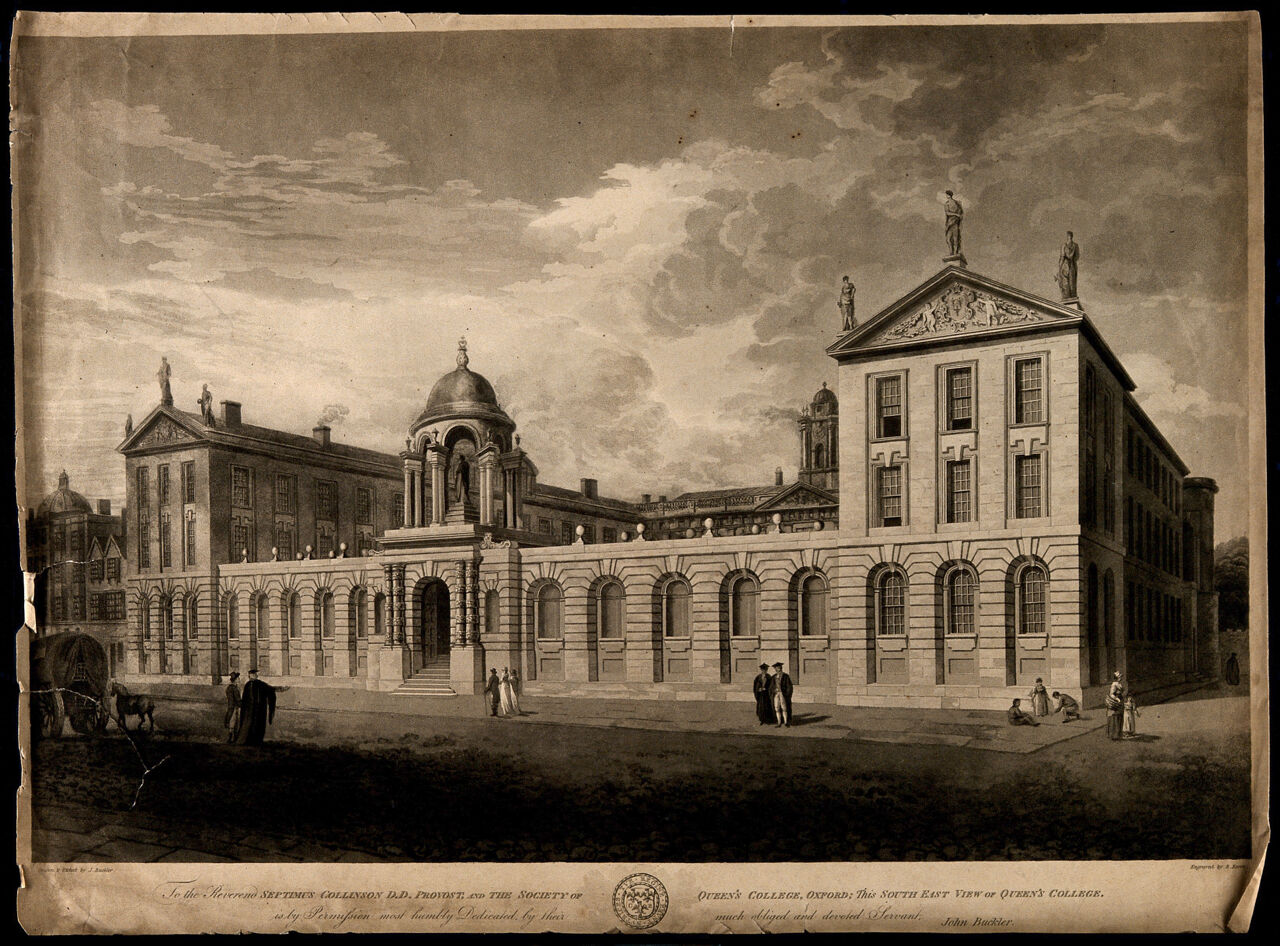
John Buckler · Wellcome Collection, London · Wellcome Collection · Public Domain Mark
- Name
- John Buckler
- Born
- 30 November 1770
- Birthplace
- Calbourne, Isle of Wight, England
- Died
- 6 December 1851
- Place of death
- Newington, London, England
- Nationality
- United Kingdom of Great Britain and Ireland · Kingdom of Great Britain
- Occupation
- architect · artist
- Honours
- Fellow of the Society of Antiquaries
- Languages
- English
VALÉORINE Encyclopedia
VALÉORINE documentary reading
Documentary summary
John Buckler, Snr (30 November 1770 – 6 December 1851) was a British artist and occasional architect who is best remembered for his many drawings of churches and other historic buildings, recording much that has since been altered or destroyed.
Admitted source layer · organised and presented by VALÉORINE
Note VALÉORINE
John Buckler (1770–1851) was an architect, artist and visual artist, of British and British nationality. The architect was born in Calbourne and died in Newington. John Buckler worked in London and Oxford.
Languages used include English. Works are held at National Library of Wales and Yale Center for British Art. Honours include Fellow of the Society of Antiquaries.
Composed from admitted, traceable facts · 26 September 2026
VALÉORINE
Reference Check
Propose documentary evidence for John Buckler. A contribution is never written directly as fact: identity, source, rights and evidence gates still decide.
Sign in to contribute
World of VALÉORINE
Documentary connections
Only confirmed graph relationships appear here. Images are shown only when their identity and reuse rights both pass the documentary gate.
Documentary evidence
Documentary basis
Authority files
wikidata · Q6223764
In this article
Biography
Biography
The recorded working language is English. Places of work recorded in the authority are London and Oxford. Work by John Buckler is recorded in the collections of National Library of Wales and Yale Center for British Art. Distinctions recorded are Fellow of the Society of Antiquaries.
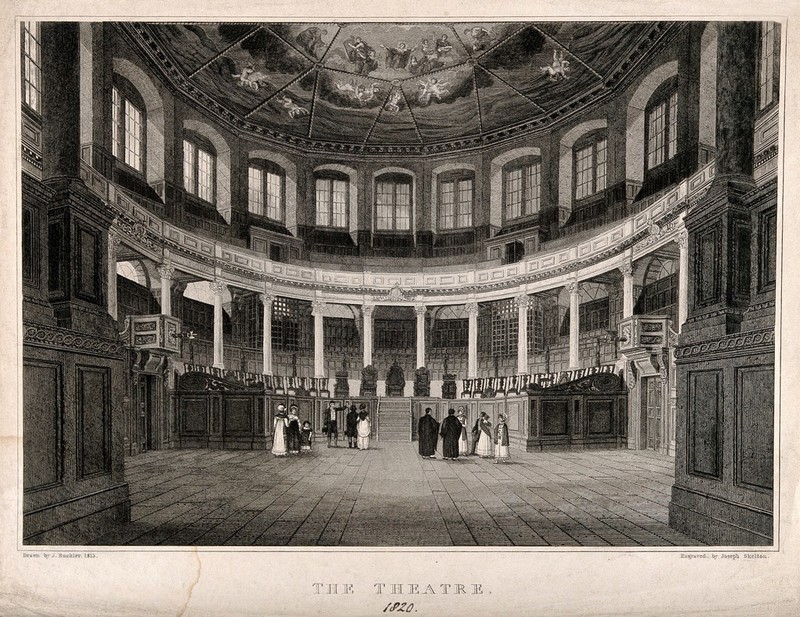
Sheldonian Theatre,
John Buckler · Wellcome Collection, London · Wellcome Collection
Key facts
Key facts
• Name — John Buckler • Birth Name — John Buckler • Born — 30 November 1770 • Birthplace — Calbourne, Isle of Wight, England • Died — 6 December 1851 • Place of death — Newington, London, England • Children — John Chessell Buckler (son) • Relatives — Charles Alban Buckler (grandson) • Illustration — One of Buckler's drawings of Ely Cathedral
Biography
Biography
Buckler was born in Calbourne, Isle of Wight. At the age of 15 he became clerk to the steward of Magdalen College, Oxford and began a lifelong involvement in the management of the college's London estates. After several years working on plans for new buildings, around 1801 he became bailiff and collector of rents for Magdalen College in Freeman's Court, London, and in Southwark, and held this post until his retirement in 1849. The work for the college allowed him ample free time, and he also practised as an architect until 1830, designing buildings such as Halkyn Castle, Flint (1822–27) for Robert Grosvenor, 2nd Earl Grosvenor (later created Marquess of Westminster) the tower of the church in Theale, Berkshire (1827–28). Glastonbury Priory, also called Abbey House, Somerset (1829–30) for J.F. Reeves, and Poll Park, Denbighshire (c. 1828), for William Bagot, 2nd Baron Bagot, "an early essay in the half-timbered style", according to Howard Colvin, who suggested that Buckler had a hand in the Gothic remodelling of Blithfield Hall, Staffordshire, for Lord Bagot, 1822–23. He or his son also designed the church of St John the Baptist, Pentrobin (now Penymynydd), in the County of Flintshire, 1843, for Sir Stephen Glynne, as one of the first Gothic Revival churches that came out of the Cambridge Camden Society. • Illustration — The Holy Trinity Church in Theale, Berkshire. The tower was designed by John Buckler. Buckler's interest in art developed over time, and his first published works were two aquatints of Magdalen College in 1797. He followed these in 1799 with an engraving of Lincoln Cathedral; the first in a series which included all the cathedrals in England by 1814, as well as many of the collegiate and parish churches. Shortly after 1800 he was commissioned by Richard Colt Hoare of Stourhead to produce ten volumes of drawings of churches and other historic buildings in Wiltshire, and Buckler's grandson described this commission as "deciding his brains for antiquarian pursuits". It was followed by similar commissions from other antiquarians, such as William Salt of Staffordshire, and by the end of his life, by his own account, Buckler had produced around 13,000 drawings of buildings. Many of the buildings Buckler drew had not been previously recorded, and many have since been demolished or substantially altered, so his work is now a valuable source of information on British architectural history. His work was exhibited at the Royal Academy every year from 1798 until 1849, and - after being twice-blackballed in 1808 and 1809 - he became a Fellow of the Society of Antiquaries of London in 1810. John Buckler died in Newington, London, in 1851, two years after his retirement. Forty-two volumes of his sketches are now held by the British Library; other places holding collections of his work include the Wiltshire Museum at Devizes, Taunton Museum, the William Salt Library in Stafford and the Bodleian Library in Oxford.
Family
Family
His eldest son, John Chessell Buckler (1793–1894), also an architect and artist, wrote several illustrated books on the history of British architecture, and his youngest son, George Buckler (1811–1886), and grandson Charles Alban Buckler (1825–1905) practised as architects as well.
Places
Named by the record
Places
Only places the record itself states, plotted where the house gazetteer settles their coordinates. Nothing is inferred from a name or a nationality.
Calbourne.
Birth place
Newington.
Death place
Notes from the source article
Cited by Wikipedia
Notes from the source article
These works are cited by the source article, in its own numbering. They are recorded as its citations, not as sources VALÉORINE has verified.
- 1.Colvin, 1997
- 2.Tyack, 2004
- 3.Cadw. Summary Description of a Listed Buildings – St John the Baptist's Church.
- 4.Staffordshire Views Collection. About the collection.
- 5.The Annual Register, Or, A View of the History and Politics of the Year 1851 (1852), London:George Woodfall & Son, p. 361.
- 6.Joshua Mardell (2022) "Blackballing Buckler: the Letters of John Buckler (1770-1851), the Carter School and the Foundations of an Antiquarian Dynasty", Antiquaries Journal, 102:418-446. doi:10.1017/S0003581522000038
- 7.Mixed with those of his son, J.C. Buckler, whose "pencil drawings of ancient buildings are almost indistinguishable in technique from those of his father" (Colvin).
- 8.Add. Mss. 36356-97
Bibliography printed in the source article · 2
- Colvin, H.M. A Biographical Dictionary of British Architects, 1600–1840. Yale University Press. not cited. 1995. 0-300-07207-4.
- Tyack, Geoffrey. Buckler, John (1770–1851).
References
Citations
References
Each reference names the institution holding it, so a reader may go to the document itself.
authority record
General reference
The Encyclopedia exists whether or not anything is for sale. Corrections are recorded rather than overwritten, and every version of this record is kept. Published 16 August 2026.
Elsewhere in Design
11,558 published records in this field, each with its sources named.
- John Black LeeDesigner
- John BrannerDesigner
- John Breedon EverardDesigner
- John BrownriggDesigner
- John BurgeeDesigner
- John C. CraigDesigner
- John C. Portman Jr.Designer
- John Carl WarneckeDesigner
Best supported in this field
For owners
Own a work by John Buckler?
A specialist will read what you send and tell you what the house can establish, what it cannot, and whether the object is suited to sale. There is no charge and no obligation. The object stays with you throughout; nothing is shipped to us unless it is arranged in writing beforehand.