
Johann Böhm
Johann Böhm (20 January 1895 – 27 November 1952) was a Czech chemist of German ethnicity who focused on photochemistry and radiography. The aluminum-containing mineral boehmite (or böhmite) was named after him.
Johann Böhm
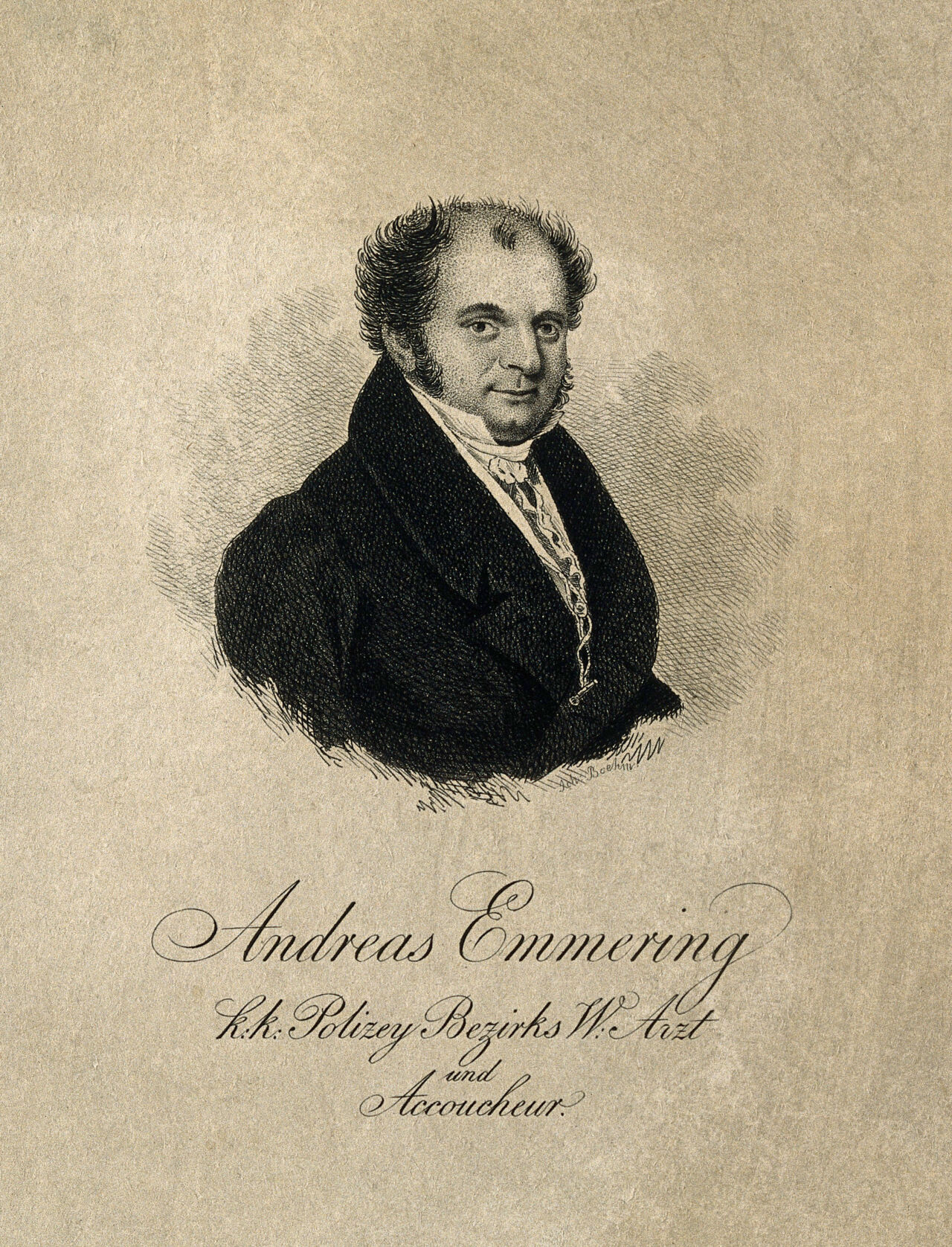
Johann Böhm · Wellcome Collection, London · Wellcome Collection · Public Domain Mark
- Name
- Johann Böhm
- Born
- 20 January 1895
- Birthplace
- České Budějovice, Bohemia, Austria-Hungary
- Died
- 27 November 1952
- Place of death
- Prague, Czechoslovakia
- Education
- German Polytechnic University in Prague
- Known for
- Boehmite
- Nationality
- Germany
- Occupation
- chemist · teacher · photographer · physicist
- Fields
- chemistry · physics · educational system
- Languages
- German · Czech · Germanic languages
VALÉORINE Encyclopedia
VALÉORINE documentary reading
Documentary summary
Johann Böhm (20 January 1895 – 27 November 1952) was a Czech chemist of German ethnicity who focused on photochemistry and radiography. The aluminum-containing mineral boehmite (or böhmite) was named after him.
Admitted source layer · organised and presented by VALÉORINE
Reference Check
Propose documentary evidence for Johann Böhm. A contribution is never written directly as fact: identity, source, rights and evidence gates still decide.
Sign in to contribute
World of VALÉORINE
Documentary connections
Only confirmed graph relationships appear here. Images are shown only when their identity and reuse rights both pass the documentary gate.

Documentary evidence
Documentary basis
Authority files
wikidata · Q517008
In this article
Biography
Biography
Johann Böhm studied at Czech Technical University in Prague and faculty of science, German University in Prague. The recorded working language is German, Czech and Germanic languages. The field of work recorded is chemistry, physics and educational system. Places of work recorded in the authority are Prague. Employment is recorded with Berlin.
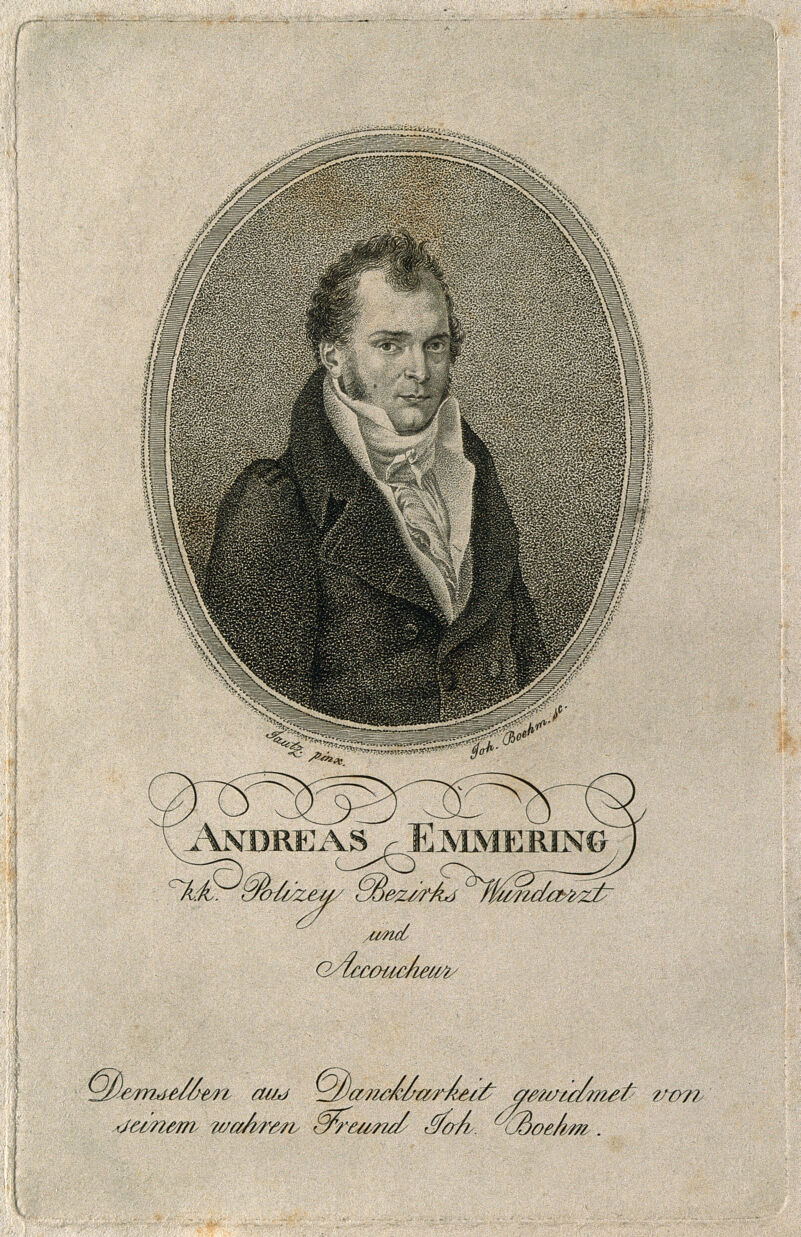
Andreas Emmering. Stipple engraving by J. Boehm after Jantz or Jautz., by Johann Böhm
Johann Böhm · Wellcome Collection, London · Wellcome Collection
Key facts
Key facts
• Name — Johann Böhm • Born — 20 January 1895 • Birthplace — České Budějovice, Bohemia, Austria-Hungary • Died — 27 November 1952 • Place of death — Prague, Czechoslovakia • Citizenship — Czechoslovak • Fields — Chemistry • Workplaces — Berlin, Freiburg, Prague, Rybitví • Education — German Polytechnic University in Prague • Known for — Boehmite
Biography
Biography
Böhm studied at the German Polytechnic University in Prague and then worked with Fritz Haber in Berlin where he re-designed and considerably improved the Weissenberg x-ray goniometer. In 1926, George de Hevesy, then a professor at the University of Freiburg, invited Böhm to co-operate with him on a series of experiments in spectrographic analysis. Afterwards Böhm worked at Freiburg University as an assistant and later as an associate professor. From October 1935 he was a professor of physical chemistry at the German University in Prague. After World War II Böhm was allowed to remain in the country and become again a citizen of Czechoslovakia because he had been active in the anti-Nazi movement supporting Czech scientists such as Jaroslav Heyrovský, but was not permitted to continue his academic career. He worked in an industrial research institute in Rybitví (Výzkumný ústav organických syntéz). A few days before his death he was appointed Corresponding Member of the Czechoslovak Academy of Sciences. He died in Prague on 27 November 1952.
Identity
Identity
Johann Böhm is recorded with the occupation chemist. Recorded as having studied at Czech Technical University in Prague and faculty of science, German University in Prague.
Life and career
Dated record
Life and career
The full dated record · 2 entries
1895
Johann Böhm born at České Budějovice.
1952
Johann Böhm died at Prague.
Places
Named by the record
Places
Only places the record itself states, plotted where the house gazetteer settles their coordinates. Nothing is inferred from a name or a nationality.
České Budějovice.
Birth place
Prague.
Death place
Literature
Scholarly footprint
A count of publications is evidence of attention, not of standing, and is given here only as a measure.
Notes from the source article
Cited by Wikipedia
Notes from the source article
These works are cited by the source article, in its own numbering. They are recorded as its citations, not as sources VALÉORINE has verified.
- 1.Wiley Online Library
- 2.Johannes Böhm, Das Weissenbergsche Röntgengoniometer. In: Zeitschrift für Physik 39 (1926) pp. 557–561. Martin J. Buerger (MIT): Karl Weissenberg and the development of X-ray crystallography, part 4: Further Developments of Weissenberg’s Method. (PDF)
- 3.L. Dobiášová: Structure of microworld - the world seen by invisible rays. Struktura mikrosvěta – Svět viděný nedviditelnými paprsky. Abstract. In: Materials Structure, vol. 7, No. 1 (2000)], p. 29 University calendar of Freiburg University, summer term 1935
- 4.Web of Science v České republice
References
Citations
References
Each reference names the institution holding it, so a reader may go to the document itself.
reference work
Secondary witness
People, houses and institutions
Knowledge graph
People, houses and institutions
Teachers, collaborators, publishers and institutions recorded against this person, each on a stated basis.
Studied at
1- Czech Technical University in PragueOrganisation
Established from a fact already recorded on a verified source.
The Encyclopedia exists whether or not anything is for sale. Corrections are recorded rather than overwritten, and every version of this record is kept. Published 16 August 2026.
Elsewhere in Photography
11,392 published records in this field, each with its sources named.
- Johan LolosPhotographer
- Johan PerssonPhotographer
- Johan RheborgPhotographer
- Johan van der KeukenPhotographer
- Johann BüttikoferPhotographer
- Johann Carl EnslenPhotographer
- Johann Martin GraackPhotographer
- Johann Victor KrämerPhotographer
Best supported in this field
For owners
Own a work by Johann Böhm?
A specialist will read what you send and tell you what the house can establish, what it cannot, and whether the object is suited to sale. There is no charge and no obligation. The object stays with you throughout; nothing is shipped to us unless it is arranged in writing beforehand.