
Jean-Pierre Granger
Illustration — Self-portrait c. 1830 Jean-Pierre Granger (11 March 1779 – 1 December 1840) was a French painter who worked in the Neo-Classical style. He is primarily known for portraits, history paintings, and mythological scenes.
Also recorded as Jean Pierre Granger
Jean-Pierre Granger
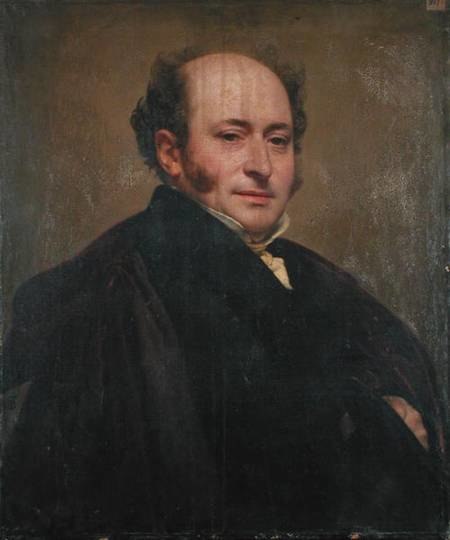
Jean-Pierre Granger (1779-1840) · MyArtPrints · Public domain
- Born
- 1779 · Paris.
- Died
- 1840 · Paris.
- Nationality
- France
- Occupation
- painter
- Fields
- history
- Education
- Beaux-Arts de Paris · French Academy in Rome
- Teachers
- Jean-Baptiste Regnault · Jacques-Louis David
- Honours
- Prix de Rome
- Languages
- French
VALÉORINE Encyclopedia
VALÉORINE documentary reading
Documentary summary
Illustration — Self-portrait c. 1830 Jean-Pierre Granger (11 March 1779 – 1 December 1840) was a French painter who worked in the Neo-Classical style. He is primarily known for portraits, history paintings, and mythological scenes.
Admitted source layer · organised and presented by VALÉORINE
Reference Check
Propose documentary evidence for Jean-Pierre Granger. A contribution is never written directly as fact: identity, source, rights and evidence gates still decide.
Sign in to contribute
World of VALÉORINE
Documentary connections
Only confirmed graph relationships appear here. Images are shown only when their identity and reuse rights both pass the documentary gate.

Documentary evidence
Documentary basis
Authority files
wikidata · Q3169367 · wikipedia · Jean-Pierre Granger
In this article
Biography
He also created numerous religious works. Some sources incorrectly call him Jean-Perrin.
Jean-Pierre Granger studied at Beaux-Arts de Paris and French Academy in Rome. Training under Jean-Baptiste Regnault and Jacques-Louis David is recorded. Romulus Antoine Hennon-Dubois and Denis François Hennon-Dubois are recorded as having studied under Jean-Pierre Granger. The recorded working language is French. Subjects and genres recorded for the work are history. Places of work recorded in the authority are Paris and Rome. Work by Jean-Pierre Granger is recorded in the collections of Nationalmuseum, Philadelphia Museum of Art, Musée Carnavalet, Musée des Beaux-Arts de la ville de Paris and Musée des Beaux-Arts de Libourne. Distinctions recorded are Prix de Rome.
He was born in Paris. His father was a glazier. At the age of six, he reportedly became a drum major in the "Régiment Royal-Bonbons", a children's branch of the French Guards which was intended to provide "manly, patriotic training". However, it also served as a form of amusement for the Dauphin. Two years later, his father made the acquaintance of Angélique Briceau (fl.1780-1800), a watercolorist who gave lessons to both of them. Shortly after, she married Louis-Jean Allais, who then gave them lessons in engraving. Granger worked as an engraver for seven years but eventually felt constrained by the limits of that medium and entered the studios of Jean-Baptiste Regnault to study oil painting. Four years later, he worked closely with Jacques-Louis David. In 1800, he was awarded the Prix de Rome for his painting Antiochus Sending His Son to Scipio as a Hostage. His colleague, Ingres, who came in second, accused David of using his influence on the jury. • Illustration — Antiochus Sending His Son to Scipio (1800) While in Rome, he worked for Lucien Bonaparte, making sketches and paintings of the Prince's antiquities collection. He also began a portrait of Bonaparte's wife, Alexandrine de Bleschamp. However, he (and some others) found it unsatisfactory. Hence, he turned it into a painting of an anonymous lady of the court. This portrait (now in the Louvre) pleased him so much that he married the model, Jeanne-Catherine Delaigle. He returned to Paris in 1812, and exhibited annually at the Salon until his death, receiving medals in 1812, 1817, and 1820. He died on 1 December 1840 in Paris. His daughter, Eléonore Palmyre (1819–1874), a pianist of some note, married the writer Paul Meurice. Her portrait was painted by Ingres, who had gotten over his grudge and became her godfather. It is currently on display at the Maison de Victor Hugo.

Jean-Pierre Granger, Père-Lachaise - Division 4 - Granger 02
Pierre-Yves Beaudouin · Pierre-Yves Beaudouin / Wikimedia Commons
Primary material
Documents and archives
reference work
- “Jean-Pierre Granger”, English Wikipedia, consulted as further reading
Reputable secondary · Wikipedia
authority record
- Wikidata, structured authority record Q3169367: Jean-Pierre Granger
General reference · Wikidata
Notes from the source article
Cited by Wikipedia
Notes from the source article
These works are cited by the source article, in its own numbering. They are recorded as its citations, not as sources VALÉORINE has verified.
- 1.Biographical notes @ the British Museum.
- 2.Amaury-Duval. L'atelier d'Ingres : souvenirs. G. Charpentier. 89. 1878.
- 3.Preview notes @ the Oxford Index.
Bibliography printed in the source article · 1
- Alexandre Péron, "Notice nécrologique sur Jean-Pierre Granger", in Annales de la Société libre des Beaux-Arts, 1840–1846, XV, Paris, 1846, pages 149–173.
References
Citations
References
Each reference names the institution holding it, so a reader may go to the document itself.
reference work
Secondary witnessauthority record
General reference
People, houses and institutions
Knowledge graph
People, houses and institutions
Teachers, collaborators, publishers and institutions recorded against this person, each on a stated basis.
The Encyclopedia exists whether or not anything is for sale. Corrections are recorded rather than overwritten, and every version of this record is kept. Published 16 August 2026.
Elsewhere in Paintings
19,183 published records in this field, each with its sources named.
- Jean-Michel PicartArtist
- Jean-Paul AlauxArtist
- Jean-Paul AubéArtist
- Jean-Pierre FranqueArtist
- Jean-Pierre LaurensArtist
- Jean-Pierre Saint-OursArtist
- Jean-Rene JeromeArtist
- Jean-Robert AngoArtist
Best supported in this field
For owners
Own a work by Jean-Pierre Granger?
A specialist will read what you send and tell you what the house can establish, what it cannot, and whether the object is suited to sale. There is no charge and no obligation. The object stays with you throughout; nothing is shipped to us unless it is arranged in writing beforehand.