
Jean Cousin
Jean Cousin (1500 – before 1593) was a French painter, sculptor, etcher, engraver, and geometrician. He is known as "Jean Cousin the Elder" to distinguish him from his son Jean Cousin the Younger, also an artist.
Also recorded as Jean Cousin the Elder
Jean Cousin
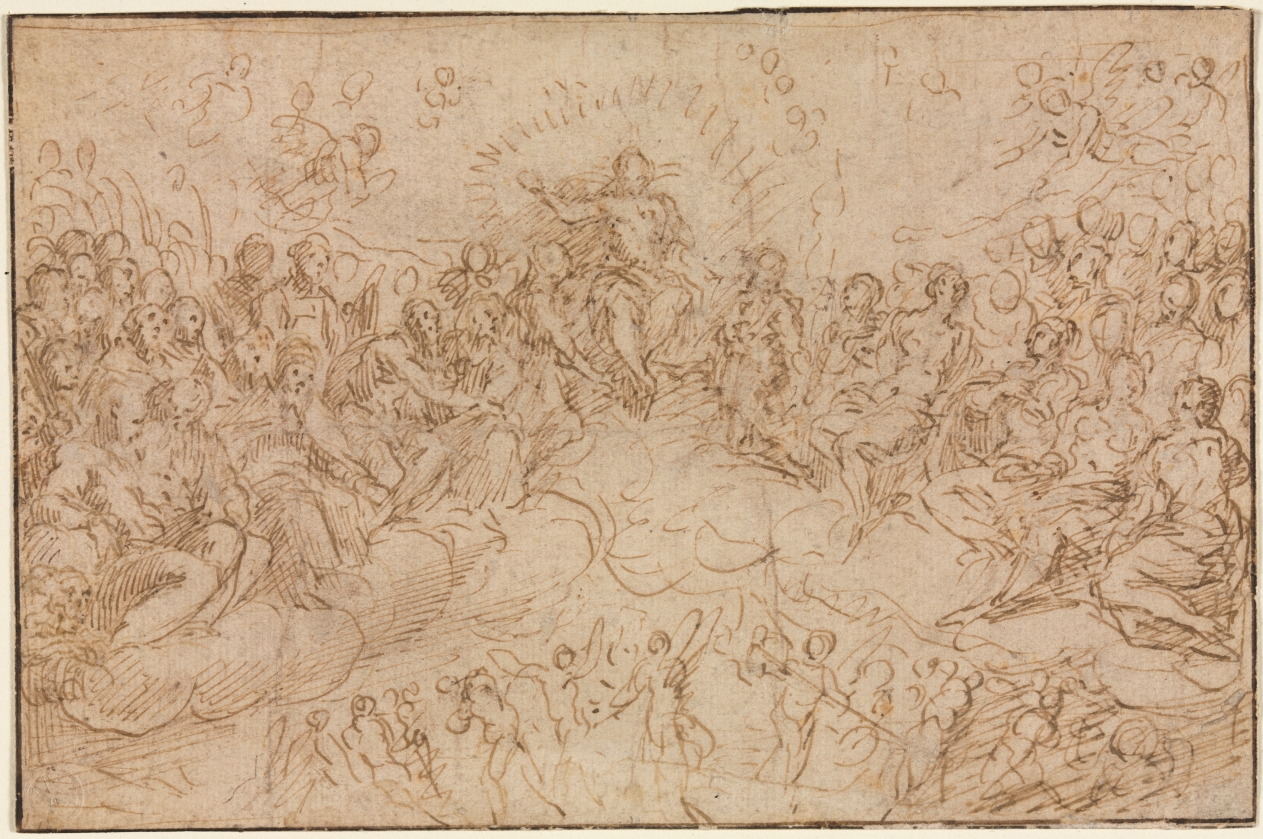
Jean Cousin · The Cleveland Museum of Art · Gift of Robert Hays Gries · CC0
- Nationality
- France.
- Occupation
- sculptor, painter, printmaker, mathematician, architect and draftsperson.
- Movements
- High Renaissance.
- Known for
- Eva Prima Pandora.
VALÉORINE Encyclopedia
VALÉORINE documentary reading
Documentary summary
Jean Cousin (1500 – before 1593) was a French painter, sculptor, etcher, engraver, and geometrician. He is known as "Jean Cousin the Elder" to distinguish him from his son Jean Cousin the Younger, also an artist.
Admitted source layer · organised and presented by VALÉORINE
Note VALÉORINE
No house-authored Note is published until its assertions and sources pass the VALÉORINE evidence contract. The documentary article remains available in full while that enrichment is being consolidated.
Documentary enrichment in progress · no unsupported statement published
Reference Check
Propose documentary evidence for Jean Cousin. A contribution is never written directly as fact: identity, source, rights and evidence gates still decide.
Sign in to contribute
Documentary evidence
Evidence Panel
not yet certified
- Identity
- resolved
- Independent source families
- 0
- Admitted assertions
- 0
- Open conflicts
- 0
Authority files
wikidata · Q2610648 · wikipedia · Jean Cousin the Elder
In this article
Career
Career
Cousin was born at Soucy, near Sens, and began his career in his native town with the study of glass-painting under Jean Hympe and Grassot. At the same time, he studied mathematics and published a successful book on the subject. He also wrote on geometry in his student days. In 1530 Cousin finished the windows for Sens Cathedral, the subject chosen being the "Legend of St. Eutropius". He also painted the windows of many of the noble châteaux in and around the city. The latest date on any of his Sens work, 1530, points to this as the year he went to Paris, where he began work as a goldsmith; but the amount and kind of his productions in the precious metals are alike unknown. In Paris Cousin continued his career as a glass-painter, and created his best-known work, the windows of the Sainte-Chapelle in Vincennes. He subsequently devoted himself to painting in oil, and has been claimed as the first Frenchman to use that new medium. Pictures attributed to him, all of much merit, are found in several of the large European collections, but, excepting "The Last Judgment", none is known to be authentic. For a long time this work lay neglected in the sacristy of the church of the Minims, Vincennes, until it was rescued by a priest and transferred to the Louvre. It is said to be the first French picture to be engraved. He was also an illustrator of books, making many designs for woodcuts and often executed them himself. The "Bible", published in 1596 by Le Clerc, and the Metamorphoses and Epistles of Ovid (1566 and 1571 respectively) contain his most noted work as an illustrator. Cousin etched and engraved many plates after the manner of Parmigianino, to whom the invention of etching has been ascribed. He also created sculptures, including, it is thought, the mausoleum of Admiral Philippe de Chabot. In addition to his early writings on mathematics, he published, in 1560, a treatise on perspective, and, in 1571, a work on portrait-painting. During his life Cousin enjoyed the favour of and worked for four kings of France: Henry II, Francis II, Charles IX, and Henry III. Among his paintings, mention should also be made of the miniatures in the prayer book of Henry II now in the Bibliothèque Nationale; among his etchings and engravings, the Annunciation and the Conversion of St. Paul; among his woodcuts, the Entrée de Henry II et Catherine de Médicis à Rouen (1551). He died at Sens, but the date of his death is uncertain.
Life and career
Dated record
Life and career
The full dated record · 2 entries
1490
Jean Cousin was born in 1490.
1560
Jean Cousin died at Paris.
Notes from the source article
Cited by Wikipedia
Notes from the source article
These works are cited by the source article, in its own numbering. They are recorded as its citations, not as sources VALÉORINE has verified.
Bibliography printed in the source article · 3
- cites:
- FIRMIN-DIDOT, Etude sur Jean Cousin (Paris, 1872);
- PATTISON, The World's Painters since Leonardo (New York, 1906)
References
Citations
References
Each reference names the institution holding it, so a reader may go to the document itself.
reference work
Wikidata, structured authority record Q2610648: Jean CousinWikimedia Foundation
Partially resolved
A further 1 witness is held back from this article because the person or object named in it is not yet resolved to this record. They are kept, not discarded, and return once the identity is established.
The Encyclopedia exists whether or not anything is for sale. Corrections are recorded rather than overwritten, and every version of this record is kept. Published 14 August 2026.
Elsewhere in Sculpture
6,174 published records in this field, each with its sources named.
- Jean BullantArtist
- Jean CardotArtist
- Jean CocteauArtist
- Jean CornuArtist
- Jean DamptArtist
- Jean de LiègeArtist
- Jean de MarvilleArtist
- Jean Del CourArtist
Best supported in this field
For owners
Own a work by Jean Cousin?
A specialist will read what you send and tell you what the house can establish, what it cannot, and whether the object is suited to sale. There is no charge and no obligation. The object stays with you throughout; nothing is shipped to us unless it is arranged in writing beforehand.