
Jean-Claude Pascal
Jean-Claude Villeminot (24 October 1927 – 5 May 1992), better known as Jean-Claude Pascal (ʒɑ̃ klod paskal), was a French comedian, actor, singer and writer.
Also recorded as Jean-Claude Villeminot · Jean Pascal
Jean-Claude Pascal
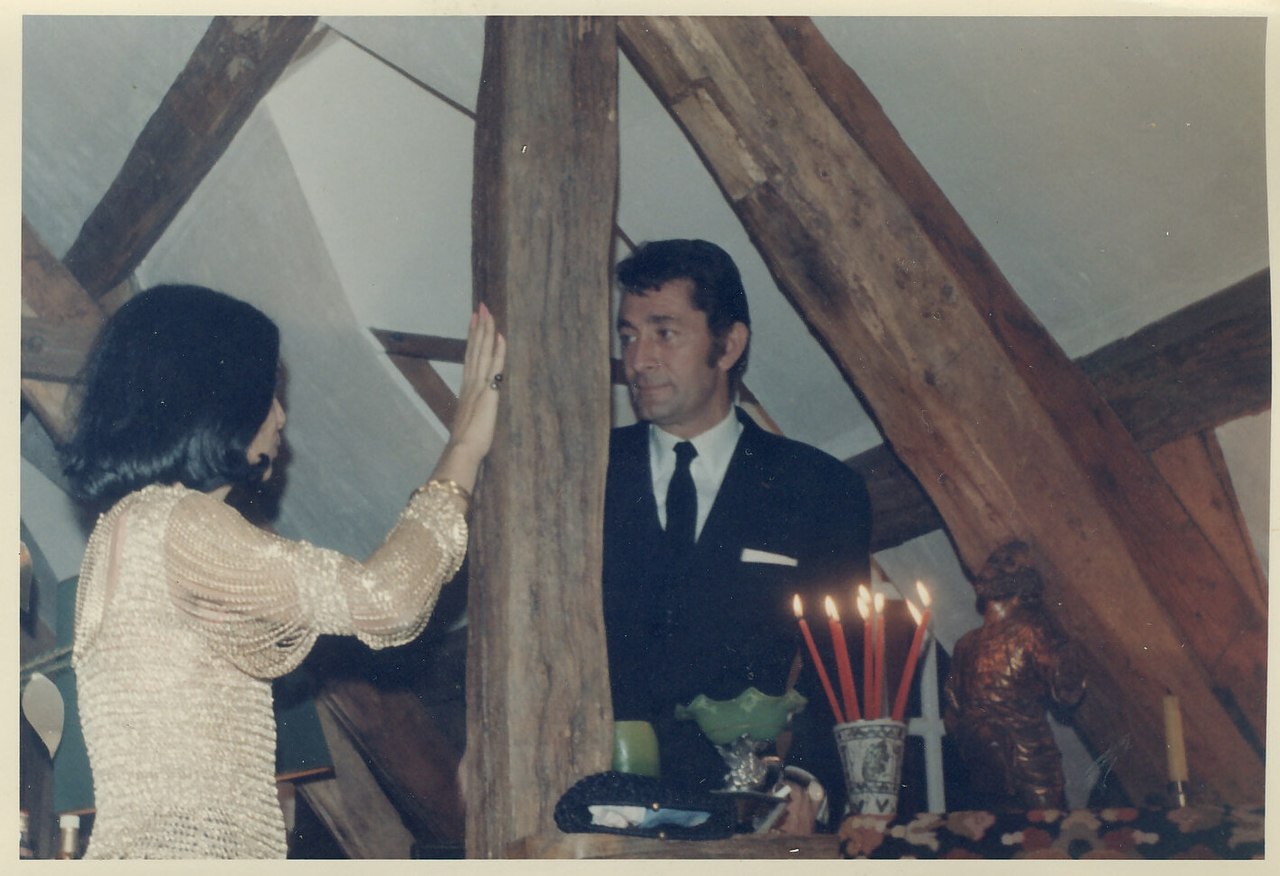
Guy villeminot · CC BY-SA 3.0
- Name
- Jean-Claude Pascal
- Birth Name
- Jean-Claude Villeminot
- Born
- 24 October 1927
- Birthplace
- Paris, France
- Died
- 5 May 1992
- Place of death
- Clichy, France
- Nationality
- France.
- Occupation
- singer, writer, film actor, fashion designer, actor and musician.
- Fields
- ballad.
VALÉORINE Encyclopedia
VALÉORINE documentary reading
Documentary summary
Jean-Claude Villeminot (24 October 1927 – 5 May 1992), better known as Jean-Claude Pascal (ʒɑ̃ klod paskal), was a French comedian, actor, singer and writer.
Admitted source layer · organised and presented by VALÉORINE
Note VALÉORINE
Jean-Claude Pascal (1927–1992) was an actor, fashion designer and film actor, among other activities, of French nationality. The actor was born Jean-Claude Villeminot in 7th arrondissement of Paris and died in Beaujon Hospital. Jean-Claude Pascal was educated at Cours Simon, Lycée Janson-de-Sailly and Sorbonne, among others.
The work spans ballad. Languages used include French. Honours include Commandeur des Arts et des Lettres, Croix de guerre 1939–1945 and First prize of the Eurovision Song Contest, among others.
Composed from admitted, traceable facts · 26 September 2026
VALÉORINE
Reference Check
Propose documentary evidence for Jean-Claude Pascal. A contribution is never written directly as fact: identity, source, rights and evidence gates still decide.
Sign in to contribute
Documentary evidence
Evidence Panel
not yet certified
- Identity
- resolved
- Independent source families
- 0
- Admitted assertions
- 0
- Open conflicts
- 0
Authority files
wikidata · Q312262 · wikipedia · Jean-Claude Pascal
In this article
Key facts
Key facts
• Name — Jean-Claude Pascal • Birth Name — Jean-Claude Villeminot • Born — 24 October 1927 • Birthplace — Paris, France • Died — 5 May 1992 • Place of death — Clichy, France • Illustration — Grave of Jean-Claude Pascal's family in the Montparnasse cemetery in Paris. • Illustration — Jean-Claude Pascal, 1968
Early life
Early life
He was born in Paris into a family of wealthy textile manufacturers. His mother, Arlette Lemoine, was the great-granddaughter of English fashion designer Charles Frederick Worth. His father, Roger Villeminot, died the year of his birth. He began his secondary education in 1938 at the Collège Annel, in Compiègne, and concluded it at the Lycée Janson-de-Sailly in Paris. In 1944, at the age of 17, he enlisted in the 2nd Armored Division of General Leclerc. He was the first French soldier to enter Strasbourg in November 1944, while the German Army was still in the process of evacuating the city. For this, he received the Croix de Guerre in 1945.
Career
Career
After surviving World War II in Strasbourg, Pascal studied at the Sorbonne before turning to fashion-designing for Christian Dior. While working on costumes for the theater production of the play Don Juan, he was exposed to acting. His first acting role was in the film Le jugement de Dieu (1949, released in 1952) and afterwards in "Le rideau cramoisi", 1951, opposite Anouk Aimée, followed by several films including Die schöne Lügnerin (La Belle et l'empereur 1959, 'Beautiful Liar') with Romy Schneider, and Angelique and the Sultan (Angélique et le sultan, 1968) with Michèle Mercier. Pascal won the 1961 Eurovision Song Contest for Luxembourg with the song "Nous les amoureux" ('We the lovers'), with music composed by Jacques Datin and lyrics by Maurice Vidalin. The song tells the story of a thwarted love between the singer and his lover ("they would like to separate us, they would like to hinder us / from being happy"). The lyrics go on about how the relationship is rejected by others but will finally be possible ("but the time will come. [...] and I will be able to love you without anybody in town talking about it. [...] [God] gave us the right to happiness and joy."). Later, Pascal explained that the song was about a homosexual relationship and the difficulties it faced. As this topic would have been considered controversial in the early 1960s, the lyrics are ambiguous and do not refer to the lovers' gender. This allowed hiding the song's actual message, which was not understood in this way by the general public at the time. Pascal was himself gay, although he never came out during his life. He later represented Luxembourg again in the 1981 contest and finished 11th of 20 with the song "C'est peut-être pas l'Amérique" ('It may not be America'), with words and music he composed together with Sophie Makhno and Jean-Claude Petit. Pascal died in Clichy, Hauts-de-Seine in 1992, aged 64, of stomach cancer.
Filmography
Filmography
• Great Man (1951), as L'interne Marcillac • They Were Five (1952), as Philippe • Four Red Roses (1951), as Pietro Leandri • La Forêt de l'adieu (1952), as Jean-Pierre • Judgement of God (1952), as Albert III, Duke of Bavaria • The Happiest of Men (1952), as Michel Brissac • The Crimson Curtain (1953), as The officer • A Caprice of Darling Caroline (1953), as Livio • Children of Love (1953), as Doctor Jacques Baurain • Alarm in Morocco (1953), as Jean Pasqier • Le Chevalier de la nuit (1953), as Chevalier Georges de Ségar • Tempest in the Flesh (1954), as Gino • Royal Affairs in Versailles (1954), as Axel von Fersen • Flesh and the Woman (1954), as Pierre Martel • The Three Thieves (1954), as Gastone Cascarilla • Caroline and the Rebels (1955), as Juan d'Aranda / de Sallanches • Bad Liaisons (1955), as Blaise Walter • Lord Rogue (1955), as Lord Henry Seymour • The Wages of Sin (1956), as Jean de Charvin • The Lebanese Mission (1956), as Jean Domèvre • Les Lavandières du Portugal (1957), as Jean-François Aubray • Guinguette (1959), as Marco • Island Fishermen (1959), as Guillaume Floury • Le Fric (1959), as Jacques Moulin • Die schöne Lügnerin (1959), as Tsar Alexander I • The Crossroads (1959), as Javier • The Opportunists (1960), as Philippe Brideau • Préméditation (1960), as Bernard Sommet • Rendezvous (1961), as Pierre • La Salamandre d'or (1962), as Antoine de Montpezat • Sans merveille (TV film, 1964), as Franck • Vol 272 (TV miniseries, 1964), as Marc • Le Faux Pas (TV film, 1965), as Robert • The Poppy Is Also a Flower (1966), as Galam Khan • Comment ne pas épouser un milliardaire (TV series, 1966), as Commandant Jean Leroy-Dantec • Las cuatro bodas de Marisol (1967), as Frank Moore • Untamable Angelique (1967), as Osman Ferradji • Angelique and the Sultan (1968), as Osman Ferradji • Under the Roofs of St. Pauli (1970), as Doctor Pasucha • Au théâtre ce soir: Les Français à Moscou (TV play, 1972), as Blanchet • Le Temps de vivre, le temps d'aimer (TV series, 1973), as Jean Moser • Le Chirurgien de Saint-Chad (TV series, 1976), as Doctor Patrick Villaresi • Liebe läßt alle Blumen blühen (TV film, 1984), as Marquis de Formentière • Au théâtre ce soir: Adieu Prudence (TV play, 1985), as Fred Russel
Identity and origins
Identity and origins
Jean-Claude Pascal was recorded at birth as Jean-Claude Villeminot. He also worked under the name Jean-Claude Pascal. The authorities additionally record the headings Jean-Claude Villeminot and Jean Pascal. His recorded language was French. Other recorded relations include Charles Frederick Worth.
Life and career
Dated record
Life and career
The full dated record · 2 entries
1927
Jean-Claude Pascal born at Paris.
1992
Jean-Claude Pascal died at Beaujon Hospital.
Discography
• "Lili Marleen" (French and German) • "Nous les amoureux" • "C'est peut-être pas l'Amérique"
Primary material
Documents and archives
Institutional database
- Wikidata, structured authority record Q312262: Jean-Claude Pascal
Scholarly · Wikimedia Foundation
reference work
- “Jean-Claude Pascal”, English Wikipedia, consulted as further reading
Reputable secondary · Wikipedia
Notes from the source article
Cited by Wikipedia
Notes from the source article
These works are cited by the source article, in its own numbering. They are recorded as its citations, not as sources VALÉORINE has verified.
- 1.Charles Frederick Worth, le "père de la haute couture". Jean-Claude Pascal, Portrait. 25 December 2017.
- 2.Billaut, François. Charles Frederick Worth, le "père de la haute couture". Point de Vue. 2020.
- 3." Nous les amoureux " de Jean-Claude Pascal, une chanson qui annonce la révolution du mouvement gay. La Première. 16 May 2019.
- 4.Minsitru, Sébastien. "Nous les amoureux" de Jean-Claude Pascal, une chanson qui annonce la révolution du mouvement gay. RTBF. 16 May 2019.
References
Citations
References
Each reference names the institution holding it, so a reader may go to the document itself.
Institutional database
Wikidata, structured authority record Q312262: Jean-Claude PascalWikimedia Foundation
Verifiedreference work
Partially resolved
Further particulars
Held on the record
Further particulars
Open the remaining particulars
Formation and teaching. Pascal studied at University of Paris, Cours Simon, Sorbonne and Lycée Janson-de-Sailly. Pascal received Knight of the Legion of Honour, Croix de guerre 1939–1945, Commandeur des Arts et des Lettres and First prize of the Eurovision Song Contest.
Recognition and collections
The Encyclopedia exists whether or not anything is for sale. Corrections are recorded rather than overwritten, and every version of this record is kept. Published 14 August 2026.
Elsewhere in Fashion
2,260 published records in this field, each with its sources named.
- Jean PatouDesigner
- Jean Philippe PiterDesigner
- Jean TouitouDesigner
- Jean-Charles de CastelbajacDesigner
- Jean-Gabriel DomergueDesigner
- Jean-Louis ScherrerDesigner
- Jean-Paul GaultierDesigner
- Jeanne CampbellDesigner
Best supported in this field
For owners
Own a work by Jean-Claude Pascal?
A specialist will read what you send and tell you what the house can establish, what it cannot, and whether the object is suited to sale. There is no charge and no obligation. The object stays with you throughout; nothing is shipped to us unless it is arranged in writing beforehand.