
Jean-Baptiste Oudry
Illustration — Jean-Baptiste Oudry, by Jean-Baptiste Perronneau. Jean-Baptiste Oudry (ʒɑ̃ batist udʁi; 17 March 1686 – 30 April 1755) was a French Rococo painter, engraver, and tapestry designer. He is particularly well known for his naturalistic pictures of animals and his hunt pieces depicting game.
Also recorded as Jean Baptiste Oudry · Houdrie of Paris · Jean Baptiste Audry · J.-B. Oudry
Jean-Baptiste Oudry
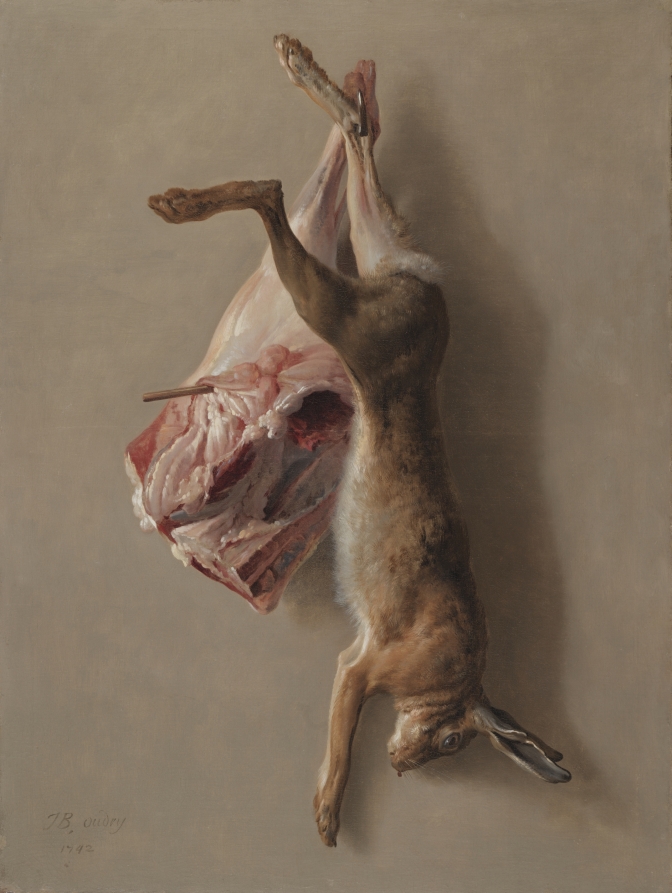
Jean-Baptiste Oudry · The Cleveland Museum of Art · John L. Severance Fund · CC0
- Born
- 1686 · Paris.
- Died
- 1755 · Beauvais.
- Nationality
- France
- Occupation
- painter · illustrator · etcher · graphic artist
- Fields
- still life
- Education
- Académie de Saint-Luc
- Teachers
- Nicolas de Largillière
- Known for
- Still Life with Dead Game and Peaches in a Landscape
- Languages
- French
VALÉORINE Encyclopedia
VALÉORINE documentary reading
Documentary summary
Illustration — Jean-Baptiste Oudry, by Jean-Baptiste Perronneau. Jean-Baptiste Oudry (ʒɑ̃ batist udʁi; 17 March 1686 – 30 April 1755) was a French Rococo painter, engraver, and tapestry designer. He is particularly well known for his naturalistic pictures of animals and his hunt pieces depicting game.
Admitted source layer · organised and presented by VALÉORINE
Reference Check
Propose documentary evidence for Jean-Baptiste Oudry. A contribution is never written directly as fact: identity, source, rights and evidence gates still decide.
Sign in to contribute
World of VALÉORINE
Documentary connections
Only confirmed graph relationships appear here. Images are shown only when their identity and reuse rights both pass the documentary gate.

Documentary evidence
Documentary basis
Authority files
gnd · 6032313-9 · wikidata · Q737137 · wikipedia · Jean-Baptiste Oudry
In this article
Biography
Biography
His son, Jacques-Charles Oudry, was also a painter.
Jean-Baptiste Oudry studied at Académie de Saint-Luc. Training under Nicolas de Largillière is recorded. Henri-Horace Roland Delaporte is recorded as having studied under Jean-Baptiste Oudry. The recorded working language is French. Subjects and genres recorded for the work are still life. Works named in the authority record are Still Life with Dead Game and Peaches in a Landscape. Work by Jean-Baptiste Oudry is recorded in the collections of Museum Boijmans Van Beuningen, Minneapolis Institute of Art, Museo del Prado, Art Institute of Chicago and J. Paul Getty Museum.
• Illustration — Marie–Marguerite Oudry, the artist's wife Jean-Baptiste Oudry was born in Paris, the son of Jacques Oudry, a painter and art dealer, and his wife Nicole Papillon, relative of the engraver Jean-Baptiste-Michel Papillon. His father was a director of the Académie de Saint-Luc art school, which Oudry joined. At first, Oudry concentrated on portraiture, and he became a pupil and perhaps a collaborator of Nicolas de Largillière from 1707 to 1712. He graduated at only 22 years of age, on 21 May 1708, at the same time as his two older brothers. The next year, he married Marie–Marguerite Froissé, the daughter of a miroitier (a mirror-maker) to whom he gave lessons in painting. Oudry became an assistant professor at Académie de Saint-Luc in 1714, and professor on 1 July 1717. He was inducted as a member of the prestigious Académie royale de peinture et de sculpture in 1719, and was engaged as a professor there in 1743. After producing mainly portraits, Oudry started to produce still life paintings of fruits or animals, as well as paintings of religious subjects, such as the Nativity, Saint Giles, and the Adoration of the Magi. In the 1720s Oudry was commissioned by Noël-Antoine de Mérou, director of the Royal Beauvais Tapestry Manufactory to create the designs for what has come to be one of the most iconic series of tapestries of the period. The series was called The Pastoral Amusements, or Les Amusements Champêtres. Through his friend, Jean-Baptiste Massé, a portrait-painter and miniaturist, Oudry was introduced to the Marquis de Beringhen, hereditary master of the royal stables, for whom he painted a pair of paintings in 1727, followed by a suite of landscapes in the Flemish manner. Through this connection, he was commissioned to produce the painting that made his reputation, Louis XV hunting a deer in the Forest of Saint-Germain (1730; now at Toulouse). Subsequently, he was commissioned to produce numerous works for the King, who was passionate about the hunt and appointed Oudry Painter-in-Ordinary of the Royal Hunt, in which capacity he produced portraits of dead game, the day's kill. Oudry was granted a workshop in the Tuileries and an apartment in the Louvre. • Illustration — Jean-Baptiste Oudry, by his wife Marie–Marguerite Froissé, etching after a Nicolas de Largillière painting M. Hultz, an adviser to the Académie de Peinture, commissioned Oudry to produce a buffet, or still-life combining silver plates and ewers, fruit and game; the work was exhibited in the Salon of 1737. Oudry timidly asked for ten pistoles for his work, but Hultz valued it much higher, insisting on paying twenty-five. Oudry was also commissioned to produce a buffet for Louis XV (exhibited in the Salon of 1743), that went to the château de Choisy, the King's favoured hunting residence. Hultz recommended Oudry to Louis Fagon (1680–1744), an intendant des finances and book collector, and Oudry decorated his houses in Vanves and Fontenay-aux-Roses with arabesques, flowers and birds. Fagon was charged with reviving the fortunes of the tapestry manufactory of Beauvais, which had flourished under Colbert, and he gave the task to Oudry and his associate, Besnier, in 1734. Oudry succeeded in his tasks, becoming wealthy in the process. His success at Beauvais led to a further appointment as inspector at the Gobelins manufactory in 1736, where his works were copied as cartoons for tapestries. Through most of the 1730s, he concentrated mainly on producing designs for tapestries, notably the nine Chasses Royales Gobelins series (1733–46), first woven for the Château de Compiègne (and reunited in Compiègne), for which the cartoons were later framed into the boiseries in an interior decor for Charles X at Fontainebleau, 1828. Oudry used a camera obscura in an attempt to speed up the process of producing landscapes, but abandoned it when he saw that the perspective and the effects of light and shade did not appear correct. Although Oudry produced excellent scenes of animals and of hunting, he also painted portraits, histories, landscapes, fruits and flowers; he imitated bas reliefs in monotone tints en camaïeu, drew on blue paper, used pastels, and created etchings. He was often sent examples of rare birds to draw. • Illustration — José de Rozas y Meléndez de la Cueva, 1st Count of Castelblanco (ca. 1716), Prado Museum, Madrid. An important patron was Christian Ludwig II, Duke of Mecklenburg-Schwerin, who commissioned two pairs of paintings from Oudry: Three Does Watching Two Stags Fighting and A Family of Roe Deer; and A Boar Hunt and A Wolf Hunt, both delivered in 1734. He later purchased a series of large paintings of animals from Louis XV's menagerie at Versailles. Oudry's initial motive for painting these works is obscure. When exhibited at the Paris Salon, they had been described as having been painted for the French king; however the commission seems to come through the king's surgeon, François Gigot de la Peyronie, who had engravings made after them, and in a letter to Christian dated March 1750, Oudry wrote that they had become available for sale due to de La Peyronie's death. In addition to the portraits of the animals from the royal menagerie, Christian also bought Oudry's life-size painting of "Clara", an Indian rhinoceros which had been exhibited all around Europe to great public interest. The works are still at Schwerin. He turned down offers to work for the Czar Peter the Great and the King of Denmark, preferring to remain in France, where he maintained a large studio of assistants. Oudry lost some of his responsibilities when Fagon was replaced by de Trudaine. He suffered two strokes in quick succession. The second left him paralysed and he died shortly thereafter in Beauvais (in present-day Oise). He was buried in the Church of Saint-Thomas in Beauvais. His epitaph on the stone was lost when the church was demolished in 1795, but was later found and placed in the Church of Saint-Étienne. Two exhibitions curated by Hal N. Opperman, first at the Grand Palais, Paris, October 1982 – January 1983, and then in a travelling exhibition in the United States, 1983, encouraged a reassessment of this purely French portraitist and genre painter.
Textile designs
Textile designs
• Illustration — Les Amusements Champêtres: Le cheval fondu tapestry, from the Barlatier de Mas Collection • Illustration — Gobelin "Aktaion" in the "Altes Rathaus" (Old Town Hall) of Bonn, Germany (1750) • Illustration — Settee (sofa) (ca 1754 –56), carved and gilded beech; wool and silk tapestry, 111.8 x 235 x 81.3 cm., Metropolitan Museum of Art • Illustration — The Lion in Love, Aubusson tapestry (ca. 1775–1780), after J-B. Oudry, Musée Nissim de Camondo, Paris.
Identity and overview
Identity and overview
The following is established of the heading itself.
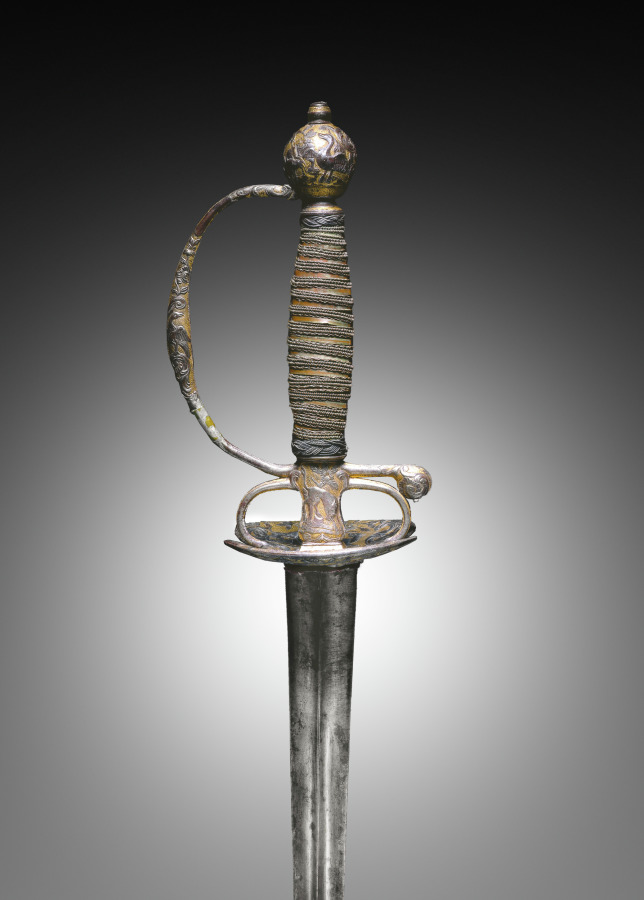
Small Sword, c.1750–60, by Jean-Baptiste Oudry
Jean-Baptiste Oudry · The Cleveland Museum of Art · Gift of Mr. and Mrs. John L. Severance
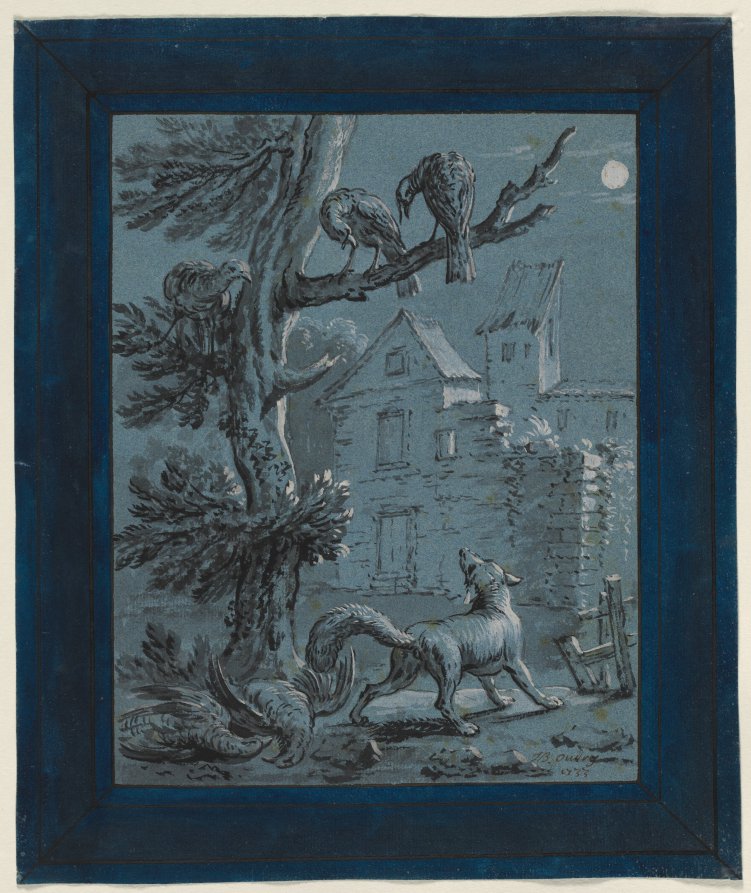
The Fox and the Turkey Hens, 1733, by Jean-Baptiste Oudry
Jean-Baptiste Oudry · The Cleveland Museum of Art · John L. Severance Fund
Places
Named by the record
Places
Only places the record itself states, plotted where the house gazetteer settles their coordinates. Nothing is inferred from a name or a nationality.
Paris.
Birth place
Beauvais.
Death place
Oil paintings
• Illustration — Adoration of the Magi (1717), 290 x 260 cm., Église Saint-Georges • Illustration — Still Life with a Spaniel Chasing Ducks "Water" (1719), 141 x 114 cm., Nationalmuseum • Illustration — Still Life with a Rifle, Hare and Bird "Fire" (1720), 144 x 116 cm., Nationalmuseum • Illustration — Still Life of Fruits and Vegetables "Earth" (1721), 145 x 113 cm., Nationalmuseum • Illustration — Allegory of Europe (1722), 161.9 × 151.8 cm., Museum of Fine Arts, Houston • Illustration — Dog Pointing a Partridge (1725), 129 x 162 cm. Hermitage Museum • Illustration — Still Life with Dead Game and Peaches in a Landscape, (1727), 80 x 100.3 cm., Birmingham Museum of Art • Illustration — Louis XV hunting deer in the Saint-Germain forest, (1730), Musée des Augustins, Toulouse • Illustration — Hyena in the Fight with two Dogs (1739), 130 x 190 cm., Ludwigslust Palace • Illustration — The Wolf and the Lamb. from La Fontaine Fables (no date), 104.1 x 125.7 cm., private collection • Illustration — Still Life with Dead Game and a Silver Tureen on a Turkish Carpet (1738), 120 x 171 cm., Nationalmuseum • Illustration — Dachshound Pehr with Game and Rifle (1740), 135 x 109 cm., Nationalmuseum • Illustration — A Hare and a Leg of Lamb (1742), 98.2 x 73.5 cm., Cleveland Museum of Art • Illustration — Swan Attacked by a Dog, (1745), 177.8 x 208.3 cm., North Carolina Museum of Art • Illustration — Cassowary (1745), 161.9 x 127.4 cm., Staatliches Museum Schwerin • Illustration — Still-life with Pheasant (1753), 97 x 64 cm., Louvre • Illustration — The White Duck (1753), 95.3 x 63.5 cm., Houghton Hall [stolen 1990] • Illustration — Still-life with Hare, Partridge and Snipe (ca. 1755), 82.2 x 66 cm., Worcester Art Museum
Primary material
Documents and archives
authority file
- Gemeinsame Normdatei 6032313-9, Ausstellung Vermächtnis der Aufklärung - Jean-Baptiste Oudry, Jean-Antoine Houdon (2000 : Schwerin).
General reference · Deutsche Nationalbibliothek
reference work
- “Jean-Baptiste Oudry”, English Wikipedia, consulted as further reading
Reputable secondary · Wikipedia
authority record
- Wikidata, structured authority record Q737137: Jean-Baptiste Oudry
General reference · Wikidata
Notes from the source article
Cited by Wikipedia
Notes from the source article
These works are cited by the source article, in its own numbering. They are recorded as its citations, not as sources VALÉORINE has verified.
- 1.Bryan,1886-9
- 2.Often incorrectly stated to be Froissié.
- 3.Jean-Louis Beringhen had been premier écuyer to Henri IV, and the post had descended in the family.
- 4.Sold in his posthumous sale, Paris, 2 July 1770.
- 5.Birmingham Museum of Art. Birmingham Museum of Art : guide to the collection. 2010. 978-1-904832-77-5.
- 6.elec.enc.sorbonne.fr. Catalogue des livres de feu M. Fagon, Conseiller d'Etat ordinaire, et au Conseil royal, intendant des finances. Dont la vente se fera en détail au plus offrant dernier enchérisseur Mercredi 5 Août 1744. & jours suivans, depuis deux heures de relevée jusqu'au soir en son Hôtel, ruë neuve des Petits-Champs.
- 7.H.N. Opperman, "The Genesis of the 'Chasses Royales'" The Burlington Magazine 112 No. 805 (April 1970:217-22).
- 8.José de Rozas y Meléndez de la Cueva, 1st Count of Castelblanco - The Collection - Museo Nacional del Prado. www.museodelprado.es.
- 9.Frank, in .
- 10.Bailey, in .
- 11.Frank, in .
Bibliography printed in the source article · 3
- J. Paul Getty Museum. Oudry's Painted Menagerie: Portraits of Exotic Animals in Eighteenth-Century Europe. 2007. 978-0-89236-879-2.
- Opperman, Hal N. Jean-Baptiste Oudry, 1686–1755. Éditions de la Réunion des musées nationaux. 1982. 2-7118-0207-8.
- Opperman, Hal N. Jean-Baptiste Oudry, 1686–1755. Kimbell Art Museum. 1983. 0-912804-12-2.
References
Citations
References
Each reference names the institution holding it, so a reader may go to the document itself.
authority file
Gemeinsame Normdatei 6032313-9, Ausstellung Vermächtnis der Aufklärung - Jean-Baptiste Oudry, Jean-Antoine Houdon (2000 : Schwerin).Deutsche Nationalbibliothek
Secondary witnessreference work
Secondary witnessauthority record
General reference
People, houses and institutions
Knowledge graph
People, houses and institutions
Teachers, collaborators, publishers and institutions recorded against this person, each on a stated basis.
Born at
1- ParisPlace
Established from a fact already recorded on a verified source.
The Encyclopedia exists whether or not anything is for sale. Corrections are recorded rather than overwritten, and every version of this record is kept. Published 16 August 2026.
Elsewhere in Illustration
5,224 published records in this field, each with its sources named.
- Jean SaudéIllustrator
- Jean SennepIllustrator
- Jean-Adolphe BeaucéIllustrator
- Jean-Baptiste DelestreIllustrator
- Jean-Claude PertuzéIllustrator
- Jean-Claude SuaresIllustrator
- Jean-Édouard DargentIllustrator
- Jean-Edouard de CastellaIllustrator
Best supported in this field
For owners
Own a work by Jean-Baptiste Oudry?
A specialist will read what you send and tell you what the house can establish, what it cannot, and whether the object is suited to sale. There is no charge and no obligation. The object stays with you throughout; nothing is shipped to us unless it is arranged in writing beforehand.