
Jacopo Sansovino
Jacopo d'Antonio Sansovino (2 July 1486 – 27 November 1570) was an Florentine sculptor and architect of the Italian Renaissance. He was active in Florence, in Rome and in the Republic of Venice, where he worked particularly around Piazza San Marco. These are crucial works in the history of Venetian Renaissance architecture.
Also recorded as Jacopo d' Antonio Tatti · Jacopo D'Antonio Tatti Sansovino · Jacopo d'Antonio Tatti · Iacopo Sansovino
Jacopo Sansovino
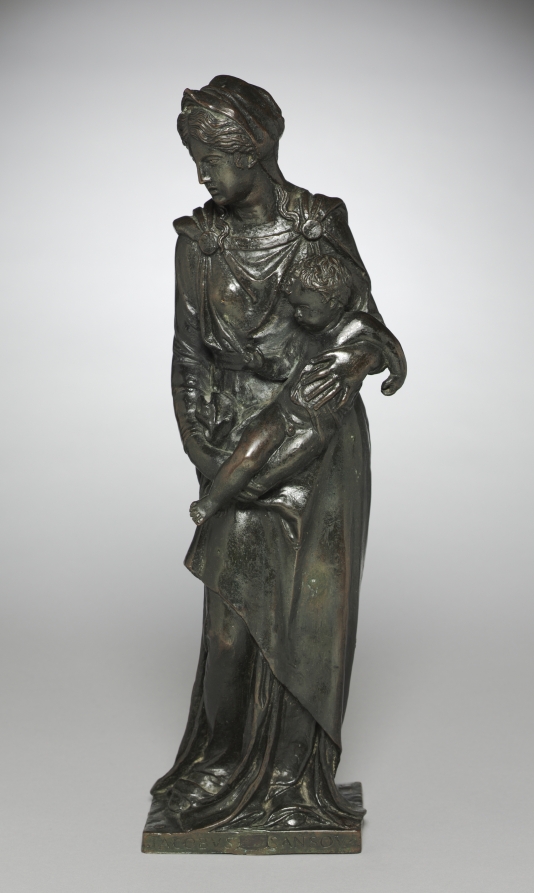
Jacopo Sansovino · The Cleveland Museum of Art · John L. Severance Fund · CC0
- Name
- Jacopo Sansovino
- Born
- 2 July 1486
- Birthplace
- Florence, Republic of Florence
- Died
- 27 November 1570
- Place of death
- Venice, Republic of Venice
- Field
- * Architecture
- Movement
- Renaissance
- Nationality
- Republic of Venice
- Occupation
- architect · sculptor · master builder
- Known for
- Basilica of San Giovanni dei Fiorentini · Palazzo Corner · Piazza della Loggia · Bacchus · Loggetta del Sansovino · Madonna and Child
VALÉORINE Encyclopedia
VALÉORINE documentary reading
Documentary summary
Jacopo d'Antonio Sansovino (2 July 1486 – 27 November 1570) was an Florentine sculptor and architect of the Italian Renaissance. He was active in Florence, in Rome and in the Republic of Venice, where he worked particularly around Piazza San Marco. These are crucial works in the history of Venetian Renaissance architecture.
Admitted source layer · organised and presented by VALÉORINE
Note VALÉORINE
Jacopo Sansovino (1486–1570) was an architect, master builder and sculptor and a national of the Republic of Venice. Born in Florence, the architect died in Venice.
Works include Bacchus, Basilica of San Giovanni dei Fiorentini, Loggetta del Sansovino and Madonna and Child, among others. Languages used include Italian.
Composed from admitted, traceable facts · 27 September 2026
VALÉORINE
Reference Check
Propose documentary evidence for Jacopo Sansovino. A contribution is never written directly as fact: identity, source, rights and evidence gates still decide.
Sign in to contribute
World of VALÉORINE
Documentary connections
Only confirmed graph relationships appear here. Images are shown only when their identity and reuse rights both pass the documentary gate.
Documentary evidence
Evidence Panel
not yet certified
- Identity
- resolved
- Independent source families
- 0
- Admitted assertions
- 0
- Open conflicts
- 0
Authority files
wikidata · Q202267 · wikipedia · Jacopo Sansovino
In this article
Biography
Biography
Andrea Palladio, in the Preface to his Quattro Libri was of the opinion that Sansovino's Biblioteca Marciana was the best building erected since Antiquity. Giorgio Vasari uniquely printed his Vita of Sansovino separately.
Key facts
Key facts
• Name — Jacopo Sansovino • Born — 2 July 1486 • Birthplace — Florence, Republic of Florence • Died — 27 November 1570 • Place of death — Venice, Republic of Venice • Field — * Architecture • sculpture • Movement — Renaissance • Works — Zecca, Biblioteca Marciana, Loggetta • Illustration — Main façade of the Biblioteca Marciana, facing the Doge's Palace • Illustration — The Loggetta of Campanile di San Marco, Venice (reconstructed)
Biography
Biography
Sansovino was born in Florence, Italy, as Jacopo Tatti. He apprenticed with Andrea Sansovino, whose name he subsequently adopted. In Rome, while living in the palace of the late Cardinal Domenico della Rovere, Sansovino made a wax model of the Deposition of Christ for Pietro Perugino to use. Around 1510, Sansovino was invited by Bramante, along with three other sculptors to make wax copies of the Laocoön. Raphael judged Sansovino's copy as the best. Sansovino returned to Florence in 1511, where he received commissions for marble sculpture of St. James for the Duomo and the Bacchus, now in the Bargello. His proposals for sculpture to adorn the façade of the Church of San Lorenzo, however, were rejected by Michelangelo, who was in charge of the scheme, to whom he wrote a bitter letter of protest in 1518. In the period of 1510–17, Sansovino shared a studio with the painter Andrea del Sarto, with whom he shared models. Like all sixteenth-century Italian architects, he devoted considerable energy to elaborate temporary structures related to courtly ceremonies and festivities. The triumphal entry of Pope Leo X into Florence in 1515 was a highpoint of this genre. Sansovino subsequently returned to Rome where he stayed for nine years, leaving for Venice in the year of the Sack of Rome (1527).
Career
Career
In 1529, Sansovino became chief architect and superintendent of properties (Protomaestro or Proto) to the Procurators of San Marco, making him one of the most influential artists in Venice. The appointment came with a salary of 80 ducats and an apartment on the south side of Piazza San Marco. Within a year his salary was raised to 180 ducats per year. His main achievements are a group of prominent structures and buildings in central Venice found near Piazza San Marco, specifically the rusticated Zecca (public mint), the highly decorated Loggetta and its sculptures adjoining the Campanile, and various statues and reliefs for the Basilica of San Marco. He also helped rebuild a number of buildings, churches, palaces, and institutional buildings including the churches of San Zulian, San Francesco della Vigna, San Martino, San Geminiano (now destroyed), Santo Spirito in Isola, and the church of the Ospedale degli Incurabili. Among palaces and buildings are the Scuola Grande della Misericordia (early plans), Ca' de Dio, Palazzo Dolfin Manin, Palazzo Corner, Palazzo Moro, and the Fabbriche Nuove di Rialto. His masterpiece is the Library of Saint Mark's, the Biblioteca Marciana, one of Venice's most richly decorated Renaissance structures, which stands in front of the Doge's palace, across the piazzetta. Construction spanned fifty years and cost over 30,000 ducats. In it he successfully made the architectural language of classicism, traditionally associated with severity and restraint, palatable to the Venetians with their love of surface decoration. This paved the way for the graceful architecture of Andrea Palladio. He died in Venice and his tomb is in the Baptistery of St. Mark's Basilica. His most important follower in the medium of sculpture was Alessandro Vittoria; another disciple was the architect and sculptor Danese Cattaneo.
Gallery
Gallery
• Illustration — The five shops and the Zecca • Illustration — (Attributed), St. John of the Desert, 1505–07 • Illustration — (Attributed), Knight Trampling on a Vanquished, c. 1506–10, Museo Horne, Florence • Illustration — Bacchus, 1515, Bargello, Florence • Illustration — St. John the Baptist, 1540, Frari Church, Venice • Illustration — Madonna and Child, c. 1550, National Gallery of Art, Washington • Illustration — Door Knocker with Nereid, Triton, and Putti, c. 1550, National Gallery of Art • Illustration — Statue of Thomas Rangone, 1554, San Zulian, Venice • Illustration — Madonna and Child with Angels (detail), 1560, Ca' d'Oro, Venice • Illustration — Mars, 1567, Scala dei Giganti, Doge's Palace, Venice • Illustration — Neptune, 1567, Scala dei Giganti
Identity and origins
Identity and origins
The authorities additionally record the headings Jacopo d' Antonio Tatti, Jacopo D'Antonio Tatti Sansovino, Jacopo d'Antonio Tatti, Iacopo Sansovino and Iacopo Tatti. His recorded language was Italian. One child is recorded: Francesco Sansovino.
Life and career
Dated record
Life and career
Explore 1486–1570
The full dated record · 6 entries
1486
Jacopo Sansovino was born on 2 July 1486.
1519
Madonna del Parto is dated 1519.
1534
San Francesco della Vigna is dated 1534.
1548
Zecca of Venice is dated 1548.
1553
Fabbriche Nuove is dated 1553.
1570
Jacopo Sansovino died on 27 November 1570.
Places
Named by the record
Places
Only places the record itself states, plotted where the house gazetteer settles their coordinates. Nothing is inferred from a name or a nationality.
Jacopo Sansovino was born at Florence.
Birthplace
Jacopo Sansovino died at Venice.
Deathplace
Context
Primary material
Context
The circumstances in which Jacopo Sansovino stands.
Documents and archives
Primary material
Documents and archives
reference work
- Wikidata, structured authority record Q202267: Jacopo Sansovino
Reputable secondary · Wikimedia Foundation
- “Jacopo Sansovino”, English Wikipedia, consulted as further reading
Reputable secondary · Wikipedia
scholarly publication
- 5. Jacopo Sansovino, Sculptor of Venice, Titian His World and His Legacy, 1982
Scholarly · Crossref registry · 1982
Notes from the source article
Cited by Wikipedia
Notes from the source article
These works are cited by the source article, in its own numbering. They are recorded as its citations, not as sources VALÉORINE has verified.
- 1.Howard 1975, p. 9.
- 2.See Howard 1975.
- 3.Howard 1975, p. 155.
- 4.46086 in the online catalog of the NGA.
- 5.56932 in the online catalog of the NGA.
Bibliography printed in the source article · 12
- Brooks, Julian. Andrea del Sarto: The Renaissance Workshop in Action. Getty Publications. 2015.
- Coonin, Arnold Victor. The Interaction of Painting and Sculpture in the Art of Perugino. Artibus et Historiae. 24. 47. 103–120. 2003. 10.2307/1483762.
- Franzoni, Claudio. Raphael. The Classical Tradition. Harvard University Press. 802–806. 2010.
- Howard, Deborah. Jacopo Sansovino Architecture and Patronage in Renaissance Venice. New Haven/London: Yale University Press, 1975, ISBN 0-300-01891-6 (online).
- Lotz, Wolfgang. Architecture in Italy, 1500–1600. Yale University Press. 1995.
- Parker, Deborah. Michelangelo and the Art of Letter Writing. Cambridge University Press. 2010.
- Pope-Hennessy, John. Italian High Renaissance and Baroque Sculpture. Phaidon. 1963.
- Tafuri, Manfredo. Interpreting the Renaissance: Princes, Cities, Architects. Yale University Press. 2006.
- Boucher, Bruce. The Sculpture of Jacopo Sansovino. 2 vols. New Haven: Yale University Press, 1991. Monograph and catalogue raisonné of the sculpture.
- Tafuri, Manfredo (Jessica Levine, translator). Venice and the Renaissance. Cambridge MA: MIT Press, 1989 [1985]. Sansovino's cultural context.
- Jacopo Sansovino | Italian sculptor | Britannica
- Hart, Vaughan, Hicks, Peter, Sansovino's Venice New Haven: Yale University Press, 2017.
References
Citations
References
Each reference names the institution holding it, so a reader may go to the document itself.
scholarly publication
Verifiedreference work
Wikidata, structured authority record Q202267: Jacopo SansovinoWikimedia Foundation
Partially resolvedreference work
Partially resolved
Further particulars
Held on the record
Further particulars
Open the remaining particulars
Formation and teaching. He trained under Andrea Sansovino. Each of those relationships is stated by the authority record rather than inferred from style. Work and production. Works recorded as notable number 7: Basilica of San Giovanni dei Fiorentini, Palazzo Corner, Piazza della Loggia, Bacchus, Loggetta del Sansovino, Madonna and Child and Medici Tabernacle with the Resurrection of Christ. Recorded with the occupation master builder. Recorded as architect, sculptor and master builder.
Jacopo Sansovino was born in Florence.
The Encyclopedia exists whether or not anything is for sale. Corrections are recorded rather than overwritten, and every version of this record is kept. Published 14 August 2026.
Elsewhere in Sculpture
6,174 published records in this field, each with its sources named.
- Jacopino da TradateArtist
- Jacopo della PilaArtist
- Jacopo della QuerciaArtist
- Jacopo di CioneArtist
- Jacqueline de JongArtist
- Jacqueline PiatigorskyArtist
- Jacques de BaerzeArtist
- Jacques DémoulinArtist
Best supported in this field
For owners
Own a work by Jacopo Sansovino?
A specialist will read what you send and tell you what the house can establish, what it cannot, and whether the object is suited to sale. There is no charge and no obligation. The object stays with you throughout; nothing is shipped to us unless it is arranged in writing beforehand.