
Il Pordenone
Pordenone, Il Pordenone in Italian, is the byname of Giovanni Antonio de’ Sacchis (c. 1484 – 14 January 1539), an Italian Mannerist painter, loosely of the Venetian school. Vasari, his main biographer, wrongly identifies him as Giovanni Antonio Licinio.
Also recorded as Pordenone · Giovanni Antonio Pordenone · Giovanni Antonio de Corticellis · Bordenone
Il Pordenone
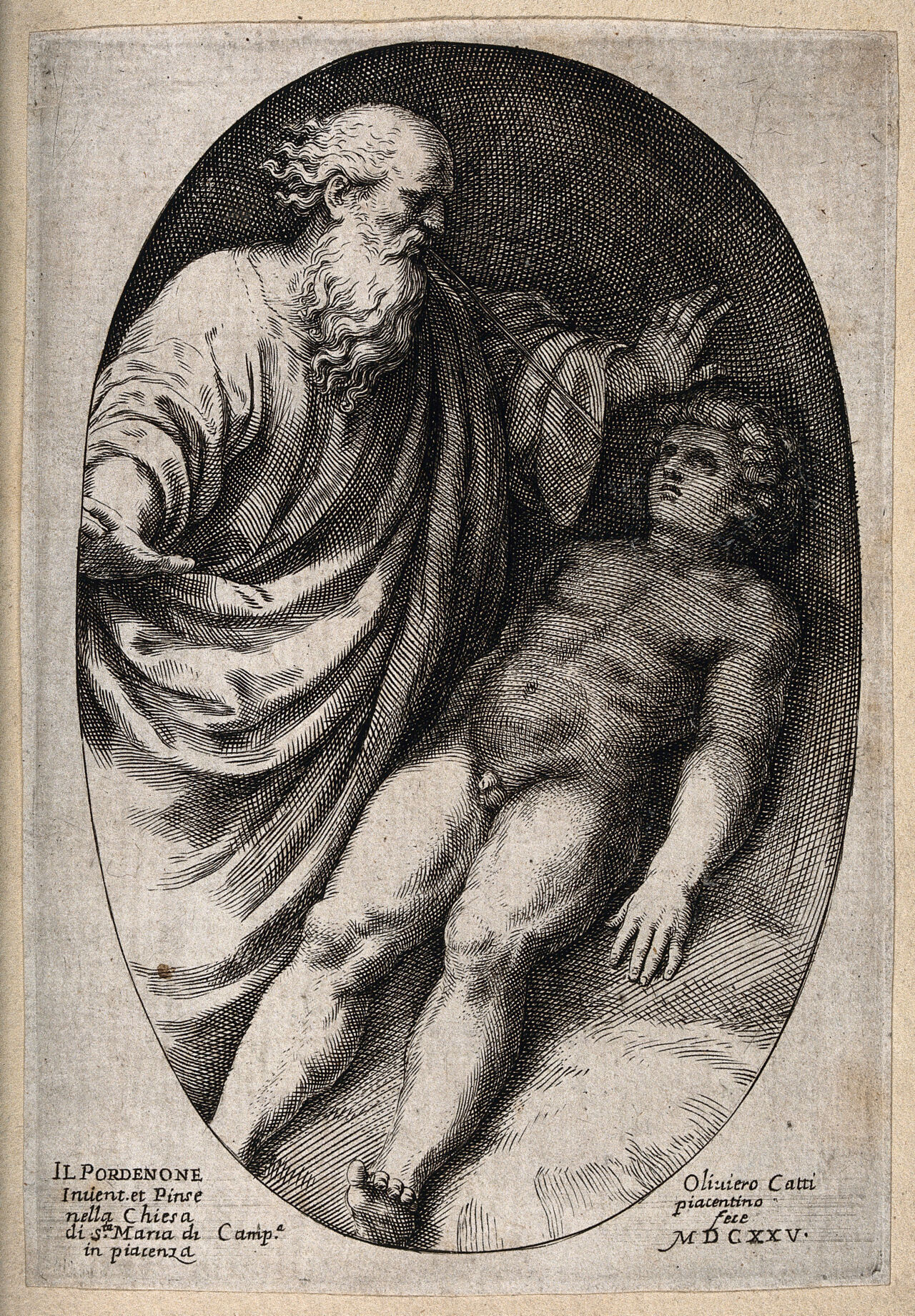
Il Pordenone · Wellcome Collection, London · Wellcome Collection · Public Domain Mark
- Name
- Pordenone
- Birth Name
- Giovanni Antonio de’ Sacchis
- Born
- c. 1484
- Died
- 14 January 1539
- Place of death
- Ferrara
- Known for
- Painting
- Movement
- Mannerism
- Nationality
- Republic of Venice
- Occupation
- painter · wood sculptor · artist
- Languages
- Italian
VALÉORINE Encyclopedia
VALÉORINE documentary reading
Documentary summary
Pordenone, Il Pordenone in Italian, is the byname of Giovanni Antonio de’ Sacchis (c. 1484 – 14 January 1539), an Italian Mannerist painter, loosely of the Venetian school. Vasari, his main biographer, wrongly identifies him as Giovanni Antonio Licinio.
Admitted source layer · organised and presented by VALÉORINE
Note VALÉORINE
No house-authored Note is published until its assertions and sources pass the VALÉORINE evidence contract. The documentary article remains available in full while that enrichment is being consolidated.
Documentary enrichment in progress · no unsupported statement published
Reference Check
Propose documentary evidence for Il Pordenone. A contribution is never written directly as fact: identity, source, rights and evidence gates still decide.
Sign in to contribute
World of VALÉORINE
Documentary connections
Only confirmed graph relationships appear here. Images are shown only when their identity and reuse rights both pass the documentary gate.
Documentary evidence
Evidence Panel
not yet certified
- Identity
- resolved
- Independent source families
- 0
- Admitted assertions
- 0
- Open conflicts
- 0
Authority files
gnd · 1132221056 · wikidata · Q983352 · wikipedia · Il Pordenone
In this article
Biography
Biography
He painted in several cities in northern Italy "with speed, vigor, and deliberate coarseness of expression and execution—intended to shock". He appears to have visited Rome, and learnt from its High Renaissance masterpieces, but lacked a good training in anatomical drawing. Like Polidoro da Caravaggio, he was one of the artists often commissioned to paint the exteriors of buildings; of such work at most a shadow survives after centuries of weather. Michelangelo is said to have approved of one palace facade in 1527; it is now only known from a preparatory drawing. Much of his work was lost when the Doge's Palace in Venice was largely destroyed by fires in 1574 and 1577. A number of fresco cycles survive, for example part of one at Cremona Cathedral, where his Passion scenes have a violence hardly repeated until Goya. Another cycle was at the Scuola Grande della Carità in Venice, now the Gallerie dell'Accademia, the main art museum, where he worked with the young Tintoretto. His life was as energetic and restless as his art; he married three times, and was accused in court of hiring criminals to kill his brother to avoid sharing their inheritance. He perhaps had some influence on later works by Titian and more clearly on Tintoretto, who to some extent took over his position as the leading painter of large mural commissions in Venice. Titian and Pordenone were rivals in his last decade and gossip even claimed that his death was suspicious.
Pomponio Amalteo is recorded as having studied under Il Pordenone. The recorded working language is Italian. The field of work recorded is painting. Works named in the authority record are Golgotha, Lamentation over the Dead Christ, St. Work by Il Pordenone is recorded in the collections of Museum Boijmans Van Beuningen, Minneapolis Institute of Art, Museo del Prado, Art Institute of Chicago and J. Paul Getty Museum.
![Milo of Croton. Woodcut by N. Boldrini after G.A. Pordenone., [between 1500 and 1599], by Il Pordenone](https://iiif.wellcomecollection.org/image/L0077651/full/800,/0/default.jpg)
Milo of Croton. Woodcut by N. Boldrini after G.A. Pordenone., [between 1500 and 1599], by Il Pordenone
Il Pordenone · Wellcome Collection, London · Wellcome Collection
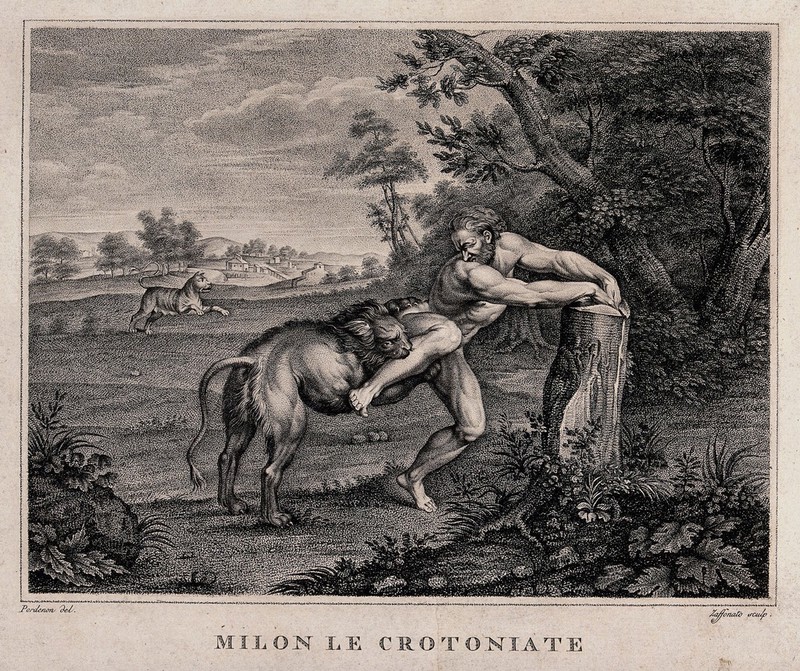
Milo of Croton. Stipple engraving by A. Zaffonato after G.A. Pordenone., by Il Pordenone
Il Pordenone · Wellcome Collection, London · Wellcome Collection
Key facts
Key facts
• Name — Pordenone • Birth Name — Giovanni Antonio de’ Sacchis • Born — c. 1484 • Birthplace — Pordenone • Died — 14 January 1539 • Place of death — Ferrara • Known for — Painting • Movement — Mannerism
Biography
Biography
• Illustration — Debate over Immaculate Conception, Farnese collection in Capodimonte Museum, Naples; originally from the Church of the Annunziata, Cortemaggiore. His name derives from being born in Pordenone in Friuli, though his family came from Corticelle (Brescia, Lombardy). He ultimately dropped the name of de’ Sacchis, having quarrelled with his brother Bartolomeo, who had wounded him in the hand. He then called himself Regillo, or De Regillo. His signature runs Antonius Portusnaonensis, or De Portunaonis. He was knighted as a cavaliere by the Hungarian King John Zápolya. As a painter, Pordenone was a scholar of Pellegrino da San Daniele, but a leading influence of his style was Giorgione; the popular story that he was a fellow-pupil with Titian under Giovanni Bellini is false. It was claimed that Pordenone's first commission was given him by a grocer in his home town, to try his boast that he could paint a picture as the priest commenced High Mass, and complete it by the time Mass was over; he completed the picture in the required time. The district about Pordenone had been somewhat fertile in capable painters; but Pordenone is the best known, a vigorous chiaroscurist and flesh painter. The 1911 Britannica states that "so far as mere flesh-painting is concerned he was barely inferior to Titian in breadth, pulpiness and tone". The two were rivals for a time, and Giovanni Antonio would sometimes affect to wear arms while he was painting. He excelled in portraits; he was equally at home in fresco and in oil-color. He executed many works in Pordenone and elsewhere in Friuli, Cremona, and Venice; at one time he settled in Piacenza, where one of his most celebrated church pictures, St. Catherine disputing with the Doctors in Alexandria is located. The figure of St. Roch, in the Dome of Pordenone is considered his own portrait. • Illustration — Golgotha, Cathedral of Cremona He was invited by Duke Ercole II of Ferrara to court; here soon afterwards, in 1539, he died, not without suspicion of poison committed by Titian. His later works are comparatively careless and superficial; and generally he is better in male figures than in female-the latter being somewhat too sturdy-and the composition of his subject-pictures is scarcely on a level with their other merits. Pordenone appears to have been a vehement self-asserting man, to which his style as a painter corresponds. Three of his principal pupils were Bernardino Licinio, named Il Sacchiense, his son-in-law Pomponio Amalteo, and Giovanni Maria Calderari.
Partial anthology of works
Partial anthology of works
• Study of the Martyrdom of St Peter Martyr (1526, J. Paul Getty Museum) • St Bonaventure (National Gallery, London) • St Louis of Toulouse (National Gallery, London) • Saints Prosdocimus and Peter (1516, North Carolina Museum of Art, Raleigh). • Golgotha (1520–21, fresco, Cathedral of Cremona) • Enthroned Madonna and Child with Saints (c. 1525, Parish church, Susegana, Treviso) • St Lorenzo Giustiniani and Other Saints (1532, originally in Santa Maria dell'Orto, now Accademia, Venice) • Enthroned Madonna and Child with Saints (1525) • Cupula Frescoes: Scenes from Old Testament, Basilica di Santa Maria di Campagna, Piacenza • Saints Martin and Christopher (1528–29, Church of San Rocco, Venice) • St Lorenzo Giustiniani and Two Friars with Saints (1532, Galleria dell'Accademia, Florence) • Saints Sebastian, Roch and Catherine (1535, Church of San Giovanni Elemosinario, Venice) • Enthroned Madonna and Child with Saints (1525, Parish Church, Grandcamp, France). • Dispute of St Catherine with Pagan Philosophers (Cathedral of Piacenza) • Deposition and Immaculate Conception (1530, Church of the Annunziata, Cortemaggiore) • St Gottardo with Saints Sebastian and Rocco (Museo Civico d'Arte, Pordenone) • St Catherine and Martyrs (Museo Civico di Conegliano) • Drawings from Ambrosiana Library, Milan • Magi (Treviso Cathedral) • Giuditta (Judith) (attrib.) (Galleria Borghese)
Works and production
Works and production
The following works and productions are recorded by name or by count.
Places
Named by the record
Places
Only places the record itself states, plotted where the house gazetteer settles their coordinates. Nothing is inferred from a name or a nationality.
Pordenone.
Birth place
Ferrara.
Death place
Primary material
Documents and archives
scholarly publication
- Andrea da Pordenone, Benezit Dictionary of Artists, 2011
Scholarly · Crossref registry · 2011
- Giorgio di Pordenone, Benezit Dictionary of Artists, 2011
Scholarly · Crossref registry · 2011
- Pordenone, Benezit Dictionary of Artists, 2011
Scholarly · Crossref registry · 2011
Institutional database
- Wikidata, structured authority record Q983352: Il Pordenone
Scholarly · Wikimedia Foundation
reference work
- “Il Pordenone”, English Wikipedia, consulted as further reading
Reputable secondary · Wikipedia
References
Citations
References
Each reference names the institution holding it, so a reader may go to the document itself.
scholarly publication
Andrea da Pordenone, Benezit Dictionary of Artists, 2011Crossref registry
Verifiedscholarly publication
Giorgio di Pordenone, Benezit Dictionary of Artists, 2011Crossref registry
Verifiedscholarly publication
Pordenone, Benezit Dictionary of Artists, 2011Crossref registry
VerifiedInstitutional database
Wikidata, structured authority record Q983352: Il PordenoneWikimedia Foundation
Verifiedreference work
Partially resolvedauthority file
Gemeinsame Normdatei 1132221056, Giornata di studio Susegana, il Pordenone, i Collalto (2016 : Susegana).Deutsche Nationalbibliothek
Partially resolved
Further particulars
Held on the record
Further particulars
Open the remaining particulars
Prosdocimus and St.
The Encyclopedia exists whether or not anything is for sale. Corrections are recorded rather than overwritten, and every version of this record is kept. Published 14 August 2026.
Elsewhere in Paintings
18,717 published records in this field, each with its sources named.
- Ike GyokuranArtist
- Ike no TaigaArtist
- Ikeda KosonArtist
- Ikuo HirayamaArtist
- Il SodomaArtist
- Ila Mae McAfeeArtist
- Ilan BaruchArtist
- Ilario SpolveriniArtist
Best supported in this field
For owners
Own a work by Il Pordenone?
A specialist will read what you send and tell you what the house can establish, what it cannot, and whether the object is suited to sale. There is no charge and no obligation. The object stays with you throughout; nothing is shipped to us unless it is arranged in writing beforehand.