
Hubbi Hatun
Ayşe Hubbi Hatun ("the living one" or "womanly"; died 1590) was a lady-in-waiting to Sultan Selim II and later to his son Sultan Murad III of the Ottoman Empire. She was a notable Ottoman poet of the sixteenth century.
Also recorded as Ayşe Hubbi Hatun · Hubba Hatun
Hubbi Hatun

Nidayi · CC BY-SA 4.0
- Name
- Hubbi Hatun
- Spouse
- Şemsi Efendi
- Birthplace
- Amasya, Ottoman Empire
- Died
- 1590
- Place of death
- Istanbul, Ottoman Empire
- Nationality
- Ottoman Empire
- Occupation
- poet · writer
- Languages
- Turkish · Persian · Arabic
Reference Check
Propose documentary evidence for Hubbi Hatun. A contribution is never written directly as fact: identity, source, rights and evidence gates still decide.
Sign in to contribute
Documentary evidence
Documentary basis
Authority files
wikidata · Q27929579 · wikipedia · Hubbi Hatun
In this article
Key facts
Key facts
• Name — Hubbi Hatun • Spouse — Şemsi Efendi • Issue — One daughter • Father — Şeyh Akşemseddin • Birthplace — Amasya, Ottoman Empire • Died — 1590 • Place of death — Istanbul, Ottoman Empire • Burial Place — Eyüp cemetery, Istanbul
Early and personal life
Early and personal life
Born as Ayşe, Hubbi Hatun spent her early childhood in the city of Amasya. She was the daughter of Şeyh Akşemseddin, and granddaughter of Beşiktaşlı Şeyh Yahya Efendi. She was very well educated, and had learned Arabic, and studied poetry. She married her first cousin, son of her maternal aunt, Prince Selim's tutor, Akşemseddinzade Şemsi Efendi, milk brother of Sultan Suleiman the Magnificent. She had a daughter who married the poet Mehmed Vusuli Efendi, known as Molla Çelebi. A garden in Fındıklı belonged to Hubbi Hatun.
Career
Career
After her husband's death in 1551, she remained at the court and was a boon companion of Prince Selim. Hubbi Hatun was famous for her beauty and poetry. She was rumoured to have had love affairs with several of Selim's courtiers. When Selim ascended the throne in 1566, Hubbi Hatun came to Istanbul. After Selim's death in 1574, Hubbi Hatun became a lady-in-waiting to his son, the new Sultan Murad III. She was influential in the reign of both Sultan Selim II and his son Murad III, along with other musahibes (favourites) of Murad, who included mistress of the housekeeper Canfeda Hatun and mistress of financial affairs Raziye Hatun.
Death
Death
• Illustration — Hubbi Hatun Tomb in Eyup Sultan Hubbi Hatun died in 1590 in Istanbul and was buried at Eyüp Cemetery.
Poetry
Poetry
She wrote lyric poems (gazel) and odes (kaside). She also wrote a narrative poem (mesnevi) under the title "Hürşid and Cemşid", which consisted of more than three thousand beyits. Her style of writing poetry was not feminine, and she wrote just like her male colleagues. She was praised in tezkires for her poetic skills. The poetic persona (mahlas) "Hubbi", with which Hubbi Hatun signed her gazels in the last hemistich, can also be found at the end of a risale (message or letter), a short work on religious warfare entitled "İmadu’l-Cihad". The following poetry was written by Hubbi Hatun. Being feminine is no shame to the name of the sun... Being masculine is no glory to the crescent moon. Another set of poetry written by Hubbi Hatun included, "Der Rağbet-i Dua": Dua temsili Yusuf gibi her dem Kim ana müşteridir halkı alem Verir her kişi makdurunca gevher Anın ta müşterisinden olalar Sen oldun şimdi hem ol zen misali Kaçan arz eyledi Yusuf cemali Geturüp nice rişte anda bir zen Hıridar oldu ana canu dilden
Identity and origins
Identity and origins
Her recorded languages were Turkish, Persian, Arabic and Ottoman Turkish. Her recorded confession was Islam.
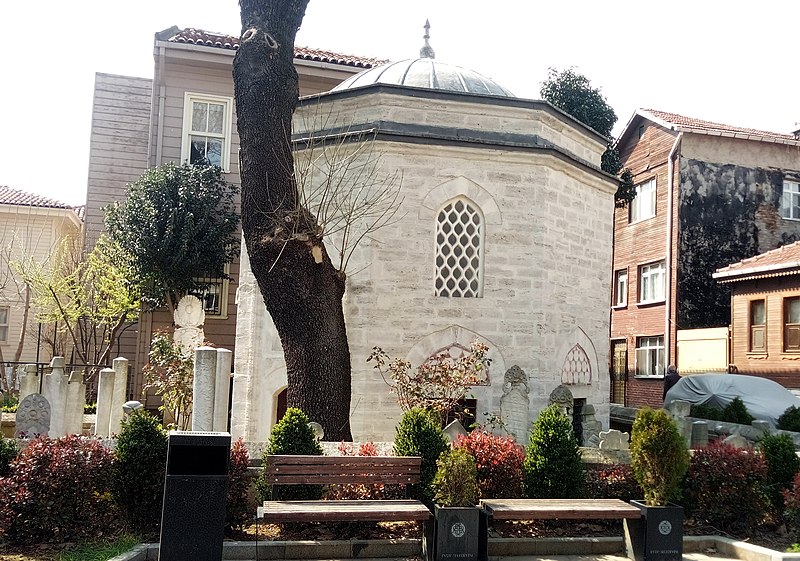
Osmanlı Dönemi Hanım Divan Şairlerinden Hubbî Hatun
Nidayi
Life and career
Dated record
Life and career
The full dated record · 1 entries
1590
Hubbi Hatun died at Istanbul.
Places
Named by the record
Places
Only places the record itself states, plotted where the house gazetteer settles their coordinates. Nothing is inferred from a name or a nationality.
Amasya.
Birth place
Istanbul.
Death place
Primary material
Documents and archives
reference work
- “Hubbi Hatun”, English Wikipedia, consulted as further reading
Reputable secondary · Wikipedia
authority record
- Wikidata, structured authority record Q27929579: Hubbi Hatun
General reference · Wikidata
Text attribution
Licensing
Text attribution
Part of the biographical narrative on this page reuses licensed material. Its origin, revision and licence are recorded here.
The biographical narrative on this page is based on the Wikipedia article Hubbi Hatun, revision 1368220234 (EN edition), by its contributors. VALÉORINE has edited that text and built its own documentary record around it. The reused material is available under CC BY-SA 4.0, and this page's reuse of it is offered under the same licence. Everything else on this page — the chronology, the holdings, the evidence, the plates and the connections — is VALÉORINE's own record. Sources and licences.
Notes from the source article
Cited by Wikipedia
Notes from the source article
These works are cited by the source article, in its own numbering. They are recorded as its citations, not as sources VALÉORINE has verified.
Bibliography printed in the source article · 8
- Fleischer, Cornell H. Bureaucrat and Intellectual in the Ottoman Empire: The Historian Mustafa Ali (1541-1600). Princeton University Press. July 14, 2014. 978-1-400-85421-9.
- Petruccioli, Attilio. Gardens in the Time of the Great Muslim Empires: Theory and Design. E. J. Brill. 1997. 978-9-004-10723-6.
- Faroqhi, Suraiya. Subjects of the Sultan: Culture and Daily Life in the Ottoman Empire. I.B.Tauris. November 29, 2005. 978-1-850-43760-4.
- Çiçek, Kemal. The Great Ottoman-Turkish Civilisation [sic]: Culture and arts. Yeni Türkiye. 2000. 978-9-756-78217-0.
- Havlioğlu, Didem. On the margins and between the lines: Ottoman women poets from the fifteenth to the twentieth centuries. BRILL. 2010.
- Sakaoğlu, Necdet. Bu mülkün kadın sultanları: Vâlide sultanlar, hâtunlar, hasekiler, kadınefendiler, sultanefendiler. Oğlak Yayıncılık. 2008. 978-9-753-29623-6.
- Andrews, Walter G. The Age of Beloveds: Love and the Beloved in Early-Modern Ottoman and European Culture and Society. Duke University Press. January 13, 2005. 978-0-822-33424-8.
- Ersöz, Emine. XV.-XVI. YY Osmanlı Döneminde Kadın Şairler.
References
Citations
References
Each reference names the institution holding it, so a reader may go to the document itself.
reference work
Secondary witnessauthority record
General reference
The Encyclopedia exists whether or not anything is for sale. Corrections are recorded rather than overwritten, and every version of this record is kept. Published 17 August 2026.
Elsewhere in Books
39,529 published records in this field, each with its sources named.
- Huangbo XiyunAuthor
- Huangfu MiAuthor
- Huangfu RanAuthor
- HuaruiAuthor
- Hubert AquinAuthor
- Hubert de RavinelAuthor
- Hubert DéquierAuthor
- Hubert DreyfusAuthor
Best supported in this field
For owners
Own a work by Hubbi Hatun?
A specialist will read what you send and tell you what the house can establish, what it cannot, and whether the object is suited to sale. There is no charge and no obligation. The object stays with you throughout; nothing is shipped to us unless it is arranged in writing beforehand.