
Hilding Ekelund
Georg Hilding Ekelund (18 November 1893 in Kangasniemi – 30 January 1984 in Helsinki) was a Finnish architect, from 1950 to 1958 a professor of housing design at Helsinki University of Technology and from 1931 to 1934 editor-in-chief of the Finnish architects' journal Arkkitehti (Finnish Architectural Review). His career as an architect spans the change in styles in Finland from the Nordic Classicism of the 1920s to the Modernism of the 1970s.
Hilding Ekelund
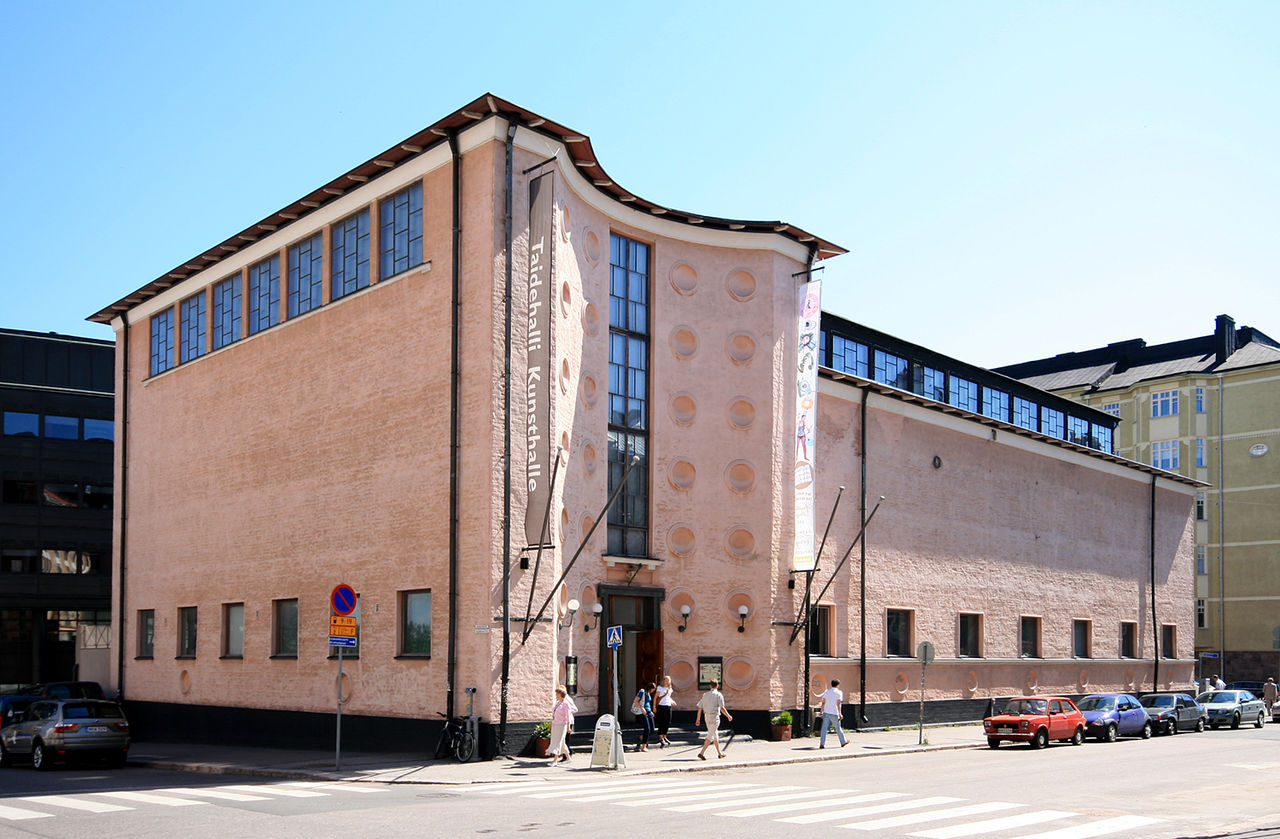
MyName (Mahlum) · Public domain
- Name
- Hilding Ekelund
- Born
- 18 November 1893
- Birthplace
- Kangasniemi, Finland
- Died
- 30 January 1984
- Place of death
- Helsinki, Finland
- Full name
- Georg Hilding Ekelund.
- Nationality
- Finland · Grand Duchy of Finland
- Occupation
- architect
- Education
- Helsinki University of Technology
- Languages
- Finnish · Swedish
VALÉORINE Encyclopedia
VALÉORINE documentary reading
Documentary summary
Georg Hilding Ekelund (18 November 1893 in Kangasniemi – 30 January 1984 in Helsinki) was a Finnish architect, from 1950 to 1958 a professor of housing design at Helsinki University of Technology and from 1931 to 1934 editor-in-chief of the Finnish architects' journal Arkkitehti (Finnish Architectural Review). His career as an architect spans the change in styles in Finland from the Nordic Classicism of the 1920s to the Modernism of the 1970s.
Admitted source layer · organised and presented by VALÉORINE
Note VALÉORINE
Hilding Ekelund (1893–1984) was an architect, a national of Finland and the Grand Duchy of Finland. The architect was born Georg Hilding Ekelund in Kangasniemi and died in Helsinki.
Hilding Ekelund was educated at Helsinki University of Technology. The architect worked in Helsinki. Languages used include Finnish and Swedish.
Composed from admitted, traceable facts · 26 September 2026
VALÉORINE
Reference Check
Propose documentary evidence for Hilding Ekelund. A contribution is never written directly as fact: identity, source, rights and evidence gates still decide.
Sign in to contribute
World of VALÉORINE
Documentary connections
Only confirmed graph relationships appear here. Images are shown only when their identity and reuse rights both pass the documentary gate.
Documentary evidence
Documentary basis
Authority files
wikidata · Q4410996 · wikipedia · Hilding Ekelund
In this article
Key facts
Key facts
• Name — Hilding Ekelund • Born — 18 November 1893 • Birthplace — Kangasniemi, Finland • Died — 30 January 1984 • Place of death — Helsinki, Finland • Significant Buildings — Taidehalli Arts Gallery Maunula social housing Helsinki 1952 Olympic Games village
Career
Career
Ekeleund studied architecture at Helsinki University of Technology, qualifying as an architect in 1916. His wide career in architecture spanned from the design of public housing areas and town planning to public buildings, factories and churches. Following a classical education in architecture, where the predominant style was Nordic Classicism, Ekelund like others Finnish architects of his generation, such as Alvar Aalto, made the switch to Modernism – known in Finland as "Functionalism" – partly in response to the greater urbanisation of the country during the 1920s and 1930s.[1] Ekelund designed a significant number of buildings in the town of Karis, already during the 1930s. The town plan for Karis, drawn up in the 1930s by architect Carolus Lindberg was soon regarded as over-dimensioned, and Ekelund was given the task of redesigning it. His "modern" design was influenced by ideas from the Garden city movement, as interpreted in Finland by Otto-Iivari Meurman and its modern interpretation by Le Corbusier, with a particular emphasis on open spaces and parks. In the town Ekelund designed a dispensing chemist, the town hall, cemetery chapel, water tower, trade college and several schools and old-people's homes.[2] Architectural competitions have been a common method in Finland for choosing designs for key public buildings, and Ekelund entered several of them over the length of his career. For instance, he won the competition for the choice of the site of the Finnish Parliament building - though the final site was later changed and J.S. Sirén was chosen as the final architect of the building, following a second competition. Among Ekelund's more notable buildings are the Taidehalli Art Gallery (together with Jarl Eklund) in Helsinki, Töölö Church in Helsinki, the Finnish Embassy in Moscow, and a number of buildings for the 1952 Summer Olympics held in Helsinki, including the Olympic Rowing Stadium, the Olympic Velodrome, and the Olympic Games village.[3] Hilding Ekelund's brother was the author and painter Ragnar Ekelund. His wife, Eva Kuhlefelt-Ekelund, was also an architect, and they formed a joint office in 1927.
Major works by Hilding Ekelund
Major works by Hilding Ekelund
• Illustration — Töölö Church, Helsinki • Kunsthalle Helsinki (1928), Helsinki • Töölö Church (1930), Helsinki • Lutheran Church (1931), Helsinki • Finnish Embassy in the Soviet Union (1938), Moscow • Olympic Velodrome (1938–40), Helsinki • Olympic Village (1939–40), Helsinki • Helsinki street kiosks (1940s–50s), Helsinki • Karis water tower (1949–1951), Karis • Maunula social housing: terraced housing and apartment blocks (1953), Helsinki • Salmisaari power station (1951), Helsinki • Swedish-speaking Finnish teachers’ house, Roihuvuori (c. 1957), Helsinki • Nelimarkka Museum (1964), Alajärvi • Sahanmäki area regional planning, Maunula, Helsinki • Illustration — Punahilkantie 12. Roihuvuori housing area, Helsinki • Private residential building (1969), South-Haaga, Helsinki
Identity
Identity
Hilding Ekelund is recorded as a citizen of Grand Duchy of Finland. Recorded with the occupation architect.
Life and career
Dated record
Life and career
Explore 1893–1984
The full dated record · 9 entries
1893
Hilding Ekelund was born on 18 November 1893.
1925
As Oy Tiilimäki 23 is dated 1925.
1928
Kunsthalle Helsinki is dated 1928.
1930
Töölö Church is dated 1930.
1939
Olympiakylän lämpökeskus is dated 1939.
1939
Töölö Rowing Stadium is dated 1939.
1940
Helsinki Velodrome is dated 1940.
1954
Sandelsgatan 3 is dated 1954.
1984
Hilding Ekelund died on 30 January 1984.
Places
Named by the record
Places
Only places the record itself states, plotted where the house gazetteer settles their coordinates. Nothing is inferred from a name or a nationality.
Hilding Ekelund was born at Kangasniemi.
Birthplace
Hilding Ekelund died at Helsinki.
Deathplace
Kangasniemi.
Birth place
Helsinki.
Death place
Context
Primary material
Context
The circumstances in which Hilding Ekelund stands.
Documents and archives
Primary material
Documents and archives
reference work
- “Hilding Ekelund”, English Wikipedia, consulted as further reading
Reputable secondary · Wikipedia
- Wikidata, structured authority record Q4410996: Hilding Ekelund
Reputable secondary · Wikimedia Foundation
authority file
- VIAF cluster 59916017 for Hilding Ekelund, aggregating national library name authorities.
General reference · OCLC
Notes from the source article
Cited by Wikipedia
Notes from the source article
These works are cited by the source article, in its own numbering. They are recorded as its citations, not as sources VALÉORINE has verified.
References
Citations
References
Each reference names the institution holding it, so a reader may go to the document itself.
reference work
Secondary witnessauthority file
Secondary witnessreference work
Wikidata, structured authority record Q4410996: Hilding EkelundWikimedia Foundation
Secondary witness
The Encyclopedia exists whether or not anything is for sale. Corrections are recorded rather than overwritten, and every version of this record is kept. Published 17 August 2026.
Elsewhere in Design
11,558 published records in this field, each with its sources named.
- Hilary MajewskiDesigner
- Hilda HongellDesigner
- Hilda MasonDesigner
- Hilda TabaDesigner
- Hildreth MeiereDesigner
- Hilja GestrinDesigner
- Hillevi SvedbergDesigner
- Hilmi ŞenalpDesigner
Best supported in this field
For owners
Own a work by Hilding Ekelund?
A specialist will read what you send and tell you what the house can establish, what it cannot, and whether the object is suited to sale. There is no charge and no obligation. The object stays with you throughout; nothing is shipped to us unless it is arranged in writing beforehand.