
Hercules Seghers
Hercules Pieterszoon Seghers or Segers (c. 1589 – c. 1638) was a Dutch painter and printmaker of the Dutch Golden Age.
Also recorded as Hercules Pieterszoon Seghers · Hercules Pieterszoon Segers · Hercules Segers · Hercules Seegers
Hercules Seghers
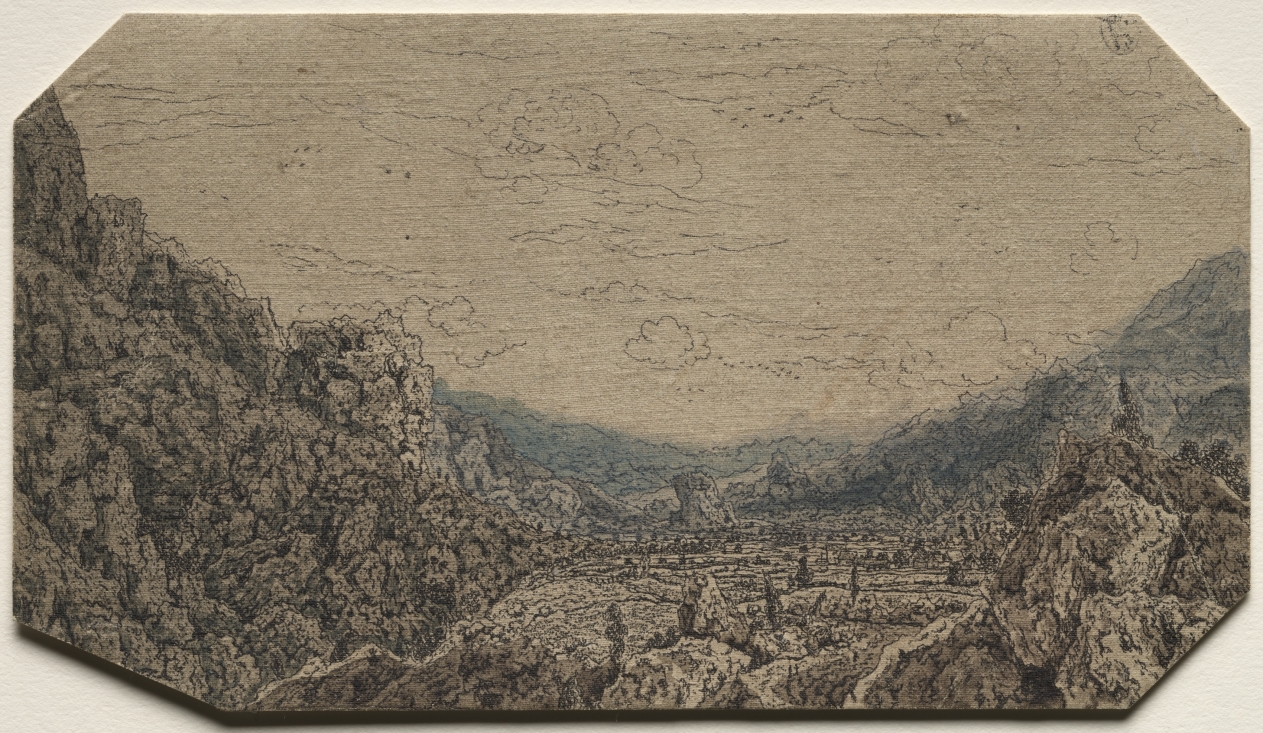
Hercules Seghers · The Cleveland Museum of Art · John L. Severance Fund · CC0
- Name
- Hercules Seghers
- Birth Name
- Hercules Pieterszoon Seghers
- Born
- c. 1589
- Birthplace
- Haarlem
- Died
- c. 1638
- Field
- Painting, Printmaking, Landscape art
- Movement
- Dutch Golden Age
- Nationality
- Dutch Republic
- Occupation
- painter · printmaker · art dealer · visual artist · graphic artist · etcher
- Fields
- landscape painting · marine art · still life
- Movements
- Baroque
- Known for
- River Valley · River Valley
VALÉORINE Encyclopedia
VALÉORINE documentary reading
Documentary summary
Hercules Pieterszoon Seghers or Segers (c. 1589 – c. 1638) was a Dutch painter and printmaker of the Dutch Golden Age.
Admitted source layer · organised and presented by VALÉORINE
Reference Check
Propose documentary evidence for Hercules Seghers. A contribution is never written directly as fact: identity, source, rights and evidence gates still decide.
Sign in to contribute
Documentary evidence
Documentary basis
Authority files
wikidata · Q931846 · wikipedia · Hercules Seghers
In this article
Biography
Biography
He has been called "the most inspired, experimental and original landscapist" of his period and an even more innovative printmaker.
Key facts
Key facts
• Name — Hercules Seghers • Birth Name — Hercules Pieterszoon Seghers • Born — c. 1589 • Birthplace — Haarlem • Died — c. 1638 • Field — Painting, Printmaking, Landscape art • Movement — Dutch Golden Age
Life
Life
• Illustration — Mountainous Landscape, c. 1650; oil on panel by Seghers. Bredius Museum, Hague – destroyed by fire in Oct. 2007. Hercules was born in Haarlem, the son of Cathalina Hercules and Pieter Seghers, a Mennonite cloth merchant, originally from Flanders, who moved to Amsterdam in 1596. There Hercules was apprenticed to the leading Flemish landscapist of the day, Gillis van Coninxloo, but his apprenticeship was presumably cut short by Coninxloo's death in 1606. Seghers and his father bought a number of his works at the auction of the studio contents, as Pieter Lastman did. Seghers' father died in 1612, after which he returned to Haarlem, joining the Haarlem Guild of St. Luke. He returned to Amsterdam in 1614 to obtain custody of an illegitimate daughter, and the following year married Anneken van der Brugghen from Antwerp, who was sixteen years older than he was. In 1620 he bought a large house in the Jordaan on the Lindengracht for about 4,000 guilders, but by the late 1620s he was in debt, and in 1631 had to sell it. From his studio at the top of the house, which was pulled down in 1912, he had a view on the recently finished Noorderkerk, which is on one of his etchings. In the same year he moved to Utrecht and started to sell art. In 1633 he moved to the Hague. He appears to have died by 1638, when a Cornelia de Witte is mentioned as widow of a "Hercules Pieterz". Like much of the detailed documentation of Segher's life, this link depends on the assumed rarity of his first name. Some later sources said that Seghers took to drink towards the end of his life and died after falling down the stairs. His posthumous reputation was boosted by the Inleyding tot de hooge schoole der schilderkonst (Introduction to the High School of Painting) of Samuel van Hoogstraten, which presented him rather as a Romantic genius avant la lettre, lonely, poor and misunderstood, based mostly on his etchings. Hoogstraeten's description of Segher's life is included in the chapter "How the Artist Should Behave in the Face of Adverse Fortune", wherein he depicts Seghers as an idiosyncratic talent, hounded by misfortune and economic instability.
Gallery
Gallery
• Illustration — Seghers, Woodland Path, c. 1618-20; canvas on panel • Illustration — Seghers, Landscape with overhanging fir, c. 1615-30; etching on paper, hand-coloured • Illustration — Seghers, Landscape with overhanging fir, c. 1615-30; etching and colour on linen • Illustration — Seghers, View of Brussels from the North-East, c. 1625; oil on panel • Illustration — Seghers, River Valley, c. 1626-30; oil on panel • Illustration — Seghers, The two Trees, c. 1620-30; etching in brown ink • Illustration — Seghers, View of the Noorderkerk (church in Amsterdam), c. 1622-30; etching on linen • Illustration — Seghers, Landscape with City on a River, c. 1627-29; oil-painting on oak panel • Illustration — Seghers, Ruins of a large church, c. 1629-38; print • Illustration — Seghers & (thereafter) Rembrandt, Rest on the Flight into Egypt, c. 1653; etching, drypoint and burin • Illustration — Seghers, The Landscape with the white rock, c. 1590-1640; oil-painting on canvas; Casa Museu Eva Klabin collection
Identity
Identity
Hercules Seghers is recorded as painter, printmaker, art dealer and visual artist.
Life and career
Dated record
Life and career
The full dated record · 2 entries
1589
Hercules Seghers was born in 1589.
1638
Hercules Seghers died at The Hague.
Prints
Prints
• Illustration — Landscape with Fir, c. 1620–30; etching on painted paper, in Rijksmuseum He is mainly known for his highly innovative etchings, mostly of landscapes, which were often printed on coloured paper or cloth, and with coloured ink, and hand-coloured and often hand-cropped to different sizes. He also made use of drypoint and a form of aquatint as well as other effects, such as running coarse cloth through the press with the print, for a mottled effect. Altogether only 183 known impressions survive from all his fifty-four plates and most are now in museums; the Rijksmuseum print room has easily the best collection. Rembrandt collected both paintings (he had eight) and prints by Seghers, and acquired one of his original plates, Tobias and the Angel (HB 1), which he reworked into his own Flight into Egypt (B 56), keeping much of the landscape. Rembrandt also reworked the Seghers painting Mountain Landscape, now in the Uffizi, and his landscape style shows some influence from Seghers. Although the dating of his prints remains unclear, his Town with four towers (HB 29) is believed both to be one of the later prints and, by comparison with paintings, to date from around 1631. Given the small number of surviving impressions, it is unlikely that prints were a major source of income for him. His Pile of books (see Rijksmuseum link) is an unusual still-life subject for a 17th-century print. He seems to have invented the "sugar-bite" aquatint technique, which was rediscovered in England over a century later by Alexander Cozens (it is also called lift-ground etching).
Paintings
Paintings
• Illustration — Panoramic Landscape, c. 1625; oil on canvas, mounted on panel Museum Boymans-van Beuningen, only attributed to Seghers since 1951. Hercules Seghers was probably best known to his contemporaries for his paintings of landscapes and still-life subjects such as The River Valley; his paintings are also rare, with perhaps only fifteen surviving (one was destroyed in a fire in October 2007). The Stadholder, Frederick Henry, Prince of Orange bought landscapes in 1632. Many of his painted landscapes are fantastic mountainous compositions, whereas in his prints it is often the technical approach rather than the subject which is extreme. Seghers painted landscapes tend to show a wide horizontal view, with emphasis on earth rather than sky; two in the Gemäldegalerie, Berlin had strips of sky added at the top later in the century to meet a changed taste. Apart from Coninxloo, Seghers drew from the Flemish landscape tradition, perhaps especially Joos de Momper and Roelandt Savery, but also the "fantastic and visionary aspects of Mannerist" landscape painting. The 1680 inventory of the collection of the marine painter Jan van de Cappelle, who owned five paintings by Seghers, describes one as a view of Brussels, which if correct would presumably mean Seghers traveled there, probably when young, when his style shows most Flemish influence (in so far as the chronology of his work is clear).
Notes from the source article
Cited by Wikipedia
Notes from the source article
These works are cited by the source article, in its own numbering. They are recorded as its citations, not as sources VALÉORINE has verified.
- 1.Segers is in fact the more common form in contemporary documents, and was used by the painter himself (modern use is about equally divided between the two): Neil MacLaren, The Dutch School, 1600–1800, Volume I, National Gallery Catalogues, p. 418-20, 1991, National Gallery, London,
- 2.Slive, 183
- 3.The attribution is contested by many. See other references for the fire in Amersfoort.
- 4.Getscher, Robert H. Hercules Seghers. Leo C. Collins. Hercules Segers. John Rowlands. ARLIS/NA Newsletter. 8. 3. 106–106. May 1980. 0090-3515.
- 5.Kannegieter, Z.J. (1942) Het huis van Hercules Segers op de Lindengracht te Amsterdam. In: Historische studiën en schetsen, p. 24-25. The actual price of the house is not recorded, and is an estimate by Kannegieter, based on similar sales.
- 6.Hoogsteder & Hoogsteder, Mathieu Dubus, avant-gardist
- 7.In fact a free copy by Seghers of the Goudt print of Adam Elsheimer's "Large Tobias" painting, now lost. See Slive, 184
- 8.R van Luttervelt, Dutch Museums, p.202, 1960, Thames & Hudson, London.
- 9.Armando Museum in Ruins After Fire.
- 10.Slive, 184–185
Bibliography printed in the source article · 2
- E. Haverkamp Begemann, Hercules Segers: The Complete Etchings, 2013, Springer, , 9789401769822
- WBOOKS. Under the spell of Hercules Segers. 2016. 978-94-625-8173-9.
References
Citations
References
Each reference names the institution holding it, so a reader may go to the document itself.
reference work
Wikidata, structured authority record Q931846: Hercules SeghersWikimedia Foundation
Secondary witnessreference work
Secondary witness
Further particulars
Held on the record
Further particulars
Open the remaining particulars
The authorities additionally record the headings Hercules Pieterszoon Seghers, Hercules Pieterszoon Segers, Hercules Segers, Hercules Seegers and Hercules Pietersz. His recorded languages were Dutch and English. Seghers worked in painting, visual arts and graphics. His work is associated with Baroque. He belonged to Haarlem Guild of St. He worked at Amsterdam, Leiden, Haarlem and Utrecht.
Identity and origins
Career and activity
Recognition and collections
Work by Hercules Seghers is
Museum Boijmans Van Beuningen, Art Institute of Chicago, Thyssen-Bornemisza Museum and National Galleries Scotland
The Encyclopedia exists whether or not anything is for sale. Corrections are recorded rather than overwritten, and every version of this record is kept. Published 14 August 2026.
Elsewhere in Prints
4,138 published records in this field, each with its sources named.
- Herald EelmaEngraver
- Herbert DickseeEngraver
- Herbert Francis WauthierEngraver
- Herbert SiebnerEngraver
- Herman Frederik Carel ten KateEngraver
- Herman HeblerEngraver
- Herman Hendrik BaandersEngraver
- Herman MollEngraver
Best supported in this field
For owners
Own a work by Hercules Seghers?
A specialist will read what you send and tell you what the house can establish, what it cannot, and whether the object is suited to sale. There is no charge and no obligation. The object stays with you throughout; nothing is shipped to us unless it is arranged in writing beforehand.