
Henry Brooke
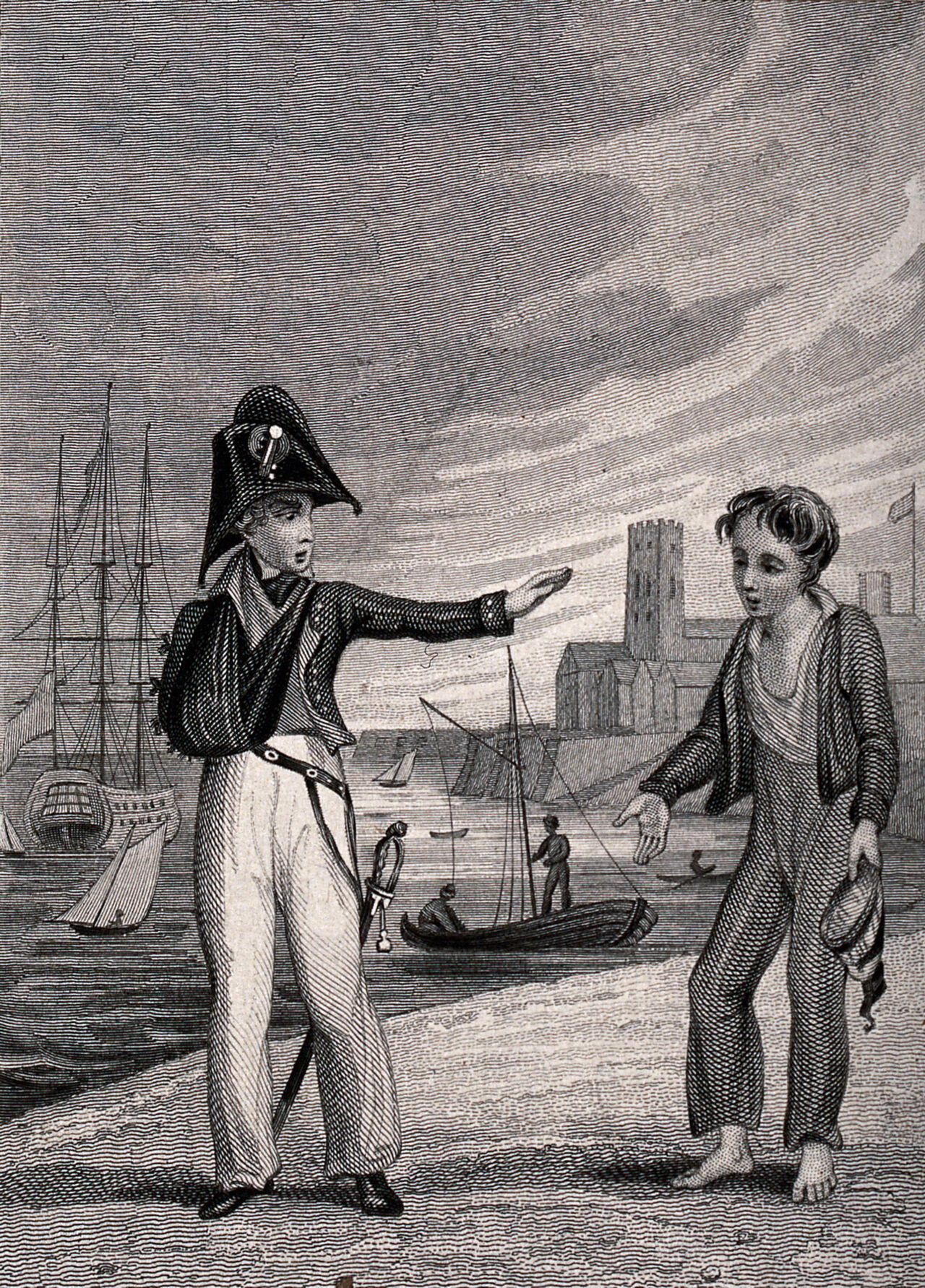
Henry Brooke · Wellcome Collection, London · Wellcome Collection · Public Domain Mark
- Name
- Henry Brooke
- Born
- 1703
- Birthplace
- Mullagh, County Cavan, Kingdom of Ireland
- Died
- 10 October 1783 (aged 80)
- Place of death
- Dublin, Kingdom of Ireland
- Occupation
- novelist, dramatist
- Nationality
- Kingdom of Ireland
- Languages
- English
VALÉORINE Encyclopedia
VALÉORINE documentary reading
Documentary summary
Henry Brooke (disambiguation)
Admitted source layer · organised and presented by VALÉORINE
Reference Check
Propose documentary evidence for Henry Brooke. A contribution is never written directly as fact: identity, source, rights and evidence gates still decide.
Sign in to contribute
World of VALÉORINE
Documentary connections
Only confirmed graph relationships appear here. Images are shown only when their identity and reuse rights both pass the documentary gate.
Documentary evidence
Documentary basis
Authority files
wikidata · Q2170258
In this article
Key facts
Key facts
• Name — Henry Brooke • Born — 1703 • Birthplace — Mullagh, County Cavan, Kingdom of Ireland • Died — 10 October 1783 (aged 80) • Place of death — Dublin, Kingdom of Ireland • Occupation — novelist, dramatist • Notable Works — The Fool of Quality (1766–70) Henry Brooke (1703 – 10 October 1783) was an Irish novelist and dramatist. He was born and raised at Rantavan House near Mullagh, a village in the far south of County Cavan in Ireland, the son of a clergyman, and he later studied law at Trinity College, Dublin, but embraced literature as a career. Brooke's father was The Reverend William Brooke, the well-off Church of Ireland Rector of Killinkere and Mullagh within the Church of Ireland Diocese of Kilmore. Henry first began his career as a poet. His now forgotten philosophical poem Universal Beauty was published in 1735, and Alexander Pope thought its sentiments and poetry fine. He then turned dramatist by adapting extant plays, such as The Earl of Essex. He wrote from the Tory point of view and became one of the most important figures in Augustan drama, although not for his successes. His Gustavus Vasa (1739) has the distinction of being the first play banned by the Licensing Act 1737. The play concerned the liberation of Sweden from Denmark in 1521 by Riksföreståndare (Protector of the Realm or Regent) Gustav Vasa (who later became King Gustav I of Sweden). Sir Robert Walpole believed that the villain of the play resembled him. Further, a facetious "attack" on it was the first public writing of Samuel Johnson, whose A Complete Vindication of the Licensers of the English Stage feigns support for Walpole while it drives the censor's argument to reductio ad absurdum. Brooke lived in Ireland most of his life, but he spent time in London when his plays were on the stage. In politics, he was somewhat radical in arguing publicly for loosening the laws persecuting Roman Catholics in the United Kingdom. His daughter Charlotte Brooke was herself an important figure in the history of Irish literature, publishing Reliques of Irish Poetry (1789) and working to increase the profile of Irish language poetry. Later, his Earl of Essex came back to the boards in a revival. Again, Samuel Johnson offered his public support of Brooke, but when he heard the Earl saying at the end of Act II, "Who rules o'er free men must himself be free," Johnson replied, "Who drives fat oxen must himself be fat." Although Johnson was objecting to the misuse and overuse of "freedom" and was at that time in a vexatious debate over the United States War of Independence (saying, "Why is it that we hear the loudest cries for liberty from the drivers of Negroes?"), Brooke was mortified by Johnson's parody and changed the line for his Collected Works. Brooke had a difficult life and made a very poor living. The Licensing Act 1737 robbed him of his primary avenue to making a living, for, after the Act, he was the first man banned by it. Whatever fame this lent him was made up for by his inability to get new plays performed. His greatest commercial successes came from the Earl of Essex and his two novels, The Fool of Quality (1760-1772) and Juliet Grenville (1774), which are two of the finest sentimental novels. John Wesley was so fond of The Fool of Quality, in which Brooke declares his belief in universal salvation, that he sought to have a copy of it given out to all new Methodist churches. He had twenty-two children. Of these, only Charlotte survived adolescence. She shepherded his Works through the press after his death.
Places
Named by the record
Places
Only places the record itself states, plotted where the house gazetteer settles their coordinates. Nothing is inferred from a name or a nationality.
County Cavan.
Birth place
Dublin.
Death place
Notes from the source article
Cited by Wikipedia
Notes from the source article
These works are cited by the source article, in its own numbering. They are recorded as its citations, not as sources VALÉORINE has verified.
- 1.Robert Welch, The Concise Oxford Companion to Irish Literature, p. 41. Oxford University Press, Oxford, 2000.
- 2.Dictionary of Irish Biography (D.I.B.): Brooke, Henry. https://www.dib.ie/biography/brooke-henry-a0990
- 3.Townlands.ie: Rantavan Townland, Co. Cavan. https://www.townlands.ie/cavan/castlerahan/mullagh/mullagh/rantavan/
- 4.De Breffny, Brian. Ireland: A Cultural Encyclopedia. Thames and Hudson. 50. 1983.
- 5.Harry M. Solomon. The rise of Robert Dodsley: creating the new age of print. SIU Press. 79. 1996. 0-8093-1651-X.
- 6.De Breffny, pg.53
- 7.John McClintock. Cyclopaedia of Biblical, Theological, and Ecclesiastical Literature. Harper & brothers (1891). p. 660.
References
Citations
References
Each reference names the institution holding it, so a reader may go to the document itself.
reference work
Secondary witness
The Encyclopedia exists whether or not anything is for sale. Corrections are recorded rather than overwritten, and every version of this record is kept. Published 18 August 2026.
Elsewhere in Books
38,750 published records in this field, each with its sources named.
- Henry Bellyse BaildonAuthor
- Henry BibbAuthor
- Henry BlossomAuthor
- Henry BoydAuthor
- Henry Brougham FarnieAuthor
- Henry Brougham, 1st Baron Brougham and VauxAuthor
- Henry CareyAuthor
- Henry CéardAuthor
Best supported in this field
For owners
Own a work by Henry Brooke?
A specialist will read what you send and tell you what the house can establish, what it cannot, and whether the object is suited to sale. There is no charge and no obligation. The object stays with you throughout; nothing is shipped to us unless it is arranged in writing beforehand.