
Harry Belafonte
Harry Belafonte (born Harold George Bellanfanti Jr.; March 1, 1927 – April 25, 2023) was an American singer, actor, and civil rights activist who popularized calypso music with international audiences in the 1950s and 1960s. Belafonte's career breakthrough album Calypso (1956) was the first million-selling LP by a single artist. Belafonte was best known for his recordings of "Day-O (The Banana Boat Song)", "Jump in the Line (Shake, Senora)", "Jamaica Farewell", and "Mary's Boy Child".
Also recorded as Harold George Belafonte Jr. · Belafonte · Harold George Bellanfanti Jr. · Harry Bellanfanti Jr.
Harry Belafonte
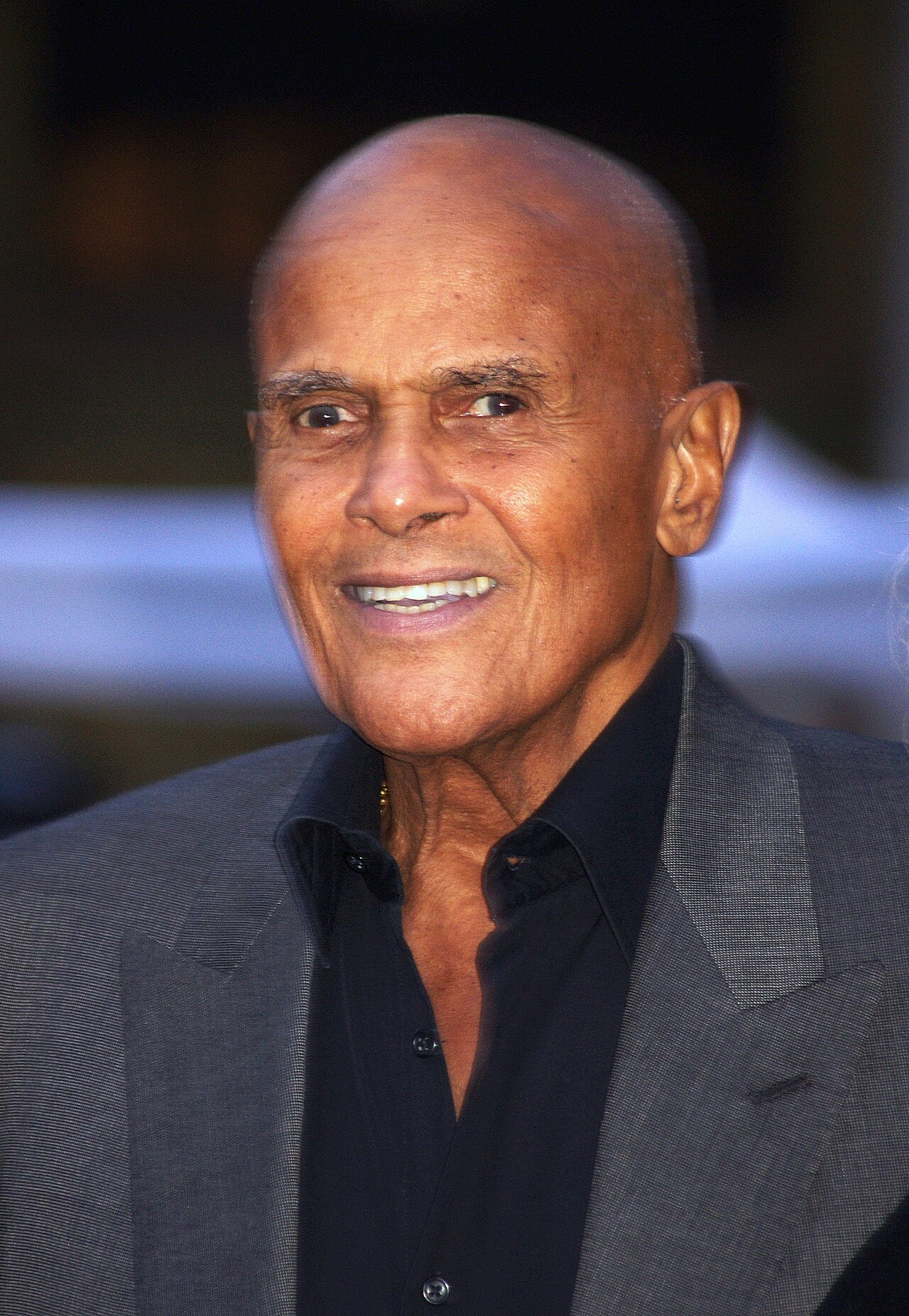
David Shankbone · CC BY 3.0
- Name
- Harry Belafonte
- Birth Name
- Harold George Bellanfanti Jr.
- Born
- 1 March 1927
- Birthplace
- New York City, U.S.
- Died
- 25 April 2023
- Occupation
- * Singer
- Full name
- Harold George Bellanfanti.
- Nationality
- United States · Jamaica
- Fields
- film industry · music industry · peace movement · civil rights movement
- Education
- Wolmer's Schools · George Washington Educational Campus · The New School
- Teachers
- Erwin Piscator
- Known for
- Calypso · Banana Boat (Day-O)
VALÉORINE Encyclopedia
VALÉORINE documentary reading
Documentary summary
Harry Belafonte (born Harold George Bellanfanti Jr.; March 1, 1927 – April 25, 2023) was an American singer, actor, and civil rights activist who popularized calypso music with international audiences in the 1950s and 1960s. Belafonte's career breakthrough album Calypso (1956) was the first million-selling LP by a single artist. Belafonte was best known for his recordings of "Day-O (The Banana Boat Song)", "Jump in the Line (Shake, Senora)", "Jamaica Farewell", and "Mary's Boy Child".
Admitted source layer · organised and presented by VALÉORINE
Note VALÉORINE
No house-authored Note is published until its assertions and sources pass the VALÉORINE evidence contract. The documentary article remains available in full while that enrichment is being consolidated.
Documentary enrichment in progress · no unsupported statement published
Reference Check
Propose documentary evidence for Harry Belafonte. A contribution is never written directly as fact: identity, source, rights and evidence gates still decide.
Sign in to contribute
Documentary evidence
Evidence Panel
not yet certified
- Identity
- resolved
- Independent source families
- 0
- Admitted assertions
- 0
- Open conflicts
- 0
Authority files
gnd · 1200490894 · museum · 271290752 · wikidata · Q214959 · wikipedia · Harry Belafonte
In this article
Biography
Biography
He recorded and performed in many genres, including blues, folk, gospel, show tunes, and American standards. He also starred in films such as Carmen Jones (1954), Island in the Sun (1957), Odds Against Tomorrow (1959), Buck and the Preacher (1972), and Uptown Saturday Night (1974). He made his final feature film appearance in Spike Lee's BlacKkKlansman (2018). Belafonte considered the actor, singer, and activist Paul Robeson to be a mentor. Belafonte was also a close confidant of Martin Luther King Jr. During the civil rights movement of the 1950s and 1960s and acted as the American Civil Liberties Union celebrity ambassador for juvenile justice issues. He was also a vocal critic of the policies of the George W. Bush and first Donald Trump administrations. Belafonte won three Grammy Awards, including a Grammy Lifetime Achievement Award, a Primetime Emmy Award, and a Tony Award. In 1989, he received the Kennedy Center Honors. He was awarded the National Medal of Arts in 1994. In 2014, he received the Jean Hersholt Humanitarian Award at the academy's 6th Annual Governors Awards and in 2022 was inducted into the Rock and Roll Hall of Fame in the Early Influence category. He is one of the few performers to have received an Emmy, Grammy, Oscar, and Tony (EGOT), although he won the Oscar in a non-competitive category.
Harry Belafonte studied at Wolmer's Schools, George Washington Educational Campus and The New School. Training under Erwin Piscator is recorded. The recorded working language is English. The field of work recorded is film industry, music industry and peace movement. Subjects and genres recorded for the work are calypso, pop music, folk music and world music. Sir Lancelot is recorded as an influence. Places of work recorded in the authority are United States. Residence is recorded at Upper West Side. Employment is recorded with UNICEF. Positions recorded include UNICEF Goodwill Ambassador. Works named in the authority record are Calypso and Banana Boat (Day-O). Distinctions recorded are Tony Award for Best Featured Actor in a Musical, Primetime Emmy Award for Individual Performance in a Variety or Music Program, Paul Robeson Award and Kennedy Center Honors.

Gustav VI Adolf, Harry Belafonte och Martin Luther King Jr, i samband med att Martin Luther King tilldelades Nobels fredspris 1964.
Scanpix

Harry Belafonte at the Vienna International Film Festival 2011.
Manfred Werner - Tsui
Key facts
Key facts
• Honorific Prefix — The Honourable • Name — Harry Belafonte • Honorific Suffix — OM • Birth Name — Harold George Bellanfanti Jr. • Born — 1 March 1927 • Birthplace — New York City, U.S. • Died — 25 April 2023 • Place of death — New York City, U.S. • Other Names — * Harold George Belafonte Jr. • Harry Bellanfanti Jr. • "King of Calypso" • Years Active — 1948–2023 • Occupation — * Singer • actor • activist • Works — Discography • Political Party — Democratic • Children — 4, including Shari and Gina
Early life
Early life
Belafonte was born Harold George Bellanfanti Jr. on March 1, 1927, at Lying-in Hospital in Harlem, New York City, the son of Jamaican-born parents Harold George Bellanfanti Sr. (1900–1990), who worked as a chef, and Melvine Love (1906–1988), a housekeeper. There are disputed claims of his father's place of birth, which is also stated as Martinique. Belafonte also had a younger brother named Dennis. His mother was the child of a Scottish Jamaican mother and an Afro-Jamaican father, and his father was the child of an Afro-Jamaican mother and a Dutch-Jewish father of Sephardic Jewish descent. Belafonte was raised Catholic and attended parochial school at St. Charles Borromeo. From 1932 to 1940, Belafonte lived with one of his grandmothers in her native country of Jamaica, where he attended Wolmer's Schools. Upon returning to New York City, he had a brief, unsuccessful stay at George Washington High School. It was later reported that undiagnosed dyslexia and blindness in one eye contributed to his academic difficulties. After dropping out of high school, he joined the U.S. Navy and served during World War II. In the 1940s, he worked as a janitor's assistant, during which a tenant gave him, as a gratuity, two tickets to see the American Negro Theater. He fell in love with the art form and befriended Sidney Poitier, who was also financially struggling. They regularly purchased a single seat to local plays, trading places in between acts, after informing the other about the progression of the play. At the end of the 1940s, Belafonte took classes in acting at the Dramatic Workshop of The New School in New York City with German director Erwin Piscator alongside Marlon Brando, Tony Curtis, Walter Matthau, Bea Arthur, and Poitier, while performing with the American Negro Theater. He subsequently received a Tony Award for his participation in the Broadway revue John Murray Anderson's Almanac (1954). He also starred in the 1955 Broadway revue 3 for Tonight with Gower Champion.
Musical career
Musical career
• Illustration — Belafonte with Nat King Cole in 1957
Early years (1949–1955)
Early years (1949–1955)
Belafonte started his career in music as a club singer in New York to pay for his acting classes. The first time he appeared in front of an audience, he was backed by the Charlie Parker band, which included Charlie Parker, Max Roach, and Miles Davis, among others. He launched his recording career as a pop singer on the Roost label in 1949, but quickly developed a keen interest in folk music, learning material through the Library of Congress' American folk songs archives. Along with guitarist and friend Millard Thomas, Belafonte soon made his debut at the jazz club The Village Vanguard. In 1953, he signed a contract with RCA Victor, recording exclusively for the label until 1974. Belafonte also performed during the Rat Pack era in Las Vegas. Belafonte's first widely released single, which went on to become his "signature" audience participation song in virtually all his live performances, was "Matilda", recorded April 27, 1953. Between 1953 and 1954, he was a cast member of the Broadway musical revue and sketch comedy show John Murray Anderson's Almanac where he sang "Mark Twain", of which he was also the songwriter.
Rise to fame (1956–1958)
Rise to fame (1956–1958)
• Illustration — Harry Belafonte in John Murray Anderson's Almanac on Broadway, photographed by Carl Van Vechten, 1954 Following his success in the film Carmen Jones (1954), Belafonte had his breakthrough album with Calypso (1956), which became the first LP in the world to sell more than one million copies in a year. He stated that it was the first million-selling album ever in England. The album is No. 4 on Billboards Top 100 Album list for spending 31 weeks at No. 1, 58 weeks in the Top Ten, and 99 weeks on the U.S. chart. The album introduced American audiences to calypso music, which had originated in Trinidad and Tobago in the early 19th century, and Belafonte was dubbed the "King of Calypso", a title he wore with reservation because he had no claims to any Calypso Monarch titles. One of the songs included in the album is "Banana Boat Song", listed as "Day-O" on the Calypso LP, which reached No. 5 on the pop chart and featured its signature lyric "Day-O". Many of the compositions recorded for Calypso, including "Banana Boat Song" and "Jamaica Farewell", gave songwriting credit to Irving Burgie. In the United Kingdom, "Banana Boat Song" was released in March 1957 and spent ten weeks in the Top 10 of the UK singles chart, reaching a peak of No. 2, and in August, "Island in the Sun" reached No. 3, spending 14 weeks in the Top 10. In November, "Mary's Boy Child" reached number one in the UK, where it spent seven weeks.
Middle career (1959–1970)
Middle career (1959–1970)
• Illustration — With Julie Andrews on the NBC special An Evening with Julie Andrews and Harry Belafonte (1969) While primarily known for calypso, Belafonte recorded in many different genres, including blues, folk, gospel, show tunes, and American standards. His second-most popular hit, which came immediately after "The Banana Boat Song", was the comedic tune "Mama Look at Bubu", also known as "Mama Look a Boo-Boo", originally recorded by Lord Melody in 1955, in which he sings humorously about misbehaving and disrespectful children. It reached No. 11 on the pop chart. In 1959, Belafonte starred in Tonight With Belafonte, a nationally televised special that featured Odetta, who sang "Water Boy" and performed a duet with Belafonte of "There's a Hole in My Bucket" that hit the national charts in 1961. Belafonte was the first Black person to win an Emmy, for Revlon Revue: Tonight with Belafonte (1960). Two live albums, both recorded at Carnegie Hall in 1959 and 1960, enjoyed critical and commercial success. From his 1959 album, "Hava Nagila" became part of his regular routine and one of his signature songs. He was one of many entertainers recruited by Frank Sinatra to perform at the inaugural gala of President John F. Kennedy in 1961, which included Ella Fitzgerald and Mahalia Jackson, among others. Later that year, RCA Victor released another calypso album, Jump Up Calypso, which became another million seller. During the 1960s he introduced several artists to U.S. audiences, most notably South African singer Miriam Makeba and Greek singer Nana Mouskouri. His album Midnight Special (1962) included Bob Dylan as harmonica player. As the Beatles and other stars from Britain began to dominate the U.S. pop charts, Belafonte's commercial success diminished; 1964's Belafonte at The Greek Theatre was his last album to appear in Billboards Top 40. His last hit single, "A Strange Song", was released in 1967 and peaked at No. 5 on the adult contemporary music charts. Belafonte received Grammy Awards for the albums Swing Dat Hammer (1960) and An Evening with Belafonte/Makeba (1965), the latter of which dealt with the political plight of black South Africans under apartheid. He earned six Gold Records. During the 1960s, Belafonte appeared on TV specials alongside artists such as Julie Andrews, Petula Clark, Lena Horne, and Nana Mouskouri. In 1967, Belafonte was the first non-classical artist to perform at the Saratoga Performing Arts Center (SPAC) in Upstate New York, soon to be followed by concerts there by the Doors, the 5th Dimension, the Who, and Janis Joplin. From February 5 to 9, 1968, Belafonte guest hosted The Tonight Show substituting for Johnny Carson. Among his interview guests were Martin Luther King Jr. and Senator Robert F. Kennedy.
Early film career (1953–1956)
Early film career (1953–1956)
• Illustration — Belafonte at the 2011 Berlin Film Festival Belafonte starred in numerous films. His first film role was in Bright Road (1953), in which he supported female lead Dorothy Dandridge. The two subsequently starred in Otto Preminger's hit musical Carmen Jones (1954). Ironically, Belafonte's singing in the film was dubbed by an opera singer, as was Dandridge's, both voices being deemed unsuitable for their roles.
Rise as an actor (1957–1959)
Rise as an actor (1957–1959)
Realizing his own star power, Belafonte was subsequently able to land several (then) controversial film roles. In Island in the Sun (1957), there are hints of an affair between Belafonte's character and the character played by Joan Fontaine; the film also starred James Mason, Dandridge, Joan Collins, Michael Rennie, and John Justin. In 1959, Belafonte starred in and produced (through his company HarBel Productions) Robert Wise's Odds Against Tomorrow, in which Belafonte plays a bank robber uncomfortably teamed with a racist partner (Robert Ryan). Belafonte also co-starred with Inger Stevens in The World, the Flesh and the Devil. Belafonte was offered the role of Porgy in Preminger's Porgy and Bess, where he would have once again starred opposite Dandridge, but refused the role because he objected to its racial stereotyping; Sidney Poitier played the role instead.
Political activism
Political activism
• Illustration — Belafonte with King Gustav VI Adolf and Martin Luther King Jr. in 1966 Belafonte is said to have married politics and pop culture. Belafonte's political beliefs were greatly inspired by the singer, actor, and civil rights activist Paul Robeson, who mentored him. Robeson opposed not only racial prejudice in the United States but also western colonialism in Africa. Belafonte refused to perform in the American South from 1954 until 1961. Belafonte gave the keynote address at the ACLU of Northern California's annual Bill of Rights Day Celebration in December 2007 and was awarded the Chief Justice Earl Warren Civil Liberties Award. The 2011 Sundance Film Festival featured the documentary film Sing Your Song, a biographical film focusing on Belafonte's contribution to and his leadership in the civil rights movement in America and his endeavors to promote social justice globally. In 2011, Belafonte's memoir My Song was published by Knopf Books.
Involvement in the civil rights movement
Involvement in the civil rights movement
• Illustration — Belafonte (center) at the 1963 Civil Rights March on Washington, D.C., with Sidney Poitier (left) and Charlton Heston Belafonte supported the civil rights movement in the 1950s and 1960s and was one of Martin Luther King Jr.'s confidants. After King had been arrested for his involvement in the Montgomery bus boycott in 1955, he began traveling to Northern cities to spread awareness and acquire donations for those struggling with social segregation and oppression in the South. The two met at the Abyssinian Baptist Church in Harlem, New York, in March of the following year. This interaction led to years of joint political activism and friendship. Belafonte joined King and his wife, Coretta Scott King, during the 1958 Washington D.C. Youth March for Integrated Schools, and in 1963, he backed King in conversations with Robert F. Kennedy, helping to organize the 1963 March on Washington —the site of King's famous "I Have a Dream" Speech. He provided for King's family since King earned only $8,000 ($80,000 in today's money) a year as a preacher. As with many other civil rights activists, Belafonte was blacklisted during the McCarthy era. During the 1963 Birmingham campaign, Belafonte bailed King out of the Birmingham, Alabama jail and raised $50,000 to release other civil rights protesters. He contributed to the 1961 Freedom Rides, and supported voter registration drives He later recalled, "Paul Robeson had been my first great formative influence; you might say he gave me my backbone. Martin King was the second; he nourished my soul." Throughout his career, Belafonte was an advocate for political and humanitarian causes, such as the Anti-Apartheid Movement and USA for Africa. From 1987 until his death, he was a UNICEF Goodwill Ambassador. During the Mississippi Freedom Summer of 1964, Belafonte bankrolled the Student Nonviolent Coordinating Committee, flying to Mississippi that August with Sidney Poitier and $60,000 in cash and entertaining crowds in Greenwood. In 1968, Belafonte appeared on a Petula Clark primetime television special on NBC. In the middle of a duet of On the Path of Glory, Clark smiled and briefly touched Belafonte's arm, which prompted complaints from Doyle Lott, the advertising manager of the show's sponsor, Plymouth Motors. Lott wanted to retape the segment, but Clark, who had ownership of the special, told NBC that the performance would be shown intact or she would not allow it to be aired at all. Newspapers reported the controversy, Lott was relieved of his responsibilities, and when the special aired, it attracted high ratings. Belafonte taped an appearance on an episode of The Smothers Brothers Comedy Hour to be aired on September 29, 1968, performing a controversial Mardi Gras number intercut with footage from the 1968 Democratic National Convention riots. CBS censors deleted the segment. The full unedited content was broadcast in 1993 as part of a complete Smothers Brothers Comedy Hour syndication package.
Involvement in the Kennedy campaign
Involvement in the Kennedy campaign
In the 1960 election between John F. Kennedy and Richard Nixon, notable Black athlete Jackie Robinson advocated his support for the Nixon campaign. His reasoning for doing so was his perception of Kennedy's championing of the Civil Rights movement as disingenuous. Because of Robinson's social impact on Black Americans, the Democratic Party was determined to find a comparable Black endorser for Kennedy's campaign. Fresh off of his win as the first Black man to receive an Emmy Award for his work on Tonight with Belafonte, Belafonte was Kennedy's pick to fill the endorsement position. The two met in Belafonte's apartment, where Kennedy had hoped to convince Belafonte to mobilize support for his campaign. He thought to accomplish this by having Belafonte mobilize his influence amongst other Black entertainers of the era, persuading them to rally for Kennedy's presidential nomination. Unexpectedly, Belafonte was not so impressed by the candidate, sharing the same sentiments as Robinson about Kennedy's role (or lack thereof) in maintaining civil rights as an essential part of his campaign. To improve his engagement with Black America, Belafonte suggested to Kennedy that he contact Martin Luther King, making a connection to a viable source of leadership within the movement. Kennedy, though, was hesitant with this suggestion, questioning the social impact the preacher could make on the campaign. After much convincing–as Kennedy and King would later meet in June 1960–the two men negotiated a deal that if Nixon became the nominee for the Republican party, Belafonte would support Kennedy's presidential pursuits. Belafonte's endorsement of the campaign was further substantiated after both Kennedy brothers had worked to bail King out of jail in Atlanta after a sit-in, engaging with a Georgia judge. Joining the Hollywood for Kennedy committee, Belafonte appeared in a 1960 campaign commercial for Democratic presidential candidate John F. Kennedy. Unfortunately, the commercial was shown on television for only one broadcast. Belafonte also attended and performed at Kennedy's inaugural ball. Kennedy later named Belafonte cultural advisor to the Peace Corps. After Kennedy's assassination, Belafonte supported Lyndon B. Johnson for the 1964 United States presidential election.
The Baldwin–Kennedy Meeting
The Baldwin–Kennedy Meeting
Renowned author James Baldwin contacted Belafonte three years after John F. Kennedy's election. The purpose of the call was to invite Belafonte to a meeting to speak with Attorney General Robert Kennedy about the continued plight of the Black people in America. This event was known as the Baldwin-Kennedy Meeting. Belafonte met with fifteen others, including Kennedy and Baldwin, in Kennedy's Central Park South apartment on May 24, 1963. The other members included were Thais Aubrey, David Baldwin, Edwin Berry, Kenneth Clark, Eddie Fales, Lorraine Hansberry, Lena Horne, Clarence Jones, Burke Marshall, Henry Morgenthau III, June Shagaloff, Jerome Smith, and Rip Torn. The guests engaged in cordial political and social conversation. Later, the talk led to an investigation of the position of Black people in the Vietnam War. Offended by Kennedy's implication that Black men should serve in the war, Jerome Smith scolded the young Attorney General. Smith, a Black man and Civil Rights advocate had been severely beaten while fighting for the movement's cause, which enforced his strong resistance to Kennedy's assertion, frustrated that he should fight for a country that did not seem to want to fight for him. A short time after the confrontation, Belafonte spoke with Kennedy. Belafonte then told him that even with the meeting's tension, he needed to be in the presence of a man like Smith to understand Black people's frustration with patriotism that Kennedy and other leaders could not understand.
Obama administration
Obama administration
In the 1950s, Belafonte was a supporter of the African American Students Foundation, which gave a grant to Barack Obama Sr., the late father of 44th U.S. president Barack Obama, to study at the University of Hawaii in 1959. In 2011, Belafonte commented on the Obama administration and the role that popular opinion played in shaping its policies. "I think [Obama] plays the game that he plays because he sees no threat from evidencing concerns for the poor." On December 9, 2012, in an interview with Al Sharpton on MSNBC, Belafonte expressed dismay that many political leaders in the United States continue to oppose Obama's policies even after his reelection: "The only thing left for Barack Obama to do is to work like a third-world dictator and just put all of these guys in jail. You're violating the American desire." On February 1, 2013, Belafonte received the NAACP's Spingarn Medal, and in the televised ceremony, he counted Constance L. Rice among those previous recipients of the award whom he regarded highly for speaking up "to remedy the ills of the nation." In November 2014, Belafonte attended "Revolution and Religion," a dialogue between Bob Avakian and Cornel West at Riverside Church in New York City.
Support for Bernie Sanders
Support for Bernie Sanders
In 2016, Belafonte endorsed Vermont U.S. senator Bernie Sanders in the Democratic primaries, saying: "I think he represents opportunity, I think he represents a moral imperative, I think he represents a certain kind of truth that's not often evidenced in the course of politics." Belafonte was an honorary co-chairman of the Women's March on Washington, which took place on January 21, 2017, the day after the inauguration of Donald Trump as president.
The Sanders Institute
The Sanders Institute
Belafonte was a fellow at the Sanders Institute.
Humanitarian activism
Humanitarian activism
• Illustration — Belafonte (left) with activist and opera star Stacey Robinson in 1988
HIV/AIDS crisis
HIV/AIDS crisis
In 1985, Belafonte helped organize the Grammy Award-winning song "We Are the World", a multi-artist effort to raise funds for Africa. He performed in the Live Aid concert that same year. In 1987, he received an appointment to UNICEF as a goodwill ambassador. Following his appointment, Belafonte traveled to Dakar, Senegal, where he served as chairman of the International Symposium of Artists and Intellectuals for African Children. He also helped to raise funds—along with more than 20 other artists—in the largest concert ever held in sub-Saharan Africa. In 1994, he embarked on a mission to Rwanda and launched a media campaign to raise awareness of the needs of Rwandan children. In 2001, Belafonte visited South Africa to support the campaign against HIV/AIDS. In 2002, Africare awarded him the Bishop John T. Walker Distinguished Humanitarian Service Award for his efforts. In 2004, Belafonte traveled to Kenya to stress the importance of educating children in the region.
Prostate Cancer awareness
Prostate Cancer awareness
Belafonte had been involved in prostate cancer advocacy since 1996, when he was diagnosed and successfully treated for the disease. On June 27, 2006, Belafonte received the BET Humanitarian Award at the 2006 BET Awards. He was named one of nine 2006 Impact Award recipients by AARP: The Magazine.
Work with UNICEF
Work with UNICEF
On October 19, 2007, Belafonte represented UNICEF on Norwegian television to support the annual telethon (TV Aksjonen) and helped raise a world record of $10 per Norwegian citizen.
Various Activist work
Various Activist work
Belafonte was also an ambassador for the Bahamas. He sat on the board of directors of the Advancement Project. He also served on the advisory council of the Nuclear Age Peace Foundation.
New York City Pride Parade
New York City Pride Parade
In 2013, Belafonte was named a grand marshal of the New York City Pride Parade alongside Edie Windsor and Earl Fowlkes.
Belafonte and foreign policy
Belafonte and foreign policy
Belafonte was a longtime critic of U.S. foreign policy. He started making political statements on the subject in the early 1980s. At various times, he made statements opposing the unilateral U.S. embargo on Cuba; praising Soviet peace initiatives; criticising the U.S. invasion of Grenada that was in violation of international law; praising the Abraham Lincoln Brigade; honoring Ethel and Julius Rosenberg; and praising Fidel Castro. Belafonte is also known for his visit to Cuba that helped ensure hip-hop's place in Cuban society. According to Geoffrey Baker's article "Hip hop, Revolucion! Nationalizing Rap in Cuba", in 1999, Belafonte met with representatives of the rap community immediately before meeting with Castro. This meeting resulted in Castro's personal approval of, and hence the government's involvement in, the incorporation of rap into his country's culture. In a 2003 interview, Belafonte reflected upon this meeting's influence: • Illustration — Belafonte speaking at the 1963 March on Washington for Jobs and Freedom "When I went back to Havana a couple years later, the people in the hip-hop community came to see me and we hung out for a bit. They thanked me profusely and I said, 'Why?' and they said, 'Because your little conversation with Fidel and the Minister of Culture on hip-hop led to there being a special division within the ministry and we've got our own studio.'." Belafonte was active in the Anti-Apartheid Movement. In 1987, he was the master of ceremonies at a reception honoring African National Congress President Oliver Tambo at Roosevelt House, Hunter College, in New York City. The reception was held by the American Committee on Africa (ACOA) and The Africa Fund. He was a board member of the TransAfrica Forum and the Institute for Policy Studies.
Opposition to the George W. Bush administration
Opposition to the George W. Bush administration
Belafonte achieved widespread attention for his political views in 2002 when he began making a series of comments about President George W. Bush, his administration and the Iraq War. During an interview with Ted Leitner for San Diego's 760 KFMB, on October 10, 2002, Belafonte referred to Malcolm X. Belafonte said: Belafonte used the quotation to characterize former United States Secretaries of State Colin Powell and Condoleezza Rice. Powell and Rice both responded, with Powell calling the remarks "unfortunate" and Rice saying: "I don't need Harry Belafonte to tell me what it means to be black." • Illustration — Belafonte in 2003 The comment resurfaced in an interview with Amy Goodman for Democracy Now! in 2006. In January 2006, Belafonte led a delegation of activists including actor Danny Glover and activist/professor Cornel West to meet with Venezuelan president Hugo Chávez. In 2005, Chávez, an outspoken Bush critic, initiated a program to provide cheaper heating oil for poor people in several areas of the United States. Belafonte supported this initiative. He was quoted as saying, during the meeting with Chávez: "No matter what the greatest tyrant in the world, the greatest terrorist in the world, George W. Bush says, we're here to tell you: Not hundreds, not thousands, but millions of the American people support your revolution." Belafonte and Glover met again with Chávez in 2006. The comment ignited a great deal of controversy. Hillary Clinton refused to acknowledge Belafonte's presence at an awards ceremony that featured both of them. AARP, which had just named him one of its 10 Impact Award honorees 2006, released this statement following the remarks: "AARP does not condone the manner and tone which he has chosen and finds his comments completely unacceptable." During a Martin Luther King Jr. Day speech at Duke University in 2006, Belafonte compared the American government to the hijackers of the September 11 attacks, saying: "What is the difference between that terrorist and other terrorists?" In response to criticism about his remarks, Belafonte asked: "What do you call Bush when the war he put us in to date has killed almost as many Americans as died on 9/11 and the number of Americans wounded in war is almost triple?... By most definitions Bush can be considered a terrorist." When he was asked about his expectation of criticism for his remarks on the war in Iraq, Belafonte responded: "Bring it on. Dissent is central to any democracy." In another interview, Belafonte remarked that while his comments may have been "hasty", he felt that the Bush administration suffered from "arrogance wedded to ignorance" and its policies around the world were "morally bankrupt." In a January 2006 speech to the annual meeting of the Arts Presenters Members Conference, Belafonte referred to "the new Gestapo of Homeland Security", saying: "You can be arrested and have no right to counsel!" During a Martin Luther King Jr. Day speech at Duke University in Durham, North Carolina in January 2006, Belafonte said that if he could choose his epitaph, it would read "Harry Belafonte, Patriot." In 2004, he was awarded the Domestic Human Rights Award in San Francisco by Global Exchange.
Business career
Business career
Belafonte liked and often visited the Caribbean island of Bonaire. He and Maurice Neme of Oranjestad, Aruba, formed a joint venture to create a luxurious private community on Bonaire named Belnem, a portmanteau of the two men's names. Construction began on June 3, 1966. The neighborhood is managed by the Bel-Nem Caribbean Development Corporation. Belafonte and Neme served as its first directors. In 2017, Belnem was home to 717 people.
Personal life, health and death
Personal life, health and death
• Illustration — Second wife Julie Robinson in 1998 • Illustration — Belafonte with third wife Pamela Frank in April 2011 Belafonte and Marguerite Byrd were married from 1948 to 1957. They had two daughters: Adrienne and Shari. They separated when Byrd was pregnant with Shari. Belafonte had an affair with actress Joan Collins during the filming of Island in the Sun. Adrienne and her daughter Rachel Blue founded the Anir Foundation/Experience, focused on humanitarian work in southern Africa. On March 8, 1957, Belafonte married his second wife Julie Robinson (1928–2024), a dancer with the Katherine Dunham Company who was of Jewish descent. They had two children: Gina and David. After 47 years of marriage, Belafonte and Robinson divorced in 2004. In April 2008, he married Pamela Frank, a photographer. In 1953, Belafonte was financially able to move from Washington Heights, Manhattan, "into a white neighborhood in East Elmhurst, Queens." In fall 1958, Belafonte was looking for an apartment to rent on the Upper West Side. After he had been turned away from other apartment buildings due to being black, he had his white publicist rent an apartment at 300 West End Avenue for him. When he moved in, and the owner realized that he was an African American, he was asked to leave. Belafonte not only refused, but he also used three dummy real estate companies to buy the building and converted it into a co-op, inviting his friends, both white and black, to buy apartments. He lived in the 21-room, 6-bedroom apartment for 48 years. Belafonte had five grandchildren: Rachel and Brian through his children with Marguerite Byrd, and Maria, Sarafina and Amadeus through his children with Robinson. He had two great-grandchildren by his oldest grandson Brian. In October 1998, Belafonte contributed a letter to Liv Ullmann's book Letter to My Grandchild. In 1996, Belafonte was diagnosed with prostate cancer and was treated for the disease. He suffered a stroke in 2004, which took away his inner-ear balance. From 2019, Belafonte's health began to decline, but he remained an active and prominent figure in the civil rights movement. Belafonte died from congestive heart failure at his home on the Upper West Side on April 25, 2023, at the age of 96.
Filmography
Filmography
• Illustration — Belafonte in 2013
Concert videos
Concert videos
• En Gränslös Kväll På Operan (1966) • Don't Stop The Carnival (1985) • Global Carnival (1988) • An Evening with Harry Belafonte and Friends (1997)
Theatre
Theatre
• John Murray Anderson's Almanac (1953) • 3 for Tonight (1955) • Moonbirds (1959) [producer] • Belafonte at the Palace (1959) • Asinamali! (1987) [producer]
Identity and origins
Identity and origins
Harry Belafonte was recorded at birth as Harold George Bellanfanti. He also worked under the name Raymond Bell. The authorities additionally record the headings Harold George Belafonte Jr., Belafonte, Harold George Bellanfanti Jr., Harry Bellanfanti Jr. And Harold George Belafonte. His recorded language was English. 3 children are recorded: Shari Belafonte, David Belafonte and Gina Belafonte.
Career and activity
Career and activity
Harry Belafonte worked in film industry, music industry, peace movement, civil rights movement and pop music. He was employed by UNICEF. Recorded position is UNICEF Goodwill Ambassador. He belonged to Mayoral Advisory Commission on City Art, Monuments, and Markers and Sanders Institute. He worked at United States and Upper West Side.
Identity
Identity
Harry Belafonte is recorded as having studied at Wolmer's Schools, George Washington Educational Campus and The New School. Formation and teaching. Belafonte studied at Wolmer's Schools, George Washington Educational Campus and The New School. He trained under Erwin Piscator. His recorded influences include Sir Lancelot.
Life and career
Dated record
Life and career
Explore 1927–2023
The full dated record · 4 entries
1927
Harry Belafonte born at Seraing.
1963
Songs Belafonte Sings (1963) is digitised and catalogued by Internet Archive.
2005
harry belafonte - tali mi banaana (2005) is digitised and catalogued by Internet Archive.
2023
Harry Belafonte died at New York City.
Places
Named by the record
Places
Only places the record itself states, plotted where the house gazetteer settles their coordinates. Nothing is inferred from a name or a nationality.
United States.
Country
Upper West Side
Residences
Seraing.
Birth place
New York City.
Death place
New York.
Administrative region
Later film and theatre involvement (1972–2018)
Later film and theatre involvement (1972–2018)
• Illustration — Belafonte at the 2011 Viennale Dissatisfied with most of the film roles offered to him during the 1960s, Belafonte concentrated on music. In the early 1970s, Belafonte appeared in more films, among which are two with Poitier: Buck and the Preacher (1972) and Uptown Saturday Night (1974). In 1984, Belafonte produced and scored the musical film Beat Street, dealing with the rise of hip-hop culture. Together with Arthur Baker, he produced the gold-certified soundtrack of the same name. Four of his songs appeared in the 1988 film Beetlejuice, including "Day-O" and "Jump in the Line (Shake, Senora)". Belafonte next starred in a major film in the mid-1990s, appearing with John Travolta in the race-reverse drama White Man's Burden (1995); and in Robert Altman's Jazz Age drama Kansas City (1996), the latter of which garnered him the New York Film Critics Circle Award for Best Supporting Actor. He also starred as an Associate Justice of the Supreme Court of the United States in the TV drama Swing Vote (1999). In 2006, Belafonte appeared in Bobby, Emilio Estevez's ensemble drama about the assassination of Robert F. Kennedy; he played Nelson, a friend of an employee of the Ambassador Hotel (Anthony Hopkins). His final film appearance was in Spike Lee's Academy Award-winning BlacKkKlansman (2018) as an elderly civil rights pioneer.
Film
Film
• Year — Title — Role — Notes — Reference • 1953 — Bright Road — Mr. Williams • 1954 — Carmen Jones — Joe • 1957 — Island in the Sun — David Boyeur • The Heart of Show Business — Short • 1959 — The World, the Flesh and the Devil — Ralph Burton • Odds Against Tomorrow — Johnny Ingram • 1970 — The Angel Levine — Alexander Levine • 1972 — Buck and the Preacher — Preacher • 1974 — Uptown Saturday Night — Dan "Geechie Dan" Beauford • 1983 — Drei Lieder — Short • 1992 — The Player — Cameo • 1994 — Ready to Wear • 1995 — White Man's Burden — Thaddeus Thomas • 1996 — Kansas City — Seldom Seen • 2006 — Bobby — Nelson • 2018 — BlacKkKlansman — Jerome Turner • Documentary • Year — Title — Reference • 1970 — King: A Filmed Record... Montgomery to Memphis • 1981 — Fundi: The Story of Ella Baker • 1982 — A veces miro mi vida • 1983 — Sag nein • 1984 — Der Schönste Traum • 1989 — We Shall Overcome • 1995 — Hank Aaron: Chasing the Dream • 1996 — Jazz '34 • 1998 — Scandalize My Name: Stories from the Blacklist • 2001 — Fidel • 2003 — XXI Century • Conakry Kas • 2004 — Ladders • 2010 — Motherland • 2011 — Sing Your Song • 2013 — Hava Nagila: The Movie • 2020 — The Sit-In: Harry Belafonte hosts the Tonight Show • Illustration — Appearing (second from left) on the British television discussion programme After Dark, in 1988
Accolades and legacy
Belafonte is an EGOT honoree, having received three Grammy Awards, an Emmy Award, a Tony Award, and, in 2014, the Jean Hersholt Humanitarian Award at the Academy of Motion Picture Arts and Sciences' 6 th Annual Governors Awards. In 2018, the Jamaican government awarded Belafonte with the Order of Merit for outstanding contributions in the field of music. Belafonte won an Emmy in 1960 for his performance on Revlon Revue. He was nominated four other times. Theater Awards • Year — Award — Theatrical Production — Category • 1954 — Tony Award — John Murray Anderson's Almanac — Distinguished Supporting or Featured Musical Actor • Theatre World Awards — Award Winner • Donaldson Award — Best Actor Debut in a Musical He also received various honours including the Kennedy Center Honors in 1989, the National Medal of Arts in 1994 and was inducted into the Rock and Roll Hall of Fame in the Early Influence category in 2022. Belafonte celebrated his 93rd birthday on March 1, 2020, at Harlem's Apollo Theater in a tribute event that concluded "with a thunderous audience singalong" with rapper Doug E. Fresh to 1956's "Banana Boat Song". Soon after, the New York Public Library's Schomburg Center for Research in Black Culture announced it had acquired Belafonte's vast personal archive of "photographs, recordings, films, letters, artwork, clipping albums," and other content. Belafonte was portrayed by John Legend in the film The Road Home.
Later recordings and subsequent activities (1971–2017)
Later recordings and subsequent activities (1971–2017)
Belafonte's fifth and final calypso album, Calypso Carnival, was issued by RCA in 1971. His recording activity slowed after releasing his final album for RCA in 1974. From the mid-1970s to early 1980s, Belafonte spent most of his time on tour, which included concerts in Japan, Europe, and Cuba. In 1977, Columbia Records released the album Turn the World Around, with a strong focus on world music. In 1978, he appeared as a guest star on an episode of The Muppet Show, during which he performed his signature song "Day-O". However, the episode is best known for Belafonte's rendition of the spiritual song "Turn the World Around" from the album, which he performed with specially made Muppets that resembled African tribal masks. It became one of the series' most famous performances and was reportedly Jim Henson's favorite episode. After Henson's death in May 1990, Belafonte was asked to perform the song at Henson's memorial service. "Turn the World Around" was also included in the 2005 official hymnal supplement of the Unitarian Universalist Association, Singing the Journey. From 1979 to 1989, Belafonte served on the Royal Winnipeg Ballet's board of directors. In 1984, Band Aid, a group of British and Irish artists, released "Do They Know It's Christmas?" as a charity effort. In December of that year, Belafonte created a similar and very successful American benefit single for African famine relief. With fundraiser Ken Kragen, he enlisted Lionel Richie, Kenny Rogers, Stevie Wonder, Quincy Jones and Michael Jackson. The song they produced and recorded, "We Are the World", brought together some of the era's best-known American musicians and is the eighth-best-selling single of all time, with physical sales in excess of 20 million copies. In 1986 the American Music Awards named "We Are the World" Song of the Year and honored Belafonte with the Award of Appreciation. • Illustration — Belafonte performing in 1983 Belafonte released his first album of original material in more than a decade, Paradise in Gazankulu, in 1988, which contained ten protest songs against the South African Apartheid policy, and was his last studio album. In the same year Belafonte, as UNICEF Goodwill Ambassador, attended a symposium in Harare, Zimbabwe, to focus attention on child survival and development in Southern African countries. As part of the symposium, he performed a concert for UNICEF. A Kodak video crew filmed the concert, which was released as a 60-minute concert video titled Global Carnival. Following a lengthy recording hiatus, An Evening with Harry Belafonte and Friends, a soundtrack and video of a televised concert, were released in 1997 by Island Records. The Long Road to Freedom: An Anthology of Black Music, a multi-artist project recorded by RCA during the 1960s and 1970s, was finally released by the label in 2001. Belafonte went on the Today Show to promote the album on September 11, 2001, and was interviewed by Katie Couric just minutes before the first plane hit the World Trade Center. The album was nominated for the 2002 Grammy Awards for Best Boxed Recording Package, for Best Album Notes, and for Best Historical Album. • Illustration — Belafonte in 1996 Belafonte received the Kennedy Center Honors in 1989. He was awarded the National Medal of Arts in 1994, and he won a Grammy Lifetime Achievement Award in 2000. He performed sold-out concerts globally from the 1950s to the 2000s. His last concert was a benefit show for the Atlanta Opera on October 25, 2003. In a 2007 interview, he stated that he had since retired from performing. On January 29, 2013, Belafonte was the keynote speaker and honoree for the MLK Celebration Series at the Rhode Island School of Design. Belafonte used his career and experiences with King to speak on the role of artists as activists. Belafonte was inducted as an honorary member of Phi Beta Sigma fraternity on January 11, 2014. In March 2014, Belafonte was awarded an honorary doctorate from Berklee College of Music in Boston. In 2017, Belafonte released When Colors Come Together, an anthology of some of his earlier recordings, produced by his son David, who wrote lyrics for an updated version of "Island in the Sun", arranged by longtime Belafonte musical director Richard Cummings, and featuring Belafonte's grandchildren Sarafina and Amadeus and a children's choir.
Discography
Discography
Belafonte released 27 studio albums, 8 live albums, and 6 collaborations, and achieved critical and commercial success.
Recognition and collections
Where the work is held
Recognition and collections
Harry Belafonte received Tony Award for Best Featured Actor in a Musical, Primetime Emmy Award for Individual Performance in a Variety or Music Program, Paul Robeson Award, Kennedy Center Honors, National Medal of Arts and Marian Anderson Award.
Documents and archives
Primary material
Documents and archives
reference work
- Wikidata, structured authority record Q214959: Harry Belafonte
Reputable secondary · Wikimedia Foundation
- “Harry Belafonte”, English Wikipedia, consulted as further reading
Reputable secondary · Wikipedia
Institutional database
authority file
- Gemeinsame Normdatei 1200490894, Harry Belafonte - die grossen Erfolge (Zusammenstellung, Reader's Digest).
Unverified · Deutsche Nationalbibliothek
Notes from the source article
Cited by Wikipedia
Notes from the source article
These works are cited by the source article, in its own numbering. They are recorded as its citations, not as sources VALÉORINE has verified.
- 1.Harry Belafonte – Calypso. AllMusic.
- 2.Finkle, Dave. Milt Okun On: Compiling the Great Songs of the Sixties. Record World. July 25, 1970.
- 3.American Civil Liberties Union. ACLU Ambassadors – Harry Belafonte.
- 4.Emmys. Awards search for Harry Belafonte.
- 5.Sinha-Roy, Piya. Belafonte, Miyazaki to receive Academy's Governors Awards. Reuters. August 28, 2014.
- 6.WKYC. Artist: Harry Belafonte: Early Influence Award. 2022.
- 7.S2BN Belafonte Productions. Life in Harlem. Sing Your Song.
- 8.Fogelson, Genia. Harry Belafonte. Holloway House Publishing. 13. 1996. 0-87067-772-1.
- 9.Hardy, Phil. The Faber Companion to Twentieth Century Music. Faber. 54. 1990. 0-571-16848-5.
- 10.Film Reference. Harry Belafonte Biography (1927–).
- 11.Keillor, Garrison. The Radical Entertainment of Harry Belafonte (Published 2011). The New York Times. October 21, 2011. 0362-4331.
- 12.Arenson, Karen W. (June 2, 2000), "Commencements; Belafonte Lauds Diversity Of Baruch College Class", The New York Times. Retrieved April 16, 2008. "He said that he had not gotten past the first year at George Washington High School, and that the only college degrees he had were honorary ones."
- 13.Betts, Reginald Dwayne. Harry Belafonte Used Fame to Fight for Freedom. The New York Times. 22 December 2023.
- 14.The African American Registry Harry Belafonte, an entertainer of truth
- 15.Blair, Elizabeth. Harry Belafonte, singer, actor and activist, has died at age 96. WUNC. April 25, 2023.
- 16.Belafonte, Harry. Harry Belafonte: Out Of Struggle, A Beautiful Voice. NPR. October 12, 2011.
- 17.Susman, Gary. Harry Belafonte – Singer, Actor, and Activist – Has Died at 96. Vanity Fair. April 25, 2023.
- 18.Beaumont-Thomas, Ben. Harry Belafonte, singer, actor and tireless activist, dies aged 96. The Guardian. April 25, 2023.
- 19.Hall, Margaret. Tony Winner Harry Belafonte Passes Away at 96. Playbill. April 25, 2023.
- 20.Chad. Harry Belafonte. Hollywood Walk of Fame. October 25, 2019.
- 21.Myers, Marc. Jazz news: Harry Belafonte: 1949. All About Jazz. February 15, 2017.
- 22.Iconic Voices of Black History – Harry Belafonte. VocaliD.
- 23.Johnson, Alex. Harry Belafonte, calypso star and civil rights champion, dies at 96. NBC News. April 25, 2023.
- 24.Singer-activist Harry Belafonte dies at 96 due to heart failure. Free Press Journal. April 25, 2023.
- 25.John Murray Anderson's Almanac (Broadway, Imperial Theatre, 1953). Playbill.
- 26.Harry Belafonte, singer, actor, activist, dies at 96. WCPO 9 Cincinnati. April 25, 2023.
- 27.Smith, Judith E. 'Calypso' – Harry Belafonte (1956). Library of Congress. 2017.
- 28.Puente, Maria. Harry Belafonte, trailblazing singer, actor and activist, dies at 96. USA Today. April 25, 2023.
- 29.Gilliland, John. Show 18 – Blowin' in the Wind: Pop discovers folk music. [Part 1] : UNT Digital Library. Pop Chronicles. 1969.
- 30.Kennedy, Mark. Irving Burgie, songwriter of calypso hit 'Day-O,' dies at 95. USA Today. December 1, 2019.
- 31.Harry Belafonte. Officialcharts.com.
- 32.Boo Boo Man (Mama Look a Boo Boo) by Caribbean Allstars, Lord Melody – Track Info AllMusic. AllMusic.
- 33.Whitburn, Joel. Joel Whitburn's Top Pop Singles, 1955–2018. Record Research Inc. 72. 2019. 978-0-89820-233-5.
- 34.WordPress. Odetta.
- 35.Chuba, Kirsten. Hollywood Flashback: Harry Belafonte Won a Barrier-Breaking Emmy in 1960. The Hollywood Reporter. 21 August 2021.
- 36.Grossman, Roberta. Video – What does Hava Nagila mean?. YouTube cbignore. 2011.
- 37.President-elect and Mrs. Kennedy arrive at the Inaugural Gala, January 19, 1961. JFK Library.
- 38.Harry Belafonte, civil rights activist and trailblazing artist, dead at 96. Yahoo News. April 25, 2023.
- 39.RIAA. Gold & Platinum.
- 40.Levith, Will. 5 Most Memorable Music Moments In SPAC History. Saratoga Living. July 12, 2018.
- 41.Bianculli, David. 'The Sit-In' Revisits A Landmark Week With Harry Belafonte As 'Tonight Show' Host. NPR. September 8, 2020.
- 42.The Martin Luther King Jr. Center for Nonviolent Social Change. MLK Appears on "Tonight" Show with Harry Belafonte. February 2, 1968.
- 43.Harry Belafonte – Calypso Carnival Album Reviews, Songs & More AllMusic. AllMusic.
- 44.Harry Belafonte – Day-O (The Banana Boat Song) (Live). Scranton Times-Tribune. April 25, 2023.
- 45.Harry Belafonte – Turn the World Around Album Reviews, Songs & More AllMusic. AllMusic.
- 46.Hennes, Joe. RIP Muppet Show Guest Harry Belafonte. ToughPigs. April 25, 2023.
- 47.Chow, Andrew R. Harry Belafonte, Trailblazing Performer and Fierce Civil Rights Activist, Dies. Time. April 25, 2023.
- 48.Duquette, Michael. Harry Belafonte: The Icon's Life In Music, Movies and TV. Observer. April 25, 2023.
- 49.McLevy, Alex. R.I.P. Harry Belafonte, actor, singer, and Civil Rights icon. The A.V. Club. April 25, 2023.
- 50.UUA. Song Information. April 9, 2012.
- 51.Winnipeg Free Press. Daylight come and we want to go to Winnipeg. April 26, 2023.
- 52.Harry Belafonte – Paradise in Gazankulu Album Reviews, Songs & More AllMusic. AllMusic.
- 53.Harry Belafonte in Concert – Global Carnival (1988). March 20, 2021.
- 54.Heckman, Don. Forever the Renaissance Man. Los Angeles Times. March 1, 1997.
- 55.Internet Archive. NBC Sept. 11, 2001 8:31 am – 9:12 am. September 11, 2001.
- 56.Varga, George. Appreciation: Harry Belafonte, dead at 96, championed 'Long Road to Freedom' in his music and his life. San Diego Union-Tribune. April 25, 2023.
- 57.Kennedy Center Announces '89 Awards. The New York Times. August 8, 1989. 0362-4331.
- 58.Pr-inside.com. kostenloses PR und Pressemitteilungen.
- 59.RISD. 2013 MLK Series Keynote Address – Harry Belafonte 'Artist as Activist'. January 29, 2013.
- 60.Brown, DeNeen L. Harry Belafonte challenges Phi Beta Sigma to join movement to stop oppression of women. The Washington Post. January 12, 2014.
- 61.ACLU Ambassador Project. American Civil Liberties Union.
- 62.Robertson, Iyana. Harry Belafonte's 'When Colors Come Together' Proves the Truth About Children and Race. BET. February 15, 2017.
- 63.Morris, Chris. Harry Belafonte, Calypso King Who Worked for African American Rights, Dies at 96. Variety. April 25, 2023.
- 64.Harry Belafonte obituary: A US icon of music, film and civil rights. BBC News. April 25, 2023.
- 65.Variety Staff. The World, the Flesh and the Devil. Variety. January 1, 1959.
- 66.Jnpickens. Musical Monday: Porgy and Bess (1959). Comet Over Hollywood. February 25, 2019.
- 67.Harry Belafonte, the Activist Who Became an Artist, Dies at 96. autos.yahoo.com. April 25, 2023.
- 68.Obenson, Tambay. Harry Belafonte, the Activist Who Became an Artist, Dies at 96. IndieWire. April 25, 2023.
- 69.Harry Belafonte Influenced Hip-Hop – From "Beat Street" To Social Justice In The Genre. AllHipHop. April 25, 2023.
- 70.The Story of How 'Beat Street' Went From a Box Office Failure to One of Hip-Hop's Most Important Movies. Okayplayer.com. June 6, 2019.
- 71.Holmes, Martin. Harry Belafonte Dies: Singer, Actor & Activist Was 96. WFMZ.com. April 25, 2023.
- 72.Bernstein, Adam. Harry Belafonte, barrier-smashing entertainer and activist, dies at 96. Washington Post. April 25, 2023.
- 73.A Tribute to Black Icons – from Harry Belafonte to Whitney Houston – by the Family Members Who Know Them Best. People. February 21, 2022.
- 74.Passarella, Christine. Harry Belafonte: Humanitarian, Social Justice Leader and Artist Extraordinaire. All About Jazz. July 31, 2022.
- 75.Simmons, Charlotte. Actor, singer, and activist Harry Belafonte dies at 96. We Got This Covered. April 25, 2023.
- 76.Macdonald, Moira. Movies | 'Sing Your Song' recounts Harry Belafonte's life. The Seattle Times.
- 77.Haygood, Wil. Book review: 'My Song,' a memoir by Harry Belafonte. The Washington Post. November 25, 2011.
- 78.Trott, Bill. Harry Belafonte, who mixed music, acting, and activism, dies at 96 – NY Times. Nasdaq, Reuters. April 25, 2023.
- 79.Smith, Judith E. Becoming Belafonte: Black Artist, Public Radical. University of Texas Press. 110–175. 2014. 978-0-292-76733-1.
- 80.Puente, Maria. Harry Belafonte, trailblazing singer, actor and activist, dies at 96. USA Today. April 25, 2023.
- 81.King, Martin Luther Jr. The Autobiography of Martin Luther King, Jr. Grand Central. 185. 2001. 978-0-446-67650-2.
- 82.Wilson, Tracy. Bigger than music: How Harry Belafonte contributed to Freedom Rides. Leaf Chronicle.
- 83.Belafonte, Harry. My Song: A Memoir. Knopf. 297. 2011. 978-0-307-27226-3.
- 84.Unicef Names Belafonte Good-Will Ambassador. The New York Times. March 9, 1987.
- 85.Harry Belafonte with Petula Clark – On The Path Of Glory.
- 86.Tempest in TV Tube Is Sparked by Touch. Spokane Daily Chronicle. AP. March 5, 1968.
- 87.Bellafonte Hollers; Chrysler Says Everything's All Right. The Dispatch. UPI. March 7, 1968.
- 88.Chrysler Rejects Charges Of Discrimination In Show. The Morning Record. AP. March 7, 1968.
- 89.Belafonte says apologies can't change heart, color. The Afro American. March 16, 1968.
- 90.Belafonte Ire Brings Penalty: Chrysler Official Apologizes To Star. Toledo Blade. AP. March 11, 1968.
- 91.New York Times. Jackie Robinson and Nixon: Life and Death of a Political Friendship. New York Times Company. June 6, 2014. 1553-8095.
- 92.Watch Bobby Kennedy for President Netflix Official Site. Netflix.com.
- 93.Ross, Steven J. Hollywood Left and Right: How Movie Stars Shaped American Politics. USA: Oxford University Press. 185–226. 2011.
- 94.Commercials – 1960 – Harry Belafonte. The Living Room Candidate.
- 95.Jet, October 1, 1964
- 96.Henderson Paul L, A. Scott. James Baldwin: Challenging Authors. Sense Publishers. 5. 121–136. 2014. 9789462096172.
- 97.Norton-Taylor, Richard. Barack Obama's father on colonial list of Kenyan students in US. The Guardian. April 17, 2012.
- 98.Harry Belafonte on Obama: 'He Plays the Game that He Plays Because He Sees No Threat from Evidencing Concerns for the Poor'. Democracy Now!. January 26, 2011.
- 99.Francis, Marquise. Harry Belafonte: Obama should 'work like a third world dictator'. The Grio. MSNBC. December 14, 2012.
- 100.NAACP Image Awards | Harry Belafonte Speaks on Gun Control in Acceptance Speech | Feb 1, 2013. February 2, 2013.
- 101.Revolution & Religion . A Dialogue Between Cornel West and Bob Avakian. YouTube. April 13, 2020.
- 102.YouTube. Harry Belafonte Endorses Bernie Sanders for President. February 11, 2016.
- 103.Aneja, Arpita. Gloria Steinem Harry Belafonte March on Washington Video. Time. January 21, 2017.
- 104.Harry Belafonte – The Sanders Institute. sandersinstitute.com.
- 105.Harry Belafonte on the AIDS crisis in Africa. CNN. June 26, 2001.
- 106.Harry Belafonte urges all countries to end school fees, UNICEF reports UN News. news.un.org. February 16, 2004.
- 107.Phoenix5.org. Harry Belafonte and prostate cancer. April 21, 1997.
- 108.Willis, Mary P. Harry Belafonte, Humanitarian. AARP The Magazine. January 12, 2009.
- 109.Harry Belafonte UNICEF. Unicef.org.
- 110.Muhammad, Latifah. Harry Belafonte, EGOT Winner and Activist, Dead at 96 Entertainment Tonight. Etonline.com. April 25, 2023.
- 111.Advancement Project.
- 112.Chiu, Kenneth. Remembering Harry Belafonte. Nuclear Age Peace Foundation. May 1, 2023.
- 113.On Eve of Historic Windsor V. United States SCOTUS Case NYC Pride Announces 2013 Grand Marshals: Edith Windsor, Harry Belafonte, Earl Fowlkes to Lead March Down 5th Ave. NYC Pride.
- 114.This week in history: Singer/activist Harry Belafonte thriving at 90. People's World. February 28, 2017.
- 115.Baker, Geoffrey. Hip Hop, Revolución! Nationalizing Rap in Cuba. Ethnomusicology. 49. 3. 368–402. Fall 2005. 20174403.
- 116.Levinson, Sandra. An exclusive interview with Harry Belafonte on Cuba. Cuba Now. October 25, 2003.
- 117.Matrix. Reception Honoring Oliver R. Tambo, President, The African National Congress (South Africa). African Activist Archive.
- 118.Ips-dc.org. Institute for Policy Studies: Trustees.
- 119.Opinion: Powell's Mastery. The Washington Post.
- 120.Belafonte won't back down from Powell slave reference. CNN. October 14, 2002.
- 121.Powell, Rice Accused of Toeing the Line. Fox News. October 22, 2002.
- 122.Harry Belafonte on Bush, Iraq, Hurricane Katrina and Having His Conversations with Martin Luther King Wiretapped by the FBI. Democracy Now!.
- 123.Venezuela plans to expand program to provide cheap heating oil to US poor. Taipei Times. October 29, 2013.
- 124.Belafonte calls Bush 'greatest terrorist' – World news – Americas. NBC News. January 8, 2006.
- 125.Chavez Repeats 'Devil' Comment at Harlem Event. Fox News. September 21, 2006.
- 126.Thomson, Katherine. Hillary's not wild about Harry. Daily News. January 12, 2006.
- 127.AARP.org. Harry Belafonte Comments. November 1, 2013.
- 128.Harry Belafonte on Bush, Iraq, Hurricane Katrina and Having His Conversations with Martin Luther King Wiretapped by the FBI. Democracy Now!.
- 129.Williams, Brad. Audience applauds Belafonte. The Daily Beacon. University of Tennessee, Knoxville. September 13, 2006.
- 130.Glantz, Aaron. Politics-US: Belafonte on Thinking Outside the Ballot Box. Ipsnews.net.
- 131.Belafonte Blasts 'Gestapo' Security. Fox News. January 23, 2006.
- 132.Goodman, Amy. Sing Your Song: Harry Belafonte on Art & Politics, Civil Rights & His Critique of President Obama. Democracy Now!. May 16, 2011.
- 133.Ode aan Bonaire, een ongrijpbare liefde in de Caraïbische branding. ThePostOnline via Knipselkrant Curacao.
- 134.Belnemproject. Amigoe via Delpher.nl. April 21, 1981.
- 135.Statuten Bel-Nem goedgekeurd. Amigoe di Curacao via Delpher.nl. June 29, 1966.
- 136.Bonaire, bevolkingscijfers per buurt. Centraal Bureau voor de Statistiek. 2017.
- 137.Hill, Erin. Joan Collins Shares Steamy Details of Affairs with Harry Belafonte and Warren Beatty. Parade: Entertainment, Recipes, Health, Life, Holidays. October 14, 2013.
- 138.Welcome to the Anir Experience. Anir Foundation.
- 139.Zack, Ian. Julie Robinson Belafonte, Dancer, Actress and Activist, Is Dead at 95. The New York Times. 23 March 2024.
- 140.Bloom, Nate. Jewish Stars 11/18. Cleveland Jewish News. November 17, 2011.
- 141.Mottran, James. Interview: Harry Belafonte, singer. The Scotsman. May 27, 2012.
- 142.CNN. Harry Belafonte Fast Facts. July 7, 2013.
- 143.Gates Jr., Henry Louis (August 26, 1996). "Belafonte's Balancing Act", The New Yorker. Accessed March 19, 2019. "In 1953, enjoying his first real taste of affluence, Belafonte moved from Washington Heights into a white neighborhood in Elmhurst, Queens."
- 144.Belafonte, Harry with Shnayerson, Michael (2012) My Song: A Memoir of Art, Race, and Defiance pp.192–193. New York: Knopf Doubleday.
- 145.Ullmann, Liv. Letter to My Grandchild. Atlantic Monthly Press. 1998. 0-87113-728-3.
- 146.Keepnews, Peter. Harry Belafonte, 96, Dies; Barrier-Breaking Singer, Actor and Activist. The New York Times. April 25, 2023.
- 147.Harry Belafonte – Rotten Tomatoes. Rotten Tomatoes.
- 148.TMC. The Heart of Show Business.
- 149.Youtuber. Drei Lieder. March 3, 2023.
- 150.Harry Belafonte. TV Guide.
- 151.PBS. Harry Belafonte, civil rights and entertainment giant, dies at 96. April 25, 2023.
- 152.NMAAHC. King: A Filmed Record . Montgomery to Memphis. National Museum of African American History and Culture.
- 153.Fundi: The Story of Ella Baker. TV Guide. 1986.
- 154.BFI.org. Harry Belafonte.
- 155.Alexander, Leslie M. Harry Belafonte. Abc-Clio. February 28, 2010. 9781851097692.
- 156.Harvey, Dennis. Conakry Kas. Variety. July 20, 2004.
- 157.Kronos36. 'Kalipso Kralı' Harry Belafonte, 96 yaşında hayatını kaybetti. Kronos Haber. April 25, 2023.
- 158.Mubi. Motherland.
- 159.Sugar Hill Times. Video Detective. September 13, 1949.
- 160.Ed Sullivan.com. Celebrating the Activism of Harry Belafonte. November 20, 2014.
- 161.Remembering Harry Belafonte. CBS News. April 25, 2023.
- 162.Cast (Harry Belafonte and the Belafonte Singers; Johnny Carson; Martha Raye). The Steve Allen Show Season 4 Episode 9.
- 163.TMC. Tonight with Belafonte.
- 164.C-SPAN. Roundtable on March on Washington.
- 165.Rotten Tomatoes. Harry Belafonte.
- 166.Goddard, Simon. How Petula Clark and Harry Belafonte Fought Racism Arm in Arm. The Guardian. April 2, 2018.
- 167.Paley Center. The Smothers Brothers Comedy Hour.
- 168.Nowakowski, Audrey. Documentary looks at Harry Belafonte's historic week hosting 'The Tonight Show' in 1968. WUWM. April 25, 2023.
- 169.Harry Belafonte & Julie Andrews – A World in Music (1969). December 8, 2020.
- 170.Harry Belafonte, Lena Horne – Harry & Lena Album Reviews, Songs & More. AllMusic.
- 171.The Flip Wilson Show : Harry Belafonte, Burns and Schreiber (1973) – | Synopsis, Characteristics, Moods, Themes and Related. AllMovie.
- 172.Morris, Wesley. Harry Belafonte, Folk Hero. The New York Times. April 25, 2023.
- 173.Hennes, Joe. RIP Muppet Show Guest Harry Belafonte. ToughPigs. April 25, 2023.
- 174.Harry Belafonte: Don't Stop The Carnival. Turner Classic Movies.
- 175.Harry Belafonte | 'South Africa' | After Dark | Late-night live talk show | 1988. October 23, 2020.
- 176.Swing Vote. TVGuide.com.
- 177.PB&J Otter – Season 2 Episode 26 – Video Detective. Videodetective.com. December 6, 1999.
- 178.Harry Belafonte, activist and entertainer, dies at 96. Associated Press. April 25, 2023.
- 179.That's What I'm Talking About. May 13, 2019.
- 180.Holden, Stephen. 'When the Levees Broke': Spike Lee's Tales From a Broken City. The New York Times. August 21, 2006.
- 181.Grow, Kory. Roger Waters, John Mellencamp Choose Interviewers for 'Speakeasy' TV Show. Rolling Stone. January 8, 2015.
- 182.Harry Belafonte – Belafonte-En Gränslös Kväll På Operan (An Evening Without Borders at the Operahouse) Album Reviews, Songs & More. AllMusic.
- 183.Harry Belafonte: Don't Stop the Carnival. TCM.
- 184.John Murray Anderson's Almanac. Broadway World. 1953.
- 185.Atkinson, Brooks. 3 for Tonight. The New York Times. April 17, 1955.
- 186.Atkinson, Brooks. 3 for Tonight: Harry Belafonte and the Champions in an Informal. The New York Times. April 17, 1955.
- 187.Hall, Margaret. Tony Winner Harry Belafonte Passes Away at 96. Playbill. April 25, 2023.
- 188.Belafonte at the Palace: Theatre Vault. Playbill. 1959.
- 189.Harry Belafonte Tony Awards Wins and Nominations. Tonyawards.com.
- 190.6th Annual Governors Awards Oscars.org Academy of Motion Picture Arts and Sciences. Oscars.org. 2014-10-28.
- 191.Harry Belafonte with Order of Merit heads National Honours and Awards list - Jamaica Observer. Jamaica Observer. 7 August 2018.
- 192.Harry Belafonte. Television Academy.
- 193.Theatre World Awards – Theatre World Awards. Theatreworldawards.org.
- 194.Nielsen Business Media, Inc. Billboard. 1954-06-19.
- 195.Schuessler, Jennifer. A Great Day-O for Black Culture. The New York Times. Arts pp C1, C3. March 14, 2020.
- 196.Jackson, Angelique. John Legend to Play Harry Belafonte in Bill Condon’s Apartheid-Era Drama ‘The Road Home’. Variety. 2026-07-30.
Bibliography printed in the source article · 3
- Sharlet, Jeff. Voice and Hammer. Virginia Quarterly Review. Fall 2013. 24–41. 2013.
- Smith, Judith. Becoming Belafonte: Black Artist, Public Radical. University of Texas Press, 2014. .
- Wise, James. Stars in Blue: Movie Actors in America's Sea Services. Annapolis, MD: Naval Institute Press, 1997. . .
References
Citations
References
Each reference names the institution holding it, so a reader may go to the document itself.
Institutional database
OpenStreetMap gazetteer entry for Harry Belafonte Library, 203, West 115th Street, Harlem, Manhattan Community Board 10, Manhattan, New York County, New York, 10026, United StatesOpenStreetMap Foundation
Verifiedauthority file
Gemeinsame Normdatei 1200490894, Harry Belafonte - die grossen Erfolge (Zusammenstellung, Reader's Digest).Deutsche Nationalbibliothek
Partially resolvedreference work
Wikidata, structured authority record Q214959: Harry BelafonteWikimedia Foundation
Partially resolvedreference work
Partially resolved
The Encyclopedia exists whether or not anything is for sale. Corrections are recorded rather than overwritten, and every version of this record is kept. Published 14 August 2026.
Elsewhere in Music memorabilia
42,307 published records in this field, each with its sources named.
- Harry B. SmithPerson
- Harry BanninkPerson
- Harry BarrisPerson
- Harry BeckettPerson
- Harry BergströmPerson
- Harry BettsPerson
- Harry BicketPerson
- Harry BlechPerson
Best supported in this field
For owners
Own a work by Harry Belafonte?
A specialist will read what you send and tell you what the house can establish, what it cannot, and whether the object is suited to sale. There is no charge and no obligation. The object stays with you throughout; nothing is shipped to us unless it is arranged in writing beforehand.