
Hakuin Ekaku
Hakuin Ekaku was one of the most influential figures in Japanese Zen Buddhism, who regarded bodhicitta, working for the benefit of others, as the ultimate concern of Zen-training. While never having received formal dharma transmission, he is regarded as the reviver of the Japanese Rinzai school from a period of stagnation, focusing on rigorous training methods integrating meditation and koan practice.
Also recorded as Hakuin Zenji · Hakuin · Sendai Ō · Sendaiō
Hakuin Ekaku
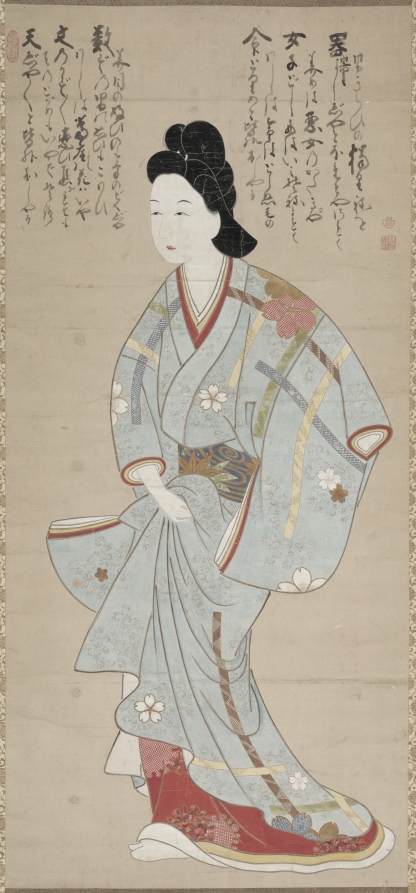
Hakuin Ekaku · The Cleveland Museum of Art · The Kelvin Smith Collection, given by Mrs. Kelvin Smith · CC0
- Name
- Hakuin Ekaku
- Born
- c. 1686
- Birthplace
- Japan
- Died
- c. 1769
- Full name
- 長沢岩次郎.
- Occupation
- philosopher · painter · writer · calligrapher · monk
- Teachers
- Dōkyō Etan · Hakuyūshi
- Languages
- Japanese · Traditional Chinese
VALÉORINE Encyclopedia
VALÉORINE documentary reading
Documentary summary
Hakuin Ekaku was one of the most influential figures in Japanese Zen Buddhism, who regarded bodhicitta, working for the benefit of others, as the ultimate concern of Zen-training. While never having received formal dharma transmission, he is regarded as the reviver of the Japanese Rinzai school from a period of stagnation, focusing on rigorous training methods integrating meditation and koan practice.
Admitted source layer · organised and presented by VALÉORINE
Reference Check
Propose documentary evidence for Hakuin Ekaku. A contribution is never written directly as fact: identity, source, rights and evidence gates still decide.
Sign in to contribute
Documentary evidence
Documentary basis
Authority files
getty · 500121206 · wikidata · Q177059 · wikipedia · Hakuin Ekaku
In this article
Biography
Biography
Training under Dōkyō Etan and Hakuyūshi is recorded. Suiō Genro is recorded as having studied under Hakuin Ekaku. The recorded working language is Japanese and Traditional Chinese. Work by Hakuin Ekaku is recorded in the collections of Minneapolis Institute of Art, Metropolitan Museum of Art, Los Angeles County Museum of Art, Art Gallery of South Australia and Yale University Art Gallery.
Key facts
Key facts
• Name — Hakuin Ekaku • Born — c. 1686 • Birthplace — Japan • Died — c. 1769 • Religion — Buddhism • School — Rinzai • Title — Rōshi Hakuin Ekaku was one of the most influential figures in Japanese Zen Buddhism, who regarded bodhicitta, working for the benefit of others, as the ultimate concern of Zen-training. While never having received formal dharma transmission, he is regarded as the reviver of the Japanese Rinzai school from a period of stagnation, focusing on rigorous training methods integrating meditation and koan practice.
Early years
Early years
Hakuin was born in 1686 in the small village of Hara, at the foot of Mount Fuji. His mother was a devout Nichiren Buddhist, and it is likely that her piety was a major influence on his decision to become a Buddhist monk. As a child, Hakuin attended a lecture by a Nichiren monk on the topic of the Eight Hot Hells. This deeply impressed the young Hakuin, and he developed a pressing fear of hell, seeking a way to escape it. He eventually came to the conclusion that it would be necessary to become a monk.
Shōin-ji and Daishō-ji
Shōin-ji and Daishō-ji
At the age of fifteen, he obtained consent from his parents to join the monastic life, and was ordained at the local Zen temple, Shōin-ji, by the residing priest Tanrei Soden. Tanrei had a poor health, and Hakuin was soon sent to a neighboring temple, Daishō-ji, where he served as a novice for three or four years, studying Buddhist texts. While at Daisho-ji, he read the Lotus Sutra, considered by the Nichiren sect to be the king of all Buddhist sutras, and found it disappointing, saying "it consisted of nothing more than simple tales about cause and effect".
Zuiun-ji
Zuiun-ji
Travelling with twelve other monks, Hakuin made his way to Zuiun-ji, the residence of Baō Rōjin, a respected scholar but also a tough-minded teacher. While studying with the poet-monk Bao, he had an experience that put him back along the path of monasticism. He saw a number of books piled out in the temple courtyard, books from every school of Buddhism. Struck by the sight of all these volumes of literature, Hakuin prayed to the gods of the Dharma to help him choose a path. He then reached out and took a book; it was a collection of Zen stories from the Ming Dynasty. Inspired by this, he repented and dedicated himself to the practice of Zen.
Eigen-ji
Eigen-ji
He again went traveling for two years, settling down at the Eigen-ji temple when he was twenty-three. It was here that Hakuin had his first entrance into enlightenment when he was twenty-four. He locked himself away in a shrine in the temple for seven days, and eventually reached an intense awakening upon hearing the ringing of the temple bell. However, his master refused to acknowledge this enlightenment, and Hakuin left the temple.
Shōju Rōjin
Shōju Rōjin
Hakuin left again, to study for a mere eight months with Shōju Rōjin (Dokyu Etan, 1642–1721), an enigmatic teacher whose historicity has been questioned. According to Hakuin and his biographers, Shoju was an intensely demanding teacher, who hurled insults and blows at Hakuin, in an attempt to free him from his limited understanding and self-centeredness. When asked why he had become a monk, Hakuin said that it was out of terror to fall into hell, to which Shōju replied "You're a self-centered rascal, aren't you!" Shōju assigned him a series of "hard-to-pass" koans. These led to three isolated moments of satori, but it was only eighteen years later that Hakuin really understood what Shōju meant with this. Hakuin left Shoju after eight months of study, but in later life, when he had realized Shoju's teachings on the importance of bodhicitta, Hakuin considered Shoju Rojin his primary teacher, and solidly identified himself with Shoju's dharma-lineage. Today Hakuin is considered to have received dharma transmission from Shoju, though he didn't receive formal dharma transmission from Shoju Rojin, nor from any other teacher, a contradiction for the Rinzai's school emphasis on formal dharma-transmission.
Incomplete accomplishment and renewed doubt
Incomplete accomplishment and renewed doubt
Hakuin realized that his attainment was incomplete. His insight was sharp during meditation, but he was unable to sustain the tranquility of mind of the Zen hall in the midst of daily life. His mental dispositions were unchanged, and attachment and aversion still prevailed in daily life, a tendency which he could not correct through "ordinary intellectual means." His mental anguish even worsened when, at twenty-six, he read that "all wise men and eminent priests who lack the Bodhi-mind fall into Hell". This raised a "great doubt" (taigi) in him, since he thought that the formal entrance into monkhood and the daily enactment of rituals was the bodhi-mind. Only with his final awakening, at age 42, did he fully realize what "bodhi-mind" means, namely working for the good of others.
Temple priest at Shōin-ji
Temple priest at Shōin-ji
After another several years of travel, at age 31 Hakuin returned to Shoin-ji, the temple where he had been ordained. He was soon installed as head priest, a capacity in which he would serve for the next half-century, giving Torin Sosho, who had followed-up Tanrei, as his "master" when enscribing himself in the Mioshi-ji bureaucracy. When he was installed as head priest of Shōin-ji in 1718, he had the title of Dai-ichiza, "First Monk": It was the minimum rank required by government regulation for those installed as temple priests and seems to have been little more than a matter of paying a fee and registering Hakuin as the incumbent of Shōin-ji. It was around this time that he adopted the name "Hakuin", which means "concealed in white", referring to the state of being hidden in the clouds and snow of mount Fuji.
Final awakening
Final awakening
Although Hakuin had several "satori experiences", he did not feel free, and was unable to integrate his realization into his ordinary life. While eventually admitting a small number of students, Hakuin committed himself to a thorough practice, sitting all night in zazen. At age 41, he experienced a decisive awakening, while reading the Lotus Sutra, the sutra that he had disregarded as a young student. He realized that the Bodhi-mind means working for the good of every sentient being: It was the chapter on parables, where the Buddha cautions his disciple Shariputra against savoring the joys of personal enlightenment, and reveals to him the truth of the Bodhisattva's mission, which is to continue practice beyond enlightenment, teaching and helping others until all beings have attained salvation. He wrote of this experience, saying "suddenly I penetrated to the perfect, true, ultimate meaning of the Lotus". This event marked a turning point in Hakuin's life. He dedicated the rest of his life to helping others achieve liberation.
Practicing the bodhi-mind
Practicing the bodhi-mind
• Illustration — Scroll calligraphy by Hakuin Ekaku (depicts Bodhidharma). Caption: Jikishi ninshin, Kensho jobutsu: "Direct pointing at the mind of man, seeing one's nature and becoming Buddha." He would spend the next forty years teaching at Shoin-ji, writing, and giving lectures. At first there were only a few monks there, but soon word spread, and Zen students began to come from all over the country to study with Hakuin. Eventually, an entire community of monks had built up in Hara and the surrounding areas, and Hakuin's students numbered in the hundreds. He eventually would certify over eighty disciples as successors.
Is that so?
Is that so?
A well-known anecdote took place in this period:
Death
Death
Shortly before his death, Hakuin wrote An elderly monk of eighty-four, I welcome in yet one more year And I owe it all everything to the Sound of One Hand barrier. Written over a large calligraphic character 死 shi, meaning Death, he had written as his jisei (death poem): 若い衆や死ぬがいやなら今死にやれ 一たび死ねばもう死なぬぞや Wakaishu ya shinu ga iya nara ima shiniyare hito-tabi shineba mō shinanu zo ya Oh young folk – if you fear death, die now! Having died once you won't die again. At the age of 83, Hakuin died in Hara, the same village in which he was born and which he had transformed into a center of Zen teaching.
Koan-training
Koan-training
Hakuin deeply believed that the most effective way for a student to achieve insight was through extensive meditation on a koan. Only with incessant investigation of his koan will a student be able to become one with the koan, and attain enlightenment. The psychological pressure and doubt that comes when one struggles with a koan is meant to create tension that leads to awakening. Hakuin called this the "great doubt", writing, "At the bottom of great doubt lies great awakening. If you doubt fully, you will awaken fully". Hakuin used two or three stages in his application of koan-training. Students had to develop their ability to see (kensho) their true nature. Yet, they also had to sustain the "great doubt", going beyond their initial awakening and further deepen their insight struggling with "difficult-to-pass" (nanto) koans, which Hakuin seems to have inherited from his teachers. This further training and awakening culminates in a full integration of understanding and quietude with the action of daily life, and bodhicitta, upholding the four bodhisattva-vows and striving to liberate all living beings.
Hear the sound of one hand
Hear the sound of one hand
In later life he used the instruction "Hear the sound of one hand," which actually consists of two parts, to raise the great doubt with beginners. He first mentioned it when writing By Kannon Bosatsu is meant the contemplation of sounds, and that is what I mean by [hearing] the sound of the single hand. Kannon Bosatsu is Kanzeon (Avalokiteshvara, Guanyin), the bodhisattva of great compassion, who hears the sounds of all people suffering in this world. The second part is "Put a stop all sounds," referring to the first bodhisattva vow of liberating all sentient beings. Hakuin preferred this to the most commonly assigned first koan from the Chinese tradition, the Mu koan. He believed his "Sound of One Hand" to be more effective in generating the great doubt, and remarked that "its superiority to the former methods is like the difference between cloud and mud". While 'the sound of one hand' is the classical instruction used by Hakuin, in Hakuin on kensho and other writings he emphasises the Hua Tou-like question "Who is the host of seeing and hearing?" to arouse the great doubt, akin to Bassui Tokushō's (1327–1387) "Who is hearing this sound?", and the Ōbaku use of the "nembutsu kōan", which entailed the practice of reciting the name of Amitabha while holding in one's mind the kōan, "Who is reciting?" Bassui equates Buddha-nature or the One Mind with Kanzeon, compassion. "...someone who, for every sound he heard, contemplated the mind of the hearer, thereby realizing his true nature." Bassui further explains that "The one gate the so-called one who hears the Dharma [...] was the perfection achieved by the bodhisattva Kannon." As for antecedents of 'the sound of one hand', it "has a close relation to," or is "adapted from," Xuedou Chongxian's (980-1052) poetic commentary that "a single hand by itself produces no sound," which appears in case 18 of The Blue Cliff Record. One hand also appears in some interactions and explanations. When first meeting Shōju Rōjin, Hakuin boasted of the "depth" and "clarity" of his own Zen understanding in the form of an elegant verse put down on a sheet of paper. Dokyo, crushing the paper with his left hand, held out his right hand and said, "Putting learning aside, what have you seen?" The "Recorded Sayings" of Zhaozhou Congshen (Jōshū Jūshin, 778–897) contain the following episode: There was a priest from Ting-chou (Joshu) who came to visit. The master asked him, "What practice do you undertake?" The priest said, "Without listening to scriptures, commandments, or discourses, I understand them." The master raised his hand and pointed to it saying "Well, do you understand that?" Regarding his final awakening, in his biography Wild Ivy Hakuin wrote
Four ways of knowing
Four ways of knowing
Asanga, one of the main proponents of Yogacara, introduced the idea of four ways of knowing: the perfection of action, observing knowing, universal knowing, and great mirror knowing. He relates these to the Eight Consciousnesses: • The five senses are connected to the perfection of action, • Samjna (cognition) is connected to observing knowing, • Manas (mind) is related to universal knowing, • Alaya-vijnana is connected to great mirror knowing. In time, these ways of knowing were also connected to the doctrine of the three bodies of the Buddha (Dharmakāya, Sambhogakāya and Nirmāṇakāya), together forming the "Yuishiki doctrine". Hakuin related these four ways of knowing to four gates on the Buddhist path: the Gate of Inspiration, the Gate of Practice, the Gate of Awakening, and the Gate of Nirvana. • The Gate of Inspiration is initial awakening, kensho, seeing into one's true nature. • The Gate of Practice is the purification of oneself by continuous practice. • The Gate of Awakening is the study of the ancient masters and the Buddhist sutras, to deepen the insight into the Buddhist teachings, and acquire the skills needed to help other sentient beings on the Buddhist path to awakening. • The Gate of Nirvana is the "ultimate liberation", "knowing without any kind of defilement".
The Five Ranks
The Five Ranks
Hakuin found the study and understanding of Dongshan Liangjie's (Jp. Tōzan Ryōkan) Five Ranks highly useful in post-satori practice. Today, they form part of the 5th step of the Japanese Rinzai koan-curriculum.
Revival of Rinzai and Otokan
Revival of Rinzai and Otokan
Hakuin is generally considered as the reviver of the Japanese Rinzai-tradition from a long period of stagnation and decline of monastic rigor. Yet, Ahn notes that this also a matter of perception, and that multiple factors are at play here. In Hakuin's time, support from the upper classes for the Zen-institutions had waned, and Zen-temples had to secure other means of support, finding it in a lay-audience. There was also the challenge of the Chinese Ōbaku-school, with its emphasis on rigorous communal training and more accessible teachings. Heine and Wright note that:... regardless of its inclusion of Pure Land elements, the fact remained that the Ōbaku school, with its group practice of zazen on the platforms in a meditation hall and its emphasis on keeping the precepts, represented a type of communal monastic discipline far more rigorous than anything that existed at the time in Japanese Buddhism. As a result of their approach, which caused a stir in Japan, many Rinzai and Sōtō masters undertook reforming and revitalizing their own monastic institutions, partly incorporating Ōbaku, partly rejecting them. Kogetsu Zenzai welcomed their influence, and Rinzai master Ungo Kiyō even began implementing the use of nembutsu into his training regimen at Zuigan-ji. Other teachers, not only Hakuin, responded to these challenges by harking back to the roots of their own school, and by adapting their style of teaching. Hakuin was affiliated to Myōshin-ji and the Ōtōkan lineage, and sought to restore what he considered as the authentic, China-derived and koan-oriented Zen-practice of the Otokan-lineage and its founders, Dai'ō Kokushi (Nanpo Shōmyō (1235–1308), who received dharma-transmission in China from Xutang Zhiyu; Daitō Kokushi (Shuho Myocho) (1283-1338); and Kanzan Egen (1277–1360). While the communal training of the Ōbaku-school was emulated, The followers of Hakuin Ekaku (1687—1769) tried to purge the elements of Ōbaku Zen they found objectionable. They suppressed the Pure Land practice of reciting Amida Buddha's name, deemphasized the Vinaya, and replaced sutra study with a more narrow focus on traditional koan collections. Hakuin's outreach to a lay-audience fits into these Japanese responses to these challenges. The ringe-monasteries Myoshin-ji and Daitoku-ji, belonging to the Otokan-lineage, rose to prominence in these new circumstances.
Lineage
Lineage
Hakuin took ordination in a Mioshi-ji affiliated temple, and remained loyal to this institution and its lineage throughout his life. In 1718, when he was installed as head priest, Hakuin noted Torin Sosho as his "master," but after his awakening to the importance of karuna and understanding Shōju Rōjin's stress on sustained post-satori practice, Hakuin regarded Shōju Rōjin as his principal teacher, though he never received formal dharma transmission from him. Little is known of Shōju Rōjin, and his historicity has even been questioned, yet confirmed by Nakamura. While traced back to the Otokan-lineage, Shōju Rōjin's fell into obscurity in the 16th century, and little is known of the 16th-century teachers. Hakuin's closest student and companion was Tōrei Enji (1721-1792), who first studied with Kogetsu Zenzai, and to whom Hakuin presented his robe as a token of recognition. All contemporary Rinzai-lineages are related to Hakuin through Gasan Jitō (1727–1797) and his students Inzan Ien (1751–1814) and Takuju Kosen (1760–1833). Gasan received Dharma transmission from Rinzai teacher Gessen Zen'e, who had received dharma transmission from Kogetsu Zenzai, before meeting Hakuin. While Gasan is considered to be a dharma heir of Hakuin, "he did not belong to the close circle of disciples and was probably not even one of Hakuin's dharma heirs," studying with Hakuin but completing his koan-training with Tōrei Enji. It was not until the Meiji era (1868-1912), when Japan was opened to the western world and Buddhism was endangered by the new regime, that Hakuin's lineage came to dominate the Rinzai institutions.
Lecturing tours and writing
Lecturing tours and writing
In later life Hakuin was a popular Zen lecturer, traveling all over the country, often to Kyoto, to teach and speak on Zen. He wrote frequently in the last fifteen years of his life, trying to record his lessons and experiences for posterity. Much of his writing was in the vernacular, and in popular forms of poetry that commoners would read.
Calligraphy
Calligraphy
An important element of Hakuin's Zen-teaching and pedagogy was his painting and calligraphy. He seriously took up painting only late in his life, at almost age sixty, but is recognized as one of the greatest Japanese Zen painters. His paintings were meant to capture Zen values, serving as sorts of "visual sermons" that were extremely popular among the laypeople of the time, many of whom were illiterate. Today, paintings of Bodhi Dharma by Hakuin Ekaku are sought after and displayed in a handful of the world's leading museums.
Life and career
Dated record
Life and career
The full dated record · 2 entries
1686
Hakuin Ekaku born at Hara-juku.
1769
Hakuin Ekaku died at Shōin-ji Temple.
Places
Named by the record
Places
Only places the record itself states, plotted where the house gazetteer settles their coordinates. Nothing is inferred from a name or a nationality.
Hara-juku.
Birth place
Shōin-ji Temple.
Death place
Zensō-ji
Zensō-ji
At age eighteen, he left Daishō-ji for Zensō-ji, a temple close to Hara. At the age of nineteen, he came across in his studies the story of the Chinese Ch'an master Yantou Quanhuo, who had been brutally murdered by bandits. Hakuin despaired over this story, as it showed that even a great monk could not be saved from a bloody death in this life. How then could he, just a simple monk, hope to be saved from the tortures of hell in the next life? He gave up his goal of becoming an enlightened monk, and not wanting to return home in shame, traveled around studying literature and poetry.
Zen sickness
Zen sickness
Hakuin's early extreme exertions affected his health, and at one point in his young life he fell ill for almost two years, experiencing what would now probably be classified as a nervous breakdown by Western medicine. He called it Zen sickness, and in later life often narrated to have sought the advice of a Taoist cave dwelling hermit named Hakuyu, who prescribed a visualization (the 'soft butter method') and breathing practice ('introspective meditation', using abdominal breathing to focus attention on the tanden (hara in Japanese), the center of the life-force as described in traditional Chinese medicine, which eventually relieved his symptoms. From this point on, Hakuin put a great deal of importance on physical strength and health in his Zen practice, and studying Hakuin-style Zen required a great deal of stamina. Hakuin often spoke of strengthening the body by concentrating the spirit, and followed this advice himself. Well into his seventies, he claimed to have more physical strength than he had at age thirty, being able to sit in zazen meditation or chant sutras for an entire day without fatigue. The practices Hakuin claimed to have learned from Hakuyu are still passed down within the Rinzai school.
Post-satori practice
Post-satori practice
Hakuin saw "deep compassion and commitment to help all sentient beings everywhere" as an indispensable part of the Buddhist path to awakening. Hakuin emphasized the need for "post-satori training", purifying the mind of karmic tendencies and [W]hipping forward the wheel of the Four Universal Vows, pledging yourself to benefit and save all sentient beings while striving every minute of your life to practice the great Dharma giving. The insight in the need of arousing bodhicitta formed Hakuin's final awakening:
Opposition to "Do-nothing Zen"
Opposition to "Do-nothing Zen"
One of Hakuin's major concerns was the danger of what he called "Do-nothing Zen" teachers, who upon reaching some small experience of enlightenment devoted the rest of their life to, as he puts it, "passing day after day in a state of seated sleep". Quietist practices seeking simply to empty the mind, or teachers who taught that a tranquil "emptiness" was enlightenment, were Hakuin's constant targets. In this regard he was especially critical of followers of the maverick Zen master Bankei. He stressed a never-ending and severe training to deepen the insight of satori and forge one's ability to manifest it in all activities. He urged his students to never be satisfied with shallow attainments, and truly believed that enlightenment was possible for anyone if they exerted themselves and approached their practice with real energy.
Zen-sickness and vital energy
Zen-sickness and vital energy
In several of his writings, most notably Yasenkanna ("Idle Talk on a Night Boat") Hakuin describes how he cured his Zen-sickness (zenbyō) by using two methods explained to him by Hakuyū, a Taoist cave-dwelling hermit. These methods are 'introspective meditation', a contemplation practice called naikan using abdominal breathing and focussing on the hara, and a visualization, the 'soft butter method'. According to Katō Shǒshun, this zen-sickness most likely happened when Hakuin was in his late twenties. Shǒshun conjects that these remedies were worked out by Hakuin on his own, from "a combination of traditional medical and meditation texts and folk therapies current at the time." According to Waddell, Yasenkanna has been in print ever since it was published, reflecting its popularity in secular circles. In the preface to Yasenkanna, attributed by Hakuin to a disciple called "Hunger and Cold, the Master of Poverty Hermitage," Hakuin explains that a long life can be attained by disciplining the body through gathering the ki, the life-force or "the fire or heat in your mind (heart)," in the tanden or lower belly, producing "the true elixir" (shintan), which is "not something located apart from the self." He describes a four-step contemplation to concentrate the ki in the tanden, as a cure against zen-sickness. In the naikan method, as explained by "the master," the practitioner lays down on his back, and concentrates the ki in the tanden, using the following contemplations: This method is different from the 'soft butter' method, and, according to Waddell, closer to traditional Zen-practice. Hakuin himself warns that longevity is not the goal of Buddhism, and is incomparable to following the Bodhisattva vows, "constantly working to impart the great Dharma to others as you acquire the imposing comportment of the Bodhisattva." In the main text of the Yasenkanna Hakuin lets Hakuyū give an extensive explanation on the principles of Chinese medicine and the dictum of "bringing the heart down into your lower body," without giving concrete instructions for practice. Hakuin has Hakuyū further explain that "false meditation is meditation that is diverse and unfocused," while "true meditation is no-meditation." Hakuyū then comes with a series of quotations and references from Buddhist sources. In passing, Hakuyū refers to "a method in the Agama in which butter is used." On Hakuin's request, Hakuyū then sets out to explain the 'butter method'. In this method, one visualizes a lump of soft butter on the head, which slowly melts, relaxing the body as it spreads over all parts of it.
Emphasis on kensho and post-satori practice
Emphasis on kensho and post-satori practice
Hakuin put a strong emphasis on kensho and post-satori practice, following the examples of his dharma-predecessors Gudō Toshoku (1577–1661), Shidō Bu'nan (Munan)(1603–1676), and his own teacher Shoju Rojin (Dokyu Etan), 1642–1721). The emphasis on kensho had a strong influence on western perceptions of Zen through the writings of D.T. Suzuki and the practice-style of Yasutani, the founder of the Sanbo Kyodan, though the Sanbo Kyodan has also incorporated the necessity of post-satori practice.
Systematisation of koan-practice
Systematisation of koan-practice
Hakuin's emphasis on koan practice had a strong influence in the Japanese Rinzai-school. In the system developed by his followers, students are assigned koans in a set sequence by their teacher and then meditate on them. Once they have broken through, they must demonstrate their insight in private interview with the teacher. If the teacher feels the student has handled the koan in a satisfactory way, then they receive the standard answer, and the next koan in the sequence is assigned. Gasan Jitō (1727–1797), who received dharma transmission from Hakuin's heir Tōrei Enji (1721-1792), and Gasan's students Inzan Ien (1751–1814) and Takuju Kosen (1760–1833) developed a fivefold classification system: 1. Hosshin, dharma-body koans, are used to awaken the first insight into sunyata. They reveal the dharmakaya, or Fundamental. They introduce "the undifferentiated and the unconditional". 2. Kikan, dynamic action koans, help to understand the phenomenal world as seen from the awakened point of view; Where hosshin koans represent tai, substance, kikan koans represent yu, function. 3. Gonsen, explication of word koans, aid to the understanding of the recorded sayings of the old masters. They show how the Fundamental, though not depending on words, is nevertheless expressed in words, without getting stuck to words. 4. Hachi Nanto, eight "difficult to pass" koans. There are various explanations for this category, one being that these koans cut off clinging to the previous attainment. They create another Great Doubt, which shatters the self attained through satori. It is uncertain which are exactly those eight koans. Hori gives various sources, which altogether give ten hachi nanto koans. 5. Goi jujukin koans, the Five Ranks of Tozan and the Ten Grave Precepts. Hakuin's main role in the development of this koan system was most likely the example and inspiration he set with his own determination and vigour for koan. The standardisation of collective zazen-practice, introducing scheduled sesshin at Mioshi-ji and its affiliated temples in the 18th century, may be an important institutional factor, requiring standardised practice-tools.
Writings
Hakuin left a voluminous body of works, divided in Dharma Works (14 vols.) and Kanbun Works (4 vols.). The following are the best known, and also translated in English: • Orategama (遠羅天釜), The Embossed Tea Kettle, a letter collection. • Yasen kanna (夜船閑話), Idle Talk on a Night Boat, a work on health-improving meditation techniques (qigong). Relevant and instructive is also: * His explanation of the Five Ranks appears in: *
Teachings
Teachings
• Illustration — Daruma by Hakuin Like his predecessors Shidō Bu'nan (Munan) (1603–1676) and Dōkyō Etan (Shoju Rojin, "The Old Man of Shōju Hermitage") (1642–1721), Hakuin stressed the importance of kensho and post-satori practice, deepening one's understanding and working for the benefit of others. Just like them he was critical of the state of practice in the Rinzai-establishment, which he saw as lacking in rigorous training.
Lay teachings
Lay teachings
A well known and popular Zen master during his later life, Hakuin was a firm believer in bringing liberation to all people. Thanks to his upbringing as a commoner and his many travels around the country, he was able to relate to the rural population, and served as a sort of spiritual father to the people in the areas surrounding Shoin-ji. In fact, he turned down offers to serve in the great monasteries in Kyoto, preferring to stay at Shoin-ji. Most of his instruction to the common people focused on living a morally virtuous life. Showing a surprising broad-mindedness, his ethical teachings drew on elements from Confucianism, ancient Japanese traditions, and traditional Buddhist teachings. He also never sought to stop the rural population from observing non-Zen traditions, despite the seeming intolerance for other schools' practices in his writings.
Primary material
Documents and archives
reference work
- Wikidata, structured authority record Q177059: Hakuin Ekaku
Reputable secondary · Wikimedia Foundation
- “Hakuin Ekaku”, English Wikipedia, consulted as further reading
Reputable secondary · Wikipedia
authority file
- Getty Union List of Artist Names 500121206, Hakuin Ekaku.
General reference · The Getty Research Institute
Printed sources
Printed sources
• Primary * * * * * * * * * * * * * • Secondary * * * * * * * * * * * • Mohr, Michel. "Emerging from Non-duality: Kōan Practice in the Rinzai Tradition since Hakuin." In The Kōan: Texts and Contexts in Zen Buddhism, edited by S. Heine and D. S. Wright. Oxford and New York: Oxford University Press, 2000. * * * • Trevor Leggett, The Tiger's Cave, contains the story of Hakuin's illness. * * * * * • Yampolsky, Philip B. The Zen Master Hakuin: Selected Writings. Edited by W. T. de Bary. Vol. LXXXVI, Translations from the Oriental Classics, Records or Civilization: Sources and Studies. New York: Columbia University Press, 1971, • Yampolsky, Philip. "Hakuin Ekaku." The Encyclopedia of Religion. Ed. Mircea Eliade. Vol. 6. New York: MacMillan, 1987. * *
Notes from the source article
Cited by Wikipedia
Notes from the source article
These works are cited by the source article, in its own numbering. They are recorded as its citations, not as sources VALÉORINE has verified.
- 1.Shoinji Temple
- 2.Zen Buddhism: from perspective of Japanese Soto & Rinzai Zen Schools
- 3.James Ford (2009), Teaching Credentials in Zen
- 4.Jack Kornfield, A Path With a Heart
- 5.Steve Silberman (2021), Roshi, You Are Drunk, Lion's Roar
- 6.Magid, B (2013). Nothing is Hidden: The Psychology of Zen Koans. Wisdom
- 7.Oxford University Press. A Dictionary of Buddhism. 2004. 9780198605607.
- 8.Hoffmann, Yoel. Japanese Death Poems: Written by Zen Monks and Haiku Poets on the Verge of Death. C.E. Tuttle Co. 1986. 978-0804831796.
- 9.McEvilley, Thomas. Sculpture in the age of doubt. Allworth Press. August 1999. 9781581150230.
- 10.Zen Master Hakuin's Letter in Answer to an Old Nun of the Hokke [Nichiren] Sect
- 11.Yoshizawa Katsuhiro, Views on Hakuin a Century after His Death (1868)
- 12.Cleary (translator), Introduction to The Undying Lamp of Zen
- 13.The Hakuin Study Group has been researching the written works of Hakuin.
Bibliography printed in the source article · 4
- Hakuin, Ekaku. Wild Ivy: The Spiritual Autobiography of Zen Master Hakuin. Shambhala Publications. 2010. 9781570627705.
- Low, Albert. Hakuin on Kensho. The Four Ways of Knowing. Shambhala. 2006.
- Yoshizawa, Katsuhiro. The Religious Art of Zen Master Hakuin. Counterpoint Press. 2010.
- Spence, Alan. Night Boat: A Zen Novel. Canongate UK. 2014. 978-0857868541.
References
Citations
References
Each reference names the institution holding it, so a reader may go to the document itself.
authority file
Getty Union List of Artist Names 500121206, Hakuin Ekaku.The Getty Research Institute
Secondary witnessreference work
Wikidata, structured authority record Q177059: Hakuin EkakuWikimedia Foundation
Secondary witnessreference work
Secondary witness
The Encyclopedia exists whether or not anything is for sale. Corrections are recorded rather than overwritten, and every version of this record is kept. Published 14 August 2026.
Elsewhere in Paintings
19,183 published records in this field, each with its sources named.
- Hakob Mkrtum HovnatanyanArtist
- Håkon BlekenArtist
- Håkon GullvågArtist
- Haku ShahArtist
- Haldane DouglasArtist
- Hale AsafArtist
- Halfdan StrømArtist
- Halil PashaArtist
Best supported in this field
For owners
Own a work by Hakuin Ekaku?
A specialist will read what you send and tell you what the house can establish, what it cannot, and whether the object is suited to sale. There is no charge and no obligation. The object stays with you throughout; nothing is shipped to us unless it is arranged in writing beforehand.