
Guido Cagnacci
Guido Cagnacci (Italian: [kaɲˈɲattʃi]; 13 January 1601 – 1663) was an Italian Baroque painter originally from Santarcangelo di Romagna. His mature works are characterized by their use of chiaroscuro and their sensual subjects. He was influenced by the masters of the Bolognese School.
Also recorded as Guido Cagnazzi · Guido Cugnacci · Guido Caganacci · Guido Cagnasi
Guido Cagnacci
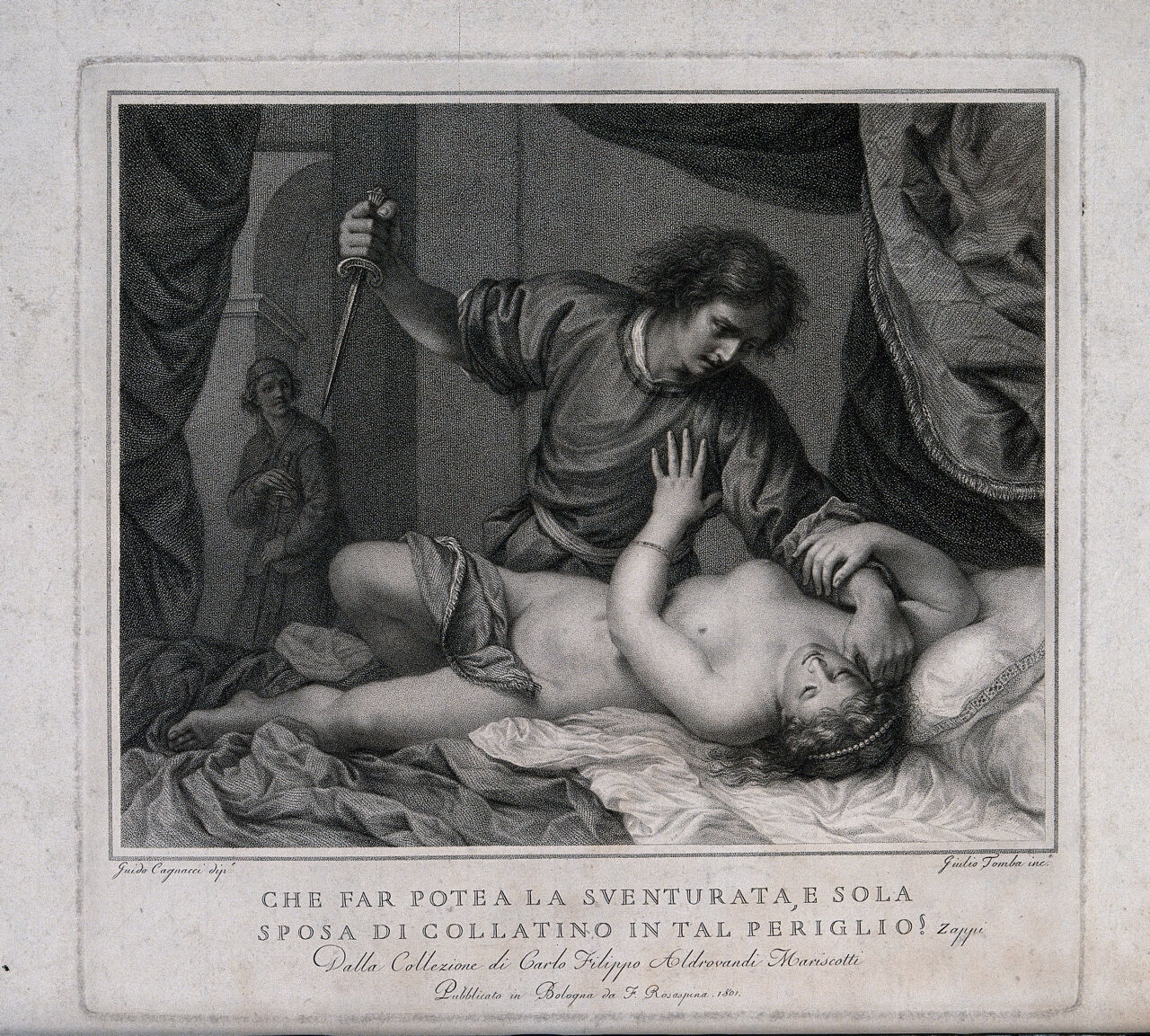
Guido Cagnacci · Wellcome Collection, London · Wellcome Collection · Public Domain Mark
- Born
- 1601. · Santarcangelo di Romagna.
- Died
- 1663. · Vienna.
- Occupation
- painter.
- Known for
- The Death of Cleopatra and Allegory of the human life.
- Languages
- Italian.
VALÉORINE Encyclopedia
VALÉORINE documentary reading
Documentary summary
Guido Cagnacci (Italian: [kaɲˈɲattʃi]; 13 January 1601 – 1663) was an Italian Baroque painter originally from Santarcangelo di Romagna. His mature works are characterized by their use of chiaroscuro and their sensual subjects. He was influenced by the masters of the Bolognese School.
Admitted source layer · organised and presented by VALÉORINE
Note VALÉORINE
No house-authored Note is published until its assertions and sources pass the VALÉORINE evidence contract. The documentary article remains available in full while that enrichment is being consolidated.
Documentary enrichment in progress · no unsupported statement published
Reference Check
Propose documentary evidence for Guido Cagnacci. A contribution is never written directly as fact: identity, source, rights and evidence gates still decide.
Sign in to contribute
Documentary evidence
Evidence Panel
wikipedia incomplete · checked 25 September 2026
- Identity
- resolved
- Independent source families
- 0
- Admitted assertions
- 0
- Open conflicts
- 0
Authority files
wikidata · Q2449649 · wikipedia · Guido Cagnacci
In this article
Biography
Biography
The recorded working language is Italian. Works named in the authority record are The Death of Cleopatra and Allegory of the human life. Work by Guido Cagnacci is recorded in the collections of Städel Museum, J. Paul Getty Museum, Nationalmuseum, Metropolitan Museum of Art and Condé Museum.
Guido Cagnacci was born on 13 January 1601 in the small city of Santarcangelo di Romagna to Matteo Cagnacci, a tanner and furrier, and Livia Serra. His mother (Serra) came from the province of Cesena; the origins of his paternal family, however, are altogether uncertain. Some documents suggest that the Cagnacci came from Castel Durante, but it is also possible that they hailed from Rimini, where Matteo moved in 1618. Not much is known about Guido's early life or training as a painter, though he is widely characterized as an autodidact. According to Giovan Battista Costa (the artist's eighteenth-century biographer), Cagnacci "had been given such marvelous talent from nature to become a painter that he began to practice this noble art all by himself and one could say almost without master." It was probably due to this precocious talent that Matteo Cagnacci decided to send his son away from his birthplace for more formal training. From 1617 to 1621, Matteo supported his son's education in Bologna, where he stayed with the nobleman Girolamo Leoni; the father paid also ostensibly for two trips to Rome, where his son lodged with Guercino. Although the identity of his master during this early period remains uncertain, Ludovico Carracci and Guido Reni are cited popularly as the young artist's Bolognese teachers. Cagnacci worked in Rimini from 1627 to 1642. After that, he moved to work in Forlì, where he would have been able to observe the paintings of Melozzo. Before living in Forlì he had been in Rome, where he had come in contact with Guercino, Guido Reni and Simon Vouet. He may have had an apprenticeship with the elderly Ludovico Carracci in Bologna. His initial output includes many devotional subjects. But moving to Venice under the name of Guido or Guidobaldo Canlassi da Bologna, he renewed a friendship with Nicolas Regnier, and dedicated himself to private salon paintings. These often depicted sensuous naked women from thigh upwards, including Lucretia, Cleopatra, and Mary Magdalene. This allies him to a strand of courtly painting, epitomized in Florence by Francesco Furini, Simone Pignoni and others. In 1649, he moved to Venice, where he took pupils, established a workshop, and had considerable success. Although harshly criticized by the Venetian painters Pietro Liberi and Marco Boschini, his work found favor with collectors and gained great popularity through reproductive prints. In 1658, he traveled to Vienna, where he remained under patronage of the Emperor Leopold I. His life was often tempestuous, as can be characterized by the 1628 episode of a failed elopement with an aristocratic widow. Some contemporaries describe him as eccentric, "unreliable and of doubtful morality". He is said to have enjoyed the company of female models dressed as men. He died in Vienna in 1663. Art historian Pier Giorgio Pasini says Cagnacci's art "was highly appreciated, as is demonstrated by contemporary eulogies (Mazzoni, and Martinioni in Sansovino) and by the summons (c. 1660) to Vienna to be court painter to Emperor Leopold I". His work remained popular in the 18th century, but subsequently fell into obscurity until reassessed by modern critics. The artist's rediscovery began in 1959 with the Seicento Bolognese exhibition. Art historian Luisa Vertova says the inconsistent quality of Cagnacci's work is bewildering: "his compositions amount to little more than empirical juxtapositions in uncertain spaces, his backdrops... are rickety cardboard stage-flats", and "puffy ears and uncouth hands are attached to torsos modelled with great sensibility to skin-surface, but his inventive capacity is rudimentary. Nevertheless, in moments of inspiration this uncultivated painter succeeds in creating forceful images which are hard to forget." Gloria Fossi says his painting is "warm with the heightened tones of grazing light, rich in the play of shadows and colors."
Selected works
Selected works
Saint Sisto pope (1627), Museo di Saludecio e del Beato Amato, Saludecio, Rimini - Italy Procession of the Holy Sacrament (1628) Museo di Saludecio e del Beato Amato, Saludecio, Rimini - Italy Christ with Saints Joseph and Eligius (1635) Madonna with saints Andre Corsini Teresa and Maria Maddalena de' Pazzi (1640, Santarcangelo di Romagna) Frescoes in Cappella della Madonna del Fuoco (Duomo, Forlì) Allegory of spheral Astrology (Pinacoteca civica, Forlì) Glory of Saints Valerian and Mercurial (Faenza) Leopold I portrait (Vienna) Calling of Saint Matthew (Museo della Città - Rimini) Allegorical Naked Figure (private) The Death of Cleopatra (Pinacoteca di Brera, Milan) Death of Cleopatra (Kunsthistorisches Museum, Gemäldegalerie, Vienna) Death of Lucretia [1] The Repentant Magdalene (Norton Simon Museum)
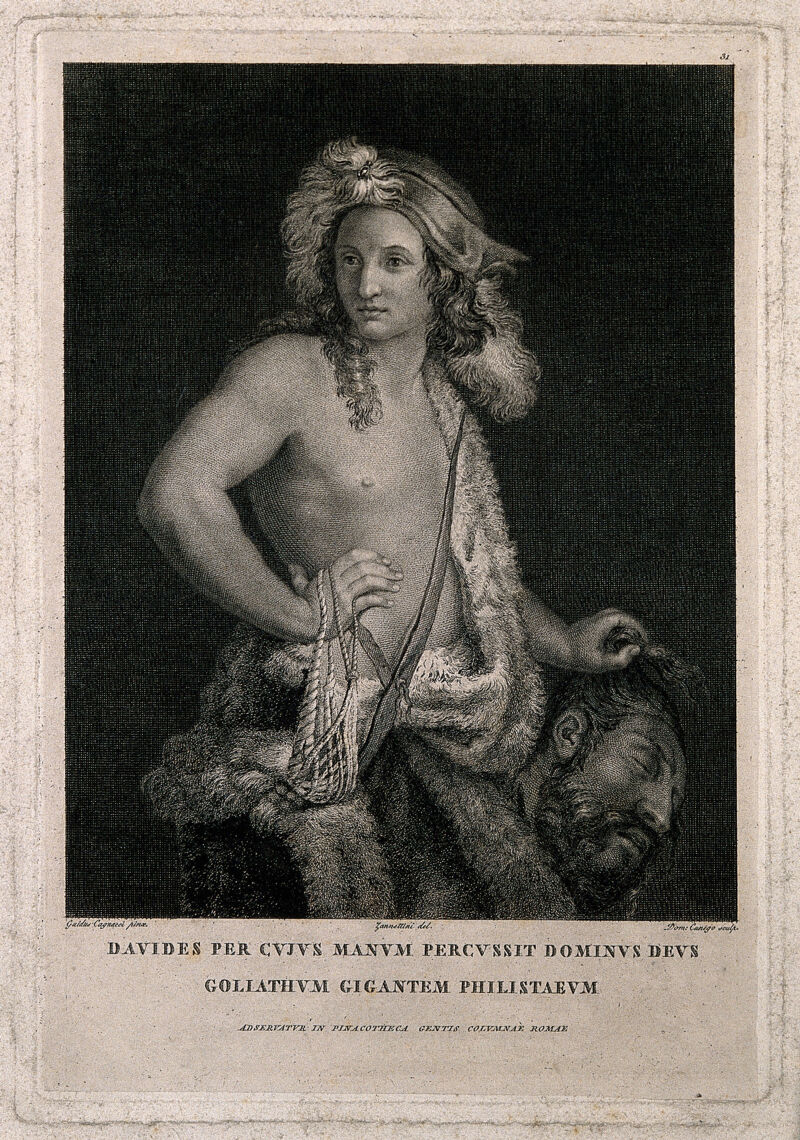
David with the head of Goliath. Line engraving by D. Cunego after Zannettini after G. Cagnacci., by Guido Cagnacci
Guido Cagnacci · Wellcome Collection, London · Wellcome Collection
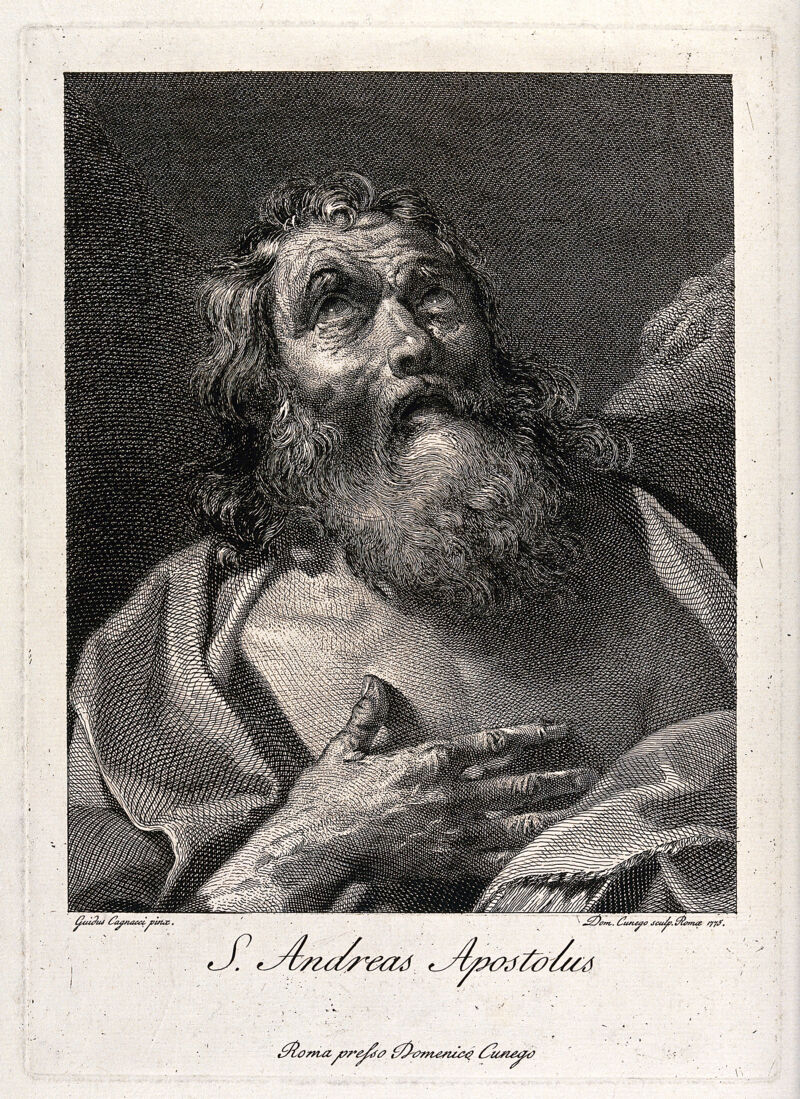
Saint Andrew. Engraving by D. Cunego, 1775, after G. Cagnacci., 1775, by Guido Cagnacci
Guido Cagnacci · Wellcome Collection, London · Wellcome Collection
Places
Named by the record
Places
Only places the record itself states, plotted where the house gazetteer settles their coordinates. Nothing is inferred from a name or a nationality.
Santarcangelo di Romagna.
Birth place
Vienna.
Death place
Notes from the source article
Cited by Wikipedia
Notes from the source article
These works are cited by the source article, in its own numbering. They are recorded as its citations, not as sources VALÉORINE has verified.
- 1.Salomon, Xavier F. (2016). The Art of Guido Cagnacci, New York: The Frick Collection. Dates of birth and death: pp. 19, 100.
- 2.Pasini, Pier Giorgio. Guido Cagnacci: pittore (1601-1663): catalogo generale. Rimini: Luisè editore, 1986, p. 13.
- 3.Pasini, Pier Giorgio. Guido Cagnacci: pittore (1601–1663): catalogo generale. Rimini: Luisè editore, 1986, p. 14.
- 4.www.analesiie.unam.mx. Guido Cagnacci.
- 5.Vertova, Luisa. Guido Cagnacci. Rimini. The Burlington Magazine. The Burlington Magazine Publications, Ltd. 135. 1088: Nov. 784. 1993. 885843.
- 6.Jonietz, Fabian (2008). "Guido Cagnacci. Forlì." The Burlington Magazine. Vol. 150, no. 1261, pp. 282–283.
- 7.Smyth, Francis P. The Age of Correggio and the Carracci: Emilian Painting of the 16th and 17th Centuries. National Gallery of Art. 392–397. 1986. 0-521-34019-5.
- 8.Pasini, Pier Giorgio. "Cagnacci, Guido". Grove Art Online. Oxford Art Online. Oxford University Press.
- 9.Fossi, Gloria. Italian Art: From the Origins to the Present Day. Giunti. 368. 2004. 88-09-03725-1.
References
Citations
References
Each reference names the institution holding it, so a reader may go to the document itself.
reference work
Partially resolvedreference work
Partially resolved
The Encyclopedia exists whether or not anything is for sale. Corrections are recorded rather than overwritten, and every version of this record is kept. Published 14 August 2026.
Elsewhere in Paintings
18,452 published records in this field, each with its sources named.
- Guglielmo de SanctisArtist
- Guglielmo MicheliArtist
- Guglielmo StellaArtist
- Guido BoggianiArtist
- Guido DanieleArtist
- Guido MarzulliArtist
- Guido of SienaArtist
- Guido SeborgaArtist
Best supported in this field
For owners
Own a work by Guido Cagnacci?
A specialist will read what you send and tell you what the house can establish, what it cannot, and whether the object is suited to sale. There is no charge and no obligation. The object stays with you throughout; nothing is shipped to us unless it is arranged in writing beforehand.