
Guido Alberti
Guido Alberti (20 April 1909 – 3 August 1996) was an Italian film actor. He appeared in 60 films between 1963 and 1993.
Guido Alberti

Decameron-Guido_Alberti.png: Gawain78 at the Italian Wikipedia project. derivative work: Cavarrone · This file was derived from: Decameron-Guido Alberti.png · Public domain
- Name
- Guido Alberti
- Birth Name
- Guido Renato Vittorio Alberti
- Born
- 20 April 1909
- Birthplace
- Benevento, Italy
- Died
- 3 August 1996
- Place of death
- Rome, Italy
- Occupation
- Actor
- Nationality
- Italy · Kingdom of Italy
- Languages
- Italian
VALÉORINE Encyclopedia
VALÉORINE documentary reading
Documentary summary
Guido Alberti (20 April 1909 – 3 August 1996) was an Italian film actor. He appeared in 60 films between 1963 and 1993.
Admitted source layer · organised and presented by VALÉORINE
Note VALÉORINE
Guido Alberti (1909–1996) was an actor and entrepreneur, of Italian and Italian nationality. The actor was born in Benevento and died in Rome. Languages used include Italian.
Composed from admitted, traceable facts · 01 October 2026
VALÉORINE
Reference Check
Propose documentary evidence for Guido Alberti. A contribution is never written directly as fact: identity, source, rights and evidence gates still decide.
Sign in to contribute
World of VALÉORINE
Documentary connections
Only confirmed graph relationships appear here. Images are shown only when their identity and reuse rights both pass the documentary gate.
Documentary evidence
Documentary basis
Authority files
wikidata · Q1553484 · wikipedia · Guido Alberti
In this article
Key facts
Key facts
• Name — Guido Alberti • Birth Name — Guido Renato Vittorio Alberti • Born — 20 April 1909 • Birthplace — Benevento, Italy • Died — 3 August 1996 • Place of death — Rome, Italy • Occupation — Actor • Years Active — 1963–1993
Selected filmography
Selected filmography
• Wild Love (1956) – Sor Alberto (uncredited) • 8½ (1963) – Pace, il produttore • The Executioner (1963) – Director de la prisión • Hands Over the City (1963) – Maglione • Aimez-vous les femmes? (1964) – Mr. Khouroulis • Le Grain de sable (1964) – Rudolf Kubler • Angélique, Marquise des Anges (1964) – Le grand Mathieu (uncredited) • Marvelous Angelique (1965) – Le grand Mathieu (uncredited) • La fuga (1965) – Il padre di Piera • Su e giù (1965) – Il commendatore Persici (segment "Colpo da leoni, Il") • The Camp Followers (1965) – Gambardelli • Casanova 70 (1965) – Il monsignore • Marco the Magnificent (1965) – Pope Gregory X • The Dreamer (1965) – Uncle Marco • Juliet of the Spirits (1965) – Player (uncredited) • Shoot Loud, Louder... I Don't Understand (1966) – Pasquale Cimmaruta • Un choix d'assassins (1967) – Domenico • OSS 117 – Double Agent (1968) – Faruk Melik – il braccio destro del Maggiore • The Vatican Affair (1968) – Il cardinale Masoli – il sovrintentdente del tesoro vaticano • A Fine Pair (1968) – Uncle Camillo Marini • La prova generale (1968) • Youth March (1969) – Avv. Milazzo • Le regine (1970) • Lady Caliph (1970) – Il monsignore • The Decameron (1971) – Musciatto, wealthy merchant • The Fifth Cord (1971) – Traversi • Ten Days' Wonder (1971) – Ludovic Van Horn – le frère et régisseur de Théo • What? (1972) – Priest • Sans sommation (1973) – (uncredited) • The Off-Road Girl (1973) – Monsignor Vittorio Baudana • Tony Arzenta (1973) – Don Mariano • Deux hommes dans la ville (1973) – The owner of the printing shop • The Bloody Hands of the Law (1973) – Prof. Palmieri • Spasmo (1974) – Malcolm • Violins at the Ball (1974) – Le producteur italien • Silence the Witness (1974) – Il questore • Almost Human (1974) – Mr. Porrino – Marilù's father • La sensualità è... un attimo di vita (1975) • Syndicate Sadists (1975) – Owner of Billiard Salon • Hallucination Strip (1975) – Il capo della polizia • Napoli violenta (1976) – Superintendent • The Black Corsair (1976) – Governor of Ribeira • The Cynic, the Rat and the Fist (1977) – Uncle • Bobby Deerfield (1977) – Priest in the Garden • L'Affaire Suisse (1978) – Anione • Contraband (1980) – Don Morrone • The Mafia Triangle (1981) – Chief of Police • La guérilléra (1982) – Joao Bernardo • Moon in the Gutter (1983) – Le gardien de la cathédrale • A Strange Passion (1984) – Valerio – l'ami de Piacchi • Saving Grace (1986) – Cardinal Augusto Morante • Love and Fear (1988) – Baretti • Alcune signore per bene (1990) – Tarlazzi • The Yes Man (1991) – Carlo Sperati • Donne in un giorno di festa (1993) – Nonno Anselmo
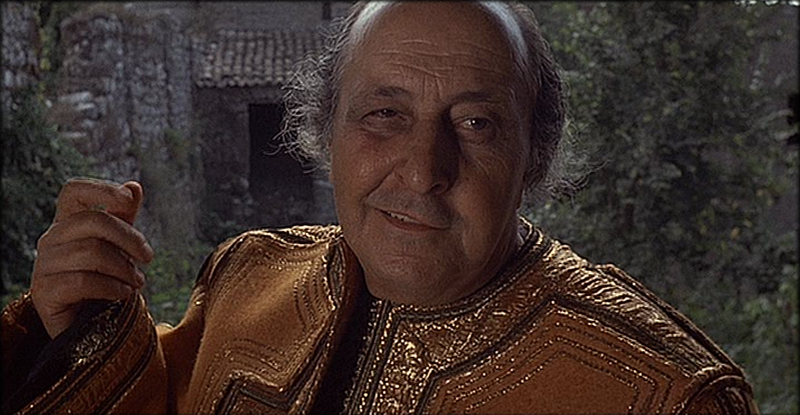
screenshot from the film Il Decameron (1971)
Gawain78 at the Italian Wikipedia project.
Life and career
Dated record
Life and career
The full dated record · 1 entries
1996
Guido Alberti died on 3 August 1996.
Places
Named by the record
Places
Only places the record itself states, plotted where the house gazetteer settles their coordinates. Nothing is inferred from a name or a nationality.
Benevento.
Birth place
Rome.
Death place
Primary material
Documents and archives
reference work
- “Guido Alberti”, English Wikipedia, consulted as further reading
Reputable secondary · Wikipedia
authority record
- Wikidata, structured authority record Q1553484: Guido Alberti
General reference · Wikidata
Notes from the source article
Cited by Wikipedia
Notes from the source article
These works are cited by the source article, in its own numbering. They are recorded as its citations, not as sources VALÉORINE has verified.
References
Citations
References
Each reference names the institution holding it, so a reader may go to the document itself.
reference work
Secondary witnessauthority record
General reference
The Encyclopedia exists whether or not anything is for sale. Corrections are recorded rather than overwritten, and every version of this record is kept. Published 17 August 2026.
Elsewhere in Film memorabilia
37,408 published records in this field, each with its sources named.
- Guglielmo ZorziPerson
- Gugu LiberatoPerson
- Gugu Mbatha-RawPerson
- Gui GuiPerson
- Guido BrignonePerson
- Guido CaprinoPerson
- Guido CelanoPerson
- Guido CernigliaPerson
Best supported in this field
For owners
Own a work by Guido Alberti?
A specialist will read what you send and tell you what the house can establish, what it cannot, and whether the object is suited to sale. There is no charge and no obligation. The object stays with you throughout; nothing is shipped to us unless it is arranged in writing beforehand.