
Giuseppe Piamontini
Giuseppe Piamontini (3 January 166413 February 1744) was an Italian Baroque sculptor, born and active in Florence.
Also recorded as Giuseppe Piemontini · Giuseppe da Firenze Piamontini
Giuseppe Piamontini
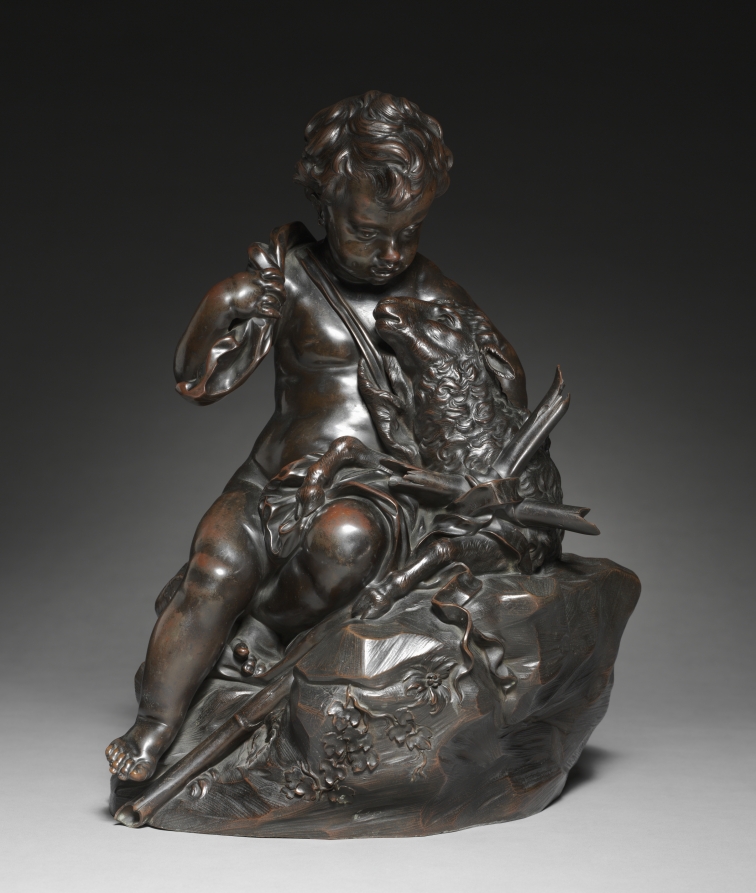
Giuseppe Piamontini · The Cleveland Museum of Art · Bequest of James Parmelee · CC0
- Name
- Giuseppe Piamontini
- Born
- 3 January 1664
- Birthplace
- Florence, Grand Duchy of Tuscany
- Died
- 13 February 1744
- Field
- Sculpture
- Movement
- Baroque
- Occupation
- sculptor
- Known for
- Gigantomachy
VALÉORINE Encyclopedia
VALÉORINE documentary reading
Documentary summary
Giuseppe Piamontini (3 January 166413 February 1744) was an Italian Baroque sculptor, born and active in Florence.
Admitted source layer · organised and presented by VALÉORINE
Note VALÉORINE
Giuseppe Piamontini (1663–1744) was a sculptor. The sculptor was born and died in Florence.
Works include Gigantomachy. Works by Giuseppe Piamontini are held at Cleveland Museum of Art, Musée Carnavalet and Museo del Prado, among others.
Composed from admitted, traceable facts · 26 September 2026
VALÉORINE
Reference Check
Propose documentary evidence for Giuseppe Piamontini. A contribution is never written directly as fact: identity, source, rights and evidence gates still decide.
Sign in to contribute
Documentary evidence
Documentary basis
Authority files
wikidata · Q18508248 · wikipedia · Giuseppe Piamontini
In this article
Key facts
Key facts
• Name — Giuseppe Piamontini • Born — 3 January 1664 • Birthplace — Florence, Grand Duchy of Tuscany • Died — 13 February 1744 • Place of death — Florence, Grand Duchy of Tuscany • Field — Sculpture • Movement — Baroque
Early lide and education
Early lide and education
Giuseppe Piamontini was born in Florence on 3 January 1664. He initially trained with Giovanni Battista Foggini, but then spent five years working with Ercole Ferrata in Rome. It has been suggested that the bronze statuette of Jupiter (Philadelphia Museum of Art; and Oxford, Ashmolean Museum), which shows the influence of Alessandro Algardi, may have been executed as a studio exercise during Piamontini’s student years in Rome. (A statuette of Juno, in the same collection, which is dated stylistically to the 1690s, was later paired with the Jupiter).
Early career
Early career
After 1686 Piamontini returned to Florence, where he shared a studio with Cateni, and began work on the small alabaster Dead Christ for the Palazzo Pitti and the life-size marble St. John the Baptist for the Baptistery. His main activity, however, was in collaboration with Foggini and others: in the Feroni Chapel, Santissima Annunziata (1691–3), he carved two large marble figures of Fortuna Nautica and Pensiero. The first is a seated, draped female figure holding a cornucopia and a bronze medallion of a boat. The Pensiero is a vigorous, bearded nude figure resting his head on his left hand, with his right arm and right leg resting on a pile of books, peering out of the chapel in a grotesque fashion. It is an inventive and powerful image, which Piamontini adopted a few years later in his work, also under the direction of Foggini, in San Gaetano, Florence. Here he carved the marble statues of St. Mark and St. Jude with two reliefs under St. Mark, one under St. Jude and one under St. Bartholomew, a statue by Pietro Novelli.
Mature work
Mature work
In 1702 Piamontini carved the marble statue of St. Bernard for the second cloister of San Frediano in Cestello, Florence. Comparison with the contorted figure of a demon below St. Bernard suggests that the two bronze reliefs of the Massacre of the Innocents and the Fall of the Giants (both Museum of Fine Arts, Boston) were probably executed around the same time, although they were not exhibited at the Santissima Annunziata until 1724. The huge marble version of the latter in the Palazzo Spini Feroni in Florence is signed and dated 1705. The complexity of the composition and the emotional intensity of the expressions and gestures illustrate Piamontini’s originality and ingenuity, although some of the figures are anatomically awkward. This combination of innovation and clumsiness is apparent again in another pair of bronzes, the Sacrifice of Isaac (1722; Florence, priv. col.) and St. Louis Bearing the Crown of Thorns (1723; Florence, Bargello), part of a series made for Anna Maria Luisa de' Medici, the Electress Palatine. Undeterred by the restrictions of a bronze group Piamontini shows the angel flying down to grab the knife from Abraham, but the finished effect remains too heavy to be credible. The group of St. Louis shows a greater attention to the detail of the draperies and to the narrative, even including an attendant carrying St. Louis’s boots. Piamontini returned to large-scale statues with his marble figure of St. Luke of 1732 for the convent church at Mafra, Portugal and Jupiter for the triumphal arch (1739) of Grand Duke Francis II in the Piazza della Libertà, Florence. After Massimiliano Soldani Benzi and Giovanni Battista Foggini, Piamontini was one of the most accomplished sculptors to emerge from the academy of Cosimo III.
Works
Works
• Illustration — Bacchus and Ariadne, Getty Center • Illustration — Cleopatra, Villa Medicea di Cerreto Guidi, Italy • Illustration — Bust of a woman, Palazzo Viviani della Robbia, Florence • Illustration — Adonis, priv. col. • Illustration — Young Saint John and the Lamb, Cleveland Museum of Art • Illustration — Bacchus and Ariadne, priv. col. • Illustration — Diana, priv. col. • Illustration — Christ Child, priv. col. • Illustration — Funerary monument of Giuseppe Del Papa
Works and production
Works and production
The following works and productions are recorded by name or by count. Recorded as human. Institutional cataloguing adds that giuseppe Piamontini is recorded with the occupation sculptor. Recorded with the gender male. It is also recorded that giuseppe Piamontini was born on 3 January 1663. Piamontini died on 13 February 1744.
Collections and holdings
Where the work is held
Collections and holdings
Institutional holdings are recorded as follows.
Documents and archives
Primary material
Documents and archives
Institutional database
- Wikidata, structured authority record Q18508248: Giuseppe Piamontini
Scholarly · Wikimedia Foundation
reference work
- “Giuseppe Piamontini”, English Wikipedia, consulted as further reading
Reputable secondary · Wikipedia
Notes from the source article
Cited by Wikipedia
Notes from the source article
These works are cited by the source article, in its own numbering. They are recorded as its citations, not as sources VALÉORINE has verified.
References
Citations
References
Each reference names the institution holding it, so a reader may go to the document itself.
Institutional database
Wikidata, structured authority record Q18508248: Giuseppe PiamontiniWikimedia Foundation
Institutional witnessreference work
Secondary witness
The Encyclopedia exists whether or not anything is for sale. Corrections are recorded rather than overwritten, and every version of this record is kept. Published 16 August 2026.
Elsewhere in Sculpture
6,174 published records in this field, each with its sources named.
- Giuseppe GricciArtist
- Giuseppe GrisoniArtist
- Giuseppe MiggianoArtist
- Giuseppe MorettiArtist
- Giuseppe PicanoArtist
- Giuseppe PierottiArtist
- Giuseppe PrinziArtist
- Giuseppe RusnatiArtist
Best supported in this field
For owners
Own a work by Giuseppe Piamontini?
A specialist will read what you send and tell you what the house can establish, what it cannot, and whether the object is suited to sale. There is no charge and no obligation. The object stays with you throughout; nothing is shipped to us unless it is arranged in writing beforehand.