
Giovanni Battista Cipriani
Giovanni Battista Cipriani (1727 – 14 December 1785) was an Italian painter and engraver, who lived in England from 1755. He is also called Giuseppe Cipriani by some authors. Much of his work consisted of designs for prints, many of which were engraved by his friend Francesco Bartolozzi.
Also recorded as Giovanni Battista Ciprani · Giovanni Battista Cypriani · Giovan Battista Cipriani · Giuseppe Cipriani
Giovanni Battista Cipriani
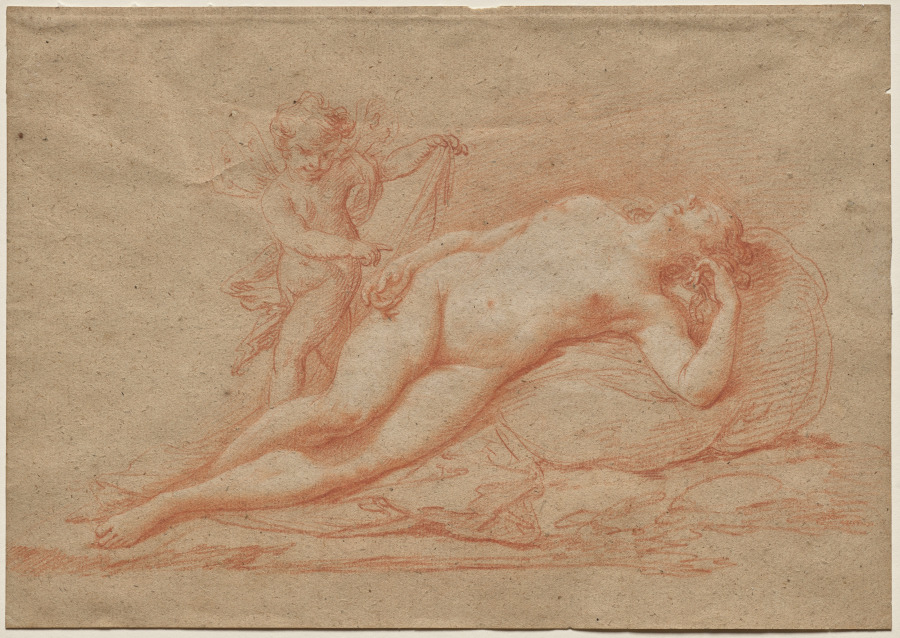
Giovanni Battista Cipriani · The Cleveland Museum of Art · Bequest of Muriel Butkin · CC0
- Name
- Giovanni Battista Cipriani
- Born
- 1727
- Birthplace
- Florence, Grand Duchy of Tuscany
- Died
- 14 December 1785 1727
- Place of death
- Hammersmith, England
- Known for
- painting
- Nationality
- Grand Duchy of Tuscany · Kingdom of Great Britain
- Occupation
- painter · printmaker · draftsperson · copper engraver · artist
- Fields
- Neoclassicism
- Teachers
- Ignazio Hugford
- Languages
- English · Italian
VALÉORINE Encyclopedia
VALÉORINE documentary reading
Documentary summary
Giovanni Battista Cipriani (1727 – 14 December 1785) was an Italian painter and engraver, who lived in England from 1755. He is also called Giuseppe Cipriani by some authors. Much of his work consisted of designs for prints, many of which were engraved by his friend Francesco Bartolozzi.
Admitted source layer · organised and presented by VALÉORINE
Note VALÉORINE
Giovanni Battista Cipriani (1727–1785) was an artist, copper engraver and draftsperson, among other activities, a national of the Grand Duchy of Tuscany and the Kingdom of Great Britain. The artist was born in Florence and died in Hammersmith.
Giovanni Battista Cipriani was a member of Royal Academy of Arts. Activity centred on Neoclassicism.
Languages used include English and Italian. Works are held at Art Institute of Chicago, Auckland Art Gallery and Finnish National Gallery, among others.
Composed from admitted, traceable facts · 26 September 2026
VALÉORINE
Reference Check
Propose documentary evidence for Giovanni Battista Cipriani. A contribution is never written directly as fact: identity, source, rights and evidence gates still decide.
Sign in to contribute
World of VALÉORINE
Documentary connections
Only confirmed graph relationships appear here. Images are shown only when their identity and reuse rights both pass the documentary gate.
Documentary evidence
Documentary basis
Authority files
wikidata · Q2687759 · wikipedia · Giovanni Battista Cipriani
In this article
Biography
Biography
Training under Ignazio Hugford is recorded. John Hamilton Mortimer is recorded as having studied under Giovanni Battista Cipriani. The recorded working language is English and Italian. The field of work recorded is Neoclassicism. Work by Giovanni Battista Cipriani is recorded in the collections of National Gallery of Victoria, Städel Museum, Minneapolis Institute of Art, Art Institute of Chicago and Auckland Art Gallery.
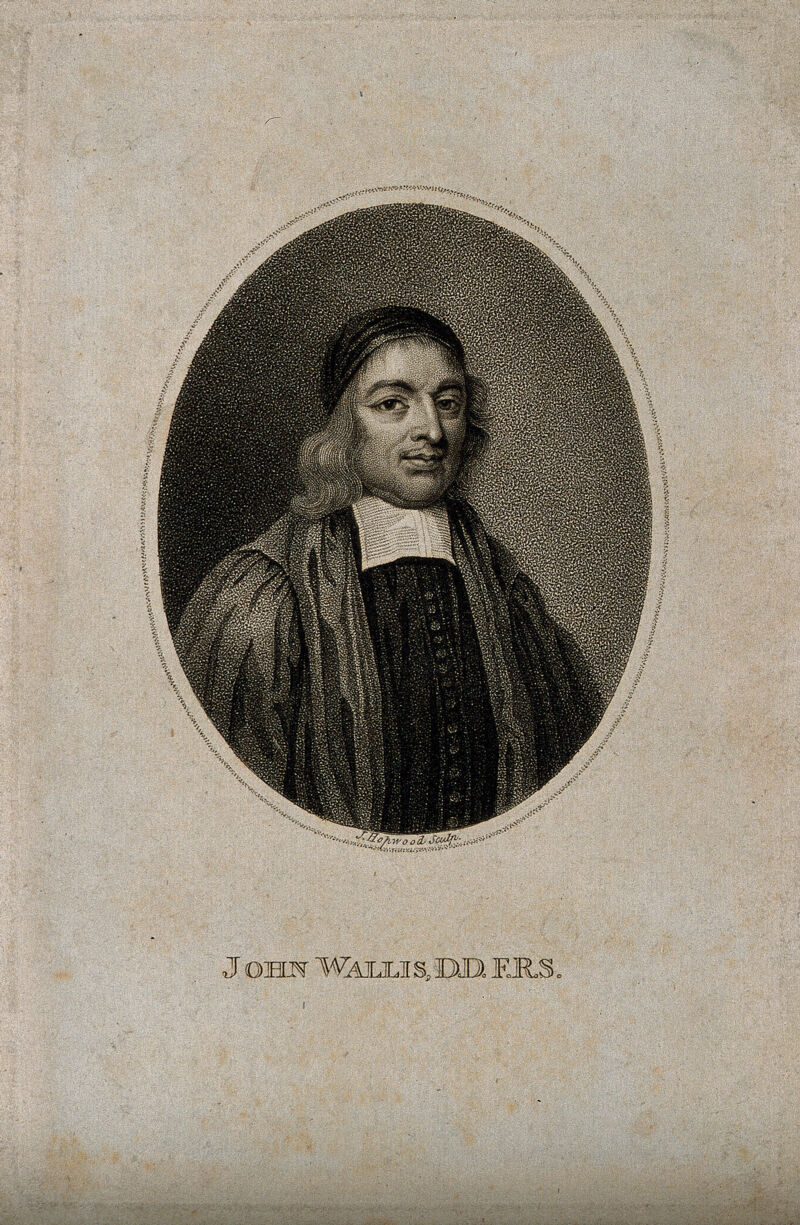
John Wallis. Stipple engraving by J. Hopwood after G. B. Cipriani., by Giovanni Battista Cipriani
Giovanni Battista Cipriani · Wellcome Collection, London · Wellcome Collection
Key facts
Key facts
• Name — Giovanni Battista Cipriani • Born — 1727 • Birthplace — Florence, Grand Duchy of Tuscany • Died — 14 December 1785 1727 • Place of death — Hammersmith, England • Known for — painting
Life
Life
Cipriani was born in Florence. His family were originally from Pistoia. He first studied with Ignatius Hugford, a Florentine artist of English descent, and then under Anton Domenico Gabbiani. He spent the years 1750–53 in Rome, where he became acquainted with the architect, Sir William Chambers, and the sculptor, Joseph Wilton whom he accompanied to England in August 1755. He had already painted two pictures, a St Tesauro and St Peter Igneo for the abbey of San Michele in Pelago, Pistoia, which had brought him a favorable reputation. He also painted one of the canvases of the organ of the church of Santa Maria Maddalena dei Pazzi in Florence and the main altarpiece of the church of the Oratory of Gesù Pellegrino outside of the San Gallo Gate. On his arrival to England he was patronized by Lord Tilney, Charles Lennox, 3rd Duke of Richmond and other noblemen. When William Chambers designed the Albany in London for Peniston Lamb, 1st Viscount Melbourne, Cipriani painted a ceiling. He also painted part of a ceiling in Buckingham House, and a room with poetical subjects at Standlynch in Wiltshire. At Somerset House, also built by his friend Chambers, he prepared the decorations for the interior of the north block, including the rooms into which the Royal Academy moved in 1750, which now houses the Courtauld Gallery The central panel of the Royal Academy's ante-room was painted by Sir Joshua Reynolds but the four compartments in the coves, representing Allegory, Fable, Nature and History, were Cipriani's. In the same building he also painted the monochrome decorations in the joint ante-room of the Royal and Antiquarian societies. According to Joseph Baretti in his Guide through the Royal Academy (1780), "the whole of the carvings in the various fronts of Somerset Place — excepting Bacon's bronze figures — were carved from finished drawings made by Cipriani." These designs include the five masks forming the keystones to the arches on the courtyard side of the vestibule, and the two above the doors leading into the wings of the north block, all believed to have been carved by Joseph Nollekens. The grotesque groups flanking the main doorways on three sides of the quadrangle and the central doorway on the terrace also appear to have been designed by Cipriani. • Illustration — Pair of Tondos with Putti. Oil on canvas, 26,5 cm diameter each. Collezione M (private collection) Rome. Cipriani was a founder member (1768) of the Royal Academy, and designed its diploma, which was engraved by Francesco Bartolozzi. In recognition of his services in this respect the members presented him with a silver cup with a commemorative inscription in 1769. He was much employed by publishers, for whom he made drawings in pen and ink, sometimes coloured. His friend Bartolozzi engraved most of them. Cipriani made some engravings, including The Death of Cleopatra, after Benvenuto Cellini; The Descent of the Holy Ghost, after Gabbiani; and portraits for Thomas Hollis's memoirs, 1780. He painted allegorical designs for the Gold State Coach and the Lord Mayor of London's State Coach, built in 1762 and 1757 respectively in 1782, and repaired Antonio Verrio's paintings at Windsor and Peter Paul Rubens's ceiling in the Banqueting House at Whitehall. He also decorated furniture. He designed many groups, of nymphs and amorini and medallion subjects to form the centre of Pergolesi's bands of ornament, and they were continually reproduced upon the elegant satin-wood furniture which was growing popular in his later days and by the end of the 18th century became a rage. These designs were sometimes inlaid in marquetry, but more usually painted onto the wood by other hands. Some of the furniture designed by the Adam Brothers was probably painted by Cipriani himself. He also occasionally designed handles for drawers and doors. Cipriani died in Hammersmith in west London, and was buried at Dovehouse Green, Chelsea, where Bartolozzi erected a monument to his memory. He had married an Englishwoman, by whom he had two sons. Among his pupils were John Alexander Gresse (1741–1794); Charles Grignion the Younger (1754–1804); and Mauritius Lowe (1746–1793).
Identity and origins
Identity and origins
The authorities additionally record the headings Giovanni Battista Ciprani, Giovanni Battista Cypriani, Giovan Battista Cipriani, Giuseppe Cipriani and Esq] [John Baptiste Cipriani. His recorded languages were English and Italian.
Identity
Identity
Giovanni Battista Cipriani is recorded as painter, printmaker, draftsperson, copper engraver and artist.
Life and career
Dated record
Life and career
The full dated record · 3 entries
1727
Giovanni Battista Cipriani born at Florence.
Undated
Giovanni Battista Cipriani (1727–1785), RA is catalogued and held by Mark Masons' Hall, London.
1785
Giovanni Battista Cipriani died at Hammersmith.
Places
Named by the record
Places
Only places the record itself states, plotted where the house gazetteer settles their coordinates. Nothing is inferred from a name or a nationality.
Florence.
Birth place
Hammersmith.
Death place
Catalogued output
Catalogued works
Giovanni Battista Cipriani (1727–1785), RA
Mark Masons' Hall, London
Where the work is held
Holdings and surviving copies
Where material relating to Giovanni Battista Cipriani is held.
Literature
Scholarly footprint
A count of publications is evidence of attention, not of standing, and is given here only as a measure.
Notes from the source article
Cited by Wikipedia
Notes from the source article
These works are cited by the source article, in its own numbering. They are recorded as its citations, not as sources VALÉORINE has verified.
- 1.Agostino Carlini; Francesco Bartolozzi; Giovanni Battista Cipriani, John Francis Rigaud, National Portrait Gallery
- 2.Visentini, Margherita Azzi. CIPRIANI, Giovanni Battista. Dizionario Biografico degli Italiani. 25. 1981.
- 3.Saltini, Guglielmo Enrico. Le Arti Belle in Toscana da mezzo il Secolo XVIII ai di Nostri. Tipografia Le Monnier. 44. 1862.
- 4.GE Saltini.
- 5.Bradley, Simon. London 6: Westminster. Yale University Press. 2003.
- 6.New Page 1.
- 7.Hobbes, James R. Picture collector's manual adapted to the professional man, and the amateur. T&W Boone. 52–53. 1849.
References
Citations
References
Each reference names the institution holding it, so a reader may go to the document itself.
reference work
Wikidata, structured authority record Q2687759: Giovanni Battista CiprianiWikimedia Foundation
Secondary witnessreference work
Secondary witness
Further particulars
Held on the record
Further particulars
Open the remaining particulars
He trained under Ignazio Hugford. Each of those relationships is stated by the authority record rather than inferred from style.
The Encyclopedia exists whether or not anything is for sale. Corrections are recorded rather than overwritten, and every version of this record is kept. Published 16 August 2026.
Elsewhere in Paintings
19,183 published records in this field, each with its sources named.
- Giovanni Battista CastagnetoArtist
- Giovanni Battista CavalcaselleArtist
- Giovanni Battista CimaroliArtist
- Giovanni Battista CiolinaArtist
- Giovanni Battista CremaArtist
- Giovanni Battista da PonteArtist
- Giovanni Battista DiscepoliArtist
- Giovanni Battista FrulliArtist
Best supported in this field
For owners
Own a work by Giovanni Battista Cipriani?
A specialist will read what you send and tell you what the house can establish, what it cannot, and whether the object is suited to sale. There is no charge and no obligation. The object stays with you throughout; nothing is shipped to us unless it is arranged in writing beforehand.