
Giovanni Antonio da Brescia
Illustration — Hercules and Antaeus, in the style of Andrea Mantegna, engraving • Illustration — Ornament print of armour Giovanni Antonio da Brescia was an Italian engraver of northern Italy, active in the approximate period 1490–1519, during the Italian Renaissance. In his early career he used the initials "Z.A." to sign some twenty engravings, and until recently Zoan Andrea was regarded as a distinct printmaker; it is now realized that they are the same person, and the "Z.A." stood for Giovanni Antonio, "Zovanni" being a north Italian spelling. Around 1507 he began to use formulae such as "IO.AN.BX.", and signed some prints more fully.
Also recorded as Giovanni Antonio Da Brescia · Ioan Brixia
Giovanni Antonio da Brescia
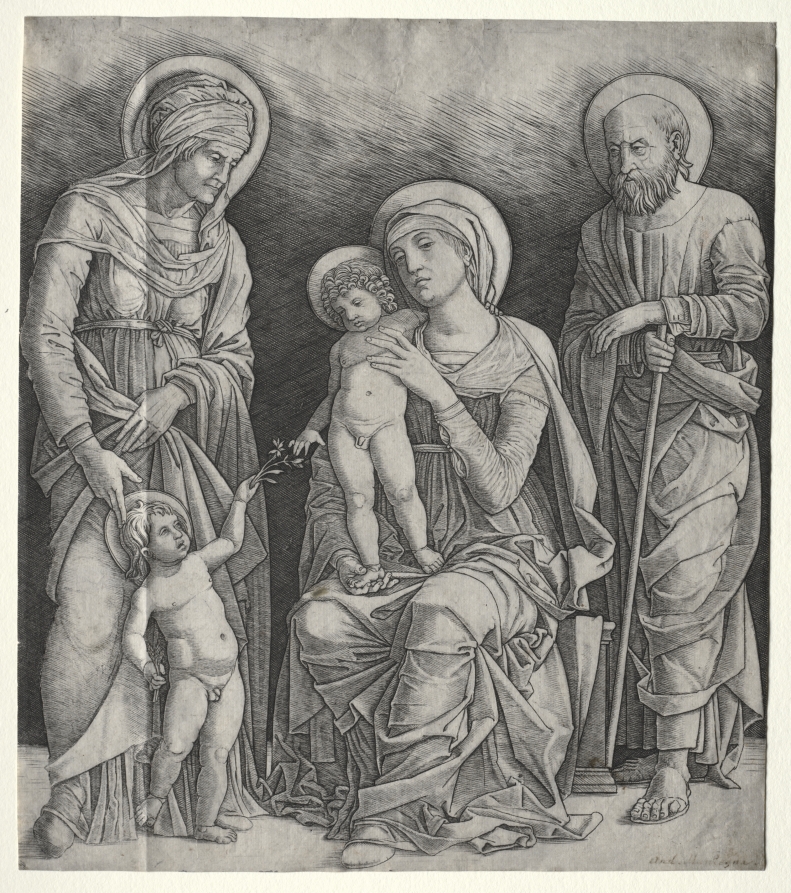
Giovanni Antonio da Brescia · The Cleveland Museum of Art · Gift of Ralph King · CC0
- Occupation
- painter · copper engraver · artist
VALÉORINE Encyclopedia
VALÉORINE documentary reading
Documentary summary
Illustration — Hercules and Antaeus, in the style of Andrea Mantegna, engraving • Illustration — Ornament print of armour Giovanni Antonio da Brescia was an Italian engraver of northern Italy, active in the approximate period 1490–1519, during the Italian Renaissance. In his early career he used the initials "Z.A." to sign some twenty engravings, and until recently Zoan Andrea was regarded as a distinct printmaker; it is now realized that they are the same person, and the "Z.A." stood for Giovanni Antonio, "Zovanni" being a north Italian spelling. Around 1507 he began to use formulae such as "IO.AN.BX.", and signed some prints more fully.
Admitted source layer · organised and presented by VALÉORINE
Reference Check
Propose documentary evidence for Giovanni Antonio da Brescia. A contribution is never written directly as fact: identity, source, rights and evidence gates still decide.
Sign in to contribute
Documentary evidence
Documentary basis
Authority files
wikidata · Q1525753 · wikipedia · Giovanni Antonio da Brescia
In this article
Life
Life
The real Zoan Andrea was a very obscure painter, documented as working in Mantua in the 1470s, who produced no engravings. The newly expanded oeuvre comprises at least 150 engravings, making Giovanni Antonio one of the most prolific Italian engravers of this period. A large number copy other prints, as was then common, and others are probably after drawings by Andrea Mantegna; "all his major works seem to have been based on designs by other artists" ("major" here presumably excludes the large number of ornament prints). Beginning his printmaking career in a close but uncertain relationship with the aged Andrea Mantegna (c. 1431–1506) in Mantua, as some kind of pupil or collaborator, he then may have travelled around north Italy, and certainly spent his later printmaking years in Rome. He developed his technique, becoming a technical influence on other Italian engravers, notably Marcantonio Raimondi.
Places of work recorded in the authority are Mantua, Rome and Vicenza. Work by Giovanni Antonio da Brescia is recorded in the collections of The Nelson-Atkins Museum of Art, Minneapolis Institute of Art, Art Institute of Chicago and Print Collection.
Though he was apparently from Brescia in northern Italy, there are no documentary records of his life other than the prints; the locations and rough timing of his career have been worked out from these. He began his traceable printmaking career in the circle of Mantegna, arriving in Mantua in the 1490s, and leaving around 1506, perhaps after Mantegna's death that year. He may have been relatively old and experienced as an artist in another medium when he joined the aged Mantegna. It is assumed he moved to Rome, as his later engravings depict works available to him only in that city, but the date this happened varies between different accounts. After he left Mantua Benedetto Montagna and his father Bartolomeo Montagna, both of Vicenza, become influences, and a period there has been posited. He also appears to have spent time in Florence, as one print copies a drawing by Filippino Lippi. The date of his arrival in Rome is estimated to be around 1506, c. 1509, and "likely" by 1513. One print shows the famous Roman sculpture the Laocoön Group, which was excavated in 1506. According to Jacquelyn Sheehan (in 1973), he must have been active there until at least 1525, from the date of a painting he engraved, but Zucker and the British Museum end his activity about 1519 or 1520; another print copies a painting of 1519.
Places
Named by the record
Places
Only places the record itself states, plotted where the house gazetteer settles their coordinates. Nothing is inferred from a name or a nationality.
Brescia.
Birth place
Rome.
Death place
Prints
His prints are mainly concerned with the figures, which often occupy most of the picture space. Unlike many of his contemporaries, who adopted the extensive landscape backgrounds pioneered by Albrecht Dürer, he is, like Mantegna, relatively little interested in the backgrounds, which are often blank or very simple. According to Sheehan "he never achieves a true unity between figures and setting, as do the more advanced masters of the 16th century". In Mantua his relationship with Mantegna was apparently close, but the precise nature of it remains uncertain. Mantegna had been interested in printmaking for decades, probably since the 1460s, and he is "the artist who can best be claimed to have "invented" printmaking in Italy". • Illustration — Christ Before Pontius Pilate • Illustration — Four Dancing Muses by Zoan Andrea • Illustration — Probably the earliest print of the Laocoön Group, excavated in Rome in 1506. • Illustration — Three putti cupids
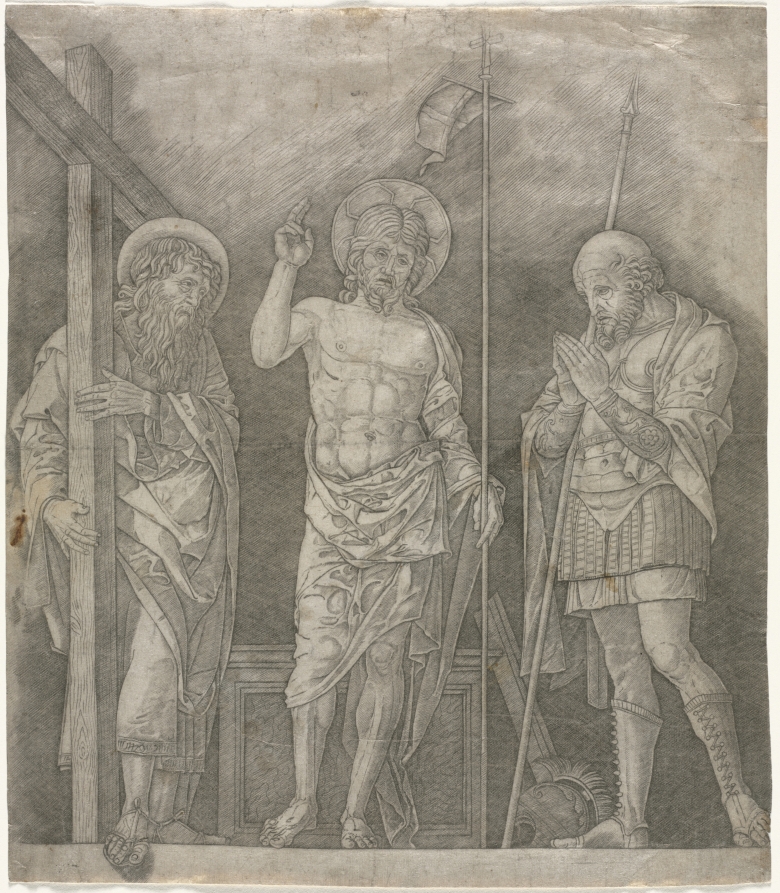
Risen Christ Between Saints Andrew and Longinus, c. 1500–1504, by Giovanni Antonio da Brescia
Giovanni Antonio da Brescia · The Cleveland Museum of Art · Gift of Ralph King
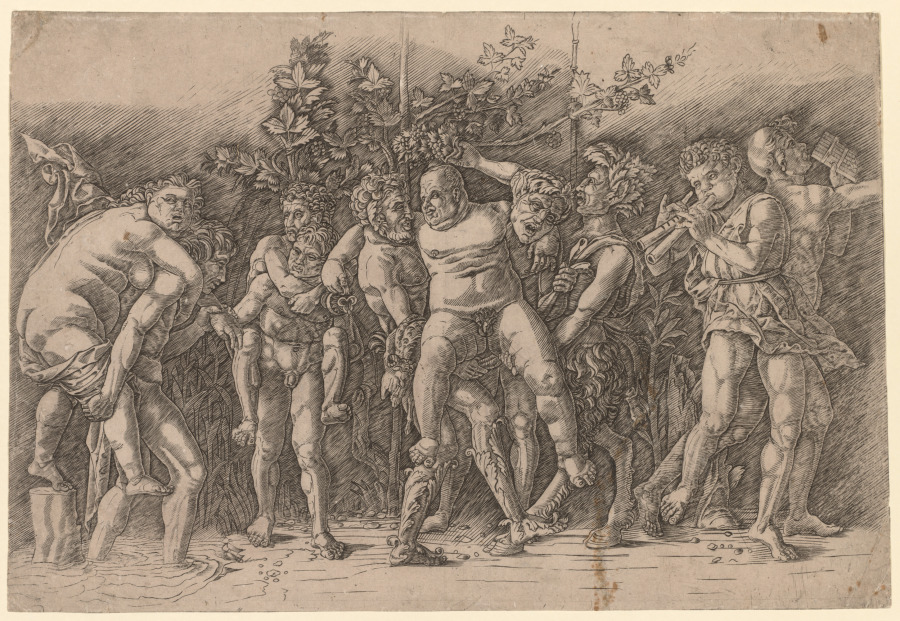
Bacchanal with Silenus, late 1400s–early 1500s, by Giovanni Antonio da Brescia
Giovanni Antonio da Brescia · The Cleveland Museum of Art · Gift of The Print Club of Cleveland
Notes from the source article
Cited by Wikipedia
Notes from the source article
These works are cited by the source article, in its own numbering. They are recorded as its citations, not as sources VALÉORINE has verified.
- 1.sometimes called "Gian Antonio..."
- 2.Zucker, 58; BM. The evidence was published by Landau and Zucker in the catalogue for the 1992 London exhibition on Mantegna
- 3.Zucker, 58–59; Sheehan, 235; BM
- 4.Zucker, 59
- 5.Zucker, 59
- 6.Zucker, 59; Sheehan, 235–237, 237 quoted
- 7.Landau, 76
- 8.Sheehan, 235
- 9.Zucker, 59; Sheehan, 235–236, 236 quoted; BM
- 10.Implied in Zucker, 59, who mentions no stops on the way
- 11.Cited in the source article.
- 12.Sheehan, 236
- 13.Zucker, 59
- 14.Sheehan, 236
- 15.Zucker, 59; BM
- 16.Sheehan, 236
- 17.Landau, 65
- 18.Christ, with hands bound, and surrounded by six men, standing in front of Pilate who is sitting on a raised throne. British Museum.
- 19.Four Dancing Muses. Google Arts & Culture.
- 20.Laocoon and his two sons devoured by the snake, after the antique statue. British Museum.
- 21.Three cupids holding torches and a dead bird. British Museum.
Bibliography printed in the source article · 3
- A. M. Hind: Early Italian Engraving: A Critical Catalogue with Complete Reproduction of All the Prints Described Vol. V (London, 1948), pp. 33–54
- M. J. Zucker: Early Italian Masters (1980), Commentary (1984), 25 [XIII/ii] of The Illustrated Bartsch, ed. W. L. Strauss (New York, 1978–)
- D. Landau and S. Boorsch (eds), Mantegna, exhibition catalogue Royal Academy and Metropolitan Museum of Art, 1992, pp. 57–61
References
Citations
References
Each reference names the institution holding it, so a reader may go to the document itself.
reference work
Secondary witnessreference work
Secondary witness
The Encyclopedia exists whether or not anything is for sale. Corrections are recorded rather than overwritten, and every version of this record is kept. Published 17 August 2026.
Elsewhere in Paintings
19,065 published records in this field, each with its sources named.
- Giovanni Antonio Bellinzoni da PesaroArtist
- Giovanni Antonio BoltraffioArtist
- Giovanni Antonio BurriniArtist
- Giovanni Antonio CucchiArtist
- Giovanni Antonio De PieriArtist
- Giovanni Antonio FasoloArtist
- Giovanni Antonio FumianiArtist
- Giovanni Antonio GalliArtist
Best supported in this field
For owners
Own a work by Giovanni Antonio da Brescia?
A specialist will read what you send and tell you what the house can establish, what it cannot, and whether the object is suited to sale. There is no charge and no obligation. The object stays with you throughout; nothing is shipped to us unless it is arranged in writing beforehand.