
Giorgio Sommer
Giorgio Sommer (2 September 1834 – 7 August 1914) was one of Europe's most important and prolific photographers of the 19th century. Giorgio Sommer was active from 1857 to 1888, he produced thousands of images of archeological ruins, landscapes, art objects, and portraits. Sommer was born in Frankfurt (modern-day Germany), where he studied business.
Also recorded as G. Sommer · G. S. · G.S.
Giorgio Sommer
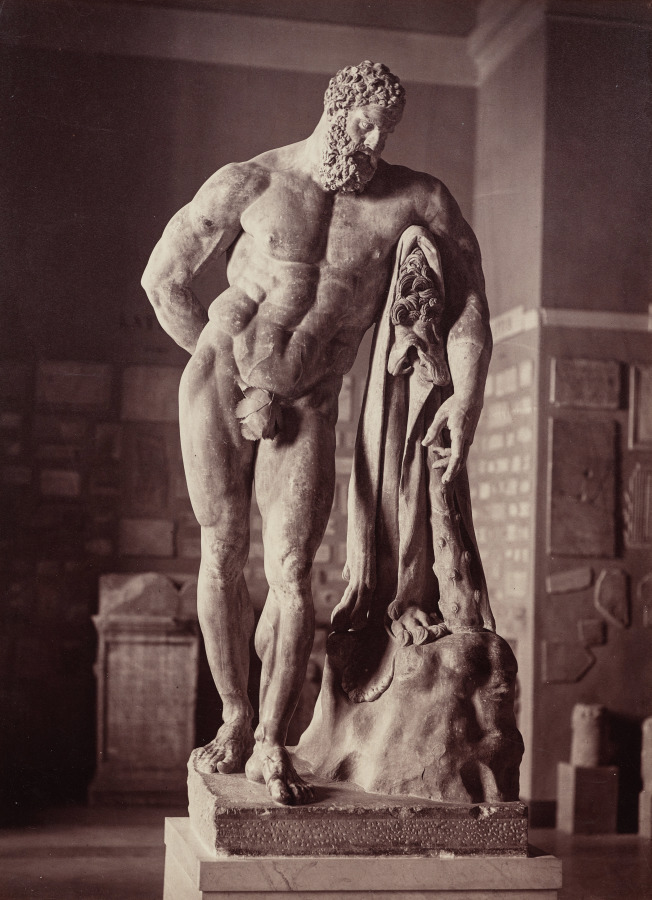
Giorgio Sommer · The Cleveland Museum of Art · Gift of George Stephanopoulos · CC0
- Name
- Giorgio Sommer
- Born
- 2 September 1834
- Birthplace
- Frankfurt, German Confederation
- Died
- 7 August 1914
- Place of death
- Naples, Kingdom of Italy
- Occupation
- Photographer
- Nationality
- Kingdom of Prussia · Kingdom of Italy
VALÉORINE Encyclopedia
VALÉORINE documentary reading
Documentary summary
Giorgio Sommer (2 September 1834 – 7 August 1914) was one of Europe's most important and prolific photographers of the 19th century. Giorgio Sommer was active from 1857 to 1888, he produced thousands of images of archeological ruins, landscapes, art objects, and portraits. Sommer was born in Frankfurt (modern-day Germany), where he studied business.
Admitted source layer · organised and presented by VALÉORINE
Reference Check
Propose documentary evidence for Giorgio Sommer. A contribution is never written directly as fact: identity, source, rights and evidence gates still decide.
Sign in to contribute
Documentary evidence
Documentary basis
Authority files
wikidata · Q64212 · wikipedia · Giorgio Sommer
In this article
Biography
Biography
He opened his first photography studio in Switzerland, where he made relief images of mountains for the Swiss government. In 1856, Sommer moved his business to Naples and in 1866 formed a partnership with fellow German photographer Edmondo Behles, who owned a studio in Rome. Operating from their respective Naples and Rome studios, Sommer and Behles became one of the largest and most prolific photography concerns in Italy. He held studios in Naples at: • Strada di Chiaia 168 • Via Monte di Dio 4 and 8 • Piazza della Vittoria Sommer's catalog included images from the Vatican Museums, the National Archeological Museum at Naples, the Roman ruins at Pompeii, as well as street and architectural scenes of Naples, Florence, Rome, Capri, and Sicily. Most notably, Sommer published his comprehensive album Dintorni di Napoli, which contained over one hundred images of everyday scenes in Naples. In April 1872, he documented a very large eruption of Mount Vesuvius in a series of stunning photographs. Sommer and Behles exhibited extensively and earned numerous honours and prizes for their work (London: 1862, Paris: 1867, Vienna: 1873, Nuremberg: 1885). At one time, Sommer was appointed official photographer to King Victor Emmanuel II of Italy. Sommer was involved in every aspect of the photography business. He published his own images that he sold in his studios and to customers across Europe. In later years, he photographed custom images for book illustrations, as well as printing his own albums and postcards. Sommer worked in all the popular formats of his day: carte de visite, stereoview, and large albumen prints (approximately 8 × 10) which were sold individually and in bound albums. The partnership with Behles ended in 1874, after which each photographer continued his own business. In Naples, Sommer opened a total of four additional studios: at No. 4 and No. 8 Monte di Dio, No. 5 Magazzino S. Caterina, and a last at Piazza della Vittoria. Sommer died in Naples in 1914.
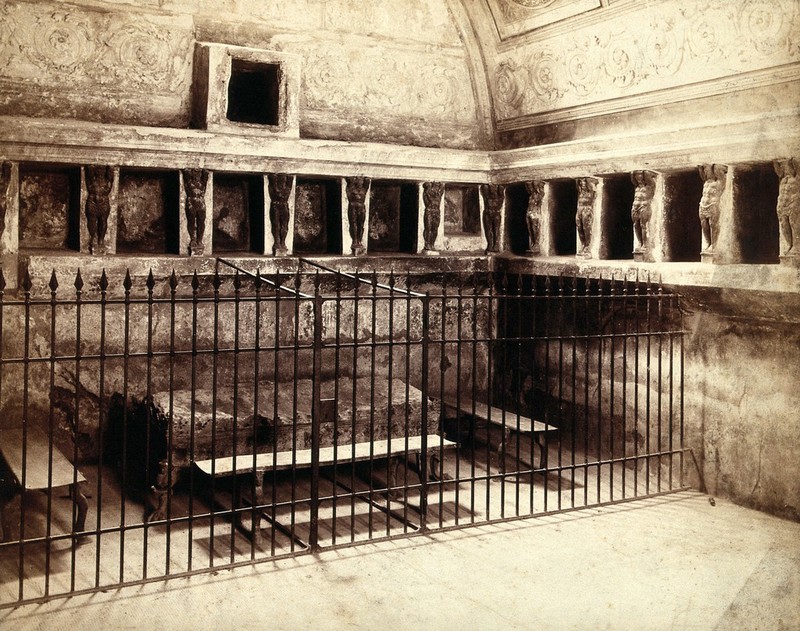
Pompeii: bath house interior showing furniture. Photograph by G. Sommer, ca. 1880., 1880, by Giorgio Sommer
Giorgio Sommer · Wellcome Collection, London · Wellcome Collection
Key facts
Key facts
• Name — Giorgio Sommer • Born — 2 September 1834 • Birthplace — Frankfurt, German Confederation • Died — 7 August 1914 • Place of death — Naples, Kingdom of Italy • Occupation — Photographer
Gallery
Gallery
• Illustration — Pompeii: Human Casts found on 5 February 1863, Städel • Illustration — Marina Grande, Capri, c. 1880 • Illustration — Naples, 1880s • Illustration — Crater of the Vesuvius, 26 April 1883 (Catalogue # 8935) • Illustration — Spaghetti eaters (Naples), before 1886 • Illustration — Stabbia Street (Pompeii), c. 1870 • Illustration — Doimede's house (Pompeii), c. 1870 • Illustration — Basilica (Pompeii), c. 1870 • Illustration — Amphitheatre (Pompeii), c. 1870 • Illustration — The Temple of Venus (Pompeii), c. 1870 • Illustration — The Temple of Isis (Pompeii), c. 1870 • Illustration — The remains of Numerius Popidius Priscus' bakery (Pompeii), c. 1870 • Illustration — Street of tombs (Pompeii), c. 1840 • Illustration — Panorama of Pompeii with Mount Vesuvius in the background (Pompeii), c. 1870 • Illustration — Panorama Forum Rivile (Pompeii), c. 1870 • Illustration — Forum (Pompeii), c. 1870 • Illustration — The Temple of Neptune, c. 1854
Notes from the source article
Cited by Wikipedia
Notes from the source article
These works are cited by the source article, in its own numbering. They are recorded as its citations, not as sources VALÉORINE has verified.
References
Citations
References
Each reference names the institution holding it, so a reader may go to the document itself.
reference work
Secondary witnessreference work
Secondary witness
The Encyclopedia exists whether or not anything is for sale. Corrections are recorded rather than overwritten, and every version of this record is kept. Published 14 August 2026.
Elsewhere in Photography
11,392 published records in this field, each with its sources named.
- Giorgia FiorioPhotographer
- Giorgina ReidPhotographer
- Giorgio MangiamelePhotographer
- Giorgio RosterPhotographer
- Giotto DainelliPhotographer
- Giovanni AnselmoPhotographer
- Giovanni ChiaramontePhotographer
- Giovanni CodaPhotographer
Best supported in this field
For owners
Own a work by Giorgio Sommer?
A specialist will read what you send and tell you what the house can establish, what it cannot, and whether the object is suited to sale. There is no charge and no obligation. The object stays with you throughout; nothing is shipped to us unless it is arranged in writing beforehand.