
Gifford Beal
Gifford Beal (January 24, 1879 – February 5, 1956) was an American painter, watercolorist, printmaker and muralist.
Also recorded as Gifford Reynolds Beal · Gifford R. Beal
Gifford Beal
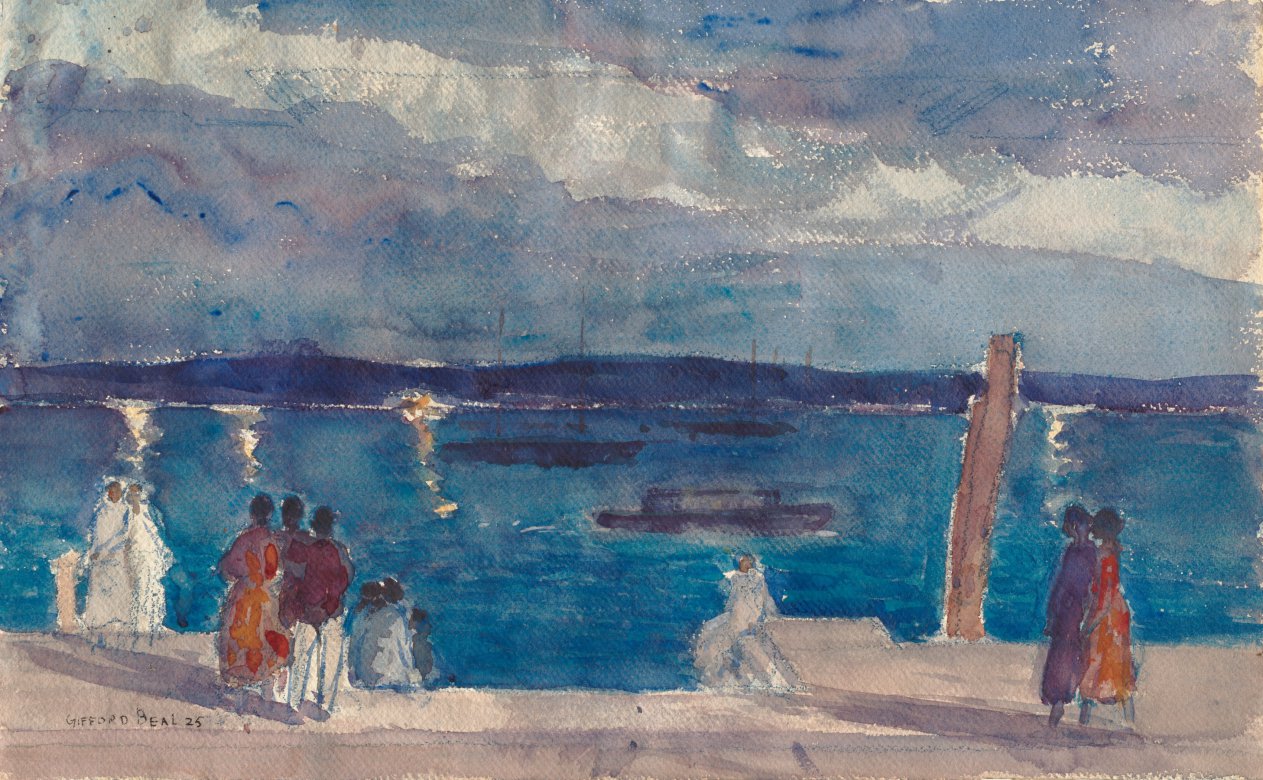
Gifford Beal · The Cleveland Museum of Art · In memory of Ralph King, gift of Mrs. Ralph King · CC0
- Name
- Gifford Reynolds Beal
- Born
- 24 January 1879
- Birthplace
- New York City
- Died
- 5 February 1956
- Known for
- Painting
- Movement
- Impressionist Modernist
- Nationality
- United States.
- Occupation
- painter.
- Education
- Princeton University, Art Students League of New York and Shinnecock Hills summer school.
- Honours
- Hallgarten Prize.
- Languages
- English.
VALÉORINE Encyclopedia
VALÉORINE documentary reading
Documentary summary
Gifford Beal (January 24, 1879 – February 5, 1956) was an American painter, watercolorist, printmaker and muralist.
Admitted source layer · organised and presented by VALÉORINE
Note VALÉORINE
Gifford Beal (1879–1956) was an American painter. The painter was born and died in New York City. Gifford Beal was also known as Beal, Gifford Reynolds.
Gifford Beal studied at Art Students League of New York, Princeton University and Shinnecock Hills summer school. The painter was a member of American Academy of Arts and Letters.
Languages used include English. Works by Gifford Beal are held at Art Institute of Chicago, Los Angeles County Museum of Art and Metropolitan Museum of Art, among others. The painter received Hallgarten Prize.
Composed from admitted, traceable facts · 01 October 2026
VALÉORINE
Reference Check
Propose documentary evidence for Gifford Beal. A contribution is never written directly as fact: identity, source, rights and evidence gates still decide.
Sign in to contribute
World of VALÉORINE
Documentary connections
Only confirmed graph relationships appear here. Images are shown only when their identity and reuse rights both pass the documentary gate.
Documentary evidence
Documentary basis
Authority files
wikidata · Q5559916 · wikipedia · Gifford Beal
In this article
Biography
Biography
Gifford Beal studied at Princeton University, Art Students League of New York and Shinnecock Hills summer school. The recorded working language is English. Work by Gifford Beal is recorded in the collections of Art Institute of Chicago, The Nelson-Atkins Museum of Art, Whitney Museum of American Art, Metropolitan Museum of Art and Smithsonian American Art Museum. Distinctions recorded are Hallgarten Prize.
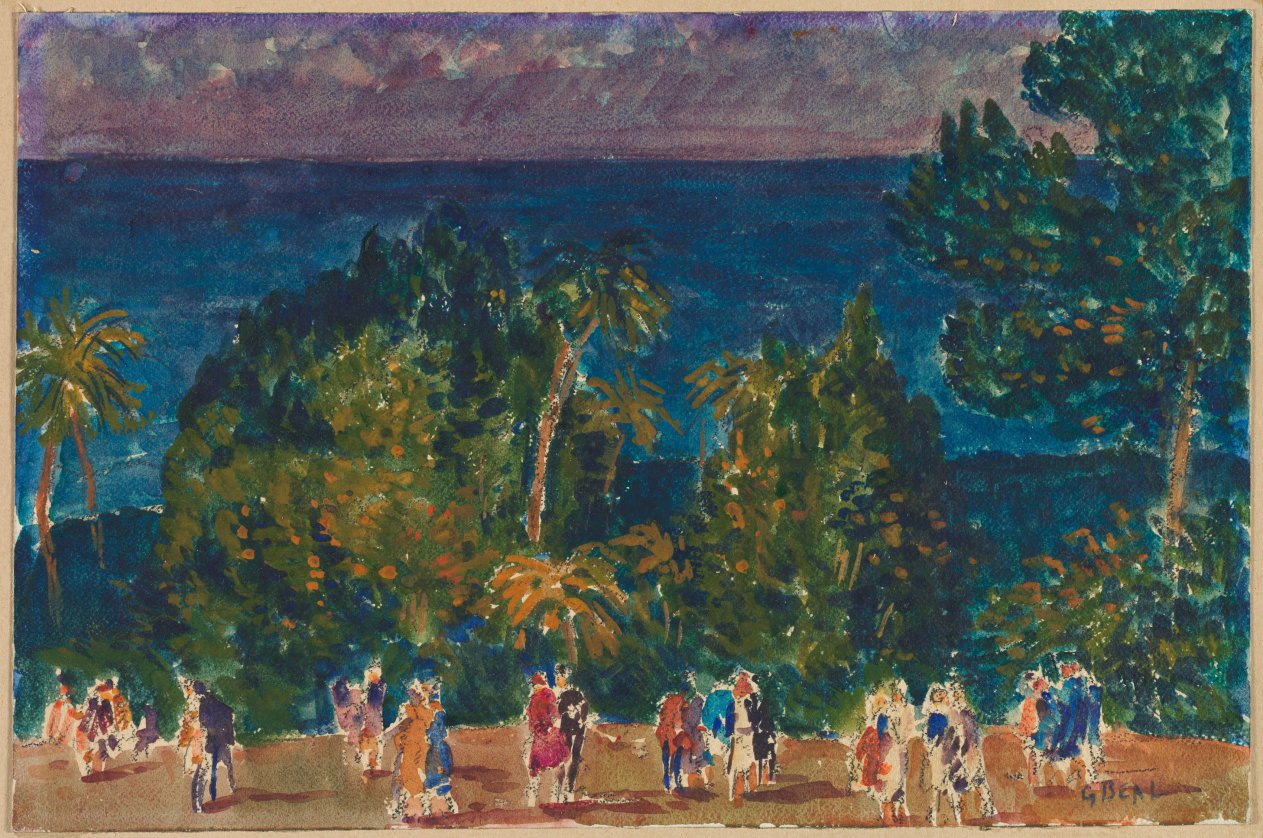
Moonlight, Bermuda, c. 1919, by Gifford Beal
Gifford Beal · The Cleveland Museum of Art · Purchase from the J. H. Wade Fund
Key facts
Key facts
• Name — Gifford Reynolds Beal • Born — 24 January 1879 • Birthplace — New York City • Died — 5 February 1956 • Place of death — New York City • Known for — Painting • Movement — Impressionist Modernist • Relatives — Reynolds Beal (brother)
Early life
Early life
Born in New York City, Gifford Beal was the youngest son in a family of six surviving children. His oldest brother Reynolds Beal (1866–1951) also went on to become an accomplished painter as did his niece Marjorie Acker (1894–1985), who married Duncan Phillips, the founder of The Phillips Collection of Washington D.C. Beal knew from an early age that he wanted to paint. Between 1892 and 1901 he studied with William Merritt Chase (1849–1916) on weekends in New York City and during the summer at Chase’s Shinnecock Hills Summer School of Art on Long Island. After graduating from Princeton University in 1900 he studied at the Art Students League of New York from 1901 to 1903 with George Brandt Bridgman (1864–1943) and Frank Vincent DuMond (1865–1951).
Career rise and recognition
Career rise and recognition
• Illustration — Gifford Beal, The Fisherman, 1922, Brooklyn Museum In 1903 Beal won his first award (3rd prize) in a competitive exhibition, held at Worcester Art Museum, Massachusetts. Many prizes followed including those awarded by: • National Academy of Design, New York, (Hallgarten Prize in 1910) • Corcoran Gallery of Art, Washington, DC, (3rd Medal and $1,000 Prize in 1914) • Panama Pacific Exposition, San Francisco, (gold medal in 1915) • Art Institute of Chicago, International Watercolor Exhibition, (Blair Prize in 1930) • Exposition Internationale des Arts et Techniques dans la Vie Moderne (1937), Paris, (silver medal in 1937) • National Academy of Design, New York, (Saltus Medal in 1948) • National Academy of Design, New York, (Samuel Finley Breese Morse gold medal in 1954) • National Academy of Design, New York, (Edward Palmer memorial Prize in 1955) Beal was elected President of the Art Students League of New York in 1916, again in 1918, and from 1920 he held this office continuously until 1930, becoming the longest serving President in its history. He taught at The Art Students’ League in 1931 and 1932. In 1920 Beal held his first one-man exhibition at Kraushaar Galleries in New York City. It was the beginning of a lifelong relationship he would have with the gallery. His work was exhibited continuously in the country. Beal’s involvement with organizations for the advancement of the arts began in 1908 when he was elected to Associate by the National Academy of Design; in 1914 he was elected to National Academician. In 1923 he became a member of the National Institute of Arts and Letters, and in 1943 he became a member of the American Academy of Arts and Letters. He was a National Academician of the American Watercolor Society from 1910 until 1955. He was also a member of the Century Association, a New York City club founded in 1847 for artists and writers. Beal also taught, and among his pupils was the painter Ann Brockman. His work was part of the painting event in the art competition at the 1936 Summer Olympics.
Museums and government buildings
Museums and government buildings
• Illustration — The Fish Bucket (1924), The Phillips Collection Beal’s work is held in an array of museum collections: • Metropolitan Museum, New York City • Whitney Museum of American Art, New York City • Cleveland Museum of Art, Ohio • The Phillips Collection, Washington D.C. • Los Angeles County Museum of Art, California • Detroit Institute of Arts, Michigan • Art Institute of Chicago, Illinois • Nelson-Atkins Museum of Art, Kansas City, Missouri • Florence Griswold Museum, Old Lyme, Connecticut • New Britain Museum of American Art, New Britain, Connecticut • Virginia Museum of Fine Arts, Richmond, Virginia • Hudson River Museum, Yonkers, New York • Telfair Museums, Georgia • Frye Art Museums, Washington • Amon Carter Museum of American Art, Texas • Crystal Bridges Museum of American Art, Arkansas • Virginia Museum of Fine Arts, Virginia • McNay Art Museum, Texas • Indianapolis Museum of Art, Indiana • Canton Museum of Art, Ohio • Terra Foundation for American Art, Illinois • Smithsonian American Art Museum, Washington D.C. • British Museum, London, England • Everson Museum of Art, New York • Princeton University Art Museum, New Jersey • Brooklyn Museum, New York • University of Michigan Museum of Art, Michigan • Mildred Lane Kemper Art Museum, Missouri • New-York Historical Society, New York • New Britain Museum of American Art, Connecticut • Maier Museum of Art, Lynchburg, Virginia Beal was commissioned to produce murals for several government buildings: • Allentown, Pennsylvania, Post Office, 1938 • Main Interior Building, Washington D.C., 1941 • Crestline, Ohio Post Office, 1943
Style and inspiration
Style and inspiration
Beal’s subjects varied. He found inspiration not only in holiday spectacle and pageantry but also in the natural and everyday side of life. Some of his best known pictures are of holiday crowds, circus performers and hunting scenes. Yet, Beal enjoyed painting the Caribbean Islands and the landscape along the Hudson River and in Gloucester and Rockport, Massachusetts, where he spent many summers. He depicted many scenes of the fishermen who worked there. The French Impressionists' use of color and light to create form and atmosphere provided Beal's first influence. As his personal style developed, other elements of painting were emphasized: compositions were built on line and form thereby adding more solidity to the work. For example, he depended on balanced, rhythmic elements to depict motion in riding or fishing scenes. Beal believed in the power of spontaneity and would sometimes rework a "dead" area of color with line in order to revitalize it. Beal's style underwent a simplification in the 1930s, his "austere" phase which coincided with American regionalism. As he grew older, his work became increasingly free and spirited, in part due to his exploration of different media, especially egg/oil tempera and brush and ink. These changes increased his sense of color and gesture, and he began to emphasize the abstract qualities of his subject. He did some of his boldest and brightest work during the last years of his life.
Gifford Beal Archive
The Smithsonian Institution in Washington D.C. holds an archive concerning Beal’s career as an artist containing correspondence, writings, works of art and printed material, much of it provided by Kraushaar Galleries, New York City. This collection has been fully digitized and is available online.
Notes from the source article
Cited by Wikipedia
Notes from the source article
These works are cited by the source article, in its own numbering. They are recorded as its citations, not as sources VALÉORINE has verified.
- 1.Richard Beer, “As They Are,” The Art News (May 19, 1934)
- 2.Routledge. North American Women Artists of the Twentieth Century: A Biographical Dictionary. 19 December 2013. 978-1-135-63882-5.
- 3.Gifford Beal. Olympedia.
- 4.Gifford R. Beal Lawn Fete. whitney.org.
- 5.Arabesque. www.dia.org.
- 6.West Wind. art.nelson-atkins.org.
- 7.Summer Scene. Florence Griswold Museum.
- 8.2015.04.01. Hudson River Museum.
- 9.New York » Telfair Museums. Telfair Museums.
- 10.Frye Art Museum - Gifford Beal. collection.fryemuseum.org.
- 11.Tanning the Nets. www.cartermuseum.org.
- 12.Shipbuilding #1 – Works – Crystal Bridges Museum of American Art.
- 13.Outside the Horse Tent (Primary Title) - (55.5.2). Virginia Museum of Fine Arts.
- 14.View from St. George, Bermuda. McNay Art Museum Online Collection.
- 15.Circus Performer. Indianapolis Museum of Art Online Collection.
- 16.Canton Museum of Art Collection. www.cantonartcollection.com.
- 17.Terra Foundation for American Art: Collections. collection.terraamericanart.org.
- 18.Gifford Beal Smithsonian American Art Museum. americanart.si.edu.
- 19.drawing British Museum. The British Museum.
- 20.Everson Museum :: Object of the Week: Freight Yards, by Gifford Beal. www.everson.org. 12 March 2018.
- 21.Gifford Reynolds Beal Princeton University Art Museum. artmuseum.princeton.edu.
- 22.Brooklyn Museum. www.brooklynmuseum.org.
- 23.Exchange: Fisherman. exchange.umma.umich.edu.
- 24.Artwork Detail Kemper Art Museum. www.kemperartmuseum.wustl.edu.
- 25.Portrait of Antoinette Kraushaar. emuseum.nyhistory.org.
- 26.Elevated, Columbus Avenue, New York – Works – eMuseum. ink.nbmaa.org.
- 27.Murals. Living New Deal. livingnewdeal.org. 1.
- 28.Park, Marlene and Gerald E. Markowitz, Democratic vistas: Post Offices and Public Art in the New Deal, Temple University Press, Philadelphia 1984
- 29.Gifford Beal Sketches, Sketchbooks and Papers, 1902-1953, Archives of American Art, Smithsonian Institution]
- 30.Kraushaar Galleries, New York City
References
Citations
References
Each reference names the institution holding it, so a reader may go to the document itself.
reference work
Secondary witnessreference work
Secondary witness
The Encyclopedia exists whether or not anything is for sale. Corrections are recorded rather than overwritten, and every version of this record is kept. Published 17 August 2026.
Elsewhere in Paintings
19,183 published records in this field, each with its sources named.
- Giannis KonstantinidisArtist
- Gianserio StrafellaArtist
- Gibby HaynesArtist
- Gideon Jacques DennyArtist
- Gigadō AshiyukiArtist
- Gigo GabashviliArtist
- Gijsbert VerhoekArtist
- Gijsbrecht LeytensArtist
Best supported in this field
For owners
Own a work by Gifford Beal?
A specialist will read what you send and tell you what the house can establish, what it cannot, and whether the object is suited to sale. There is no charge and no obligation. The object stays with you throughout; nothing is shipped to us unless it is arranged in writing beforehand.