
Gérard Audran
Gérard Audran (or Girard Audran) (2 August 164026 July 1703), was a French engraver of the Audran family, the third son of Claude Audran. • Illustration — Gérard Audran: engraving by Nicolas-Gabriel Dupuis
Also recorded as Gerard Audran · Girard Audran · G. (Gérard) Audran
Gérard Audran
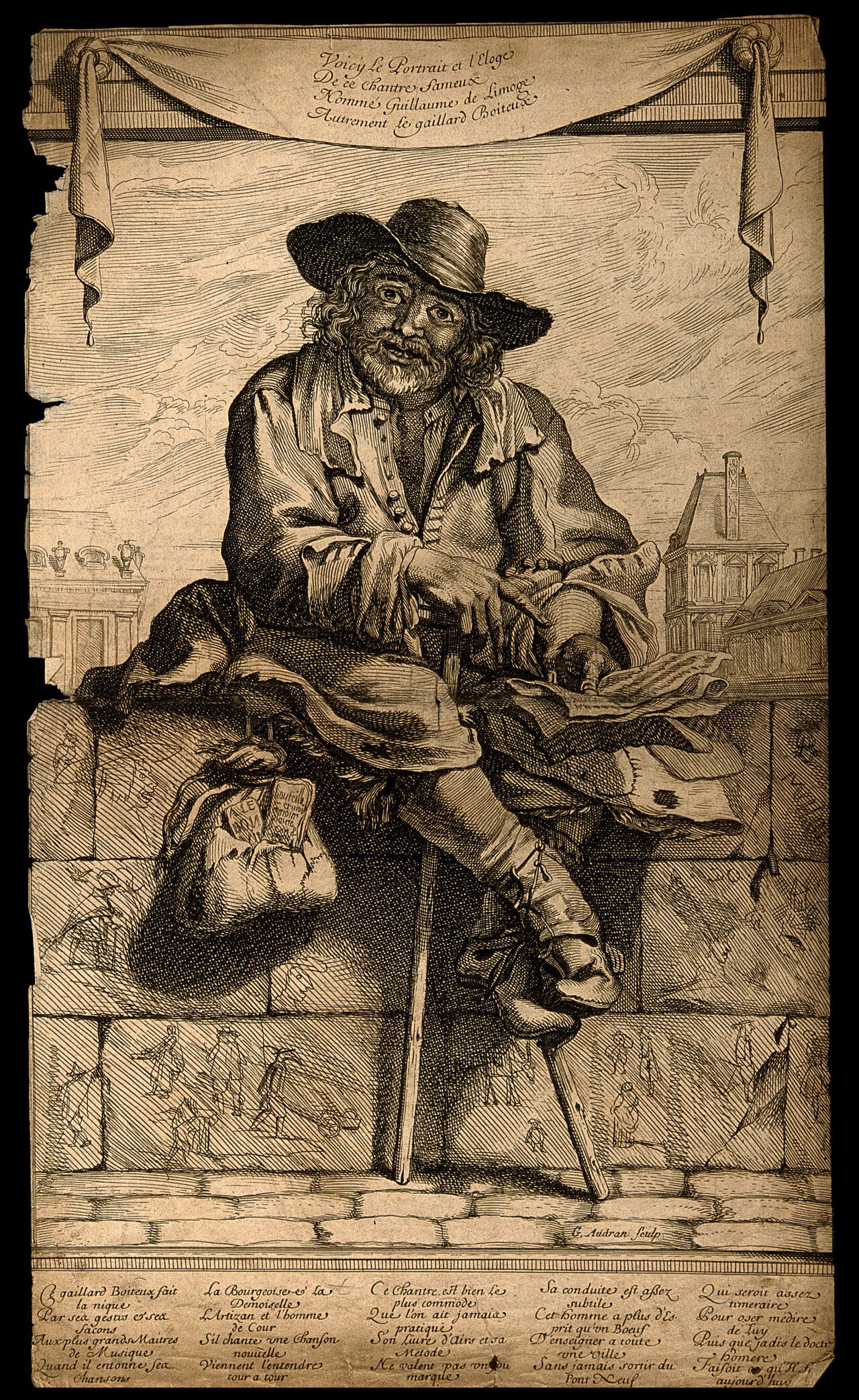
Gérard Audran · Wellcome Collection, London · Wellcome Collection · Public Domain Mark
- Born
- 1640
- Died
- 1703
- Nationality
- France
- Occupation
- printmaker · print publisher
Reference Check
Propose documentary evidence for Gérard Audran. A contribution is never written directly as fact: identity, source, rights and evidence gates still decide.
Sign in to contribute
Documentary evidence
Documentary basis
Authority files
wikidata · Q707239 · wikipedia · Gérard Audran
VALÉORINE Encyclopedia
The documentary record
Statements marked “Documentary record” are set in the article beside the passage they confirm. Each is read from the authority records of the institutions named here; select “Prove” to see the record it was read from, where in that record, and when.
Institutions cited
Bibliothèque nationale de France · Deutsche Nationalbibliothek · Getty Union List of Artist Names
Complete reading chain (JSON)In this article
Life
Life
He was born in Lyon and was taught the first principles of design and engraving by his father. Following the example of his brother, he went to Paris to perfect himself in his art. In 1666, he engraved for Le Brun Constantines Battle with Laxentius, his Triumph, and the Stoning of Stephen, which gave great satisfaction to the painter, and placed Audran in the very first rank of engravers at Paris. The next year he set out for Rome, where he resided three years, and engraved several fine plates. He is reputed to have worked for or trained with Carlo Maratta. That great patron of the arts, J. B. Colbert, was so struck with Audran's works that he persuaded Louis XIV to recall him to Paris. On his return, Audran applied himself assiduously to engraving, and was appointed engraver to the king, from whom he received great encouragement. In the year 1681 he was admitted to the council of the Royal Academy. He died in Paris. His engravings of Le Bruns Battles of Alexander are regarded as the best of his numerous works. Gerard published in 1683 a work entitled Les Proportions du corps humain mesurés sur les plus belles figures de l'antiquité. • Illustration — Gérard Audran after Charles LeBrun, Alexander Entering Babylon, original print first published 1675, engraving
Documentary record
Gérard Audran, a copperplate engraver, publisher and printmaker, was born on 2 August 1640 and died on 26 July 1703. Gérard Audran was born in Lyon, according to the Bibliothèque nationale de France and the Getty Union List of Artist Names. The Bibliothèque nationale de France records the fuller form Lyon (Rhône). Gérard Audran died in Paris, France, according to the Bibliothèque nationale de France and the Getty Union List of Artist Names.
Identity
Identity
Gérard Audran is recorded as printmaker and print publisher.
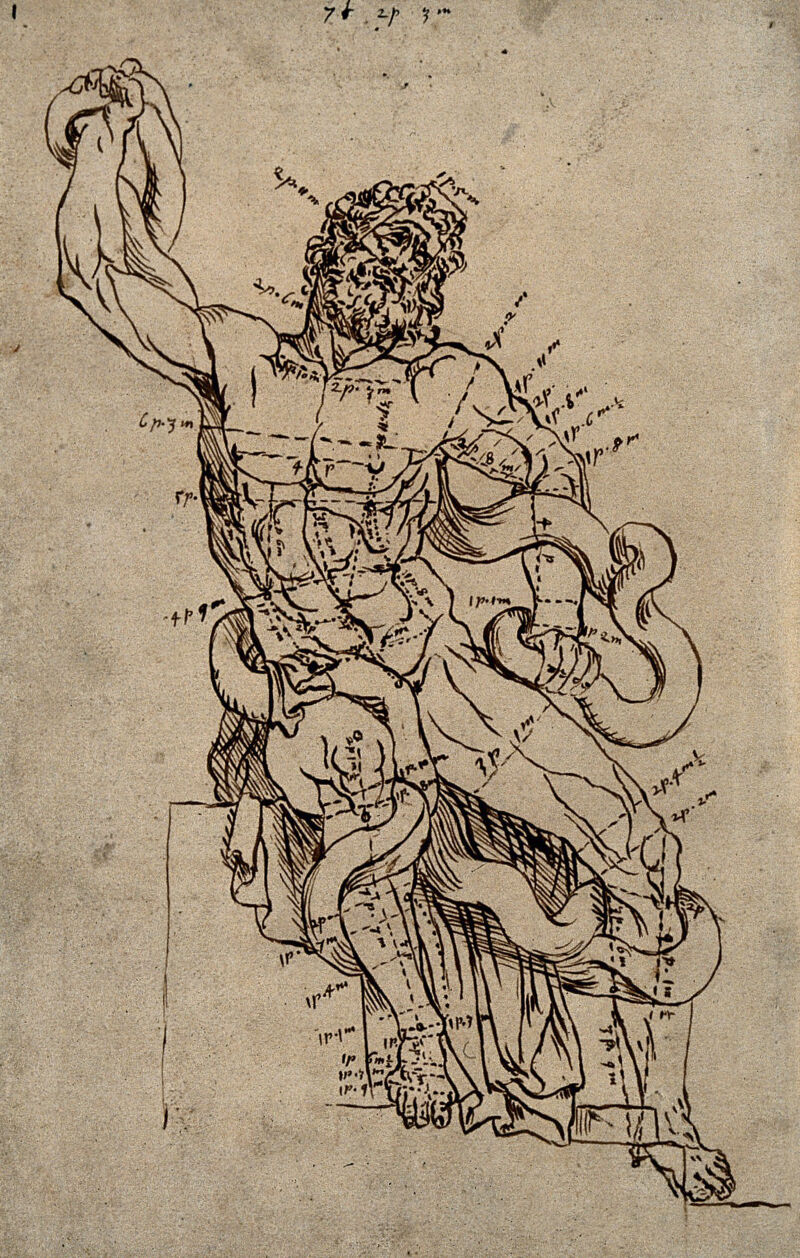
The Laocoön sculpture. Pen and ink drawing after G. Audran., by Gérard Audran
Gérard Audran · Wellcome Collection, London · Wellcome Collection
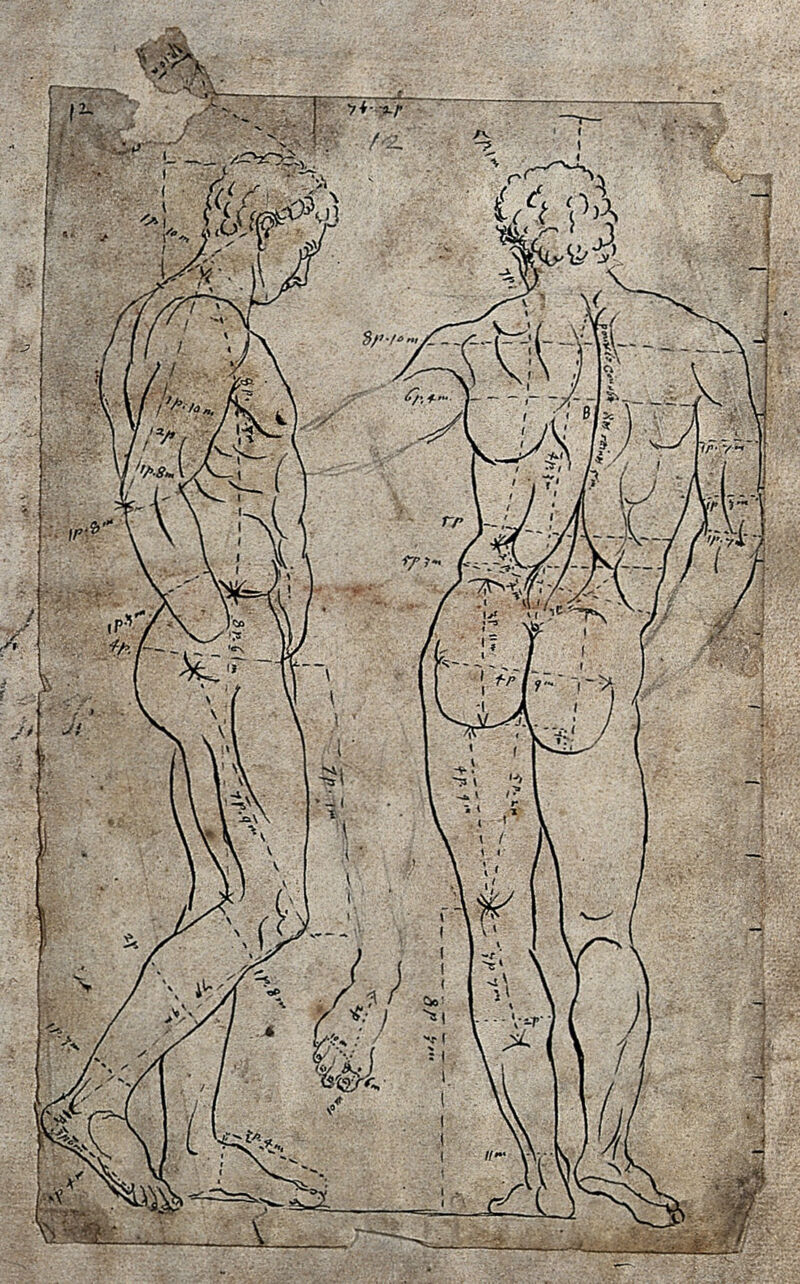
The Belvedere Antinous. Pen and ink drawing after G. Audran., by Gérard Audran
Gérard Audran · Wellcome Collection, London · Wellcome Collection
Life and career
Dated record
Life and career
The full dated record · 2 entries
1640
Gérard Audran was born in 1640.
1703
Gérard Audran died at Paris.
Text attribution
Licensing
Text attribution
Part of the biographical narrative on this page reuses licensed material. Its origin, revision and licence are recorded here.
The biographical narrative on this page is based on the Wikipedia article Gérard Audran, revision 1344636172 (EN edition), by its contributors. VALÉORINE has edited that text and built its own documentary record around it. The reused material is available under CC BY-SA 4.0, and this page's reuse of it is offered under the same licence. Everything else on this page — the chronology, the holdings, the evidence, the plates and the connections — is VALÉORINE's own record. Sources and licences.
Notes from the source article
Cited by Wikipedia
Notes from the source article
These works are cited by the source article, in its own numbering. They are recorded as its citations, not as sources VALÉORINE has verified.
- 1.Georges Duplessis. Gérard Audran. 1892.
- 2.Joseph Guibert. Audran, Gérard. 240.
- 3.Les plafonds de la Galerie du petit appartement du Roi à Versailles modernites.hypotheses.org (französisch).
References
Citations
References
Each reference names the institution holding it, so a reader may go to the document itself.
reference work
Wikidata, structured authority record Q707239: Gérard AudranWikimedia Foundation
Secondary witnessreference work
Secondary witness
Further particulars
Held on the record
Further particulars
Open the remaining particulars
The authorities additionally record the headings Gerard Audran, Girard Audran and G. His recorded language was French. He was the child of Claude Audran the Elder. Other recorded relations include Charles Audran. He belonged to Académie royale de peinture et de sculpture. He worked at Paris, rue Saint-Jacques and Gobelins Tapestry Manufactory.
Identity and origins
Career and activity
The Encyclopedia exists whether or not anything is for sale. Corrections are recorded rather than overwritten, and every version of this record is kept. Published 14 August 2026.
Elsewhere in Prints
4,138 published records in this field, each with its sources named.
- Georges JacquotEngraver
- Georges LemmenEngraver
- Gerald BrockhurstEngraver
- Gerald LaingEngraver
- Gerard BouttatsEngraver
- Gérard CochetEngraver
- Gerard de JodeEngraver
- Gerard de LairesseEngraver
Best supported in this field
For owners
Own a work by Gérard Audran?
A specialist will read what you send and tell you what the house can establish, what it cannot, and whether the object is suited to sale. There is no charge and no obligation. The object stays with you throughout; nothing is shipped to us unless it is arranged in writing beforehand.