
George Dawe
George Dawe (6 February 1781 – 15 October 1829) was an English portraitist who painted 329 portraits of Russian generals active during Napoleon's invasion of Russia for the Military Gallery of the Winter Palace. He relocated to Saint Petersburg in 1819, where he won acclaim for his work from the artistic establishment and complimentary verses by Pushkin. He was the son of Philip Dawe, a successful mezzotint engraver who also produced political cartoons relating to the events of the Boston Tea Party.
Also recorded as G. Daoe · D. Doj · Dawe · [Dawe]
George Dawe
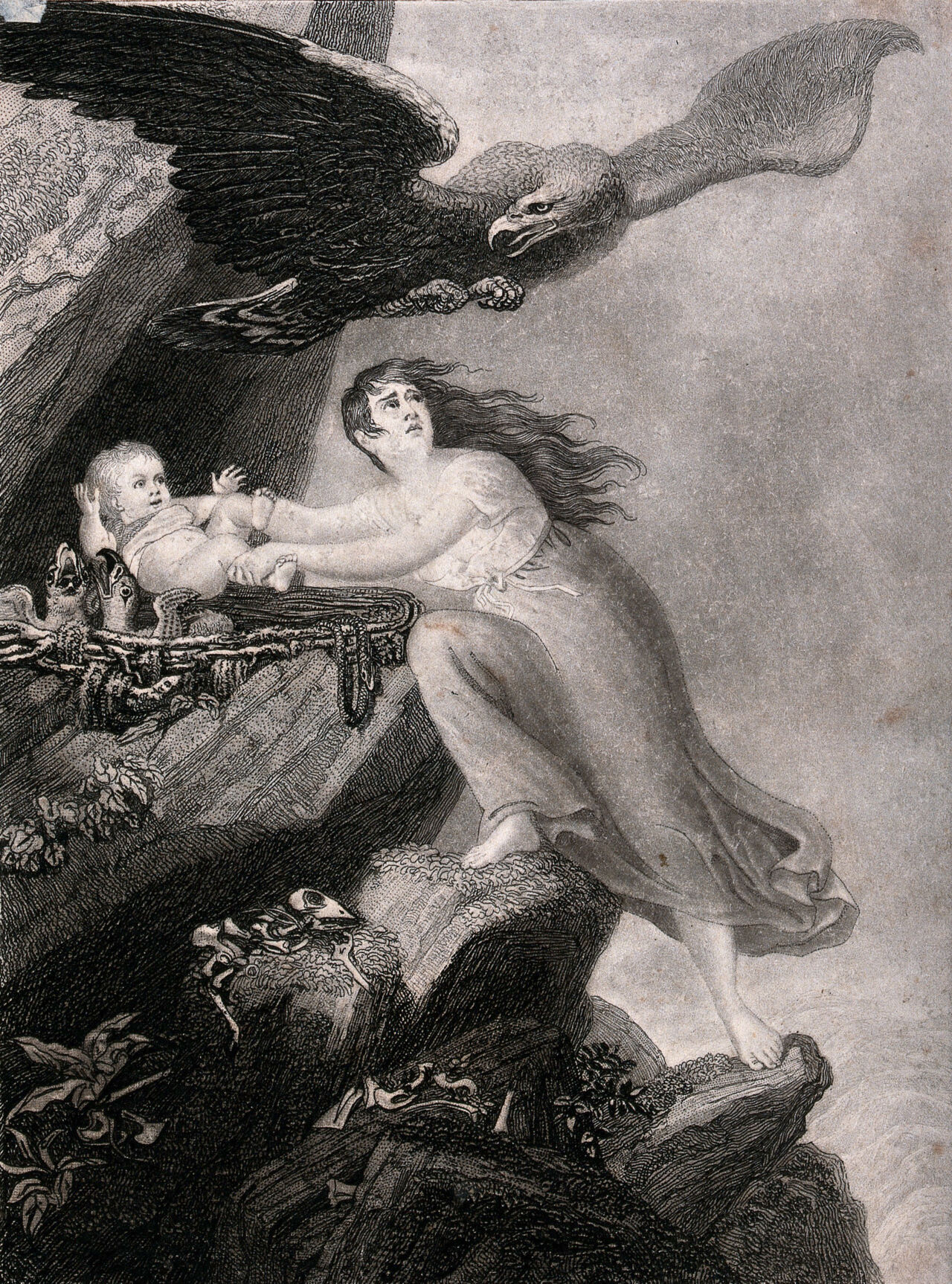
George Dawe · Wellcome Collection, London · Wellcome Collection · Public Domain Mark
- Born
- sources differ (1781 and 1781).
- Died
- 1829.
- Nationality
- United Kingdom of Great Britain and Ireland and Kingdom of Great Britain.
- Occupation
- painter, printmaker and portraitist.
- Fields
- portrait.
VALÉORINE Encyclopedia
VALÉORINE documentary reading
Documentary summary
George Dawe (6 February 1781 – 15 October 1829) was an English portraitist who painted 329 portraits of Russian generals active during Napoleon's invasion of Russia for the Military Gallery of the Winter Palace. He relocated to Saint Petersburg in 1819, where he won acclaim for his work from the artistic establishment and complimentary verses by Pushkin. He was the son of Philip Dawe, a successful mezzotint engraver who also produced political cartoons relating to the events of the Boston Tea Party.
Admitted source layer · organised and presented by VALÉORINE
Note VALÉORINE
George Dawe (1781–1829) was a painter, portraitist and printmaker, of British and British nationality. The painter was born in London and died in Kentish Town.
George Dawe worked for Alexander I of Russia and was a member of Royal Academy of Arts. The painter worked in Saint Petersburg. Activity centred on painting.
The work spans portrait. Languages used include English.
Composed from admitted, traceable facts · 30 September 2026
VALÉORINE
Reference Check
Propose documentary evidence for George Dawe. A contribution is never written directly as fact: identity, source, rights and evidence gates still decide.
Sign in to contribute
Documentary evidence
Documentary basis
Authority files
wikidata · Q1507231 · wikipedia · George Dawe
In this article
Early life and studies
Early life and studies
One of his brothers was Henry Edward Dawe, also a portraitist.
George Dawe was born on 6 February 1781 to Philip Dawe and Jane in Brewer Street, in the parish of St James's in Westminster. Philip was an artist and engraver in mezzotint who had worked with Hogarth and Joseph Mallord William Turner and who also produced satirical political cartoons about life in America which are still highly regarded. George was the first child born to the couple and there would be other successful artists in the family. Dawe was baptised on 25 February 1781 at St James's Church in Piccadilly, with George Morland as his godfather. He originally trained with his father as an engraver and became very accomplished from an early age. He later became interested in painting and went on to study at the Royal Academy of Arts where he won the Royal Academy Schools Gold Medal in 1803. He was elected an associate member of the Royal Academy in 1809 and became an Academician in 1814. He collected old masters and studied modern and classical languages, philosophy and literature. He also studied anatomy as part of his pursuit of a better understanding of the human form and undertook human dissections in his own home as well as attending operations to improve his knowledge of the human body.
Portrait painting
Portrait painting
His painting of classical subjects won much praise and were the making of his early reputation but he was more interested in financial success and sought portraiture commissions which were lucrative and which brought him into contact with high society. However, the direct way in which he promoted his own work was not approved of by artistic society and brought considerable criticism from his contemporaries, one of whom was John Constable, who painted a background for a Dawe portrait on at least one occasion. He enjoyed the patronage of the Duke and Duchess of Kent and also that of Princess Charlotte and Prince Leopold.
Career in Russia
Career in Russia
In 1819 he travelled with the Duke of Kent through Europe. On this tour his painting of portraits of military staff and diplomats brought him to the attention of Alexander I who commissioned him to paint the portraits of senior Russian military staff who had successfully fought Napoleon. He went to live in St Petersburg and, from 1822 to 1828, painted over 300 portraits for the military collection at the Winter Palace with his assistants, Alexander Polyakov and Wilhelm August Golicke. He became a celebrity throughout Europe and mixed with the Russian intellectual elite. Among others he met and knew were Pushkin who wrote a poem about him entitled "To Dawe Esq." In 1826 Nicholas I invited him to his coronation ceremony and in 1828 he was officially appointed First Portrait Painter of the Imperial Court. Dawe returned to England in 1828 and stayed for several months. During this time he exhibited many of his recent works and George IV was among those to whom they were privately shown.
Decline in health, and death
Decline in health, and death
He returned to St Petersburg in 1829 but soon became increasingly unwell with breathing difficulties following a serious cold. He had pulmonary weakness throughout life following childhood illness. He returned to London in August 1829 and died on 15 October at the home of his brother-in-law, Thomas Wright, a celebrated engraver. He was buried in the crypt of St Paul's Cathedral and his funeral was attended by many artists and officials from the Russian embassy. The significant body of work he created in Russia is currently housed in the military gallery in the Hermitage Museum in St Petersburg. Many of his paintings are also included in the British Royal Collection. Despite the international celebrity he enjoyed in his own lifetime his popularity did not endure in England, although in Russia he is still well-known and held in high regard.
Russian royalty, noblemen and military officers
Russian royalty, noblemen and military officers
Sources:
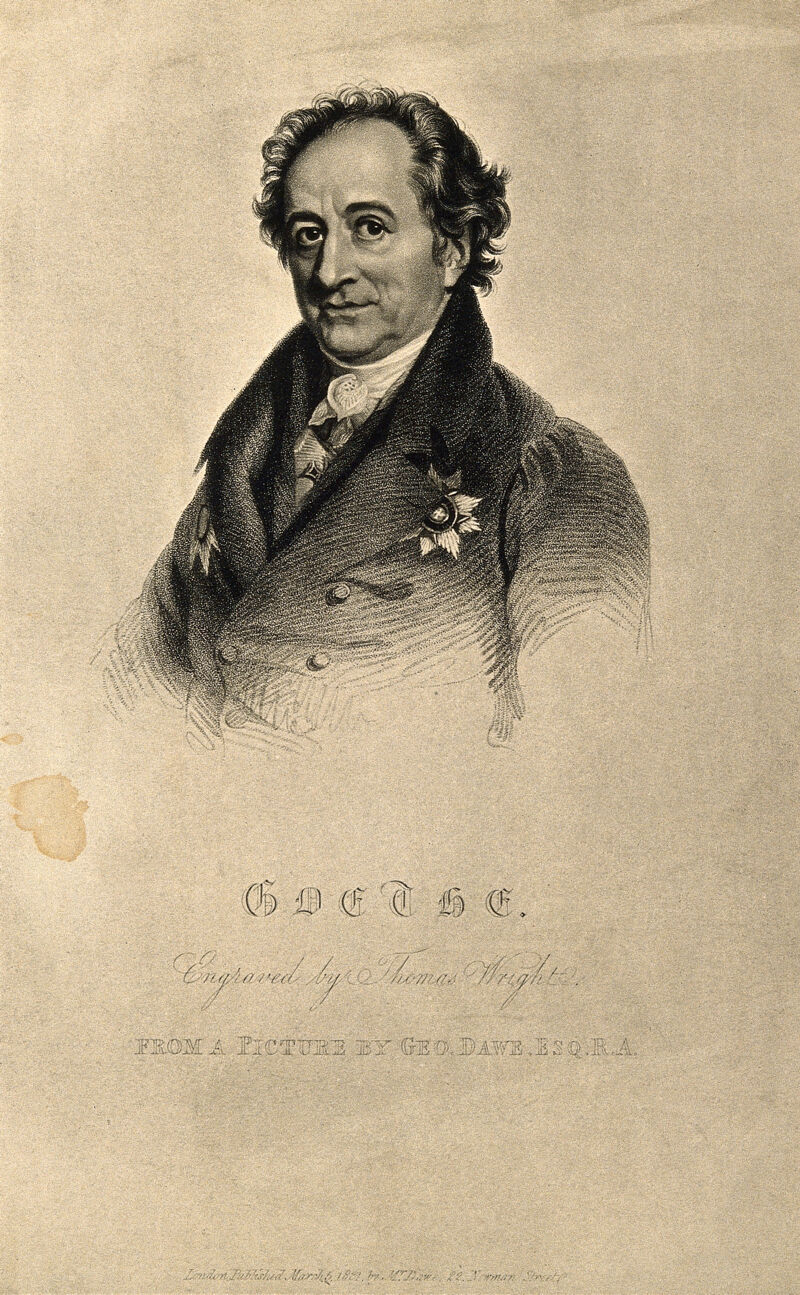
Johann Wolfgang von Goethe. Stipple engraving by T. Wright, 1821, after G. Dawe, 1819., March 5 1821, by George Dawe
George Dawe · Wellcome Collection, London · Wellcome Collection
Life and career
Dated record
Life and career
The full dated record · 2 entries
1781
George Dawe was born in 1781.
1829
George Dawe died at Kentish Town.
Primary material
Documents and archives
reference work
- Wikidata, structured authority record Q1507231: George Dawe
Reputable secondary · Wikidata
- “George Dawe”, English Wikipedia, consulted as further reading
Reputable secondary · Wikipedia
scholarly publication
- Dawe, George (1781–1829), Oxford Dictionary of National Biography, 2018
Scholarly · Crossref registry · 2018
Notes from the source article
Cited by Wikipedia
Notes from the source article
These works are cited by the source article, in its own numbering. They are recorded as its citations, not as sources VALÉORINE has verified.
- 1."Tate organization: Arts and Artists"
- 2."Dadiani Fine Art".
- 3.Oxford Dictionary of National Biography
- 4.“RusArtNet: Biography of George Dowe”
- 5."Royal Academy: George Dawe RA (1781–1829)"
- 6.“The World Artist: George Dawe”
- 7."Memorials of St Paul's Cathedral" Sinclair, W. p. 465: London; Chapman & Hall, Ltd; 1909.
- 8.Lamb, Charles. Recollections of a late Royal Academician. The Englishman's Magazine, vol. ii, no. i, September 1831
- 9.“National Portrait Gallery: George Dawe Collection”
- 10.“Art UK: George Dowe”
- 11.“Hermitage Museum Collection of George Dawe”
Bibliography printed in the source article · 2
References
Citations
References
Each reference names the institution holding it, so a reader may go to the document itself.
scholarly publication
Institutional witnessreference work
Secondary witnessreference work
Secondary witness
The Encyclopedia exists whether or not anything is for sale. Corrections are recorded rather than overwritten, and every version of this record is kept. Published 14 August 2026.
Elsewhere in Prints
4,138 published records in this field, each with its sources named.
- George BobaEngraver
- George BrookshawEngraver
- George ClausenEngraver
- George CookeEngraver
- George de ZayasEngraver
- George Emerick EssigEngraver
- George Frederick Cumming SmillieEngraver
- George GarrardEngraver
Best supported in this field
For owners
Own a work by George Dawe?
A specialist will read what you send and tell you what the house can establish, what it cannot, and whether the object is suited to sale. There is no charge and no obligation. The object stays with you throughout; nothing is shipped to us unless it is arranged in writing beforehand.