
Frederick Marryat
Captain Frederick Marryat (10 July 1792 – 9 August 1848) was a Royal Navy officer and novelist. He is noted today as an early pioneer of nautical fiction, particularly for his semi-autobiographical novel Mr Midshipman Easy (1836). He is remembered also for his children's novel The Children of the New Forest (1847).
Also recorded as Author of Peter Simple, Naval officer, Kings own, · Captain Marryat · Captain Frederick Marryat · Captain Marryatt
Frederick Marryat
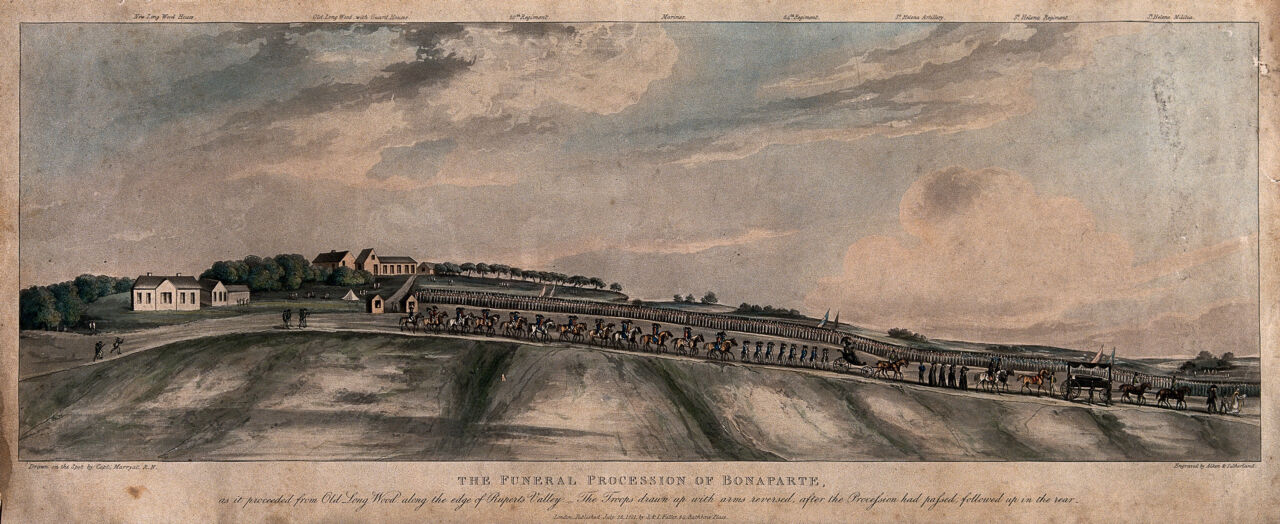
Frederick Marryat · Wellcome Collection, London · Wellcome Collection · Public Domain Mark
- Name
- Frederick Marryat
- Born
- 10 July 1792
- Birthplace
- Westminster, London, UK
- Died
- 9 August 1848
- Place of death
- Langham, Norfolk, UK
- Occupation
- Royal Navy officer, writer, novelist
- Nationality
- United Kingdom of Great Britain and Ireland · Kingdom of Great Britain · United Kingdom
- Fields
- English-language literature · children's and young adult literature · navy
- Education
- Great Ealing School
- Known for
- Mr Midshipman Easy · The Phantom Ship · The Children of the New Forest
- Honours
- Fellow of the Royal Society · Companion of the Order of the Bath
- Languages
- English
VALÉORINE Encyclopedia
VALÉORINE documentary reading
Documentary summary
Captain Frederick Marryat (10 July 1792 – 9 August 1848) was a Royal Navy officer and novelist. He is noted today as an early pioneer of nautical fiction, particularly for his semi-autobiographical novel Mr Midshipman Easy (1836). He is remembered also for his children's novel The Children of the New Forest (1847).
Admitted source layer · organised and presented by VALÉORINE
Note VALÉORINE
Frederick Marryat (1792–1848) was a British and British children's writer, military officer and naval officer, among other activities. Born in London, the children's writer died in Langham.
Frederick Marryat studied at Great Ealing School. The children's writer was a member of Royal Society and Royal Society of London. Frederick Marryat was active in children's and young adult literature, English-language literature and navy.
Works include Mr Midshipman Easy, The Children of the New Forest and The Phantom Ship. Languages used include English. Works by the children's writer are held at National Gallery of Victoria. Frederick Marryat received Companion of the Order of the Bath and Fellow of the Royal Society.
Composed from admitted, traceable facts · 29 September 2026
VALÉORINE
Reference Check
Propose documentary evidence for Frederick Marryat. A contribution is never written directly as fact: identity, source, rights and evidence gates still decide.
Sign in to contribute
World of VALÉORINE
Documentary connections
Only confirmed graph relationships appear here. Images are shown only when their identity and reuse rights both pass the documentary gate.
Documentary evidence
Evidence Panel
not yet certified
- Identity
- resolved
- Independent source families
- 0
- Admitted assertions
- 0
- Open conflicts
- 0
Authority files
wikidata · Q467770 · wikipedia · Frederick Marryat
In this article
Biography
Biography
In addition, he developed a widely used system of maritime flag signalling, known as Marryat's Code.
Frederick Marryat studied at Great Ealing School. The recorded working language is English. The field of work recorded is English-language literature, children's and young adult literature and navy. Works named in the authority record are Mr Midshipman Easy, The Phantom Ship and The Children of the New Forest. Work by Frederick Marryat is recorded in the collections of National Gallery of Victoria. Distinctions recorded are Fellow of the Royal Society and Companion of the Order of the Bath.
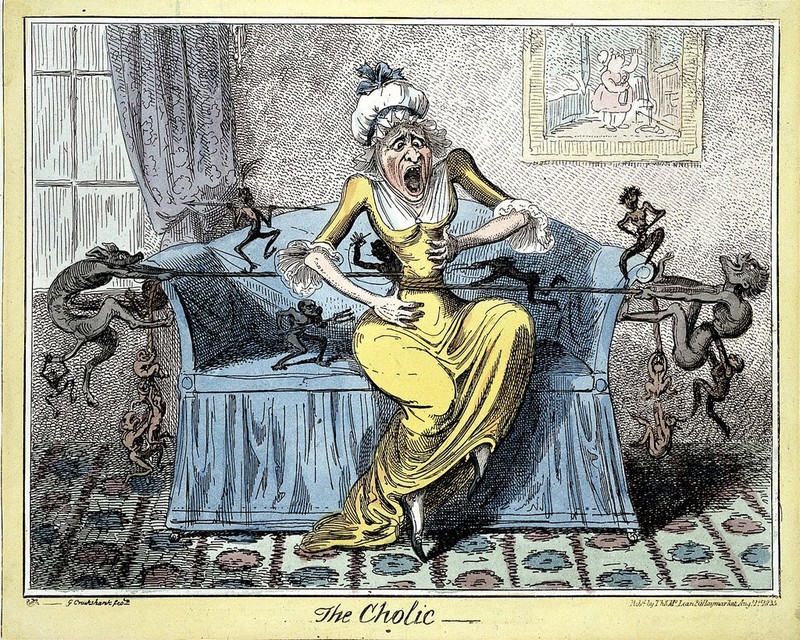
Coloured etching: 'The Cholic'; by Cruikshank, by Frederick Marryat
Frederick Marryat · Wellcome Collection, London · Wellcome Collection
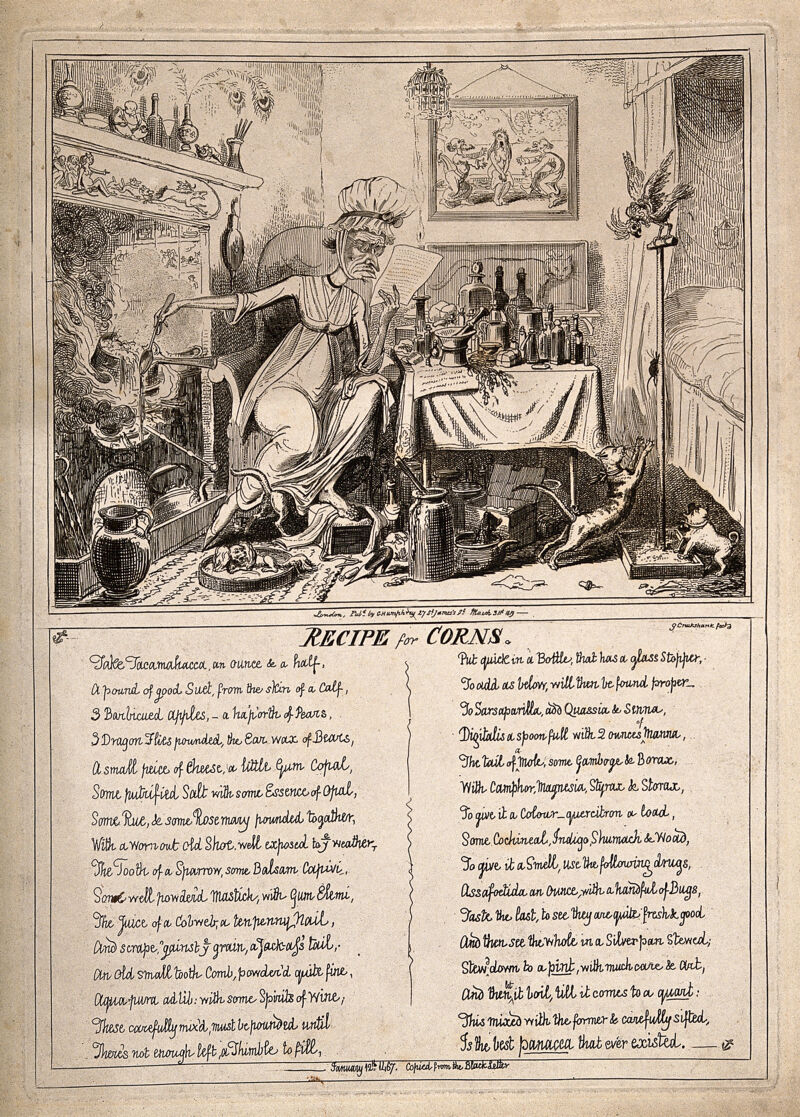
A haggard old woman carelessly mixing a recipe for corns on the fire in her sordid bedroom. Etching by G. Cruikshank, 1819, after Captain F. Marryat., 1 August 1835, by Frederick Marryat
Frederick Marryat · Wellcome Collection, London · Wellcome Collection
Key facts
Key facts
• Honorific Prefix — Captain • Name — Frederick Marryat • Born — 10 July 1792 • Birthplace — Westminster, London, UK • Died — 9 August 1848 • Place of death — Langham, Norfolk, UK • Occupation — Royal Navy officer, writer, novelist • Period — 19th century • Genre — Sea stories and children's literature
Early life and naval career
After the war
After the war
Marryat turned to scientific studies after the war. He invented a lifeboat, which earned him a gold medal from the Royal Humane Society and the nickname "Lifeboat". He developed a practical, widely used system of maritime flag signalling, known as Marryat's Code, based on his experience in the Napoleonic Wars escorting merchant ships in convoys. He also described a new gastropod genus Cyclostrema with the type species Cyclostrema cancellatum. • Illustration — Frederick Marryat's sketch of Napoleon's body on his deathbed In 1820, Marryat commanded the sloop HMS Beaver and temporarily commanded HMS Rosario in order to carry despatches to England announcing the death of Napoleon on Saint Helena. He also took the opportunity to make a sketch of Napoleon's body on his deathbed; this was later published as a lithograph. His artistic skills were modest, but he made numerous sketches of shipboard life above and below deck. In 1823, Marryat was appointed to HMS Larne and took part in an expedition against Burma in 1824, which resulted in large losses from disease. He was promoted to command the 28-gun HMS Tees, which gave him the rank of post-captain. By 1826 he was back in England and that year donated two Burmese artifacts to the British Museum, in an unsuccessful effort to be selected as a trustee. In 1829, he was commanding the frigate HMS Ariadne on a search for shoals around the Madeira and Canary Islands. This was an uninspiring exercise. As his first novel The Naval Officer had just been published, he decided to resign his commission in November 1830 and take up writing full-time.
Literary career
Literary career
From 1832 to 1835, Marryat edited The Metropolitan Magazine. Additionally, he kept writing novels; his biggest success came with Mr Midshipman Easy in 1836. He lived in Brussels for a year, travelled in Canada and the United States, and moved to London in 1839, where he was in the literary circle of Charles Dickens and others. He was in North America in 1837 when rebellion broke out in Lower Canada, and served with the expeditionary force sent to suppress it. Marryat was named a Fellow of the Royal Society in recognition of his lifeboat, signals system and other achievements. In 1843, he moved to a farm at Manor Cottage, Langham in Norfolk. He died there in 1848. His daughter Florence Marryat later became known as a writer and actress. His son Francis Samuel Marryat completed his father's last novel, The Little Savage. Marryat's novels are typical of their time, with concerns of family connections and social status often overshadowing the naval action. He based much of his fiction on his 25 years' experience at sea. Among those who admired his works were Mark Twain, Joseph Conrad, and Ernest Hemingway. As the first nautical novels, they served as models for 20th century works by C. S. Forester and Patrick O'Brian. These also were set in the time of Nelson and told of young men rising through the ranks due to their successes as naval officers. Marryat was also known for short writings on nautical subjects. These short stories, plays, pieces of travel journalism, and essays were published in The Metropolitan Magazine, and many were later collected in book form as Olla Podrida. Marryat's 1839 Gothic novel The Phantom Ship contained "The White Wolf of the Hartz Mountains". This featured the first female werewolf to appear in a short story. In 1839, Marryat also published his Diary in America, a travelogue that reflects his criticisms of American culture and society. The book and the author were both subject to acts of violence. The book and Marryat's effigy were each burned in public. Controversy arose among Marryat's readers. Some criticized him for careless writing, others admired his vivacity about life at sea. His later novels were generally for the children's market, including his most famous novel today: The Children of the New Forest, published in 1847 and set in the countryside round the village of Sway, Hampshire. The works of Marryat are considered by the maritime historians of today to be a reliable source on the operation and characteristics of the sailing vessels of his time.
Marriage and family
Marriage and family
On 21 January 1819, Marryat married Catherine Shairp. They had four sons and seven daughters together, of whom eight survived infancy. These included Florence, a prolific novelist; Emilia, who became a writer of moralist adventure novels in her father's vein and wrote a biography of him; Augusta, who also wrote adventure fiction; and Frank, a naval officer and author. Marryat's niece Augusta Sophia Marryat married Henry Young, who served as Governor of South Australia and Tasmania. A suburb of Adelaide, called Marryatville, and the town of Port Augusta were named after her. Augusta's brother Charles Marryat was the first Anglican Dean of Adelaide.
Identity and origins
Identity and origins
His recorded language was English. He was the child of Joseph Marryat and Charlotte Marryat. He married Catherine Shairp. 4 children are recorded: Frederick Marryat, Frank Marryat, Augusta Marryat and Florence Marryat. Other recorded relations include Frederica Lilian Thomas, Marion Violet Thomas, Eveline Thomas and Alda Thomas.
Life and career
Dated record
Life and career
Explore 1792–1849
The full dated record · 3 entries
1792
Frederick Marryat born at London.
1848
Frederick Marryat died at Langham.
1849
Valerie, an Autobiography by Captain Marryat (1849) is digitised and catalogued by Internet Archive.
Places
Named by the record
Places
Only places the record itself states, plotted where the house gazetteer settles their coordinates. Nothing is inferred from a name or a nationality.
London.
Birth place
Langham.
Death place
Notes from the source article
Cited by Wikipedia
Notes from the source article
These works are cited by the source article, in its own numbering. They are recorded as its citations, not as sources VALÉORINE has verified.
- 1.Frederick Marryat: English naval officer and author. Encyclopædia Britannica.
- 2.Captain Marryat - the Wimbledonian who never was. Wimbledon Guardian. 10 August 2012.
- 3.Taylor, Lawrence. The History of Parliament: the House of Commons 1790-1820 (Marryat, Joseph. 1757-1824). The History of Parliament Trust. 1986. 9780436521010.
- 4.J. K. Laughton, "Marryat, Frederick (1792–1848)", rev. Andrew Lambert, Oxford Dictionary of National Biography (Oxford, UK: OUP, 2004) Retrieved 2 January 2016. A daughter of Frederick Geyer of Boston and his wife, Charlotte Marryatt was one of the first women admitted to membership of the Royal Horticultural Society. She died in 1854.
- 5.James H. Ellis, A Ruinous and Unhappy War: New England and the War of 1812, New York: Algora Publishing, 2009, pp. 236–237.
- 6.National Maritime Museum (UK), Capt. Marryat's framed and original sketch of Napoleon Bonaparte after his death at St Helena.
- 7.British Museum Collection
- 8.British Museum Collection
- 9.Manor Cottage Langham Norfolk. British Towns and Villages.
- 10.Liukkonen, Petri. Frederick Marryat. Books and Writers (kirjasto.sci.fi). Kuusankoski Public Library.
- 11.Barger, Andrew. Shifters: The Best Werewolf Short Stories 1800–1849. Bottletree Books LLC. 35–36. 2010. 978-1-933747-25-5.
- 12.Lang, Kathrin. Dictionary of Nineteenth-Century Journalism.
- 13.Batchvarov, Kroum. The Merchant Ship in the British Atlantic, 1600–1800: Continuity and Innovation in a Key Technology. International Journal of Nautical Archaeology. 50. 2. 403–406. 3 July 2021. 10.1080/10572414.2021.1987716.
- 14."Marryat, Frederick, author", Dictionary of Canadian Biography online, accessed 14 November 2025
- 15.Life and Letters of Captain Marryat Vol. 2 (1872), pp. 291–295
- 16.State Library of South Australia. PRG 160/52: Two diaries recorded by Bishop Augustus Short, D.D.
- 17.The King's Own by Frederick Marryat.
- 18.[Frederick Marryat]. Japhet, in Search of a Father. By the Author of “Peter Simple,” “Jacob Faithful,” “Naval Officer,” &c. Wallis & Newell, publishers, No. 9, John Street. 1835–1836. 1049132541.
Bibliography printed in the source article · 4
- David Hannay, Life of Marryat (1889)
- Florence Marryat, Life and Letters (1872)
- Tom Pocock, Captain Marryat: Seaman, Writer and Adventurer (2000)
- Oliver Warner, Captain Marryat: a Rediscovery (1953)
References
Citations
References
Each reference names the institution holding it, so a reader may go to the document itself.
reference work
Wikidata, structured authority record Q467770: Frederick MarryatWikimedia Foundation
Partially resolvedreference work
Partially resolved
Further particulars
Held on the record
Further particulars
Open the remaining particulars
Frederick Marryat worked in English-language literature, children's and young adult literature and navy. He belonged to Royal Society. Marryat received Fellow of the Royal Society and Companion of the Order of the Bath. Recorded as writer, novelist, naval officer, sailor and military officer.
Career and activity
Recognition and collections
Work by Frederick Marryat is
National Gallery of Victoria
The Encyclopedia exists whether or not anything is for sale. Corrections are recorded rather than overwritten, and every version of this record is kept. Published 15 August 2026.
Elsewhere in Books
38,960 published records in this field, each with its sources named.
- Frederick Law OlmstedAuthor
- Frédérick LeboyerAuthor
- Frederick Locker-LampsonAuthor
- Frederick M. SmithAuthor
- Frederick PetersonAuthor
- Frederick Russell BurnhamAuthor
- Frederick SchwatkaAuthor
- Frederick SeidelAuthor
Best supported in this field
For owners
Own a work by Frederick Marryat?
A specialist will read what you send and tell you what the house can establish, what it cannot, and whether the object is suited to sale. There is no charge and no obligation. The object stays with you throughout; nothing is shipped to us unless it is arranged in writing beforehand.