
Frederick H. Evans
Illustration — Frederick H. Evans, photo by Gertrude Käsebier Frederick H. Evans (26 June 1853 – 24 June 1943) was an English photographer, best known for his images of architectural subjects, such as English and French cathedrals. Evans was born and died in London. He began his career as a bookseller, but retired from that to become a full-time photographer in 1898, when he adopted the platinotype technique for his photography.
Also recorded as Frederick Henry Evans · Henry Frederick Evans
Frederick H. Evans
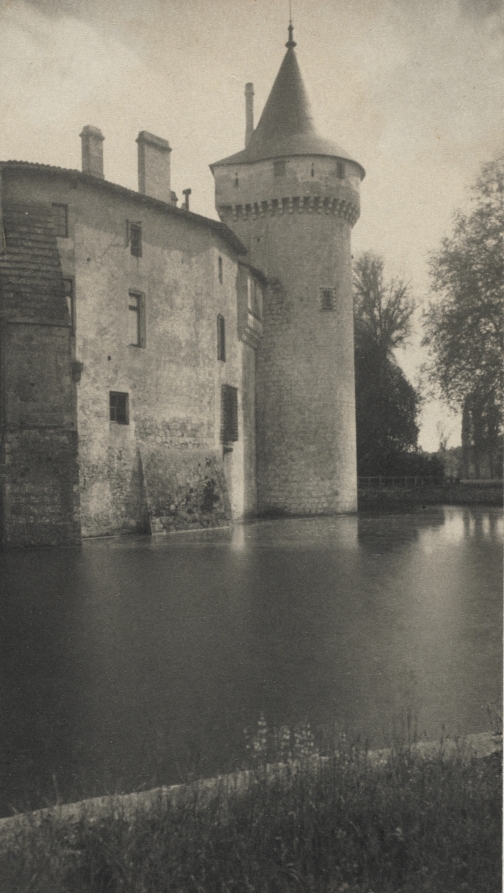
Frederick H. Evans · The Cleveland Museum of Art · Andrew R. and Martha Holden Jennings Fund · CC0
- Born
- 1853 · London.
- Died
- 1943 · London.
- Nationality
- United Kingdom
- Occupation
- photographer
- Languages
- English
VALÉORINE Encyclopedia
VALÉORINE documentary reading
Documentary summary
Illustration — Frederick H. Evans, photo by Gertrude Käsebier Frederick H. Evans (26 June 1853 – 24 June 1943) was an English photographer, best known for his images of architectural subjects, such as English and French cathedrals. Evans was born and died in London. He began his career as a bookseller, but retired from that to become a full-time photographer in 1898, when he adopted the platinotype technique for his photography.
Admitted source layer · organised and presented by VALÉORINE
Reference Check
Propose documentary evidence for Frederick H. Evans. A contribution is never written directly as fact: identity, source, rights and evidence gates still decide.
Sign in to contribute
World of VALÉORINE
Documentary connections
Only confirmed graph relationships appear here. Images are shown only when their identity and reuse rights both pass the documentary gate.

Born In · outgoing
London
Place
Pencil sketch by George Henry Harlow, 1814, http://www.npg.org.uk/collections/search/largerimage.php?mkey=mw05495
Died In · outgoing
London
Place
Pencil sketch by George Henry Harlow, 1814, http://www.npg.org.uk/collections/search/largerimage.php?mkey=mw05495
Citizen Of · outgoing
United Kingdom
Place
Documentary evidence
Documentary basis
Authority files
gnd · 1035224119 · wikidata · Q1452901 · wikipedia · Frederick H. Evans
In this article
Gallery
Gallery
Platinotype images, with extensive and subtle tonal range, non glossy-images, and better resistance to deterioration than other methods available at the time, suited Evans' subject matter. Almost as soon as he began, however, the cost of platinum - and consequently, the cost of platinum paper for his images - began to rise. Because of this cost, and because he was reluctant to adopt alternate methodologies, by 1915 Evans retired from photography altogether. Evans' ideal of straightforward, "perfect" photographic rendering - unretouched or modified in any way - as an ideal was well-suited to the architectural foci of his work: the ancient, historic, ornate and often quite large cathedrals, cloisters and other buildings of the English and French countryside. This perfectionism, along with his tendency to exhibit and write about his work frequently, earned for him international respect and much imitation. He ultimately became regarded as perhaps the finest architectural photographer of his, or any, era - though some professionals privately felt that the Evans' philosophy favoring extremely literal images was restrictive of the creative expression rapidly becoming available within the growing technology of the photographic field. Evans was also an able photographer of landscapes and portraits, and among the many notable friends and acquaintances he photographed was George Bernard Shaw, with whom he also often corresponded. Evans was made an honorary fellow of the Royal Photographic Society in 1928, he was also a member of the Linked Ring photographic society.
The recorded working language is English. Work by Frederick H. Evans is recorded in the collections of Museo Nacional Centro de Arte Reina Sofía, Minneapolis Institute of Art, Art Institute of Chicago, The Nelson-Atkins Museum of Art and National Gallery of Victoria.
• Illustration — A Memory of the Normans (1903) • Illustration — Across Nave and Octagon (1903) • Illustration — Height and Light in Bourges Cathedral (1903) • Illustration — In Sure and Certain Hope (1904) • Illustration — In Sure and Certain Hope (1903) • Illustration — Into the North Transept (1903)
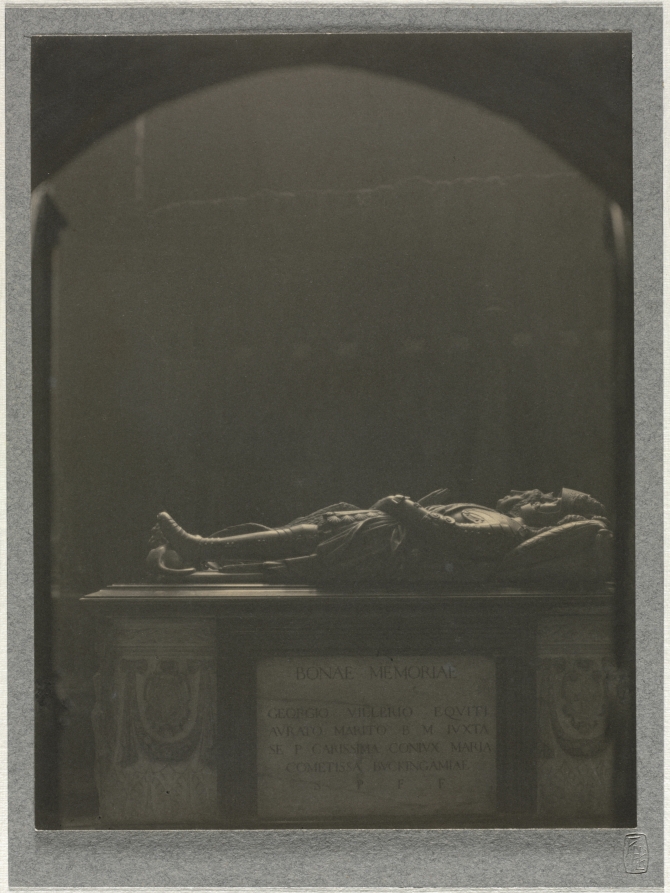
Westminster Abbey, Tomb of Sir Georges Villiers (d. 1605), c. 1900, by Frederick H. Evans
Frederick H. Evans · The Cleveland Museum of Art · Gift of Michael E. Hoffman
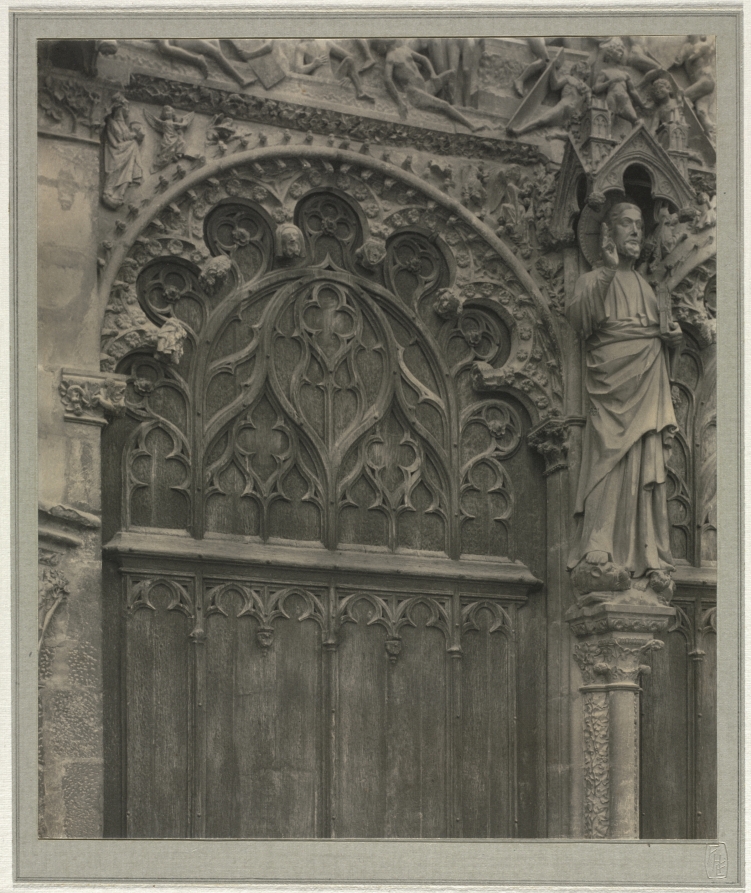
Bourges Cathedral: Crypt Under Nave, c. 1900, by Frederick H. Evans
Frederick H. Evans · The Cleveland Museum of Art · Gift of Michael E. Hoffman
Life and career
Dated record
Life and career
The full dated record · 2 entries
1853
Frederick H. Evans born at London.
1943
Frederick H. Evans died at London.
Primary material
Documents and archives
Institutional database
- Wikidata, structured authority record Q1452901: Frederick H. Evans
Scholarly · Wikimedia Foundation
authority file
- Gemeinsame Normdatei 1035224119, Exhibition Frederick H. Evans - A Logical Perfection (2008 : New York, NY).
General reference · Deutsche Nationalbibliothek
reference work
- “Frederick H. Evans”, English Wikipedia, consulted as further reading
Reputable secondary · Wikipedia
Notes from the source article
Cited by Wikipedia
Notes from the source article
These works are cited by the source article, in its own numbering. They are recorded as its citations, not as sources VALÉORINE has verified.
- 1.Anne M. Lyden. The Photographs of Frederick H. Evans. Getty Publications. 2010. 978-0-89236-988-1.
- 2.The J. Paul Getty Trust. A Record of Emotion: The Photographs of Frederick H. Evans. The J. Paul Getty Museum.
- 3.Coburn, Alvin Langdon. Frederick H. Evans. Image, Journal of Photography of George Eastman House. International Museum of Photography at George Eastman House Inc. 2. 9. 49–50. December 1953.
- 4.The J. Paul Getty Trust. Artists: Frederick H. Evans. The J. Paul Getty Museum.
- 5."A Sea of Steps," Wells Cathedral, Stairs to Chapter House and Bridge to Vicar's Close.
- 6.Frederick H. Evans (British, 1853 - 1943) (Getty Museum). The J. Paul Getty in Los Angeles.
References
Citations
References
Each reference names the institution holding it, so a reader may go to the document itself.
Institutional database
Wikidata, structured authority record Q1452901: Frederick H. EvansWikimedia Foundation
Institutional witnessauthority file
Gemeinsame Normdatei 1035224119, Exhibition Frederick H. Evans - A Logical Perfection (2008 : New York, NY).Deutsche Nationalbibliothek
Secondary witnessreference work
Secondary witness
Further particulars
Held on the record
Further particulars
Open the remaining particulars
The identifiers under which Frederick H. Evans may be traced in institutional catalogues.
Recognition and collections
Work by Frederick H. Evans is
Museo Nacional Centro de Arte Reina Sofía, Minneapolis Institute of Art, Art Institute of Chicago and The Nelson-Atkins Museum of Art
The Encyclopedia exists whether or not anything is for sale. Corrections are recorded rather than overwritten, and every version of this record is kept. Published 17 August 2026.
Elsewhere in Photography
11,392 published records in this field, each with its sources named.
- Frederick George RadcliffePhotographer
- Frederick Giles GibbsPhotographer
- Frederick GoldringPhotographer
- Frederick GutekunstPhotographer
- Frederick Henry ColdreyPhotographer
- Frederick HollyerPhotographer
- Frederick HudsonPhotographer
- Frederick Johann WeberPhotographer
Best supported in this field
For owners
Own a work by Frederick H. Evans?
A specialist will read what you send and tell you what the house can establish, what it cannot, and whether the object is suited to sale. There is no charge and no obligation. The object stays with you throughout; nothing is shipped to us unless it is arranged in writing beforehand.