
Franz von Lenbach
Franz on Lenbach was born on 13 December 1836 in Schrobenhausen. Lenbach completed his primary education at Landsberg in 1848, then attended a business school in Landshut. From 1851 to 1852, he was apprenticed to the sculptor Anselm Sickinger in Munich.
Franz von Lenbach
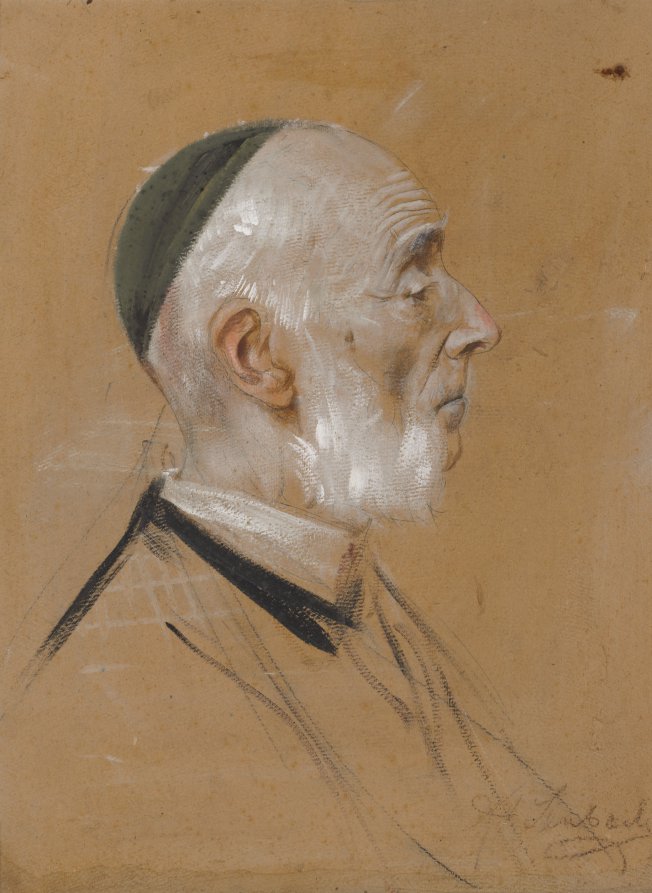
Franz von Lenbach · The Cleveland Museum of Art · Delia E. Holden Fund · CC0
VALÉORINE Encyclopedia
VALÉORINE documentary reading
Documentary summary
Franz on Lenbach was born on 13 December 1836 in Schrobenhausen. Lenbach completed his primary education at Landsberg in 1848, then attended a business school in Landshut. From 1851 to 1852, he was apprenticed to the sculptor Anselm Sickinger in Munich.
Admitted source layer · organised and presented by VALÉORINE
Reference Check
Propose documentary evidence for Franz von Lenbach. A contribution is never written directly as fact: identity, source, rights and evidence gates still decide.
Sign in to contribute
Documentary evidence
Documentary basis
Authority files
gnd · 4304395-1 · wikidata · Q585323 · wikipedia · Franz von Lenbach
In this article
Biography
Biography
He was only there a short time before beginning studies at the Augsburg University of Applied Sciences. While there, he drew and painted in his spare time, befriended Johann Baptist Hofner (1832–1913), the animal painter, and decided to become an artist. In 1854, he obtained his family's reluctant permission to study at the Academy of Fine Arts, Munich, and later took private lessons from Hermann Anschütz. Lenbach was already an accomplished artist when he became the pupil of Karl von Piloty. In 1858, he was able to stage an exhibition at the Glaspalast and won a travel scholarship, which enabled him to accompany Piloty to Rome. A few works remain as the outcome of this first journey: A Peasant seeking Shelter from Bad Weather (1855), The Goatherd (1860, in the Schack Gallery, Munich) and The Arch of Titus (in the Palfy collection, Budapest). He also travelled to Paris and Brussels. It was about then that he started receiving his first portrait commissions. On returning to Munich, he was at once called to Weimar to take the appointment of professor at the newly established Weimar Saxon Grand Ducal Art School, where he became known for taking his students on painting expeditions en plein aire. He remained for only two years, however, when he felt the need for more studies and decided to take another trip to Italy. During this time, he also found an important patron; Baron Adolf Friedrich von Schack. Through his support, Lenbach was able to leave for Italy in 1863 with a guaranteed annual income. He returned to Munich in 1866. The following year, he won a gold medal at the Exposition Universelle and went to Spain for one year, accompanied by his student, Ernst Friedrich von Liphart, to make more copies of the Old Masters for Schack. Upon returning, his career as a portrait painter began in earnest. His breakthrough came in 1869, when he won a gold medal at the Glaspalast, despite being up against many fashionable French painters. After 1870, he began making visits to Vienna to develop a market for his paintings there, which even survived the Panic of 1873. It is also said that he travelled there frequently because he had a passion for Maria Beccadelli di Bologna, which was never returned. From 1875 to 1876 he, Hans Makart, and other associates made a trip to Egypt, which left a deep impression in his style. In 1882, he was awarded the Order of Merit of the Bavarian Crown, which entitled him to become "Von Lenbach". The following year, he was back in Rome, where he lived in apartments at the Palazzo Borghese. One of his sitters was Clara Schumann, whose portrait he drew in pastel in 1878. In 1885, he was commissioned to do a portrait of Pope Leo XIII. As the Pope did not have time to sit for the portrait, a new technique was used to create a photographic template. He left Rome in 1887 and began building a villa in Munich. Later that year, he married Countess Magdalena Moltke. In 1895, a major scandal erupted when one of his assistants took unfinished paintings and sketches, had students fill in the details, and passed them off as Lenbach's work. In 1896, he and Magdalena were divorced, over suspicions of infidelity with her doctor, Ernst Schweninger, whom she did in fact later marry. Lenbach also remarried, to Charlotte von Hornstein, daughter of the composer Robert von Hornstein. He refused to join the Munich Secession and was highly critical of the new Bavarian National Museum. He also began to paint women, almost exclusively, whereas before he had concentrated on men. Around 1900, he started to produce trading card designs for the Stollwerck chocolate company of Cologne. In 1902, he became an honorary Knight in the Légion d’Honneur. That same year, he suffered a stroke while returning from a trip to his home town and never fully recovered. He died at his Munich villa two years later, on 6 May 1904. He was buried at the Westfriedhof and many prominent figures spoke at his funeral.
Franz on Lenbach was born on 13 December 1836 in Schrobenhausen. His father, who originally came from South Tyrol where the family name was spelled "Lempach", was a Master Mason for Schrobenhausen, where Lenbach was born. Lenbach completed his primary education at Landsberg in 1848, then attended a business school in Landshut. From 1851 to 1852, he was apprenticed to the sculptor Anselm Sickinger in Munich. At that time, his father died and he went home to help in the family business. He was only there a short time before beginning studies at the Augsburg University of Applied Sciences. While there, he drew and painted in his spare time, befriended Johann Baptist Hofner (1832–1913), the animal painter, and decided to become an artist. In 1854, he obtained his family's reluctant permission to study at the Academy of Fine Arts, Munich, and later took private lessons from Hermann Anschütz. Lenbach was already an accomplished artist when he became the pupil of Karl von Piloty. In 1858, he was able to stage an exhibition at the Glaspalast and won a travel scholarship, which enabled him to accompany Piloty to Rome. A few works remain as the outcome of this first journey: A Peasant seeking Shelter from Bad Weather (1855), The Goatherd (1860, in the Schack Gallery, Munich) and The Arch of Titus (in the Palfy collection, Budapest). He also travelled to Paris and Brussels. It was about then that he started receiving his first portrait commissions. On returning to Munich, he was at once called to Weimar to take the appointment of professor at the newly established Weimar Saxon Grand Ducal Art School, where he became known for taking his students on painting expeditions en plein aire. He remained for only two years, however, when he felt the need for more studies and decided to take another trip to Italy. During this time, he also found an important patron; Baron Adolf Friedrich von Schack. Through his support, Lenbach was able to leave for Italy in 1863 with a guaranteed annual income. He returned to Munich in 1866. The following year, he won a gold medal at the Exposition Universelle and went to Spain for one year, accompanied by his student, Ernst Friedrich von Liphart, to make more copies of the Old Masters for Schack. Upon returning, his career as a portrait painter began in earnest. His breakthrough came in 1869, when he won a gold medal at the Glaspalast, despite being up against many fashionable French painters. After 1870, he began making visits to Vienna to develop a market for his paintings there, which even survived the Panic of 1873. It is also said that he travelled there frequently because he had a passion for Maria Beccadelli di Bologna, which was never returned. From 1875 to 1876 he, Hans Makart, and other associates made a trip to Egypt, which left a deep impression in his style. In 1882, he was awarded the Order of Merit of the Bavarian Crown, which entitled him to become "Von Lenbach". The following year, he was back in Rome, where he lived in apartments at the Palazzo Borghese. One of his sitters was Clara Schumann, whose portrait he drew in pastel in 1878. In 1885, he was commissioned to do a portrait of Pope Leo XIII. As the Pope did not have time to sit for the portrait, a new technique was used to create a photographic template. He left Rome in 1887 and began building a villa in Munich. Later that year, he married Countess Magdalena Moltke. By the 1890s, he was painting almost entirely from photographs, a common practice at the time, but he also began working too fast, in an effort to create sufficient income. In 1895, a major scandal erupted when one of his assistants took unfinished paintings and sketches, had students fill in the details, and passed them off as Lenbach's work. In 1896, he and Magdalena were divorced, over suspicions of infidelity with her doctor, Ernst Schweninger, whom she did in fact later marry. Lenbach also remarried, to Charlotte von Hornstein, daughter of the composer Robert von Hornstein. He refused to join the Munich Secession and was highly critical of the new Bavarian National Museum. He also began to paint women, almost exclusively, whereas before he had concentrated on men. Around 1900, he started to produce trading card designs for the Stollwerck chocolate company of Cologne. In 1902, he became an honorary Knight in the Légion d’Honneur. That same year, he suffered a stroke while returning from a trip to his home town and never fully recovered. He died at his Munich villa two years later, on 6 May 1904. He was buried at the Westfriedhof and many prominent figures spoke at his funeral.
Third Reich era
Third Reich era
Lenbach's paintings were much prized by top Nazis and given as gifts by underlings. Goebbels gifted Hitler a Lenbach in 1936, writing in his diary, "(Hitler) is very touched and takes the greatest joy in my Lenbach". Lenbachs were also looted from Jewish collectors like the Löw-Beer family in Brněnec, Rudolf Mosse in Berlin, Sigmund Bernstein, and many others. The database of the German Lost Art Foundation lists 108 entries for Lenbach. The ERR database for objects seized in France (the "Cultural Plunder by the Einsatzstab Reichsleiter Rosenberg: Database of Art Objects at the Jeu de Paume") lists six artworks by Lenbach.
Legacy
Some of Lenbach's paintings are now in national collections in the United Kingdom, including portraits by Lenbach of Bismarck and Gladstone in the National Galleries of Scotland and another of Gladstone in the Palace of Westminster. Others are in the Frye Art Museum in Seattle, Washington.
Primary material
Documents and archives
reference work
- Wikidata, structured authority record Q585323: Franz von Lenbach
Reputable secondary · Wikimedia Foundation
- “Franz von Lenbach”, English Wikipedia, consulted as further reading
Reputable secondary · Wikipedia
scholarly publication
- Franz von Lenbach, Germany's Greatest Portrait-Painter, Brush and Pencil, 1904
Scholarly · Crossref registry · 1904
authority file
- VIAF cluster 7518656 for Franz von Lenbach, aggregating national library name authorities.
General reference · OCLC
Notes from the source article
Cited by Wikipedia
Notes from the source article
These works are cited by the source article, in its own numbering. They are recorded as its citations, not as sources VALÉORINE has verified.
- 1.ahnen.ubuecher.de: Franz Joseph Lenbach + Josepha Herke.
- 2.online-ofb.de Josepha Herke
- 3.16. 417–418.
- 4.Baron Ernst Friedrich von Liphart, RusArtNet.com, retrieved 31 December 2013
- 5.Ernst Friederich von Liphart, Master Paintings, retrieved 3 January 2014
- 6.Reich, Nancy B. (1985). Clara Schumann: The Artist and the Woman. Ithaca u.a: Cornell Univ. Pr. p. 165. .
- 7.Art UK bio
- 8.Charles and Emma Frye Collection , Frye Museum, retrieved 5 February 2014
- 9.Spoils of War. 32.
- 10.Holocaust_Era_Assets_Conference_Proceedings_2009. 861.
- 11.German groups, Jewish heirs unite efforts to locate lost art. www.lootedart.com.
- 12.Welt Online. Nazis stehlen bei "Judenaktion" 2000 Kunstwerke. www.lootedart.com.
- 13.Lost Art Internet Database - Advanced Search. www.lostart.de.
- 14.Cultural Plunder by the Einsatzstab Reichsleiter Rosenberg: Database of Art Objects at the Jeu de Paume.
Bibliography printed in the source article · 6
- von Baranow, Sonja. Grove Art Online. 2003.
- Sonja von Baranow: Franz von Lenbach. Leben und Werk. DuMont, Cologne 1986, .
- Reinhold Baumstark (Ed.): Lenbach. Sonnenbilder und Porträts. Pinakothek/DuMont, Munich 2004, .
- Dieter Distl, Klaus Englert (Eds.), Reinhard Horn: Franz von Lenbach – Unbekanntes und Unveröffentlichtes. Ludwig, Pfaffenhofen 1986, .
- Brigitte Gedon: Franz von Lenbach. Die Suche nach dem Spiegel. Nymphenburger, Munich 1999, ; Überarb. Neuausg. DuMont, Köln 2011, .
- Winfried Ranke: Franz von Lenbach. Der Münchner Malerfürst. Kiepenheuer & Witsch, Cologne 1986, .
References
Citations
References
Each reference names the institution holding it, so a reader may go to the document itself.
scholarly publication
Institutional witnessauthority file
Secondary witnessreference work
Wikidata, structured authority record Q585323: Franz von LenbachWikimedia Foundation
Secondary witnessreference work
Secondary witness
The Encyclopedia exists whether or not anything is for sale. Corrections are recorded rather than overwritten, and every version of this record is kept. Published 14 August 2026.
Elsewhere in Photography
11,392 published records in this field, each with its sources named.
- Franz Norbert MöslangPhotographer
- Franz PfemfertPhotographer
- Franz PlanerPhotographer
- Franz RohPhotographer
- Franz Wilhelm JunghuhnPhotographer
- Franz Xaver SetzerPhotographer
- Franz-Peter WeixlerPhotographer
- Franziska MöllingerPhotographer
Best supported in this field
For owners
Own a work by Franz von Lenbach?
A specialist will read what you send and tell you what the house can establish, what it cannot, and whether the object is suited to sale. There is no charge and no obligation. The object stays with you throughout; nothing is shipped to us unless it is arranged in writing beforehand.