
Frans Francken I
Illustration — Frans Francken by Rubens Frans Francken I or Frans Francken the Elder (1542–1616) was a Flemish painter who was one of the principal painters in Antwerp during the Counter-Reformation. He is mainly known for his large altarpieces and allegorical paintings. He was a member of the Francken dynasty of painters that played an important role in the Antwerp art scene in the late 16th century and the 17th century.
Also recorded as Frans (I) Francken · Frans Francken the Elder · Franciscus Francks the Elder · Frans, the elder Franck
Frans Francken I
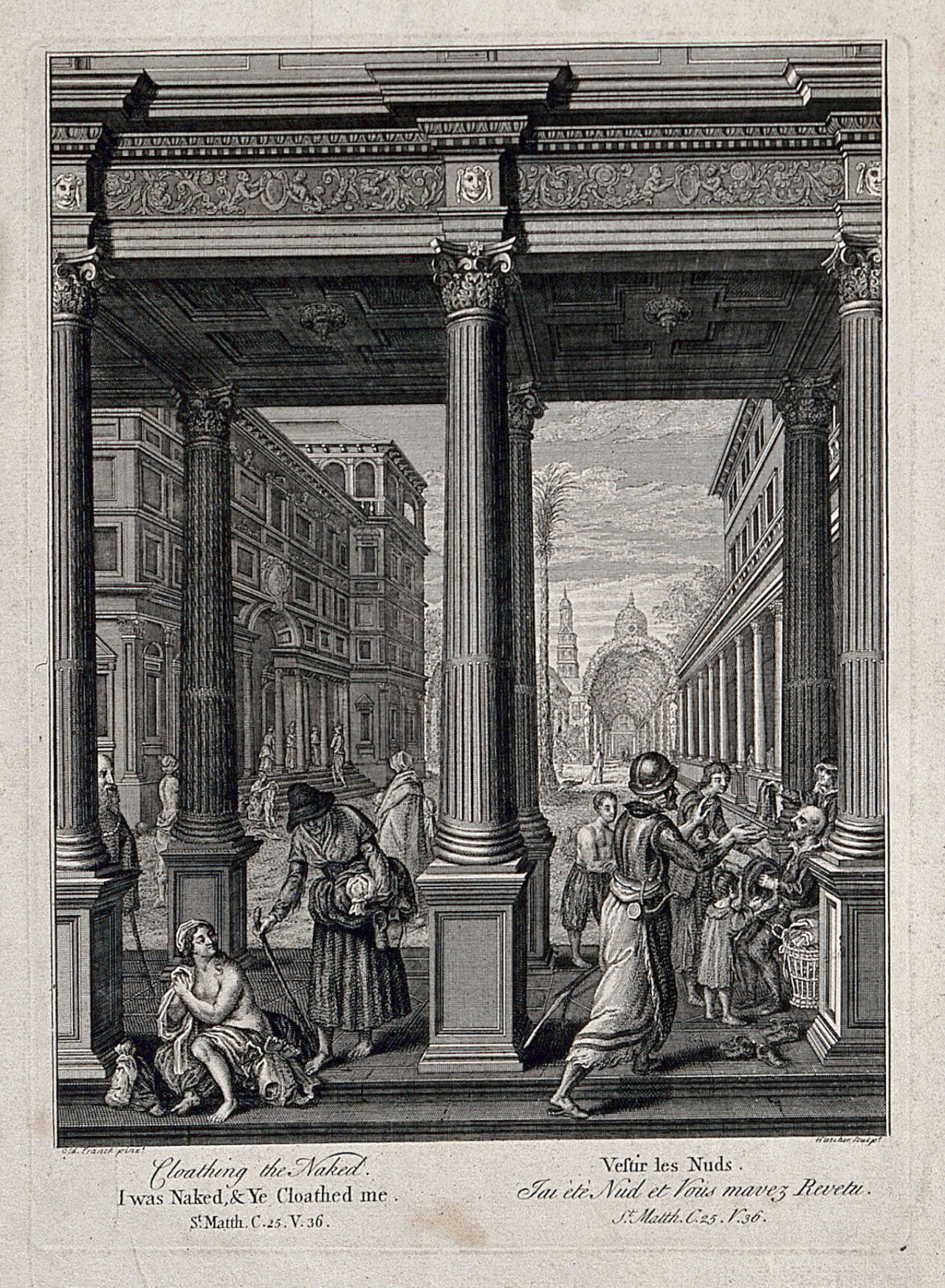
Frans Francken I · Wellcome Collection, London · Wellcome Collection · Public Domain Mark
- Born
- 1542 · Herentals.
- Died
- 1616 · Antwerp.
- Nationality
- Habsburg Netherlands
- Occupation
- painter
- Movements
- Flemish Baroque painting
Reference Check
Propose documentary evidence for Frans Francken I. A contribution is never written directly as fact: identity, source, rights and evidence gates still decide.
Sign in to contribute
World of VALÉORINE
Documentary connections
Only confirmed graph relationships appear here. Images are shown only when their identity and reuse rights both pass the documentary gate.
Documentary evidence
Documentary basis
Authority files
wikidata · Q600844 · wikipedia · Frans Francken the Elder
In this article
Life
Life
The authority associates the name with Flemish Baroque painting. Places of work recorded in the authority are Antwerp. Work by Frans Francken I is recorded in the collections of Nationalmuseum, Royal Museum of Fine Arts Antwerp, Museum of Fine Arts Ghent (MSK), Royal Museums Greenwich and Statens Museum for Kunst.
Francken was born in Herentals as the son of Nicholas Francken, an obscure painter from Herentals. His father later settled in Antwerp and was likely his first teacher. He became a master of the Antwerp Guild of St. Luke in 1567 and was its deacon in 1587. His younger brothers Hieronymus Francken I and Ambrosius Francken I both became successful painters. The early biographer Karel van Mander wrote that Frans Francken the Elder was a pupil of the leading Antwerp Romanist painter Frans Floris. The Romanists were Netherlandish painters who had typically travelled to Italy to study the works of leading Italian High Renaissance artists such as Michelangelo, Raphael and their followers. Their art assimilated these Italian influences into the Northern painting tradition. • Illustration — The Battle of Time against Death In 1571 he collaborated with his older brother Hieronymus on a large Adoration of the Magi triptych (Brussels, Royal Museums of Fine Arts of Belgium and London, Brompton Oratory) which bears his monogram as well as that of his brother Hieronymus. The brothers included self-portraits in profile: Hieronymus on the left side and Frans on the right side of the triptych. Frans Francken married Elisabeth Mertens. The couple had many children, of whom at the time of his death in 1619 six were still alive: Thomas (b Antwerp, 28 Feb 1574; d Antwerp, c. 1625), Frans, Hieronymus, Ambrosius II (b Antwerp, c. 1590; d Antwerp, bur 8 Aug 1632), Magdalena and Elisabeth. The four sons all became painters. His pupils included his son Frans, Gortzius Geldorp, Herman van der Mast and Jan de Wael. He died in Antwerp in 1616.
Work
Work
• Illustration — Wedding Dance Frans Francken the Elder worked mainly on altar pieces as there was a great demand for such works as a result of the iconoclasm of the Calvinists. His masterpiece is a triptych entitled Christ among the Scribes, which was made for the Antwerp Cathedral in 1587. The figures are rather wooden in the late Mannerist style. However, the heads show the artist's skill for portraiture. Frans Francken I was also a portrait painter and a few court portraits have been attributed to him. His earliest paintings were in the style of Frans Floris but after 1600 he developed his own style which displayed classicising characteristics not unlike those in the work of Otto van Veen. Frans Francken the Elder painted small-scale cabinet pictures, a genre in which his sons Frans and Hieronymus would excel. He was further known for his allegorical paintings and his son Frans would continue this tradition. An example of an allegorical painting is The Battle of Time against Death in the Bayerische Staatsgemäldesammlungen.
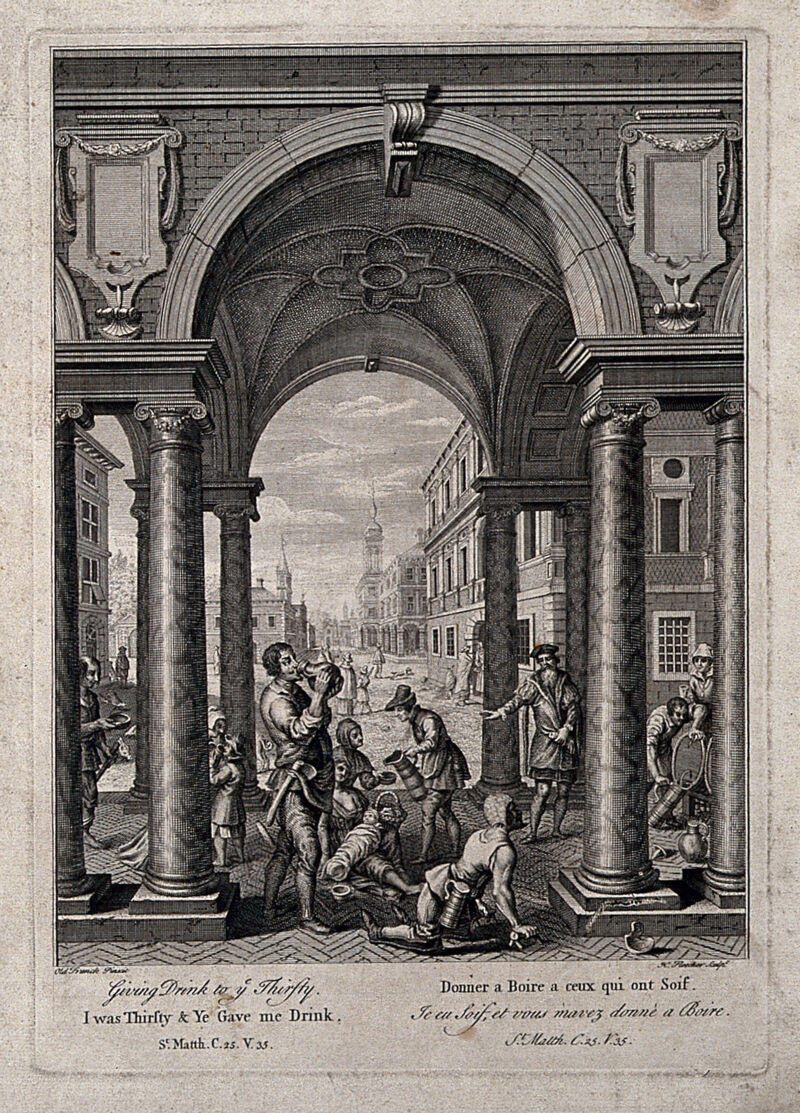
Examples of charity: giving drink to the thirsty. Etching by H. Fletcher after Frans Francken the elder., by Frans Francken I
Frans Francken I · Wellcome Collection, London · Wellcome Collection
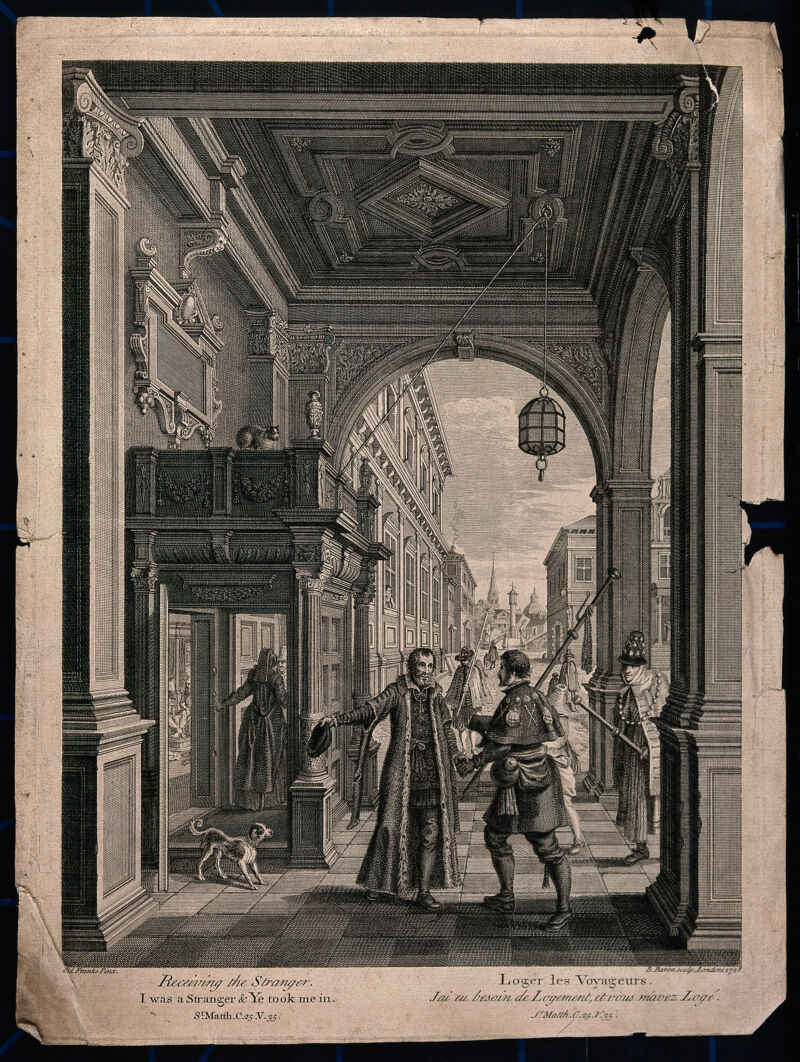
A pilgrim is given lodging by a rich man. Engraving by B. Baron after Frans Francken the elder., by Frans Francken I
Frans Francken I · Wellcome Collection, London · Wellcome Collection
Places
Named by the record
Places
Only places the record itself states, plotted where the house gazetteer settles their coordinates. Nothing is inferred from a name or a nationality.
Herentals.
Birth place
Antwerp.
Death place
Text attribution
Licensing
Text attribution
Part of the biographical narrative on this page reuses licensed material. Its origin, revision and licence are recorded here.
The biographical narrative on this page is based on the Wikipedia article Frans Francken the Elder, revision 1351251628 (EN edition), by its contributors. VALÉORINE has edited that text and built its own documentary record around it. The reused material is available under CC BY-SA 4.0, and this page's reuse of it is offered under the same licence. Everything else on this page — the chronology, the holdings, the evidence, the plates and the connections — is VALÉORINE's own record. Sources and licences.
Notes from the source article
Cited by Wikipedia
Notes from the source article
These works are cited by the source article, in its own numbering. They are recorded as its citations, not as sources VALÉORINE has verified.
- 1.Ursula Härting. "Francken." Grove Art Online. Oxford Art Online. Oxford University Press. Web. 25 August 2023
- 2.Frans Francken (I) at the Netherlands Institute for Art History
- 3.Christa Grössinger, North-European panel paintings: catalogue of Netherlandish & German paintings before 1600 in English churches & colleges, Harvey Miller, 1992, p. 263
- 4.Frans Francken in Karel van Mander's Schilder-boeck, 1604
- 5.Ilja M. Veldman. "Romanism." Grove Art Online. Oxford Art Online. Oxford University Press. Web. 26 March 2015
- 6.Carl Van de Velde. "Frans Floris I." Grove Art Online. Oxford Art Online. Oxford University Press. Web. 26 March 2015
- 7.Peeters, Natasja, Connecting people : documenting the activities of the Antwerp painter Hieronymus Francken, and other Floris disciples, in Paris after 1566, in: Les échanges artistiques entre les anciens Pays-Bas et la France, 1482 - 1814 : actes du colloque international organisé par l'Institut de recherches historiques du Septentrion - UMR CNRS 8529 - Université de Lille 3 au Palais des Beaux-Arts de Lille les 28-29-30 mai 2008 (2010), 117-128
- 8.Franks Francken I, in: Walter A. Liedtke, Flemish Paintings in the Metropolitan Museum of Art, Metropolitan Museum of Art, New York, 1984, p. 224
References
Citations
References
Each reference names the institution holding it, so a reader may go to the document itself.
reference work
Secondary witness
The Encyclopedia exists whether or not anything is for sale. Corrections are recorded rather than overwritten, and every version of this record is kept. Published 28 August 2026.
Elsewhere in Paintings
19,456 published records in this field, each with its sources named.
- Frans de MomperArtist
- Frans de NeveArtist
- Frans DeckerArtist
- Frans DenysArtist
- Frans Hals JuniorArtist
- Frans HensArtist
- Frans KoppelaarArtist
- Frans LuycxArtist
Best supported in this field
For owners
Own a work by Frans Francken I?
A specialist will read what you send and tell you what the house can establish, what it cannot, and whether the object is suited to sale. There is no charge and no obligation. The object stays with you throughout; nothing is shipped to us unless it is arranged in writing beforehand.