
François Quesnay
François Quesnay (lang; 4 June 1694 – 16 December 1774) was a French economist and physician of the Physiocratic school. He is known for publishing the "Tableau économique" (Economic Table) in 1758, which provided the foundations of the ideas of the Physiocrats. This was perhaps the first work attempting to describe the workings of the economy in an analytical way, and as such can be viewed as one of the first important contributions to economic thought.
François Quesnay
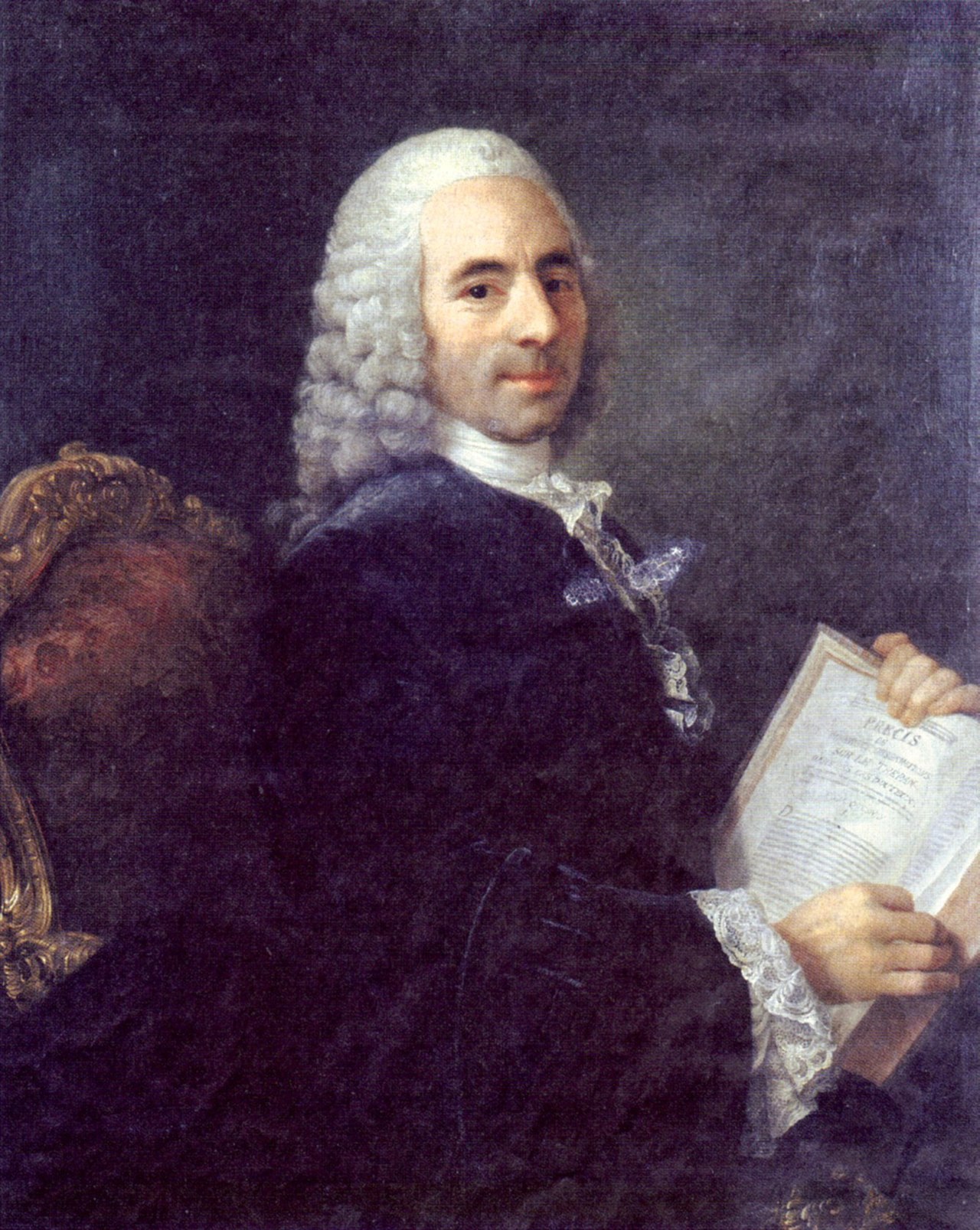
Unidentified painter · Heinz Rieter: Studien zur Entwicklung der ökonomischen Theorie IX. Verlag Duncker und Humboldt, Berlin · Public domain
- Born
- 4 June 1694
- Birthplace
- Méré near Versailles, France
- Died
- 16 December 1774
- Place of death
- Versailles, France
- Nationality
- France
- Occupation
- philosopher · economist · physician · encyclopédistes · surgeon · naturalist · writer
- Movements
- physiocracy
- Known for
- Tableau économique
VALÉORINE Encyclopedia
VALÉORINE documentary reading
Documentary summary
François Quesnay (lang; 4 June 1694 – 16 December 1774) was a French economist and physician of the Physiocratic school. He is known for publishing the "Tableau économique" (Economic Table) in 1758, which provided the foundations of the ideas of the Physiocrats. This was perhaps the first work attempting to describe the workings of the economy in an analytical way, and as such can be viewed as one of the first important contributions to economic thought.
Admitted source layer · organised and presented by VALÉORINE
Note VALÉORINE
François Quesnay (1694–1774) was an economist, encyclopédistes and naturalist, among other activities, of French nationality. The economist was associated with physiocracy. Among the works is Tableau économique.
Composed from admitted, traceable facts · 27 September 2026
VALÉORINE
Reference Check
Propose documentary evidence for François Quesnay. A contribution is never written directly as fact: identity, source, rights and evidence gates still decide.
Sign in to contribute
World of VALÉORINE
Documentary connections
Only confirmed graph relationships appear here. Images are shown only when their identity and reuse rights both pass the documentary gate.
Documentary evidence
Evidence Panel
not yet certified
- Identity
- resolved
- Independent source families
- 0
- Admitted assertions
- 0
- Open conflicts
- 0
Authority files
wikidata · Q13575 · wikipedia · François Quesnay
In this article
Biography
Biography
Quesnay worked between 1694 and 1774 across philosopher, economist, physician, encyclopédistes and surgeon and 2 further recorded occupations. Every statement below returns to a source shown in the evidence panel; where the record is silent or divided, the article says so instead of resolving it.
Key facts
Key facts
• School Tradition — Physiocrats • Born — 4 June 1694 • Birthplace — Méré near Versailles, France • Died — 16 December 1774 • Place of death — Versailles, France • Region — Western philosophy • French philosophy • Main Interests — Political economy, Sinology • Era — Age of Enlightenment • Notable Ideas — Laissez-faire
Life
Life
Quesnay was born at Méré near Versailles, the son of an advocate and small landed proprietor. Apprenticed at the age of sixteen to a surgeon, he soon went to Paris, studied medicine and surgery there, and, having qualified as a master-surgeon, settled down to practice at Mantes. In 1737 he was appointed perpetual secretary of the academy of surgery founded by François Gigot de la Peyronie, and became surgeon in ordinary to King Louis XV. In 1744 he graduated as a doctor of medicine; he became the physician in ordinary to the king, and afterwards his first consulting physician, and was installed in the Palace of Versailles. His apartments were on the entresol, whence the Réunions de l'entresol received their name. Louis XV esteemed Quesnay highly, and used to call him his thinker. When he ennobled him he gave him for arms three flowers of the pansy (derived from pensée, in French meaning thought), with the Latin motto Propter cogitationem mentis. He now devoted himself principally to economic studies, taking no part in the court intrigues which were perpetually going on around him. Around 1750 he became acquainted with Jacques C.M.V. de Gournay (1712–1759), who was also an earnest inquirer in the economic field; and round these two distinguished men was gradually formed the philosophic sect of the Économistes, or, as for distinction's sake they were afterwards called, the Physiocrates. The most remarkable men in this group of disciples were the elder Mirabeau (author of L'Ami des hommes, 1756–60, and Philosophie rurale, 1763), Nicolas Baudeau (Introduction a la philosophie économique, 1771), Guillaume-François Le Trosne (De l'ordre social, 1777), André Morellet (best known by his controversy with Galiani on the freedom of the grain trade during the Flour War), Lemercier de La Rivière, and du Pont de Nemours. Adam Smith, during his stay on the continent with the young Duke of Buccleuch in 1764–1766, spent some time in Paris, where he made the acquaintance of Quesnay and some of his followers; he paid a high tribute to their scientific services in his Wealth of Nations. In 1717, Quesnay married Jeanne-Cathérine Dauphin, and had a son and a daughter; his grandson by the former was a member of the first Legislative Assembly. He died on 16 December 1774, having lived long enough to see his great pupil, Anne Robert Jacques Turgot, Baron de Laune, in office as minister of finance.
Work
Work
• Illustration — Tableau économique His economic writings are collected in the 2nd vol. of the Principaux économistes, published by Guillaumin, Paris, with preface and notes by Eugène Daire; also his Oeuvres économiques et philosophiques were collected with an introduction and note by August Oncken (Frankfort, 1888); a facsimile reprint of the Tableau économique, from the original MS., was published by the British Economic Association (London, 1895). His other writings were the article "Évidence" in the Encyclopédie, and Recherches sur l'évidence des vérites geometriques, with a Projet de nouveaux éléments de géometrie, 1773. Quesnay's Eloge was pronounced in the Academy of Sciences by Grandjean de Fouchy (see the Recueil of that Academy, 1774, p. 134). See also F.J. Marmontel, Mémoires; Mémoires de Mme. du Hausset; H. Higgs, The Physiocrats (London, 1897).
Economics
Economics
• Illustration — Tableau economique, 1965 In 1758 he published the Tableau économique (Economic Table), which provided the foundations of the ideas of the Physiocrats. This was perhaps the first work to attempt to describe the workings of the economy in an analytical way, and as such can be viewed as one of the first important contributions to economic thought. The publications in which Quesnay expounded his system were the following: two articles, on "Fermiers" (Farmers) and on "Grains", in the Encyclopédie of Diderot and Jean le Rond d'Alembert (1756, 1757); a discourse on the law of nature in the Physiocratie of Dupont de Nemours (1768); Maximes générales de gouvernement economique d'un royaume agricole (1758), and the simultaneously published Tableau économique avec son explication, ou extrait des économies royales de Sully (with the celebrated motto, Pauvres paysans, pauvre royaume; pauvre royaume, pauvre roi); Dialogue sur le commerce et les travaux des artisans; and other minor pieces. The Tableau économique, though on account of its dryness and abstract form it met with little general favor, may be considered the principal manifesto of the school. It was regarded by the followers of Quesnay as entitled to a place amongst the foremost products of human wisdom, and is named by the elder Mirabeau, in a passage quoted by Adam Smith, as one of the three great inventions which have contributed most to the stability of political societies, the other two being those of writing and of money. Its object was to exhibit by means of certain formulas the way in which the products of agriculture, which is the only source of wealth, would in a state of perfect liberty be distributed among the several classes of the community (namely, the productive classes of the proprietors and cultivators of land, and the unproductive class composed of manufacturers and merchants), and to represent by other formulas the modes of distribution which take place under systems of Governmental restraint and regulation, with the evil results arising to the whole society from different degrees of such violations of the natural order. It follows from Quesnay's theoretic views that the one thing deserving the solicitude of the practical economist and the statesman is the increase of the net product; and he infers also what Smith afterwards affirmed, on not quite the same ground, that the interest of the landowner is strictly and indissolubly connected with the general interest of the society. A small edition de luxe of this work, with other pieces, was printed in 1758 in the Palace of Versailles under the king's immediate supervision, some of the sheets, it is said, having been pulled by the royal hand. Already in 1767 the book had disappeared from circulation, and no copy of it is now procurable; but, the substance of it has been preserved in the Ami des hommes of Mirabeau, and the Physiocratie of Dupont de Nemours.
Orientalism and China
Orientalism and China
Quesnay is known for his writings on Chinese politics and society. His book Le Despotisme de la Chine, written in 1767, describes his views of the Chinese imperial system. He was supportive of the meritocratic concept of giving scholars political power, without the cumbersome aristocracy that characterized French politics, and the importance of agriculture to the welfare of a nation. Gregory Blue writes that Quesnay "praised China as a constitutional despotism and openly advocated the adoption of Chinese institutions, including a standardized system of taxation and universal education." Blue speculates that this may have influenced the 1793 establishment of the Permanent Settlement in Bengal by the British Empire. Quesnay's interests in Orientalism has also been a source of criticism. Carol Blum, in her book Strength in Numbers on 18th century France, labels Quesnay an "apologist for Oriental despotism." Because of his admiration of Confucianism, Quesnay's followers bestowed him with the title "Confucius of Europe." Quesnay's infatuation for Chinese culture, as described by Jesuits, led him to persuade the son of Louis XV to mirror the "plowing of sacred land" by the Chinese emperor to symbolize the link between government and agriculture.
On taxation
On taxation
Quesnay acknowledged three economic classes in France: the "proprietary" class consisting of only landowners, the "productive" class of agricultural workers, and the "sterile" class of merchants. Quesnay saw no benefit to the sterile class and believed the productive to be all important. Quesnay viewed France's agriculture as backward and unproductive compared to Britain during the time he was residing in the Palace of Versailles. Despite residing in the Palace, Quesnay believed agriculture was the heart of the economy and of special importance to him. Quesnay argued that taxes placed on cultivators are only harmful to society as these taxes will reduce the incentive for agricultural production. Taxing proprietors (property holders) does not destroy the means of production meaning there is no decline in output. Quesnay wanted proprietors to bear the full burden of the tax in the country as taxing cultivators is a negative consequence for everyone. Removing incentive from cultivators reduces agricultural production and the agricultural surplus Quesnay believed to be the heart of the economy. Quesnay also opposed indirect taxes in contrast to direct taxes. These "indirect taxes" are placed on the French public by proprietors whose greed demands immunity from taxation. Direct taxes on proprietors have no impact on reproduction and economic decline. Reducing indirect taxes and increasing direct taxes gives the French a surplus of agriculture and the funding the country needs. However, this opinion was not very popular among the wealthy of which Quesnay spent time regularly with. He spent some of his time fearing for his life in the Palace. Quesnay’s taxation theory was closely linked to his broader model of economic circulation, particularly as expressed in the Tableau Économique. Tax policy was not treated as an isolated fiscal question but as a mechanism that could either preserve or disrupt the circulation of the agricultural surplus among classes. From this perspective, taxation that reduced the surplus available to agriculture risked breaking the process of reproduction that sustained the economy over time. Also note that Quesnay regarded fiscal reform as inseparable from legal and institutional reform, since privileges, exemptions, and fragmented tax administration prevented the rational allocation of the surplus. As a result, Quesnay’s proposals implied a significant restructuring of state finance rather than a marginal adjustment of existing taxes, which limited their political feasibility under the Ancient Régime. Historians interpret these limits as evidence of tension between Physiocratic theory and entrenched social hierarchies in eighteenth-century France.
Life and career
Dated record
Life and career
Explore 1694–1774
The full dated record · 5 entries
1694
François Quesnay born at Méré.
1752
Receives Fellow of the Royal Society.
1752
François Quesnay received Fellow of the Royal Society in 1752.
1774
Dies at Versailles.
1774
François Quesnay died 16 December 1774.
Context
Primary material
Context
The circumstances in which François Quesnay stands. Established in Library of Congress under n50050536. Quesnay received Fellow of the Royal Society in 1752.
Documents and archives
Primary material
Documents and archives
reference work
- “François Quesnay”, English Wikipedia, consulted as further reading
Reputable secondary · Wikipedia
authority record
- Wikidata, structured authority record Q13575: François Quesnay
Unverified · Wikidata
Notes from the source article
Cited by Wikipedia
Notes from the source article
These works are cited by the source article, in its own numbering. They are recorded as its citations, not as sources VALÉORINE has verified.
- 1.Cleveland, Cutler J., "Biophysical economics", Encyclopedia of Earth, Last updated: 14 September 2006.
- 2.See the biographical note in the Collected Works of Karl Marx and Frederick Engels: Volume 31 (International Publishers: New York, 1989) p. 605.
- 3.Taieb.net. Nouvelles Ephemerides, Économiques, Seconde Partie, Analyses, Et Critiques Raisonnées. N° Premier. Éloge Historique De M. Quesnay, Contenant L'Analyse De Ses Ouvrages, Par M. Le Cte D'A***.
- 4.Smith, Adam, 1937, The Wealth of Nations, N.Y.: Random House, p. 643; first published 1776.
- 5.Murphy, Antoin E. The Genesis of Macroeconomics: New Ideas from Sir William Petty to Henry Thornton. Oxford University Press. 120. 2009. 978-0199543229.
- 6.O'Hara, Phillip Anthony. Encyclopedia of Political Economy. Psychology Press. 848. 1999. 978-0415187183.
- 7.Kafker, Frank A. Kafker, Frank A.: Notices sur les auteurs des 17 volumes de « discours » de l'Encyclopédie (suite et fin). Recherches sur Diderot et sur l'Encyclopédie Année (1990) Volume 8 Numéro 8 p. 112. Recherches Sur Diderot et Sur l'Encyclopédie. 8. 1. 101–21. 1990.
- 8.Quesnay, François. 22. 742–43.
- 9.McCabe, Ina Baghdiantz. Orientalism in Early Modern France: Eurasian Trade, Exoticism and the Ancien Regime. Berg Publishers. 271–72. 2008. 978-1845203740.
- 10.Shaffer, E.S. Comparative Criticism. Cambridge University Press. 22, East and West: Comparative Perspectives. 239–40. 2000. 978-0521790727.
- 11.Blum, Carol. Strength in Numbers: Population, Reproduction, and Power in Eighteenth-Century France. JHU Press. 16. 2002. 978-0801868108.
- 12.Rothbard, Murray N. Economic Thought Before Adam Smith. Ludwig von Mises Institute. 366. 2006. 978-0945466482.
- 13.Gunn, Geoffrey C. First Globalization: The Eurasian Exchange, 1500 to 1800. Rowman & Littlefield. 148. 2003. 978-0742526624.
- 14.Giovannetti-Singh, Gianamar. Globalising China: Jesuits, Eurasian Exchanges, and the Early Modern Sciences. PhD Dissertation. University of Cambridge. 2023-10-24. 10.17863/CAM.102115.
- 15.Vaggi, Gianni "The Economics of Francois Quesnay"(1987) The MacMillan Press. pp.16-23,104-107,165-178.
Bibliography printed in the source article · 1
References
Citations
References
Each reference names the institution holding it, so a reader may go to the document itself.
reference work
Partially resolvedauthority record
Unverified
Further particulars
Held on the record
Further particulars
Open the remaining particulars
His recorded languages were Spanish and French. Other recorded relations include Alfred Quesnay de Beaurepaire and Jules Quesnay de Beaurepaire. Quesnay worked in economics. His work is associated with physiocracy. He belonged to Royal Society and French Academy of Sciences.
Identity and origins
Career and activity
The Encyclopedia exists whether or not anything is for sale. Corrections are recorded rather than overwritten, and every version of this record is kept. Published 14 August 2026.
Elsewhere in Books
38,960 published records in this field, each with its sources named.
- François PonsardAuthor
- François PorchéAuthor
- François Poullain de la BarreAuthor
- François PouquevilleAuthor
- François RabelaisAuthor
- François Sengat-KuoAuthor
- François SureauAuthor
- François Tristan l'HermiteAuthor
Best supported in this field
For owners
Own a work by François Quesnay?
A specialist will read what you send and tell you what the house can establish, what it cannot, and whether the object is suited to sale. There is no charge and no obligation. The object stays with you throughout; nothing is shipped to us unless it is arranged in writing beforehand.