
François Gérard
François Pascal Simon Gérard (fʁɑ̃swa paskal simɔ̃ ʒeʁaʁ, 4 May 1770 – 11 January 1837), titled as Baron Gérard in 1809, was a French painter. He was born in Rome, where his father occupied a post in the house of the French ambassador, and his mother was Italian. A student of Jacques-Louis David, Gérard became one of the leading painters of the First French Empire (1804–1815) and the Bourbon Restoration (1815–1830).
Also recorded as François Pascal Simon, Baron Gérard · François Pascal Simon (Baron) Gérard · Baron François Pascal Simon Gérard · Francois Pascal Simon, Baron Gerard
François Gérard
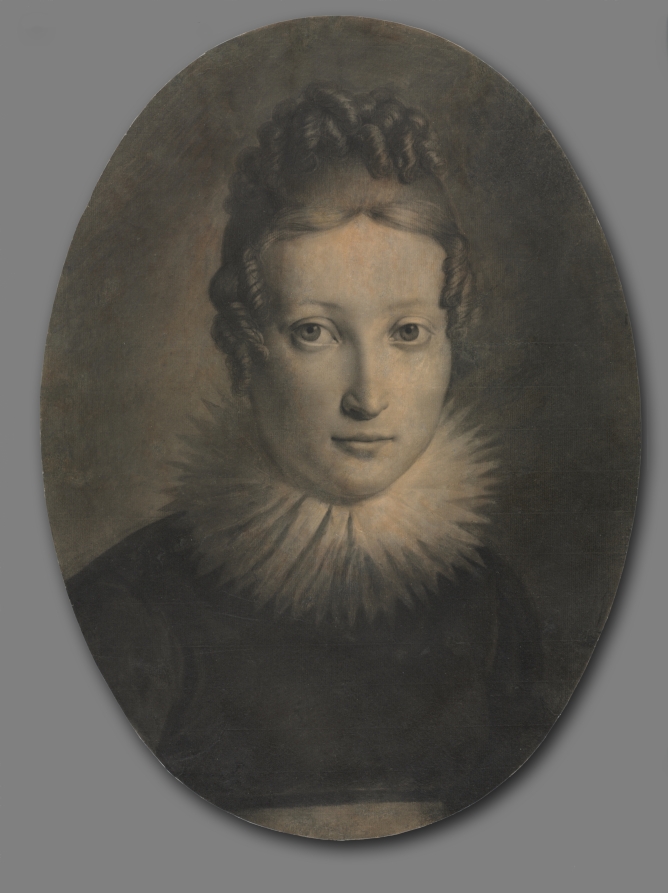
François Gérard · The Cleveland Museum of Art · Bequest of Muriel Butkin · CC0
- Name
- Francois Gérard
- Birth Name
- François Pascal Simon Gérard
- Born
- 12 March 1770
- Birthplace
- Rome, Papal States
- Died
- 11 January 1837
- Place of death
- Paris, France
- Known for
- Portrait painting
- Training
- Pajou, Brenet, David
- Nationality
- France.
- Occupation
- painter, politician, teacher, portraitist, illustrator and visual artist.
- Fields
- history painting.
VALÉORINE Encyclopedia
VALÉORINE documentary reading
Documentary summary
François Pascal Simon Gérard (fʁɑ̃swa paskal simɔ̃ ʒeʁaʁ, 4 May 1770 – 11 January 1837), titled as Baron Gérard in 1809, was a French painter. He was born in Rome, where his father occupied a post in the house of the French ambassador, and his mother was Italian. A student of Jacques-Louis David, Gérard became one of the leading painters of the First French Empire (1804–1815) and the Bourbon Restoration (1815–1830).
Admitted source layer · organised and presented by VALÉORINE
Note VALÉORINE
No house-authored Note is published until its assertions and sources pass the VALÉORINE evidence contract. The documentary article remains available in full while that enrichment is being consolidated.
Documentary enrichment in progress · no unsupported statement published
Reference Check
Propose documentary evidence for François Gérard. A contribution is never written directly as fact: identity, source, rights and evidence gates still decide.
Sign in to contribute
Documentary evidence
Evidence Panel
not yet certified
- Identity
- resolved
- Independent source families
- 0
- Admitted assertions
- 0
- Open conflicts
- 0
Authority files
getty · 500027110 · wikidata · Q163543 · wikipedia · François Gérard
In this article
Biography
Biography
Court painter to Emperor Napoleon and later First Painter to Kings Louis XVIII and Charles X, Gérard enjoyed great renown across Europe. Nicknamed “the painter of kings, the king of painters”, he was the portraitist of choice for many European royal families. His salon was one of the most celebrated of its time and welcomed the some of the era’s most eminent figures. After he was made a baron of the Empire in 1809 by Emperor Napoleon, he was known formally as Baron Gérard.
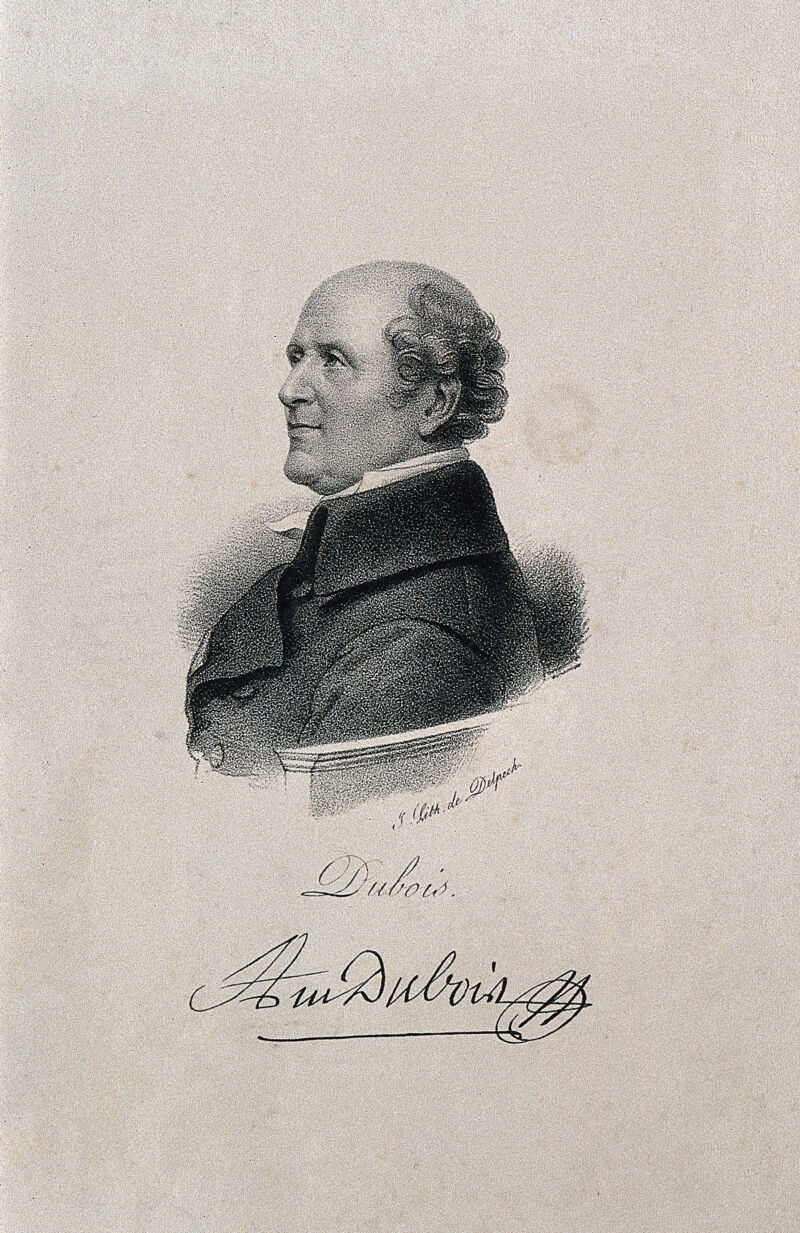
Antoine, Baron Dubois. Lithograph after F. P. S. Gérard, 1803., by François Gérard
François Gérard · Wellcome Collection, London · Wellcome Collection
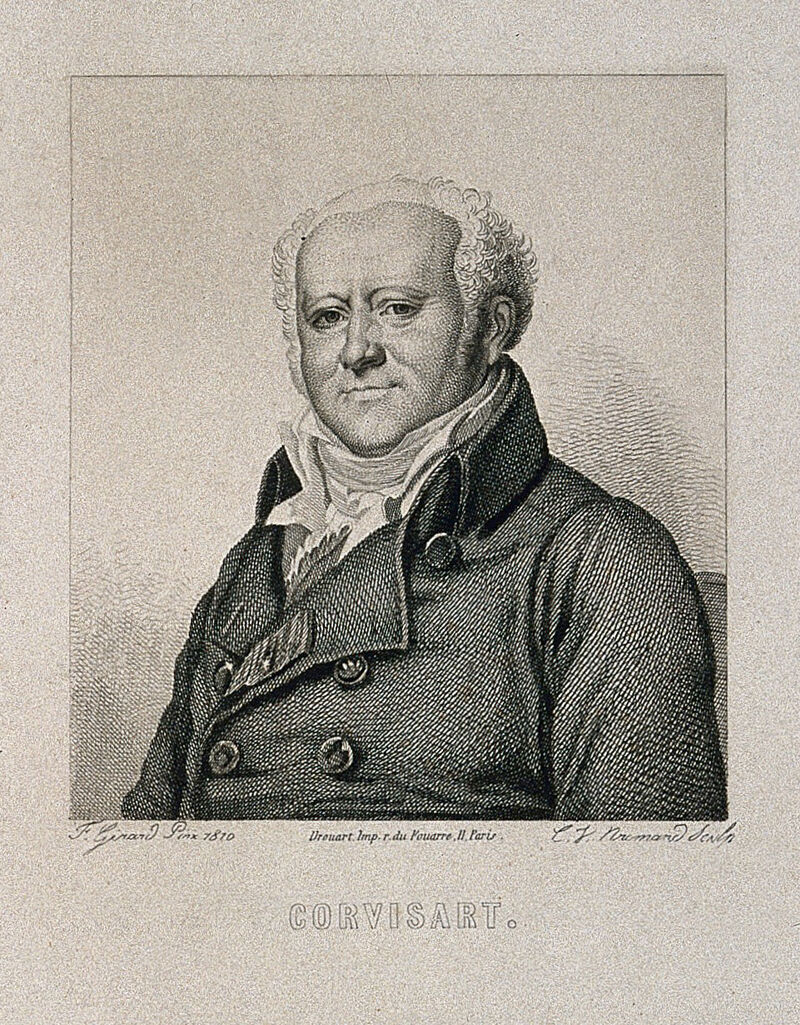
Jean-Nicolas, Baron Corvisart. Etching by C. J. Normand after F. P. S. Gérard., by François Gérard
François Gérard · Wellcome Collection, London · Wellcome Collection
Key facts
Key facts
• Name — Francois Gérard • Birth Name — François Pascal Simon Gérard • Born — 12 March 1770 • Birthplace — Rome, Papal States • Died — 11 January 1837 • Place of death — Paris, France • Known for — Portrait painting • Training — Pajou, Brenet, David
Life and career
Life and career
• Illustration — Portrait by Thomas Lawrence (c. 1824) François Gérard was born in Rome to J. S. Gérard and Cleria Matteï.[1] At the age of twelve, Gérard obtained admission into the Pension du Roi in Paris. From the Pension, he passed to the studio of the sculptor Augustin Pajou, which he left at the end of two years for the studio of the history painter Nicolas-Guy Brenet,[2] whom he quit almost immediately to place himself under Jacques-Louis David. In 1789, he competed for the Prix de Rome, which was carried off by his comrade Girodet. The following year (1790), he once more showed up, but the passing of his father prevented him from finishing his work and forced him to travel to Rome with his mother. He eventually made it back to Paris in 1791, but due to his extreme poverty, he was forced to abandon his studies in favor of a job that would pay him money right away. David at once availed himself of his help, and one of that master's most celebrated portraits, of Louis-Michel Le Pelletier de Saint-Fargeau, may owe much to the hand of Gérard. This painting was executed early in 1793, the year in which Gérard, at the request of David, was named a member of the revolutionary tribunal, from the fatal decisions of which he, however, invariably absented himself. • Illustration — Family tomb in Montparnasse Cemetery In 1794, he obtained the first prize in a competition, the subject of which was The Tenth of August, that is, the storming of the Tuileries Palace on that date in 1792. Further stimulated by the successes of his rival and friend Girodet in the Salons of 1793 and 1794, Gérard (aided by Jean-Baptiste Isabey, the miniaturist) produced in 1795 his famous Bélisaire. In 1796, a portrait of his generous friend (conserved today in the Louvre) obtained undisputed success, and the money received from Isabey for these two works enabled Gérard to execute in 1797 his Psyche et l'Amour (illustration). At last, in 1799, his portrait of Madame Mère established his position as one of the foremost portrait-painters of the day. At the Salon of 1808, eight (and at the Salon of 1810, fourteen) portraits by him were exhibited, indicating the numbers he executed yearly. Figures of the Empire and of the Bourbon Restoration, as well as men and women of Europe, sat for Gérard. This was due in part to his manner and conversation, as his salon was frequented alongside his studio. Madame Germaine de Staël, George Canning, Charles de Talleyrand, and the Duke of Wellington have written about his society. Rich and famous, Gérard was stung by remorse for earlier ambitions abandoned; at intervals, he had indeed striven with Girodet and other rivals to prove his strength at history painting, still a more prestigious genre than portraiture. His Bataille d'Austerlitz (1810) showed a breadth of invention and style which was even more conspicuous in L'Entrée d'Henri IV à Paris (at Versailles), the work with which in 1817 he paid homage to the returned Louis XVIII. After this date, Gérard declined, watching with impotent grief the progress of the Romantic school. Loaded with honors – baron of the Empire in 1809, member of the Institut on 7 March 1812, officer of the Légion d'honneur, first painter to the king – he worked on, sad and discouraged. He painted several works to celebrate the Coronation of Charles X in 1825. In 1830 he was commissioned by Charles to produce a large history painting of his son Duke of Angoulême bidding farewell to the French Army expedition departing Toulon for the Conquest of Algeria. This was never executed as it was rapidly overtaken by the events of the July Revolution that brought down Charles and the Bourbon Dynasty.[3] The revolution of 1830 added to his disquiet, and on 11 January 1837, after three days of fever, he died. gérard is best remembered for his portraits. The color of his paintings has suffered, but his drawings show in uninjured delicacy the purity of his line, and those of women are specially remarkable for a virginal simplicity and frankness of expression. His students included Heinrich Christoph Kolbe.
Selected works
Selected works
• Illustration — Marius Returning to Rome, 1789 • Illustration — Antoine-Jean Gros, 1791 • Illustration — Jean-Baptiste Isabey and His Daughter, 1795 • Illustration — Portrait of Joséphine de Beauharnais, 1801 • Illustration — Flora Caressed by Zephyr, 1802 • Illustration — Portrait of Juliette Récamier, 1802 • Illustration — Portrait of Letizia Bonaparte, 1803 • Illustration — Napoleon Bonaparte as First Consul, 1803 • Illustration — Portrait of Mary Nisbet, 1803 • Illustration — Catherine Grand, 1804 • Illustration — Marshal Michel Ney, 1805 • Illustration — Napoleon I as Emperor, 1805 • Illustration — Portrait of Joséphine de Beauharnais, 1808 • Illustration — Portrait of Joachim Murat, 1808 • Illustration — Portrait of Talleyrand, 1808 • Illustration — Portrait of Joseph Bonaparte, 1808 • Illustration — Portrait of Marie Walewska, 1810 • Illustration — Napoleon at the Battle of Austerlitz, 1810 • Illustration — Portrait of Jérôme Bonaparte, 1811 • Illustration — Portrait of Jean-Baptiste Jules Bernadotte, 1811 • Illustration — Portrait of Joachim Murat, king of Naples and of the Two Sicilies, 1811–1812, private collection, Paris • Illustration — Portrait of Marie Louise, 1812 • Illustration — Portrait of Louis XVIII, 1814 • Illustration — Portrait of the Duke of Wellington, 1814 • Illustration — Portrait of Désirée Clary • Illustration — Portrait of Catherine Grand, Princesse de Bénévent • Illustration — Portrait of Hortense de Beauharnais • Illustration — Portrait of Hortense de Beauharnais • Illustration — Cupid and Psyche • Illustration — Portrait of the Count of Artois, 1815 • Illustration — Teresa of Ávila • Illustration — Entry of Henry IV into Paris, 1817 • Illustration — Corinne at Cape Misenum, 1819–1821, Musée des Beaux-Arts de Lyon • Illustration — Portrait of the Duke of Berry, 1820 • Illustration — Duchess of Berry, 1820 • Illustration — Adelaide of Orleans, 1821 • Illustration — The Duchess of Berry and Her Children, 1822 • Illustration — Louis XVIII in his Study, 1823 • Illustration — Daphnis and Chloe, c. 1824, oil on canvas, The Detroit Institute of Arts • Illustration — Portrait of Charles X, 1825 • Illustration — Zoé Talon and her Children, 1825 • Illustration — Maximilien Sébastien Foy, 1826 • Illustration — The Coronation of Charles X, 1827 • Illustration — Lord Stuart de Rothesay, 1829 • Illustration — Portrait of Alphonse de Lamartine, 1831 • Illustration — Portrait of Louis Phillippe I, 1834 • Illustration — The Reading of the Declaration of the Deputies, 1836 • Illustration — Mme de Staël as her character Corinne (posthumously)
Identity and origins
Identity and origins
The authorities additionally record the headings François Pascal Simon, Baron Gérard, François Pascal Simon (Baron) Gérard, Baron François Pascal Simon Gérard, Francois Pascal Simon, Baron Gerard and Francois, Baron Gerard. His recorded language was French. He was the child of Jean Simon Gérard and Claire Mattéi.
Career and activity
Career and activity
François Gérard worked in portrait painting and visual arts. He was employed by Beaux-Arts de Paris. Recorded position is court painter. He belonged to German Archaeological Institute, Royal Netherlands Academy of Arts and Sciences and Académie des beaux-arts. He worked at Paris and Rome.
Work and production
Work and production
Works recorded as notable number 5: The Battle of Austerlitz, 2nd December 1805, Entrée d'Henri IV à Paris, 22 mars 1594, Cupid and Psyche, Portrait of Emperor Napoleon I and Portrait of Marie Caroline Ferdinande Louise de Naples, Wife of Charles Ferdinand, Duke de Berry, in the Park de Bagatelle in the Bois de Boulogne, Paris. His recorded genre is history.
Life and career
Dated record
Life and career
The full dated record · 2 entries
1770
François Gérard was born in 1770.
1837
François Gérard died at Paris.
Notes from the source article
Cited by Wikipedia
Notes from the source article
These works are cited by the source article, in its own numbering. They are recorded as its citations, not as sources VALÉORINE has verified.
- 1.Henri Gérard 1888
- 2.Nicolas-Guy Brenet (1728–1792), professor at the Académie royale de peinture et de sculpture, 1778. Michael Bryan, Dictionary of Painters and Engravers, s.v. "Brenet, Nicolas Guy". Brenet was also the master of Jean Germain Drouais.
- 3.Sessions, Jennifer E. By Sword and Plow: France and the Conquest of Algeria. Cornell University Press, 2015
Bibliography printed in the source article · 4
- Gérard, François. 11. 764–765.
- cite book
- cite book
- cite book
References
Citations
References
Each reference names the institution holding it, so a reader may go to the document itself.
reference work
Partially resolvedreference work
Partially resolved
A further 1 witness is held back from this article because the person or object named in it is not yet resolved to this record. They are kept, not discarded, and return once the identity is established.
Further particulars
Held on the record
Further particulars
Open the remaining particulars
François Gérard studied at Beaux-Arts de Paris. He trained under Augustin Pajou, Jacques-Louis David and Nicolas-Guy Brenet. Each of those relationships is stated by the authority record rather than inferred from style.
The Encyclopedia exists whether or not anything is for sale. Corrections are recorded rather than overwritten, and every version of this record is kept. Published 14 August 2026.
Elsewhere in Illustration
5,224 published records in this field, each with its sources named.
- Franck MooreIllustrator
- Franco BrambillaIllustrator
- Franco MigliacciIllustrator
- François FlamengIllustrator
- François MaretIllustrator
- François-Claudius Compte-CalixIllustrator
- François-Louis FrançaisIllustrator
- François-Rolland ElluinIllustrator
Best supported in this field
For owners
Own a work by François Gérard?
A specialist will read what you send and tell you what the house can establish, what it cannot, and whether the object is suited to sale. There is no charge and no obligation. The object stays with you throughout; nothing is shipped to us unless it is arranged in writing beforehand.