
Ferraù Fenzoni
Illustration — The deposition Ferraù Fenzoni (1562 – 11 April 1645) was an Italian painter and draughtsman. He was a canvas and fresco painter of biblical and religious subjects who worked in a late Mannerist style. He trained and worked in Rome in his youth and later he worked on important commissions in Todi and his native Faenza.
Also recorded as Ferrau da Faenza · Ferrau da Faenza Faenzoni · Ferrau Fenzoni · Ferrau da Faenza Fanzoni
Ferraù Fenzoni
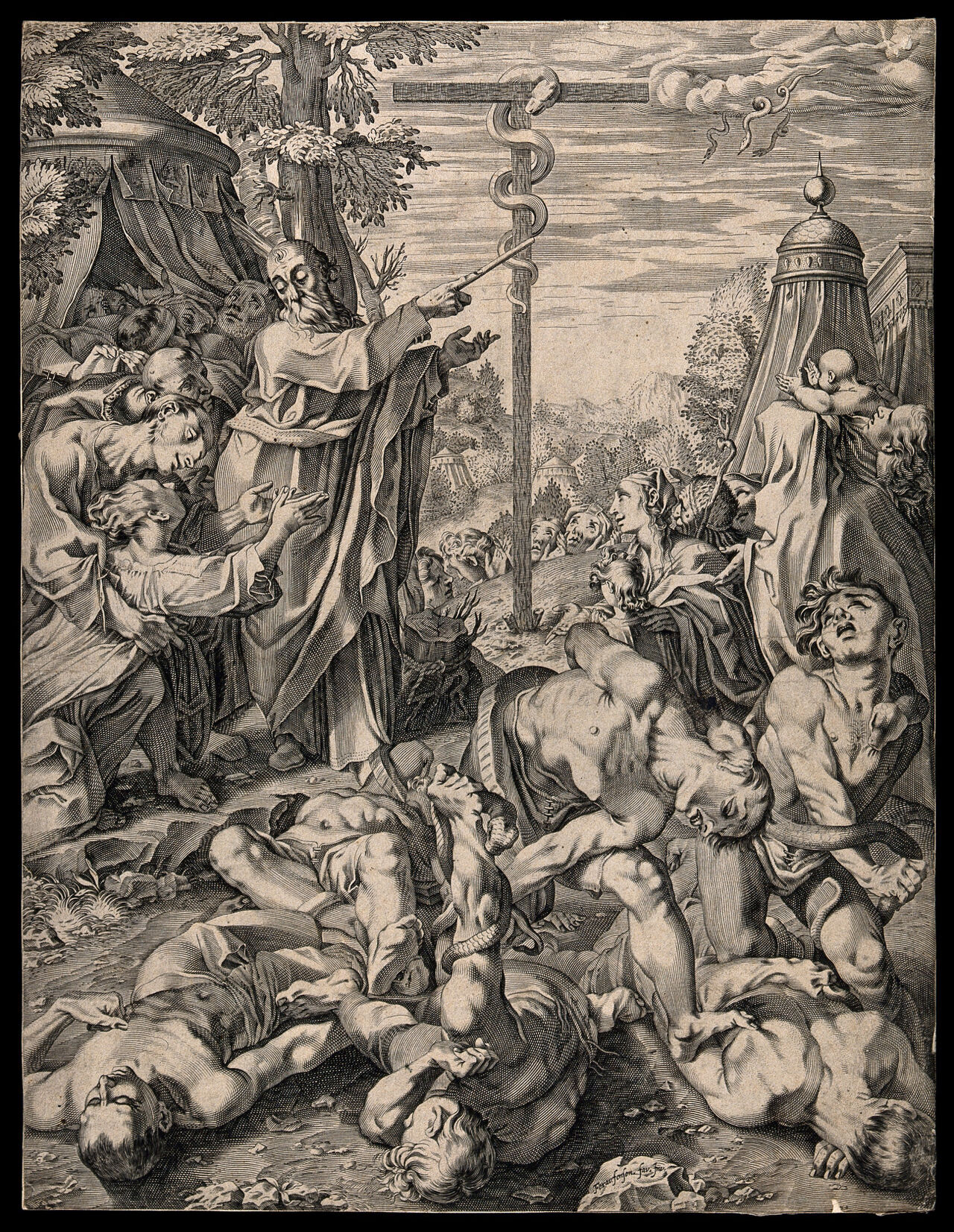
Ferraù Fenzoni · Wellcome Collection, London · Wellcome Collection · Public Domain Mark
- Born
- 1562 · Faenza.
- Died
- 1645 · Faenza.
- Occupation
- painter
- Honours
- Order of the Golden Spur
VALÉORINE Encyclopedia
VALÉORINE documentary reading
Documentary summary
Illustration — The deposition Ferraù Fenzoni (1562 – 11 April 1645) was an Italian painter and draughtsman. He was a canvas and fresco painter of biblical and religious subjects who worked in a late Mannerist style. He trained and worked in Rome in his youth and later he worked on important commissions in Todi and his native Faenza.
Admitted source layer · organised and presented by VALÉORINE
Reference Check
Propose documentary evidence for Ferraù Fenzoni. A contribution is never written directly as fact: identity, source, rights and evidence gates still decide.
Sign in to contribute
World of VALÉORINE
Documentary connections
Only confirmed graph relationships appear here. Images are shown only when their identity and reuse rights both pass the documentary gate.
Documentary evidence
Documentary basis
Authority files
wikidata · Q3743155 · wikipedia · Ferraù Fenzoni
In this article
Life
Life
He is also called 'Ferraù da Faenza' and 'Il Faenzone' after his birthplace Faenza.
Ferraù Fenzoni was born in Faenza and moved to Rome as a young man in the early 1580s. He was apprenticed in Rome during the papacy of Gregory XIII and worked on numerous fresco cycles under pope Sixtus V, such as the Loggia della Benedizioni in the Lateran Palace, the frescoes on the walls and vaults of the Scala Santa of the adjacent Basilica of San Giovanni in Laterano, and the decoration in the Sistine library. From 1594, he worked in Todi. He made illusionistic decorations in the bishop's palace ánd various altarpieces and murals in the Cathedral of Todi. Most of the latter is lost except for an impressive Last Judgement. • Illustration — Last Judgment, Todi Cathedral He returned to Faenza in 1599 where he remained for the rest of his career. He decorated chapels in the cathedral of Faenza from 1612 to 1616. In 1622, he completed a Deposition (local Pinacoteca). Among his most important works of his late period are The Pool of Bethesda, made around 1600 for the confraternity of San Giovanni Decollato. He also worked for churches in other locations of Romagna, including Bagnacavallo, Castel Bolognese and Cesena. One of his last significant paintings is an altarpiece of The deposition from around 1622, painted for the artist's chapel in the church of the now destroyed Madonna del Fuoco Church in Faenza. At the end of the 1620s, Fenzoni stopped painting, due to his bad eyesight. The artist became a prominent local figure and received various honours. In 25 April 1634, he was made the vicar and keeper (castellano) of Granarolo. In 1640, Cardinal Girolamo Colonna made Fenzoni a knight in the Order of the Golden Spur (cavaliere dello speron d’oro).
Work
Work
His expressive canvases are executed in a late Mannerist style. His style was influenced by the artists working for the court of Rudolf II in Prague who are referred to as Northern Mannerists. His chromatic range, use of light, and iridescent tones, however, place him within the tradition of Federico Barocci. Fenzoni's work further has affinities with the work of Francesco Vanni and Andrea Lilio, two artists with whom he exchanged drawings. Fenzoni was a prolific draughtsman and continued to draw into his old age. His reputation was such that he was able to obtain commissions for pen drawings, which were sold as autonomous works of art. He is mainly known today for his drawings rather than his painting. Approximately 160 drawings by his hand have survived, a large portion of which are in the collection of the Uffizi in Florence.
Life and career
Dated record
Life and career
The full dated record · 2 entries
1562
Ferraù Fenzoni born at Faenza.
1645
Ferraù Fenzoni died at Faenza.
Primary material
Documents and archives
authority record
- Wikidata, structured authority record Q3743155: Ferraù Fenzoni
General reference · Wikidata
reference work
- “Ferraù Fenzoni”, English Wikipedia, consulted as further reading
Reputable secondary · Wikipedia
References
Citations
References
Each reference names the institution holding it, so a reader may go to the document itself.
authority record
Secondary witnessreference work
Secondary witness
Further particulars
Held on the record
Further particulars
Open the remaining particulars
Ferraù Fenzoni received Order of the Golden Spur.
Recognition and collections
Work by Ferraù Fenzoni is
Nationalmuseum, Städel Museum, Minneapolis Institute of Art and Thyssen-Bornemisza Museum
The Encyclopedia exists whether or not anything is for sale. Corrections are recorded rather than overwritten, and every version of this record is kept. Published 18 August 2026.
Elsewhere in Paintings
18,792 published records in this field, each with its sources named.
- Fernando Yáñez de la AlmedinaArtist
- Fernando Zóbel de Ayala y MontojoArtist
- Ferol Sibley WarthenArtist
- Ferran Cabrera i CantóArtist
- Ferre GrignardArtist
- Ferrer BassaArtist
- Ferruccio PagniArtist
- Ferruccio RontiniArtist
Best supported in this field
For owners
Own a work by Ferraù Fenzoni?
A specialist will read what you send and tell you what the house can establish, what it cannot, and whether the object is suited to sale. There is no charge and no obligation. The object stays with you throughout; nothing is shipped to us unless it is arranged in writing beforehand.