
Ehud Banai
Ehud Banai (born 31 March 1953) is an Israeli musician, songwriter, author, and a member of the prominent Banai family in Israel.
Ehud Banai

Whistling in the Dark · CC BY-SA 2.0
- Name
- Ehud Banai
- Born
- 31 March 1953
- Birthplace
- Jerusalem, Israel.
- Occupation
- Musician, songwriter, author, radio broadcaster
- Nationality
- Israel
- Fields
- rock music
- Education
- Katzenelson High School
- Honours
- Ophir Award for Best Original Music · Ministry of Culture Prize (Israel)
- Languages
- Hebrew
VALÉORINE Encyclopedia
VALÉORINE documentary reading
Documentary summary
Ehud Banai (born 31 March 1953) is an Israeli musician, songwriter, author, and a member of the prominent Banai family in Israel.
Admitted source layer · organised and presented by VALÉORINE
Reference Check
Propose documentary evidence for Ehud Banai. A contribution is never written directly as fact: identity, source, rights and evidence gates still decide.
Sign in to contribute
Documentary evidence
Documentary basis
Authority files
wikidata · Q5348678 · wikipedia · Ehud Banai
In this article
Key facts
Key facts
• Name — Ehud Banai • Native Name — אהוד בנאי • Born — 31 March 1953 • Birthplace — Jerusalem, Israel. • Origin — Jerusalem, Israel • Instrument — Vocals, Guitar, Harmonica • Genre — Rock, folk, folk rock, Israeli folk, Israeli rock, Israeli folk-rock • Occupation — Musician, songwriter, author, radio broadcaster • Years Active — 1977–present • Label — CBS, NMC • Website — https: www.ehudbanai.co.il/
Early life
Early life
Ehud Banai was born in Jerusalem to the Iranian Jewish Banai family. His father was the actor Yaakov Banai. The family moved to Givatayim when Banai was four. At the age of ten, he learned to play the cello. In 1971 he was drafted to the Israel Defense Forces and served in the Nahal infantry brigade. After his discharge, he moved to London, where he busked in the London Underground for six months.
Music career
Music career
• Illustration — Ehud Banai at Neve Shalom Rally for Peace In 1982, Banai formed a band with singer Avi Matos. He made several other attempts at a breakthrough during the following years. He auditioned for Shlomo Bar's band, Habreira Hativ'it, but wasn't accepted. In 1986, Ehud and his band Haplitim ("The Refugees") broke through, with the hit single Ir Miklat (City of Refuge) and the rock opera "Mami". In 1987, Banai and the Refugees released their self-titled debut, which is considered by many to be one of the best and most important albums of Israeli rock, with original mix of new wave guitar rock with some oriental rhythms and sounds. Most of the album consisted of protest songs. The songs also included many Biblical subjects and allusions, such as the golden calf and cities of refuge. • Illustration — Ehud Banai, 1997 Their follow-up, Karov ("Near"), released in 1989, had influences ranging from Banai's early childhood in Jerusalem, traveling in Europe, Bob Dylan, the Banai family's Afghan/Persian-Jewish background, to Jewish prayer and piyutim, among others. He also released "Under the Jasmine Tree", an album of Persian folk tales as told by his father. During the 1990s, Banai released three albums (The Third was released in 1992, In a Little While in 1996, and Tip Tipa in 1998). Ane' Li was released in 2004. The song "Blues Kna'ani" (Canaanite Blues) was written in memory of Meir Ariel, and "Hayom" (Today) was written for Banai's wife. Banai sang a duet with David D'Or on D'Or's album Kmo HaRuach ("Like the Wind"), which was released on March 27, 2006. A triple live album, Mamshich Linso'a ("Keeps On Moving"), was released in October 2006. Banai writes the lyrics and composes the music for almost all of his own songs. For the greater part of his musical career, he has observed Jewish traditions, and essentially “returned” to Orthodox Jewish religious observance over the course of the early 2000s. Banai habitually scatters references to his connection to Jewish subjects throughout many of his songs. • Illustration — Ehud Banai performing, 2008 In 2008, "On the Move", a documentary film directed by Avida Livny and produced by Gidi Avivi, Yael Biron and Dror Nahum, about Banai and the Refugees, participated in the official competition of the Jerusalem Film Festival, in EPOS -the international art & culture film festival in Israel and has been screened in cinemateques around Israel. The film traces Banai's early years on the music scene, through the struggle, musical passion, and deeply rooted friendship he shared with members of his first band, "The Refugees" – Yossi Elephant, Jean Jacques Goldeberg, Noam Halevi, and Gil Smetana. In September 2008, Banai released Shir Chadash, an album of traditional Jewish songs (zemirot), including several melodies composed by Shlomo Carlebach. Banai's album Resisei Laila ("Shards of the Night") was released in 2011.
Published works
• Remembering Almost Everything (Keter 2001) • Ze HaMakom

Ehud Banai
קובי אליאס · received by email from author
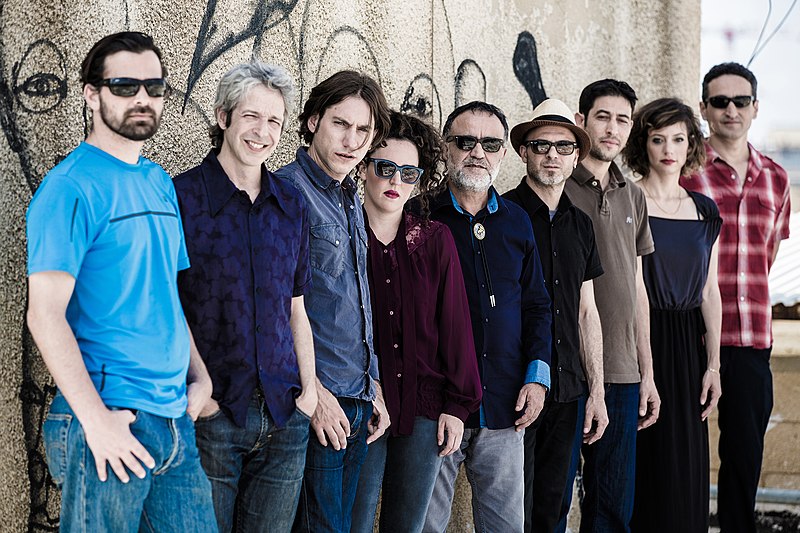
אהוד בנאי עם ההרכב הקבוע: גיל סמטנה – הפקה מוסיקלית ובס, ערן פורת – תופים, נושי פז – גיטרות, ניצן – חן רזאל – כינור, אלעד כהן – בונן – כלי הקשה וסאמפלר, ביל צור – קלידים. אליהם הצטרפו: מאיה בלזיצמן - צ`לו ושירה, גליה חי - ויולה וקולות.
רויטל טופיול · שילוח הפקות - תמונת יח"צ
Partial discography
• Ehud Banai and the Refugees (1987) • Mitachat Siach HaYasmin (Under the Jasmine Tree), with Yaakov Banai (1989) • Karov ("Close") (1989) • Hashlishi ("The Third) (1992) • Od Me'at ("Soon") (1996) • Tip Tipa (1998) • Ane Li ("Answer Me") (2004) • Mamshich Linsoa (Keeps on Driving) (2006) • Shir Chadash (New Song) (2008) • Resisei Laila (Shards of Night) (2011) • Beofek Acher (2012) • EB=MC2 (2017), with Michael Chapman
Notes from the source article
Cited by Wikipedia
Notes from the source article
These works are cited by the source article, in its own numbering. They are recorded as its citations, not as sources VALÉORINE has verified.
References
Citations
References
Each reference names the institution holding it, so a reader may go to the document itself.
reference work
Secondary witnessreference work
Secondary witness
The Encyclopedia exists whether or not anything is for sale. Corrections are recorded rather than overwritten, and every version of this record is kept. Published 17 August 2026.
Elsewhere in Music memorabilia
42,375 published records in this field, each with its sources named.
- Egyptian Radio and Television UnionOrganisation
- Ehab TawfikPerson
- Ehsan AmanPerson
- Ehud AsheriePerson
- Eibhlis FarrellPerson
- Eibon RecordsOrganisation
- Eicca ToppinenPerson
- Eightball RecordsOrganisation
Best supported in this field
For owners
Own a work by Ehud Banai?
A specialist will read what you send and tell you what the house can establish, what it cannot, and whether the object is suited to sale. There is no charge and no obligation. The object stays with you throughout; nothing is shipped to us unless it is arranged in writing beforehand.