
Domenico Cunego
Domenico Cunego (17278 January 1803) was an Italian printmaker. The engravings he made depicting Michelangelo's Sistine Chapel ceiling, published in Gavin Hamilton's Schola Italica Picturae (1773), were an important source for the artists of his time.
Domenico Cunego
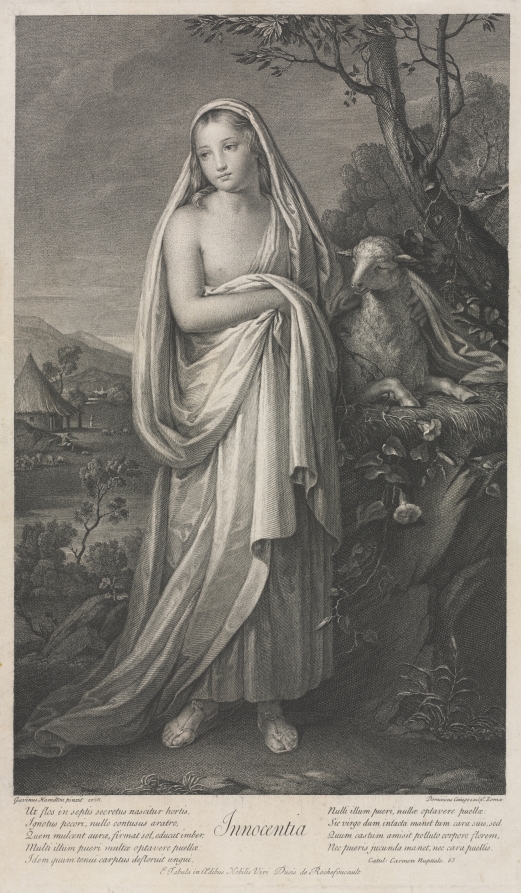
Domenico Cunego · The Cleveland Museum of Art · Gift of Mrs. Frederck C. Merrick · CC0
- Name
- Domenico Cunego
- Born
- 1727
- Birthplace
- Verona, Republic of Venice
- Died
- 8 January 1803
- Place of death
- Rome, Papal States
- Field
- Printmaking
- Training
- Francesco Ferrari
- Movement
- Neoclassicism
- Nationality
- Republic of Venice
- Occupation
- engraver · graphic artist
- Languages
- Italian
VALÉORINE Encyclopedia
VALÉORINE documentary reading
Documentary summary
Domenico Cunego (17278 January 1803) was an Italian printmaker. The engravings he made depicting Michelangelo's Sistine Chapel ceiling, published in Gavin Hamilton's Schola Italica Picturae (1773), were an important source for the artists of his time.
Admitted source layer · organised and presented by VALÉORINE
Note VALÉORINE
Domenico Cunego (1727–1803) was an engraver and graphic artist and a national of the Republic of Venice. Born in Verona, the engraver died in Rome. Domenico Cunego worked in Berlin, Rome and Verona.
Languages used include Italian. Works by the engraver are held at Ackland Art Museum, Auckland Art Gallery and Finnish National Gallery, among others.
Composed from admitted, traceable facts · 01 October 2026
VALÉORINE
Reference Check
Propose documentary evidence for Domenico Cunego. A contribution is never written directly as fact: identity, source, rights and evidence gates still decide.
Sign in to contribute
World of VALÉORINE
Documentary connections
Only confirmed graph relationships appear here. Images are shown only when their identity and reuse rights both pass the documentary gate.
Documentary evidence
Documentary basis
Authority files
wikidata · Q4247199 · wikipedia · Domenico Cunego
In this article
Biography
Biography
The recorded working language is Italian. Places of work recorded in the authority are Verona, Rome and Berlin. Work by Domenico Cunego is recorded in the collections of Nationalmuseum, Minneapolis Institute of Art, Auckland Art Gallery, Finnish National Gallery and Geldersch Landschap en Kasteelen.
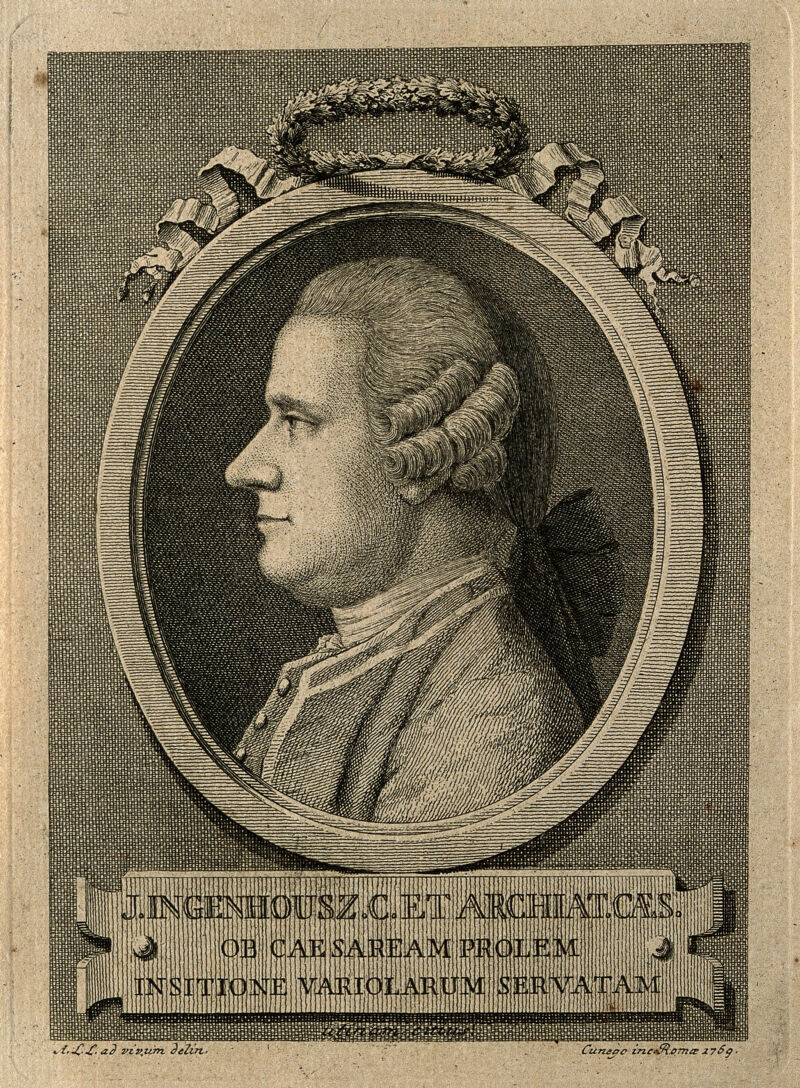
Jan Ingenhousz. Etching by D. Cunego, 1769, after A.L.L., 1700-1799, by Domenico Cunego
Domenico Cunego · Wellcome Collection, London · Wellcome Collection
Key facts
Key facts
• Name — Domenico Cunego • Born — 1727 • Birthplace — Verona, Republic of Venice • Died — 8 January 1803 • Place of death — Rome, Papal States • Field — Printmaking • Training — Francesco Ferrari • Movement — Neoclassicism
Early life
Early life
Domenico Cunego was born in Verona in 1727, He was the pupil of an otherwise unknown painter by the name of Francesco Ferrari. When he was 18, and after executing several paintings, all of which are now lost or untraceable, he turned to engraving, an art in which he may have been self-taught (Gori Gandellini). Between 1752 and 1760 he collaborated with Dionigi Valesi on the illustrations for a three-volume catalogue of the coin collection of Giacomo Muselli, published in Verona (1752, 1756, 1760). Also from the 1750s are several Views of Verona after drawings by T. Majeroni and the St. Thomas of Villanova (1757) after Antonio Balestra. This Veronese painter was frequently a source of inspiration for Cunego, who often reproduced works by his contemporaries, for example Francesco Solimena and Felice Boscaratti (1721–1807).
Career
Career
In October 1760 Cunego came into contact with James Adam, younger brother of Robert Adam, who was visiting Verona. Together with Adam and his travelling companions, Charles-Louis Clérisseau, Antonio Zucchi and the Veronese draughtsman Giuseppe Sacco (1735–98), Cunego visited Florence and Siena, and in February 1761 he arrived in Rome. He remained in the service of Adam for about two years, during which time he engraved two plates for Robert Adam’s Ruins of the Palace of the Emperor Diocletian at Spalatro in Dalmatia (London, 1764), as well as 14 views of towns in the region of Campania after drawings by Clérisseau, printed about 1763. Adam returned to London in 1763, but Cunego preferred to remain working independently in Rome. He remained on good terms with his former patron, however, and with the world of English publishing in general. Between 1764 and 1778 he executed many engravings after Gavin Hamilton’s paintings; most important are several pictures based on the Iliad. Cunego was commissioned in 1769 to produce several plates for the Collection of Prints Engraved after the Most Capital Paintings in England, published in London by John Boydell, and 22 plates for the Schola Italica picturae by Gavin Hamilton, a collection of engravings of 16th- and 17th-century Italian paintings (Rome, 1773). He also produced plates for David Allan's Origin of Portraiture. During the same period Cunego also made a large number of engravings after the work of famous artists of the past such as Giorgione, Titian, Reni, Domenichino, Guercino and (in 1780) after Michelangelo’s Last Judgement (Rome, Vatican, Sistine Chapel). He produced plates of portraits, particularly those of popes: Clement XIII (after Piranesi), Clement XIV and Pius VI (after Giovanni Domenico Porta). • Illustration — Engraved portrait of Anton Raphael Mengs by Domenico Cunego By this time Cunego was famous in Rome and well established in Neoclassical circles. He was the favourite engraver of Anton Raphael Mengs, many of whose works he reproduced in engravings and etchings. Mengs’s tracings were the basis for Cunego’s 40 engravings of the heads of figures from Raphael’s School of Athens (Rome, Vatican, Stanza della Segnatura). In 1785 Cunego travelled to Berlin, where he was invited to manage the copperplate printing works of someone named Pascal; he returned to Rome, however, four years later.
Later works
Later works
In Germany Cunego experimented with engraving in the manière noire (mezzotint), which became the predominant mode of expression in his later Roman works. A number of plates date from the 1790s, notably 27 Views of Rome as well as some devotional engravings. His last engraved work may have been the Tomb of Bishop de Fatatis (1800), after a drawing by Ciaffaroni. He continued to run his own school until his death and numbered among his pupils Gian Carlo Colombo, Camillo Tinti and his sons by his first marriage Luigi Cunego (b. 1750, d. 1823) and Giuseppe Cunego (b. 1760). Cunego died in Rome on 8 January 1803.
Works
Works
• Illustrations for the 3-volume catalogue of Giacomo Muselli's coin collection, in collaboration with Dionigi Valesi (1752, 1756, 1760). Internet Archive • Views of Verona after drawings by T. Majeroni (1750s) • St. Thomas of Villanova (1757), after a painting by Antonio Balestra (a frequent source for Cunego) • Some of the engravings for Ruins of the palace of the Emperor Diocletian at Spalato in Dalmatia. by Robert Adam, 1764
Gallery
Gallery
• Illustration — Andromache Bewailing the Death of Hector, 1764, Yale Center for British Art • Illustration — Achilles Laments the Death of Patroclus, 1764 • Illustration — Lot flanked by his two daughters, Metropolitan Museum of Art • Illustration — A man and woman embracing, plate from Schola Italica Picturae • Illustration — Entombment of Christ, 1775, Metropolitan Museum of Art • Illustration — Temple of Jupiter, Spalato • Illustration — Saint John the Baptist • Illustration — Temple of Pola in Istria, 1760–67 • Illustration — Galatea. Engraving by D. Cunego after Agostino Carracci
Places
Named by the record
Places
Only places the record itself states, plotted where the house gazetteer settles their coordinates. Nothing is inferred from a name or a nationality.
Verona.
Birth place
Rome.
Death place
Primary material
Documents and archives
reference work
- “Domenico Cunego”, English Wikipedia, consulted as further reading
Reputable secondary · Wikipedia
authority record
- Wikidata, structured authority record Q4247199: Domenico Cunego
General reference · Wikidata
Notes from the source article
Cited by Wikipedia
Notes from the source article
These works are cited by the source article, in its own numbering. They are recorded as its citations, not as sources VALÉORINE has verified.
- 1.Domenico Cunego Entombment of Christ. The Metropolitan Museum of Art.
- 2.Bryan, Michael (1903). Bryan's Dictionary of painters and engravers, Vol. 1. A-C, p. 361; Note: "CUNEGO, Domenico, an Italian designer and engraver, was born at Verona in 1727, and died at Rome in 1794". (which contradicts the date of death set at 1803...)
- 3.Tomory, Peter (1972). The life and art of Henry Fuseli. Praeger. p. 111
- 4.Luigi Cunego Artist Royal Academy of Arts. www.royalacademy.org.uk.
Bibliography printed in the source article · 1
- Bryan, Michael (1903). Bryan's dictionary of painters and engravers. Vol. 1: A-C. G. New York: Macmillan.
References
Citations
References
Each reference names the institution holding it, so a reader may go to the document itself.
reference work
Secondary witnessauthority record
General reference
The Encyclopedia exists whether or not anything is for sale. Corrections are recorded rather than overwritten, and every version of this record is kept. Published 16 August 2026.
Elsewhere in Prints
4,138 published records in this field, each with its sources named.
- Do Ho SuhEngraver
- Doel ReedEngraver
- Domenico BeccafumiEngraver
- Domenico CampagnolaEngraver
- Domenico del BarbiereEngraver
- Domenico FalciniEngraver
- Domenico MaggiottoEngraver
- Domenico Maria BonaveraEngraver
Best supported in this field
For owners
Own a work by Domenico Cunego?
A specialist will read what you send and tell you what the house can establish, what it cannot, and whether the object is suited to sale. There is no charge and no obligation. The object stays with you throughout; nothing is shipped to us unless it is arranged in writing beforehand.