
Diana Beauclerk
Lady Diana Beauclerk (Lady Diana Spencer; other married name Diana St John, Viscountess Bolingbroke; 24 March 1734 – 1 August 1808) was an English noblewoman and celebrated artist.
Also recorded as Lady Spencer · Viscountess Bolingbroke · Diana Spencer · Lady Diana Spencer
Diana Beauclerk
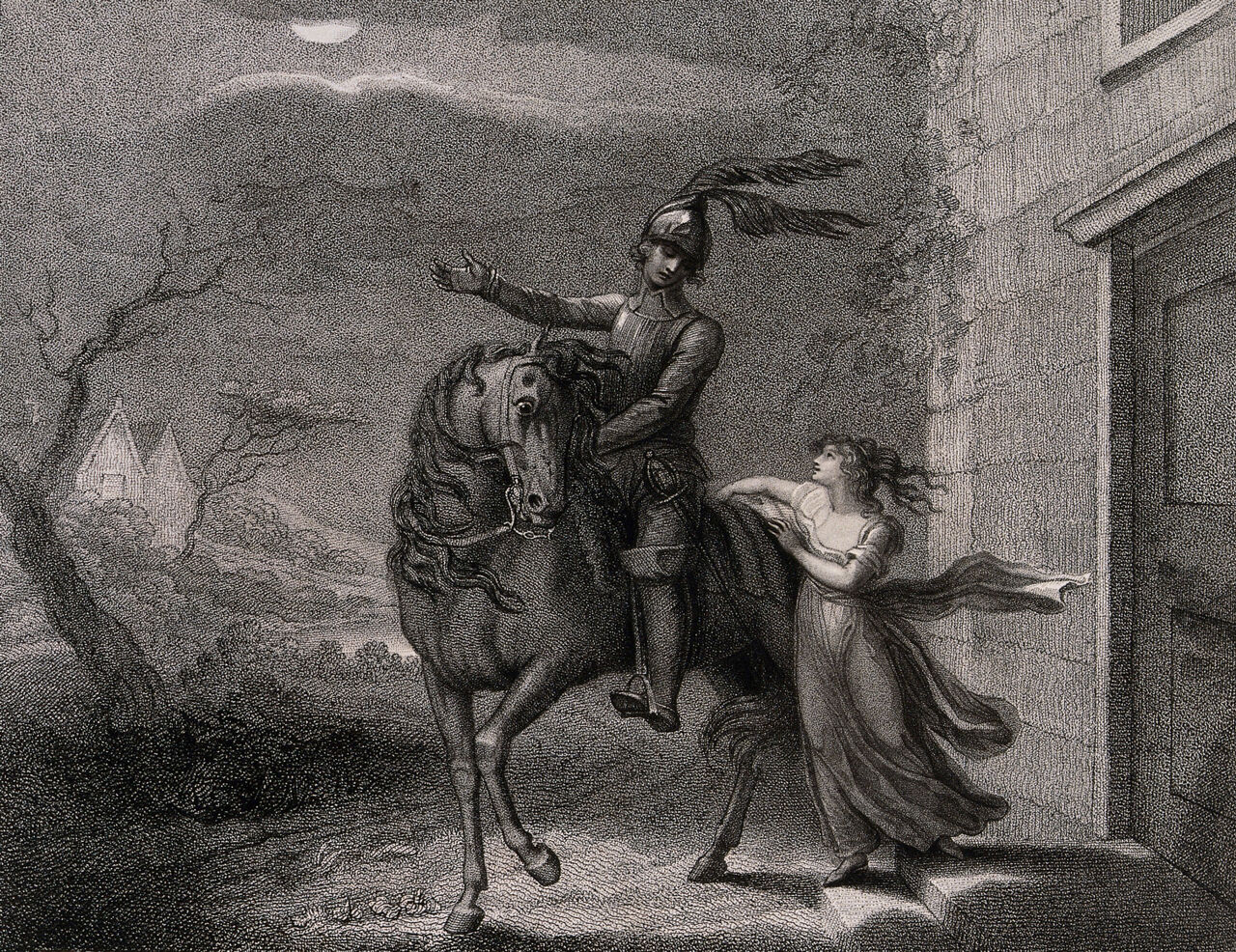
Diana Beauclerk · Wellcome Collection, London · Wellcome Collection · Public Domain Mark
- Name
- Diana Beauclerk
- Born
- 24 March 1734
- Died
- 1 August 1808
- Occupation
- noblewoman & artist
- Nationality
- United Kingdom of Great Britain and Ireland · Kingdom of Great Britain
- Fields
- portrait
VALÉORINE Encyclopedia
VALÉORINE documentary reading
Documentary summary
Lady Diana Beauclerk (Lady Diana Spencer; other married name Diana St John, Viscountess Bolingbroke; 24 March 1734 – 1 August 1808) was an English noblewoman and celebrated artist.
Admitted source layer · organised and presented by VALÉORINE
Note VALÉORINE
Diana Beauclerk (1734–1808) was a draftsperson, illustrator and painter, of British and British nationality. The draftsperson was born Diana Spencer in Great Britain.
The work spans portrait. Languages used include English.
Composed from admitted, traceable facts · 27 September 2026
VALÉORINE
Reference Check
Propose documentary evidence for Diana Beauclerk. A contribution is never written directly as fact: identity, source, rights and evidence gates still decide.
Sign in to contribute
Documentary evidence
Documentary basis
Authority files
wikidata · Q3706764
In this article
Key facts
Key facts
• Honorific Prefix — Lady • Name — Diana Beauclerk • Born — 24 March 1734 • Died — 1 August 1808 • Resting Place — Richmond, Surrey, England • Father — Charles Spencer, 3rd Duke of Marlborough • Mother — the Hon. Elizabeth Trevor • Children — 7 • Occupation — noblewoman & artist • Relatives — George Spencer (brother) Elizabeth Spencer (sister) Sarah Churchill, Duchess of Marlborough (great-grandmother) George St John (son) Frederick St John (son) Charles George Beauclerk (son)
Early life
Early life
Lady Diana Spencer was born into the aristocratric Spencer family as the daughter of Charles, 3rd Duke of Marlborough (1706–1758), and the Hon. Elizabeth Trevor (d. 1761). Her siblings were George (later 4th Duke), Lord Charles Spencer, and Elizabeth, Countess of Pembroke. Her great-grandmother was the formidable Sarah Churchill, Duchess of Marlborough. She was raised at Langley Park, Buckinghamshire, where she was introduced to art at an early age. Sir Joshua Reynolds was a family friend.
Marriages and children
Marriages and children
• Illustration — Topham Beauclerk, her second husband On 8 September 1757, she married Frederick St John, 2nd Viscount Bolingbroke (1734–1787). From 1762 to 1768 she was Lady of the Bedchamber to Queen Charlotte. She became widely known as 'Lady Di' (as did her namesake, Diana, Princess of Wales, prior to her marriage). Lady Diana had four children by her first marriage: • George St John, 3rd Viscount Bolingbroke (5 March 1761 — 11 December 1824) • Henriette St John (1 Aug 1762 — April 1834), married in 1792 Henry Towcester • Anne (born ca. 1764, and did not survive infancy) • General Frederick St John (20 December 1765 — 19 November 1844), MP for Oxford, married Lady Mary Kerr (died 1791), the Hon. Arabella Craven (died 1819) and Caroline Parsons (died 1869). Finding herself in a desperately unhappy marriage to the notoriously unfaithful Viscount Bolingbroke, Lady Di overturned convention. She left her husband and maintained a secret relationship with her lover, Topham Beauclerk. In February 1768 Bolingbroke petitioned for divorce on grounds of adultery ("criminal conversation"). The petition required an Act of Parliament, which was passed the next month. Within two days, she married Topham Beauclerk, of Old Windsor, Berkshire. They had three children: • Elisabeth Beauclerk (20 August 1766 – 25 March 1793), married her cousin, George Herbert, 11th Earl of Pembroke • (Anne) Mary Day Beauclerk (29 June or 20 August 1766 – 23 July 1851), twin of Elisabeth. She famously had a long-term relationship with her own half-brother Bolingbroke, and had four sons by him. After he abandoned her, she married in 1797 Franz von Jenison-Walworth (1764–1824), a German count of English parentage (son of Count Francis von Jenison zu Walworth), and had legitimate issue, 2 sons (one son deceased) and four daughters. (Her descendants via her youngest daughter Emilie (or Amalie) include the Princes of Loewenstein-Wertheim-Freudenberg, and through them, other German royalty). • Charles George Beauclerk (20 January 1774 – 25 December 1846), M.P. for Richmond (1796-98), in 1799 he married Emily Charlotte Ogilvie, daughter of Emily Mary Lennox, Duchess of Leinster, by her second husband, William Ogilvie. He is ancestor of the Beauclerks, Marquises of Valero de Urría.
Friends
Friends
• Illustration — Part of a stipple engraving, published by John Boydell in 1782, after Lady Diana's 1779 drawing of her friend and cousin Georgiana Cavendish. Their circle of friends included Samuel Johnson, Georgiana Cavendish — who maintained a glittering salon — Edward Gibbon, David Garrick, Charles James Fox, James Boswell and Edmund Burke. Fanny Burney recorded in her diary the feelings of Edmund Burke about Lady Diana after the death of Topham Beauclerk: From the window of the dining-parlour, Sir Joshua Reynolds directed us to look at a pretty white house which belonged to Lady Di. Beauclerk. "I am extremely glad," said Mr. Burke, "to see her at last so well housed; poor woman! the bowl has long rolled in misery; I rejoice that it has now found its balance. I never, myself, so much enjoyed the sight of happiness in another, as in that woman when I first saw her after the death of her husband. It was really enlivening to behold her placed in that sweet house, released from all her cares, a thousand pounds a year at her own disposal, and — her husband was dead! Oh, it was pleasant, it was delightful to see her enjoyment of her situation!" "But, without considering the circumstances" said Mr. Gibbon, "this may appear very strange, though, when they are fairly stated, it is perfectly rational and unavoidable." "Very true," said Mr. Burke, "if the circumstances are not considered, Lady Di. may seem highly reprehensible." He then, addressing himself particularly to me, as the person least likely to be acquainted with the character of Mr. Beauclerk, drew it himself in strong and marked expressions, describing the misery he gave his wife, his singular ill-treatment of her, and the necessary relief the death of such a man must give. On the other hand, James Boswell records that Samuel Johnson said of her (in 1773), "The woman's a whore and there's an end on't."
Artistic work
Artistic work
• Illustration — "Lady and child dancing", by Lady Diana Beauclerk Lady Diana eventually helped to support herself through her artwork. She painted portraits, illustrated plays and books, provided designs for Wedgwood's innovative pottery, and decorated rooms with murals. Championed by her close friend Horace Walpole, she was able to establish herself as an artist at a time when women struggled to forge careers. Beauclerk illustrated a number of literary productions, including Horace Walpole's tragedy The Mysterious Mother, the English translation of Gottfried August Bürger's Leonora (1796) and The Fables of John Dryden (1797). After 1785 she was one of a circle of women, along with Emma Crewe and Elizabeth Templetown (1746/7-1823), whose designs for Josiah Wedgwood were made into bas-reliefs on jasper ornaments.
Later life, death, and legacy
Later life, death, and legacy
Beauclerk's second husband died in 1780 and, due to restricted finances, she began to lead a more retired life. Lady Diana died in 1808 and is buried at Richmond, Surrey. In the mid-1990s a portrait of her hung in Kenwood House, Hampstead in north London, with the caption: "Lady Diana Spencer, known chiefly for the unhappiness of her first marriage."
Identity and origins
Identity and origins
Diana Beauclerk was recorded at birth as Diana Spencer. The authorities additionally record the headings Lady Spencer, Viscountess Bolingbroke, Diana Spencer, Lady Diana Spencer and Lady Beauclerk. Her recorded language was English. She was the child of Charles Spencer, 3rd Duke of Marlborough and Elizabeth Spencer, Duchess of Marlborough. She married Topham Beauclerk and Frederick St John, 2nd Viscount Bolingbroke. 4 children are recorded: George St John, Charles Beauclerk, Frederick St John and Anne Beauclerk.
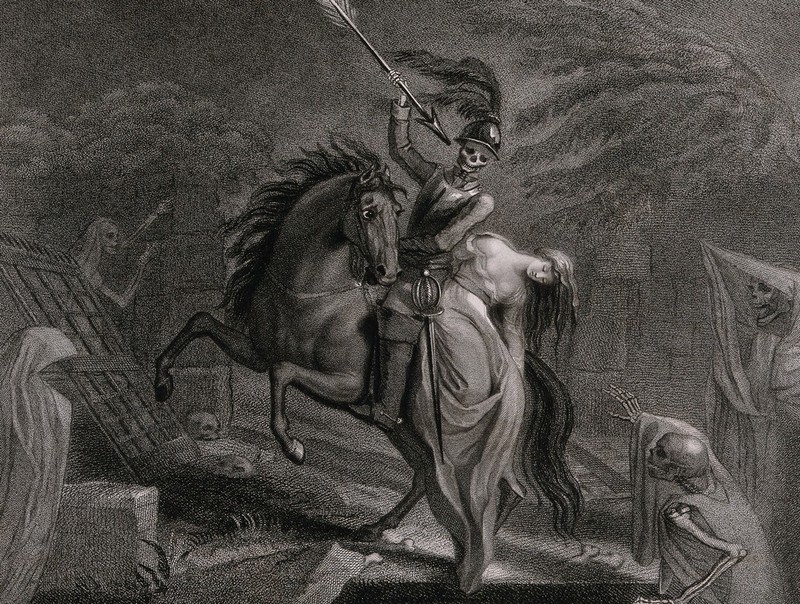
Death disguised as the knight William reveals himself as
Diana Beauclerk · Wellcome Collection, London · Wellcome Collection
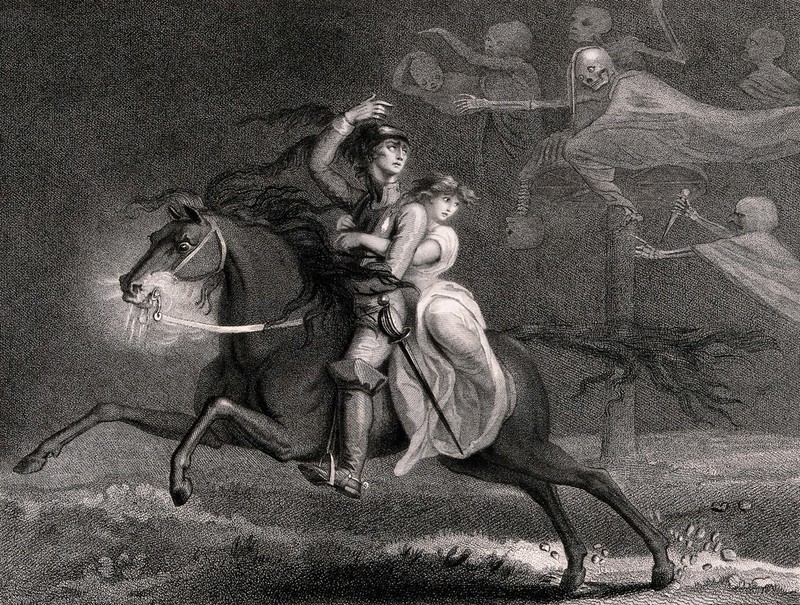
Death disguised as the knight William and his lover Lenore ride past ghostly figures of Death. Stipple engraving by Harding after Lady Diana Beauclerk, 1796., June 1. 1796, by Diana Beauclerk
Diana Beauclerk · Wellcome Collection, London · Wellcome Collection
Life and career
Dated record
Life and career
The full dated record · 2 entries
1734
Diana Beauclerk born at Great Britain.
1808
Diana Beauclerk died.
Sculpture design
Beauclerk designed the allegorical group, sculpted by John de Veere of the Coade Stone factory, to decorate the plain facade of the Pelican and British Empire Life Insurance Company at 70 Lombard Street in the City of London. It was rescued before building demolition in 1915 and is now displayed in the Horniman Museum.
Notes from the source article
Cited by Wikipedia
Notes from the source article
These works are cited by the source article, in its own numbering. They are recorded as its citations, not as sources VALÉORINE has verified.
- 1.www.burkespeerage.com
- 2."The Diary of Fanny Burney (Madame D'Arblay)"
- 3.James Boswell, Life of Samuel Johnson; entry for 7 May 1773.
- 4.Historic England. Exterior view of 'The Pelican', the offices of Pelican and British Empire Life Insurance Company, at 70 Lombard Street.
Bibliography printed in the source article · 6
- Adamson, Donald; Beauclerk Dewar, Peter. The House of Nell Gwyn: The Fortunes of the Beauclerk Family, 1670–1974. London: William Kimber (1974).
- Erskine, Beatrice. Lady Diana Beauclerk, her life and her work (London: T.F. Unwin, 1903).
- Hicks, Carola. Improper Pursuits: The Scandalous Life of an Earlier Lady Diana Spencer (New York: St. Martin's Press, 2001).
- Sloan, Kim. A Noble Art: Amateur Artists and Drawing Masters, C.1600-1800. British Museum Press, 2000.
- Surtees, Virginia. 'Beauclerk, Lady Diana (1734–1808).' in Oxford Dictionary of National Biography. Ed. H. C. G. Matthew and Brian Harrison. Oxford: OUP, 2004. 8 May 2007.
- Editors Delia Gaze, Maja Mihajlovic, Leanda Shrimpton. Entry at Dictionary of Women Artists: Artists. Taylor & Francis, 1997.
References
Citations
References
Each reference names the institution holding it, so a reader may go to the document itself.
reference work
Wikidata, structured authority record Q3706764: Diana BeauclerkWikimedia Foundation
Secondary witness
The Encyclopedia exists whether or not anything is for sale. Corrections are recorded rather than overwritten, and every version of this record is kept. Published 14 August 2026.
Elsewhere in Illustration
5,224 published records in this field, each with its sources named.
- Denys Watkins-PitchfordIllustrator
- Derek DesiertoIllustrator
- Devdutt PattanaikIllustrator
- Di CavalcantiIllustrator
- Diana BloomfieldIllustrator
- Diana GardnerIllustrator
- Diana WielerIllustrator
- Diane DillonIllustrator
Best supported in this field
For owners
Own a work by Diana Beauclerk?
A specialist will read what you send and tell you what the house can establish, what it cannot, and whether the object is suited to sale. There is no charge and no obligation. The object stays with you throughout; nothing is shipped to us unless it is arranged in writing beforehand.