
Daniel Hopfer
Daniel Hopfer (c. 1470 – 1536) was a German artist who is widely believed to have been the first to use etching in printmaking, at the end of the 15th century. He also worked in woodcut.
Also recorded as Daniel, the Elder Hopfer · Daniel I Hopfer · Daniel, I Hopfer · Daniel I Hopffer
Daniel Hopfer
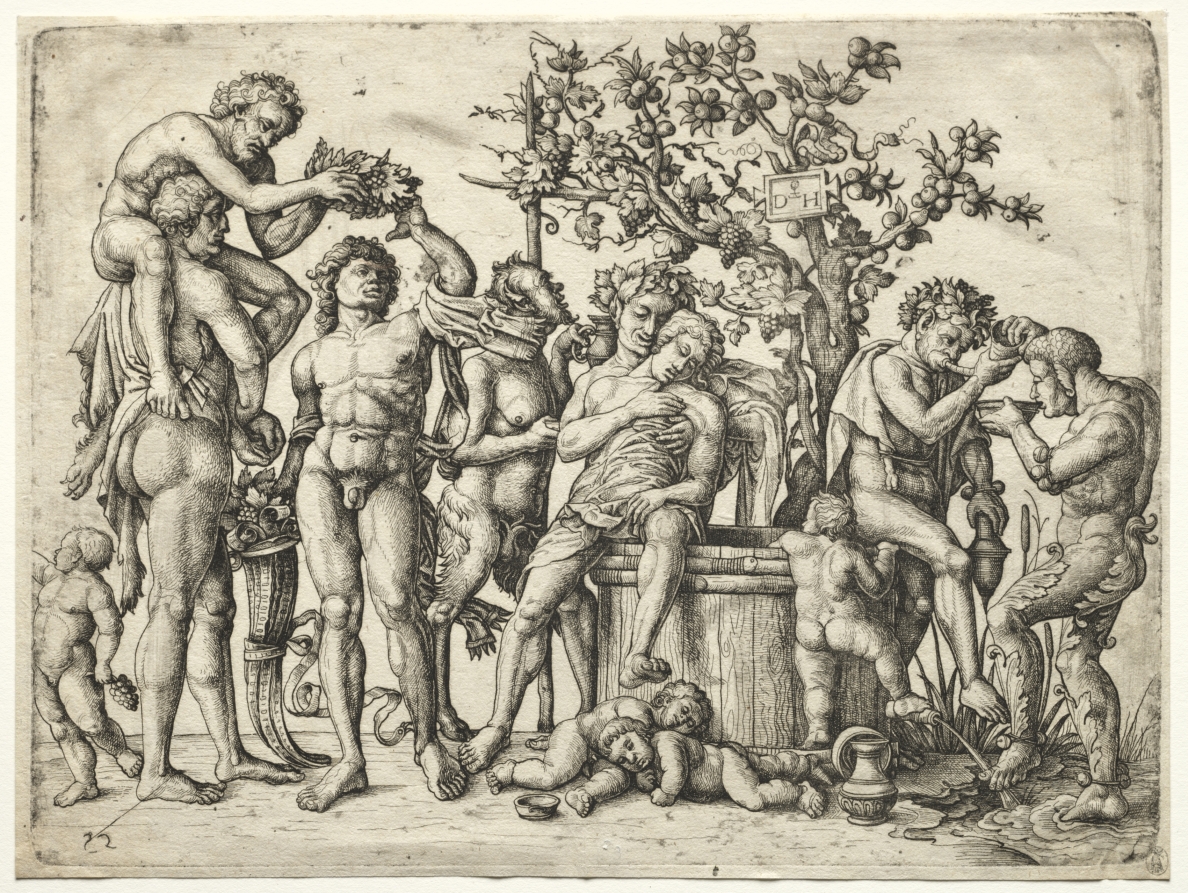
Daniel Hopfer · The Cleveland Museum of Art · Dudley P. Allen Fund · CC0
- Born
- 1470
- Died
- 1536
- Nationality
- Germany
- Occupation
- engraver · armourer · painter · graphic artist · copper engraver · draftsperson · visual artist · etcher · xylographer · artist
VALÉORINE Encyclopedia
VALÉORINE documentary reading
Documentary summary
Daniel Hopfer (c. 1470 – 1536) was a German artist who is widely believed to have been the first to use etching in printmaking, at the end of the 15th century. He also worked in woodcut.
Admitted source layer · organised and presented by VALÉORINE
Note VALÉORINE
Daniel Hopfer (1470–1536) was an armourer, artist and copper engraver, among other activities, of German nationality. The armourer was born in Kaufbeuren and died in Augsburg. Daniel Hopfer worked in Augsburg. Languages used include German.
Composed from admitted, traceable facts · 26 September 2026
VALÉORINE
Reference Check
Propose documentary evidence for Daniel Hopfer. A contribution is never written directly as fact: identity, source, rights and evidence gates still decide.
Sign in to contribute
Documentary evidence
Documentary basis
Authority files
gnd · 1148044795 · wikidata · Q548407 · wikipedia · Daniel Hopfer
In this article
Life
Life
Although his etchings were widely ignored by art historians for years, more recent scholarship is crediting him and his work with "single-handedly establishing the salability of etchings" and introducing the print publisher business model. Unlike most later prints, etched on copper plates, Hopfer's printed etching continued to use the iron plates he was used to working with in steel plate armour, the material he was trained in, and with which he continued to work.
• Illustration — Martin Luther by Hopfer 1523, Martin Luther's House, Wittenberg Hopfer was born in Kaufbeuren. The son of Anna Sendlerin and painter Bartholomäus Hopfer, Daniel moved to Augsburg early in his life, and acquired citizenship there in 1493. In 1497 he married Justina Grimm, sister of the Augsburg publisher, physician and druggist Sigismund Grimm. The couple had three sons: Jörg, Hieronymus and Lambert, the last two of whom carried on their father's profession of etching, Hieronymus in Nuremberg and Lambert in Augsburg. Jörg's sons Georg and Daniel (junior), also became distinguished etchers, patronised by no less than the Emperor Maximilian II, whose successor, Rudolf II, raised Georg to the nobility. • Illustration — Daniel Hopfer: Gib Frid – three old women beating a devil on the ground. Before the Funck number Daniel was trained as an etcher of armour. There are only two proven examples of his own work on armour: a shield from 1536 now in the Royal Armoury museum (La Real Armería) of the Royal Palace of Madrid and a sword in the Germanisches Nationalmuseum of Nuremberg. An Augsburg horse armour in the German Historical Museum, Berlin, dating to between 1512 and 1515, is decorated with motifs from Hopfer's etchings and woodcuts, but this is no evidence that Hopfer himself worked on it. The etching of metals with acid was known in Europe from at least 1400, but the elaborate decoration of armour (in Germany at the least) was an art probably imported from Italy around the end of the 15th century — little earlier than the birth of etching as a printmaking technique. Although the first extant dated etchings are the three by Albrecht Dürer of 1515, and despite the fact that none of his works are dated, stylistic evidence suggests that Daniel Hopfer was using this technology as early as 1500. It is often thought that Hopfer taught Dürer the technique. • Illustration — Hieronymus Hopfer: Three ornate vessels, probably a model for goldsmiths. With the Funck number, lower right: "68" The Hopfers prospered in Augsburg, and by 1505 Daniel owned a house in the city centre. He sat on the committee of the Augsburg guild of smiths, which at this time included painters and etchers, probably because these crafts were uniquely connected in the town, one of Europe's principal manufacturing places of arms and armour. Daniel died in Augsburg in 1536. His achievements had been widely recognized during his life, and in 1590 he was posthumously named as the inventor of the art of etching, with the imperial patent of nobility bestowed upon his grandson Georg.
Works
Works
• Illustration — Daniel Hopfer: Mary with Jesus, an example of the "Hopfer style". Note the Funck number lower left: "133". Daniel Hopfer's early etchings were done in line-work, but he and his sons soon developed more sophisticated techniques, referred to by armour historians as the Hopfer style. Applied to prints, this produced silhouetted designs on a black ground, doubtless by multiple bitings of the plates. The technically demanding procedure seems to have been both delicate and labour-intensive, and no other artists are known to have used this exact method. Their plates were all iron, rather than the copper that the Italians later introduced once appropriate acids had been discovered. Iron plates had to be handled carefully to be kept free of rust, which could develop quickly from even a fingerprint. None of the Hopfer family were trained artists, or natural draughtsmen: their designs show a certain naïveté that never gained an artistic following. But the extraordinary diversity of the Hopfers' works have made them collector's items. From religious prints to designs for goldsmiths, secular subjects such as peasants, military figures (especially Landsknechts), portraits of contemporary worthies, mytholological and folkloric themes, the sheer range of the Hopfers' productions are both remarkable and unique, designed to appeal to a clientele far wider than the metalsmiths who bought their patterns to create their wares. However, the Hopfer family did not hesitate to plagiarize the work of their contemporaries: of Daniel's 230 known prints, 14 are copies of other masters, mainly Mantegna, whilst only a minority of Hieronymus' 82 plates are his original work — no fewer than 21 are copies of Dürer's works, and around 30 others are copies from Jacopo de' Barbari, Raimondi and Altdorfer among others. In the next century, David Funck (1642–1705), a distant relative of the Hopfers and a bookseller of Nuremberg, acquired 230 of the Hopfers' iron plates and reprinted these under the title Operae Hopferianae. He added a scratched number, known as the Funck number, to each one, thus creating a second state of the hitherto un-retouched plates. A further print run of 92 plates was made in 1802 by the publishers C. W. Silberberg of Frankfurt under the title Opera Hopferiana. The quality of the prints is a tribute to the care with which the Hopfer family maintained these rust-prone plates, many of which are now in the Berlin print cabinet.
Gallery
Gallery
• Illustration — alt= Three German Soldiers Armed with Halberds, c. 1510. An original etched iron plate from which prints would be made. National Gallery of Art • Illustration — alt= Five Landsknechte 1530 • Illustration — alt= Decorated steedarmor of Daniel Hopfer
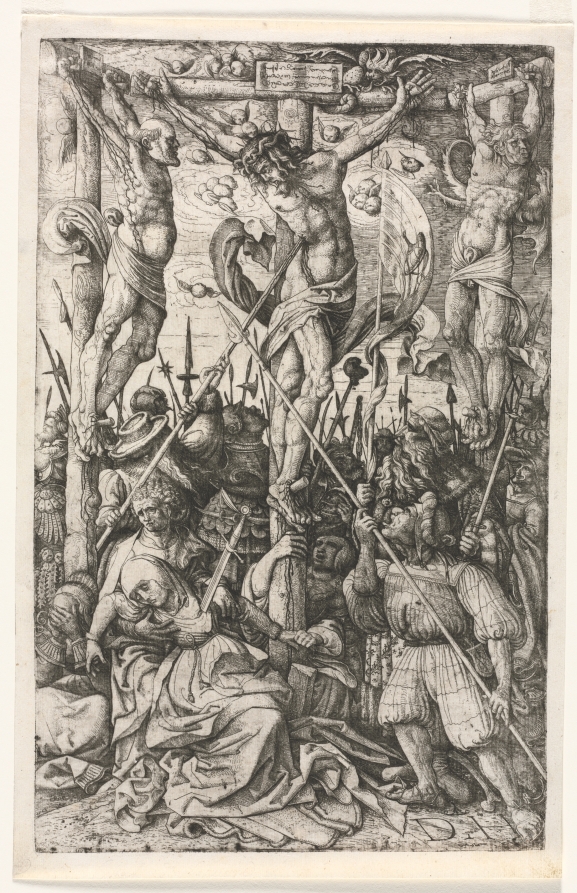
The Calvary, c. 1520, by Daniel Hopfer
Daniel Hopfer · The Cleveland Museum of Art · Edwin R. and Harriet Pelton Perkins Memorial Fund
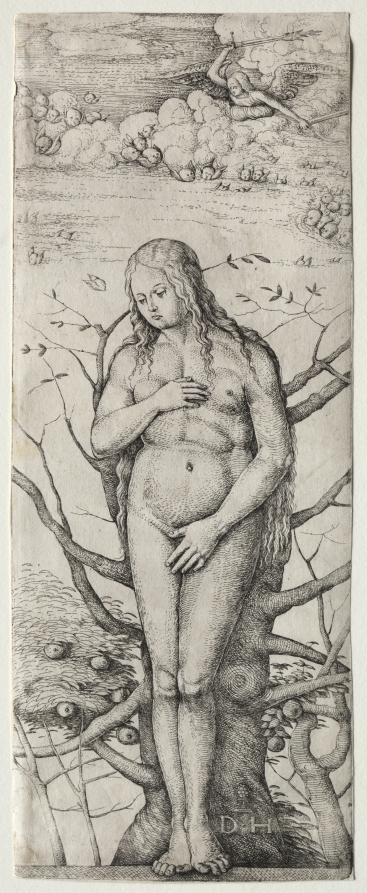
Eve, 1505–36, by Daniel Hopfer
Daniel Hopfer · The Cleveland Museum of Art · Delia E. Holden Fund
Life and career
Dated record
Life and career
The full dated record · 2 entries
1470
Daniel Hopfer born at Kaufbeuren.
1536
Daniel Hopfer died at Augsburg.
Primary material
Documents and archives
scholarly publication
- Hopfer, Daniel, Benezit Dictionary of Artists, 2011
Scholarly · Crossref registry · 2011
Institutional database
- Wikidata, structured authority record Q548407: Daniel Hopfer
Scholarly · Wikimedia Foundation
authority file
- Gemeinsame Normdatei 1148044795, Daniel Hopfer.
General reference · Deutsche Nationalbibliothek
Notes from the source article
Cited by Wikipedia
Notes from the source article
These works are cited by the source article, in its own numbering. They are recorded as its citations, not as sources VALÉORINE has verified.
- 1.Spotlight Essay: Daniel Hopfer Kemper Art Museum. www.kemperartmuseum.wustl.edu.
- 2.Biography of HOPFER, Daniel in the Web Gallery of Art. www.wga.hu.
- 3.Cohen, Brian D. "Freedom and Resistance in the Act of Engraving (or, Why Dürer Gave up on Etching)," Art in Print Vol. 7 No. 3 (September–October 2017), 18.
- 4.Bindewald, Maik. "An Undiscovered State of Albrecht Dürer's Large Cannon , Art in Print Vol. 5 No. 5 (January–February 2016), 6.
Bibliography printed in the source article · 3
- Daniel Hopfer von Kaufbeuren, Meister zu Augsburg 1493-1536. Ed. Eyssen: Dissertation, Ruprecht-Karls-Universität, Heidelberg, 1904
- Hollstein's German Engravings Etchings and Woodcuts 1400-1700. Vol. XV. A.L. Van Gendt B.V., Blaricum, 1986.
- The Renaissance Print 1470-1550. David Landau and Peter Parchall. Yale University Press, 1994.
References
Citations
References
Each reference names the institution holding it, so a reader may go to the document itself.
scholarly publication
Hopfer, Daniel, Benezit Dictionary of Artists, 2011Crossref registry
Institutional witnessInstitutional database
Wikidata, structured authority record Q548407: Daniel HopferWikimedia Foundation
Institutional witnessauthority file
Gemeinsame Normdatei 1148044795, Daniel Hopfer.Deutsche Nationalbibliothek
Secondary witnessreference work
Secondary witness
The Encyclopedia exists whether or not anything is for sale. Corrections are recorded rather than overwritten, and every version of this record is kept. Published 14 August 2026.
Elsewhere in Prints
4,138 published records in this field, each with its sources named.
- Daniel du JanerandEngraver
- Daniël DupréEngraver
- Daniel FournierEngraver
- Daniel Friedrich LoosEngraver
- Daniel Joseph MartinezEngraver
- Daniel MarotEngraver
- Daniel PreisslerEngraver
- Daniel RabelEngraver
Best supported in this field
For owners
Own a work by Daniel Hopfer?
A specialist will read what you send and tell you what the house can establish, what it cannot, and whether the object is suited to sale. There is no charge and no obligation. The object stays with you throughout; nothing is shipped to us unless it is arranged in writing beforehand.