
cradle
Illustration — Rocking cradle A cradle is an infant bed which rocks but is non-mobile. It is distinct from a typical bassinet which is a basket-like container on free-standing legs with wheels.
cradle
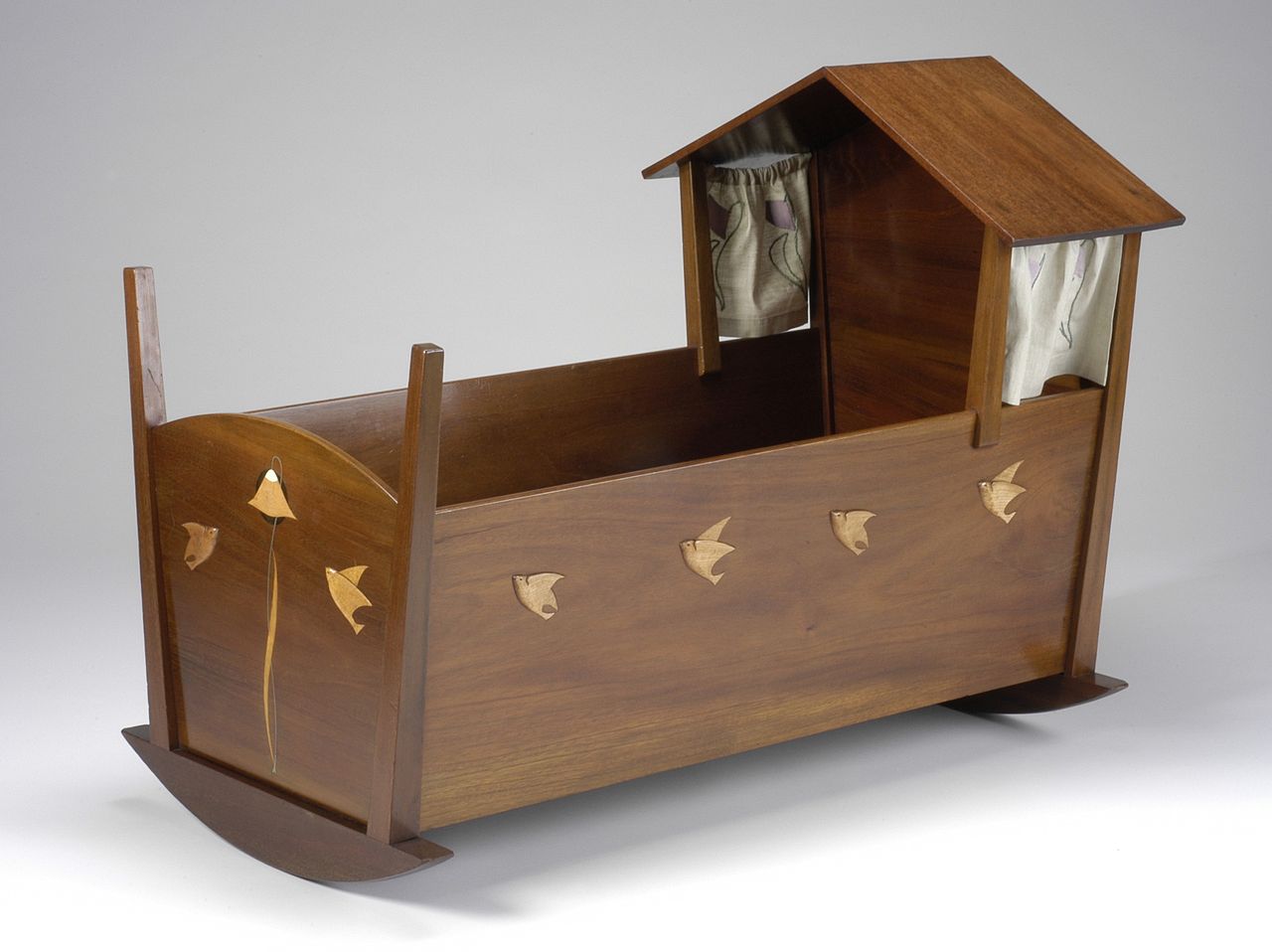
Baillie Scott · Image: http: Gallery: http: archive copy at the Wayback Machine · Public domain
- Field
- infant bed
Reference Check
Propose documentary evidence for cradle. A contribution is never written directly as fact: identity, source, rights and evidence gates still decide.
Sign in to contribute
World of VALÉORINE
Documentary connections
Only confirmed graph relationships appear here. Images are shown only when their identity and reuse rights both pass the documentary gate.

Documentary evidence
Evidence Panel
wikipedia incomplete · checked 25 September 2026
- Identity
- resolved
- Independent source families
- 0
- Admitted assertions
- 0
- Open conflicts
- 0
Authority files
getty · 500054804 · gnd · 1252422296 · wikidata · Q21159303
In this article
History
• Illustration — An Irish oak cradle, from circa 1690, displayed in the National Museum of Ireland Earliest cradles were formed from hollowing out a half log, later replaced by a simple box structure. A carbonized cradle was found in the remains of Herculaneum left from the destruction of the city by the eruption of Mount Vesuvius in 79 CE. The Nahua or Aztec people used cradles, with an Aztec ceramic figure of a child in a cradle dated back to between 1350 and 1521 CE. In most countries, cradles were commonly made of light wood or wicker, with the babies of royal or wealthy families slept in cradles decorated with precious stones, gold and silver from the medieval period on. Cradles continued to be designed to reflect design fashions, including the Renaissance, Baroque, and Art Nouveau. In Ireland, low, hooded cradles were common, and could have evolved from more primitive cradles that were made from a dug out tree trunk and later woven ones.These low, box shaped cradles with a hood were more common in Ireland than suspended rocking cradles which were popular throughout Europe from the 1700s. It was believed that getting a secondhand cradle for a first born baby was lucky, and that it was preferable to give away a cradle rather than buy it. The hooded cradle was also common in early colonist settlers in North America. In Hungary, babies slept in a cradle after their christening, sleeping with their mothers up to this point. Examples of adult cradles also exist from the 18th and 19th centuries, and are presumed to have been used for elderly or infirm patients.
Primary material
Documents and archives
authority file
- Gemeinsame Normdatei 1252422296, Cradle.
Unverified · Deutsche Nationalbibliothek
- Getty Union List of Artist Names 500054804, Master of the Cradle.
Unverified · The Getty Research Institute
reference work
- Wikidata, structured authority record Q21159303: cradle
Reputable secondary · Wikidata
Citations
References
Each reference names the institution holding it, so a reader may go to the document itself.
authority file
Gemeinsame Normdatei 1252422296, Cradle.Deutsche Nationalbibliothek
Partially resolvedauthority file
Getty Union List of Artist Names 500054804, Master of the Cradle.The Getty Research Institute
Partially resolvedreference work
Partially resolved
Knowledge graph
Connections
Each connection was recorded deliberately, with the basis for it kept on the internal record.
Broader subject
1- infant bedTerminology
Established from a fact already recorded on a verified source.
The Encyclopedia exists whether or not anything is for sale. Corrections are recorded rather than overwritten, and every version of this record is kept. Published 14 August 2026.
Elsewhere in Furniture
924 published records in this field, each with its sources named.
- counterTerminology
- countertopTerminology
- court cupboardTerminology
- Cracked Ice screenTerminology
- credence tableTerminology
- credenzaTerminology
- crepe makerTerminology
- Crucifixion RetableTerminology
Best supported in this field
For owners
Own an object connected with cradle?
A specialist will read what you send and tell you what the house can establish, what it cannot, and whether the object is suited to sale. There is no charge and no obligation. The object stays with you throughout; nothing is shipped to us unless it is arranged in writing beforehand.