
Coccinelle
Jacqueline Charlotte Dufresnoy (23 August 1931 – 9 October 2006), better known by her stage name Coccinelle ("ladybird" in French), was a French cabaret entertainer, singer, actress, and transgender activist. She was the first widely publicized celebrity transgender woman to undergo gender reassignment in Europe. An international celebrity and a renowned club singer, styled as a blonde bombshell and sex symbol.
Coccinelle

Anonymous Unknown author · cocktail.pe/lucha-reyes-un-icono-de-la-moda-en-el-peru/ · Public domain
- Name
- Coccinelle
- Birth Name
- Jacqueline-Charles Dufresnoy
- Born
- 23 August 1931
- Birthplace
- Paris, France
- Died
- 9 October 2006
- Place of death
- Marseille, France
- Occupation
- * Entertainer
- Full name
- Jacques Charles Dufresnoy.
- Nationality
- France.
- Languages
- French.
VALÉORINE Encyclopedia
VALÉORINE documentary reading
Documentary summary
Jacqueline Charlotte Dufresnoy (23 August 1931 – 9 October 2006), better known by her stage name Coccinelle ("ladybird" in French), was a French cabaret entertainer, singer, actress, and transgender activist. She was the first widely publicized celebrity transgender woman to undergo gender reassignment in Europe. An international celebrity and a renowned club singer, styled as a blonde bombshell and sex symbol.
Admitted source layer · organised and presented by VALÉORINE
Reference Check
Propose documentary evidence for Coccinelle. A contribution is never written directly as fact: identity, source, rights and evidence gates still decide.
Sign in to contribute
World of VALÉORINE
Documentary connections
Only confirmed graph relationships appear here. Images are shown only when their identity and reuse rights both pass the documentary gate.
Documentary evidence
Documentary basis
Authority files
wikidata · Q2737959 · wikipedia · Coccinelle
In this article
Key facts
Key facts
• Name — Coccinelle • Birth Name — Jacqueline-Charles Dufresnoy • Born — 23 August 1931 • Birthplace — Paris, France • Died — 9 October 2006 • Place of death — Marseille, France • Occupation — * Entertainer • activist • singer • actress
Early life and education
Early life and education
Dufresnoy was born in Paris in 1931 to a working class family at rue Notre Dame de Nazareth No. 66 in the 3rd arrondissement of Paris. Her mother sold flowers in the Pigalle district. At school she played with the girls and was nicknamed "little princess". She was forced to attend an all-boys school from which she often played truant, wanting to become a hairdresser instead. Her homophobic father initially agreed, but only if she agreed to solely cut men's hair. The salon where Dufresnoy ended up working had many sex workers as customers and her father threatened to send her to a reformatory.
Adolescence
Adolescence
Around 1949 Dufresnoy was working as a valet at a hotel and encountered Lucrèce, another transfemme person for the first time, which was a revelatory moment for her. One weekend she decided to go out in women's clothing which gave her a "sensation of intense jubilation", but she was seen by a neighbour who mistook her for her mother. Her mother later found out but agreed not to tell Dufresnoy's father, Charles. She therefore continued to go out as a woman accompanied by a hairdressing client, Monique who she has befriended and whose clothes she borrowed. They frequented bars including Madame Arthur where Dufresnoy introduced herself to Madame Germaine who, alongside with her common-law husband Monsieur Marcel Oudjman, managed the bar as well as Le Carrousel de Paris. Dufresnoy secured an audition at which, purportedly, a ladybird landed on her dress, inspiring her to adopt "Coccinelle" (French for "ladybird") as her stage name. An alternative origin story of the name traces itself back to her having had a favourite black and red polka-dot dress. Additionally, Lucrèce also attended an audition the same day and both were hired to work at the club. As she was still underage, Dufresnoy had to get her father to sign a form allowing her to work there and so with her mother's support, she lied to him saying she had got a job as a bartender. Charles Dufresnoy was physically violent with his family and so Coccinelle went to stay with Lucrèce to avoid him. On returning home one day, she unexpectedly encountered her father. He saw her and cried and she understood that he had accepted her. The two began to go out together in public.
Madame Arthur
Madame Arthur
Coccinelle had practically stopped wearing men's clothes, except to enter Madame Arthur where she worked - something performers were forced to do to avoid breaking cross-dressing bans that affected the Oudjmans' cabaret bars. However, she continued to face police harassment and Madame Arthur was threatened with closure "if Coccinelle continues to outrage morals and public order".
Military conscription
Military conscription
Dufresnoy had been taking feminizing hormones when she was deemed fit for army service so was initially sent to the feminine branch of the army. An army doctor who conducted her physical test declared "something must be done" with her body which encouraged her to later seek gender affirming surgery. She was discharged from service.
Le Carrousel de Paris
Le Carrousel de Paris
After working at Madame Arthur, Coccinelle performed regularly at Le Carrousel de Paris nightclub where she performed covers of popular songs. The club also featured regular acts by other transgender women such as April Ashley and Bambi. Coccinelle's friendship with Bambi was important and the two supported each other. While performing there, Coccinelle became its most famous transgender act and had a featuring segment in the 1959 documentary style film, Europa di notte by director Alessandro Blasetti. The film helped propel her to international fame. The same year, Italian singer Ghigo Agosti dedicated the song Coccinella to her, provoking widespread consternation and controversy.
Film and later career
Film and later career
Coccinelle appeared in the 1962 Argentine thriller film Los Viciosos and was the first French trans woman to become a major star, when Bruno Coquatrix splashed her name in red letters on the front of Paris Olympia for revue, Cherchez la femme which ran for 7 months at La Olympia in Paris between 1963 and 1964. She later appeared in the 1968 Spanish romantic drama Días de viejo color. Her last public performance was in 1990.
Gender affirming surgery and legal gender change
Gender affirming surgery and legal gender change
Coccinelle had a rhinoplasty as part of her feminization and in 1958 first heard about Georges Burou who performed vaginoplasties in Casablanca. She said later, "Dr Burou rectified the mistake nature had made and I became a real woman, on the inside as well as the outside. After the operation, the doctor just said, 'Bonjour, Mademoiselle', and I knew it had been a success." Afterwards, her parents began to call her Jacqueline. Coccinelle very quickly became a media sensation upon her return to France after her surgery in Morocco, with a look and stage act based on the prominent sex symbols of the day. Historian Joanne Meyerowitz wrote "the more sexualized MTF showed up in the sensationalized press in the stories on Coccinelle, who worked at Le Carrousel in Paris". In 1959 with the help of lawyer, Robert Badinter she legally changed her gender. This legal step thus permitted her to marry and on 16 March 1962, she married French journalist Francis Paul Bonnet at a highly publicised civil ceremony at the town hall of the 17th arrondissement of Paris followed by the church of Saint-Jean de Montmartre on the condition that she was re-baptised since being recognised as a woman. This was the first union involving a transgender person to be officially acknowledged by the government of France, thereby establishing transgender people's legal right to marry. Her marriage to Bonnet was dissolved in 1962. She then married Paraguayan dancer Mario Costa in 1963, who died in 1977. She then married fellow transgender activist Thierry Wilson in 1996.
Transgender activism and later life
Transgender activism and later life
Coccinelle worked extensively as an activist on behalf of transgender people, founding the organization "Devenir Femme" (To Become Woman), which was designed to provide emotional and practical support to those seeking gender reassignment surgery. She also helped establish the Center for Aid, Research, and Information for Transsexuality and Gender Identity. Her 1987 autobiography, titled Coccinelle par Coccinelle, was published by Daniel Filipacchi. An Ecuadorian LGBTQI+ association founded in 1997 was named after her.
Death
Death
Coccinelle was hospitalised in July 2006 following a stroke. She later died on 9 October in Marseille and her funeral was held at Eglise Saint-Roch de Paris.
Filmography
Filmography
• Year — Film — Role — Other notes • |1962 — I Don Giovanni della Costa Azzurra — Herself • |1962 — Los viciosos — Herself • |1968 — Días de viejo color — Asistene a la fiesta
Places
Named by the record
Places
Only places the record itself states, plotted where the house gazetteer settles their coordinates. Nothing is inferred from a name or a nationality.
Coccinelle was born at 18th arrondissement of Paris.
Birthplace
Coccinelle died at 5th arrondissement of Marseille.
Deathplace
18th arrondissement of Paris.
Birth place
5th arrondissement of Marseille.
Death place
Discography
Coccinelle No 1 (President Records No 38." cda 1052) • Tu t'fous de moi [You don't care about me] • L'Amour a fleur de coeur [Heart-deep Love] • Prends-moi ou laisse-moi [Take me or leave me] • Tu es là [You are there] Coccinelle No 2 (President Records No 12" cda 1052) • Je cherche un millionnaire [I'm looking for a millionaire] • Avec mon petit faux-cul [With my little false bottom] Coccinelle - 4 chansons de la Revue de l'Olympia "Chercher la femme" (RCA VICTOR 86.012M - 1963) • Cherchez la femme [Look for the woman] • On fait tout à la main [Everything is done by hand] • C'est sûrement vous [It's probably you] • Depuis toujours [Since forever] Star du Carrousel de Paris CD (Marianne Melodie 041625) Compilation of 20 titles.
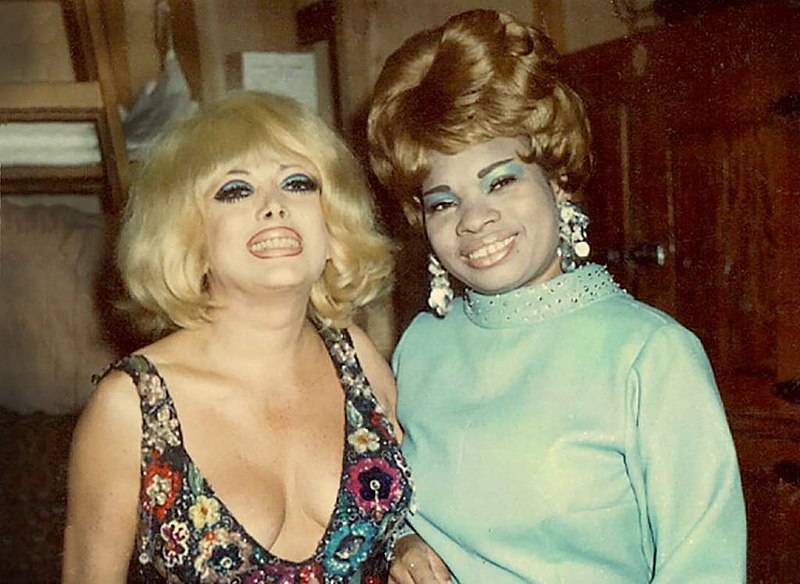
Lucha Reyes al lado de la vedette y cantante de origen francés, Coccinelle
Anonymous Unknown author · cocktail.pe/lucha-reyes-un-icono-de-la-moda-en-el-peru/
Primary material
Documents and archives
reference work
- “Coccinelle”, English Wikipedia, consulted as further reading
Reputable secondary · Wikipedia
authority record
- Wikidata, structured authority record Q2737959: Coccinelle
General reference · Wikidata
Citations
References
Each reference names the institution holding it, so a reader may go to the document itself.
reference work
Secondary witnessauthority record
General reference
The Encyclopedia exists whether or not anything is for sale. Corrections are recorded rather than overwritten, and every version of this record is kept. Published 18 August 2026.
Elsewhere in Film memorabilia
37,604 published records in this field, each with its sources named.
- CM PunkPerson
- CNU (singer)Person
- Co PrinsPerson
- Cobie SmuldersPerson
- Coco JonesPerson
- Coco MartinPerson
- Cody CameronPerson
- Cody HornPerson
Best supported in this field
For owners
Own a work by Coccinelle?
A specialist will read what you send and tell you what the house can establish, what it cannot, and whether the object is suited to sale. There is no charge and no obligation. The object stays with you throughout; nothing is shipped to us unless it is arranged in writing beforehand.