
Claude André Deseine
Claude-André Deseine (12 April 1740 – 30 December 1823) was a French sculptor and the elder brother of Louis-Pierre Deseine.
Also recorded as Claude-André De Seine · Claude-André Deseine · Claude Andre Deseine · Claude-Andre De Seine
Claude André Deseine
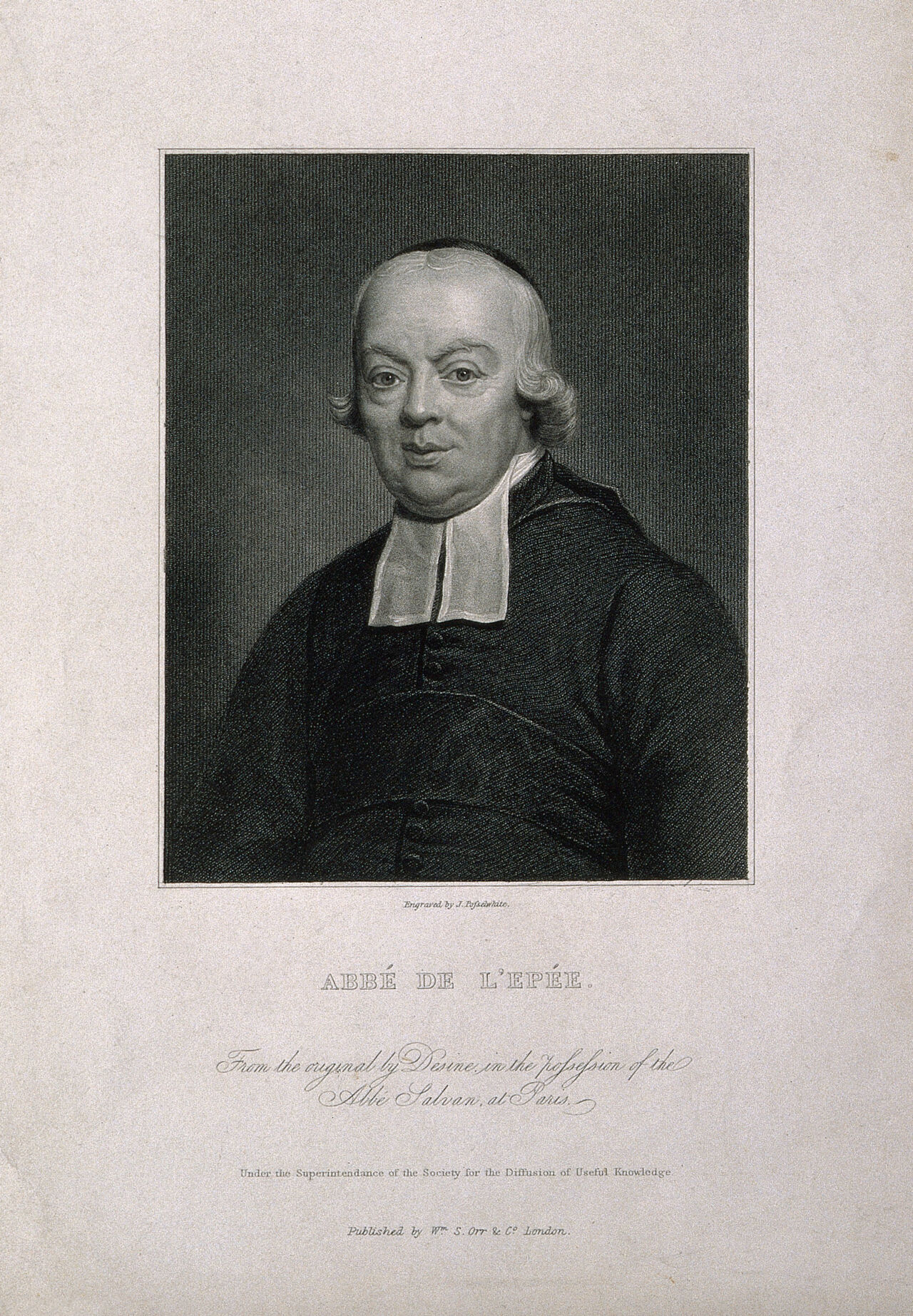
Claude André Deseine · Wellcome Collection, London · Wellcome Collection · Public Domain Mark
- Born
- 1740 · Paris.
- Nationality
- France
- Occupation
- sculptor
- Fields
- art of sculpture
- Education
- Académie royale de peinture et de sculpture
- Languages
- French
Reference Check
Propose documentary evidence for Claude André Deseine. A contribution is never written directly as fact: identity, source, rights and evidence gates still decide.
Sign in to contribute
World of VALÉORINE
Documentary connections
Only confirmed graph relationships appear here. Images are shown only when their identity and reuse rights both pass the documentary gate.

Documentary evidence
Documentary basis
Authority files
wikidata · Q2976888 · wikipedia · Claude André Deseine
VALÉORINE Encyclopedia
The documentary record
Statements marked “Documentary record” are set in the article beside the passage they confirm. Each is read from the authority records of the institutions named here; select “Prove” to see the record it was read from, where in that record, and when.
Institutions cited
Bibliothèque nationale de France · Getty Union List of Artist Names
Complete reading chain (JSON)In this article
Life
Life
Claude André Deseine studied at Académie royale de peinture et de sculpture. The recorded working language is French. The field of work recorded is art of sculpture. Work by Claude André Deseine is recorded in the collections of Nationalmuseum, Musée Cognacq-Jay, Museum of the French Revolution and Musée des Beaux-Arts de Rennes.
Deseine was the son of an artisan and his wife, and was one of many (perhaps more than fifteen) children. His father died in 1777 and a court ruled that Deseine, "being deaf and dumb from birth", could control his own income but had to have his possessions managed by guardians. In 1778, he was a student at the Royal Academy of Painting and Sculpture in Paris. Soon after, he started working professionally: in 1783 he sold busts of Madame Saint-Huberty, Voltaire and Rousseau, from his house in Paris. Deseine had been a former pupil of l'Abbe de l'Eppe, a priest who had opened the world's first free school for the deaf, and developed a form of sign language. In 1786 he presented the National Assembly with a bust of his former teacher. Deseine's work gained prominence during the French Revolution. The art historian Michael Levey has contrasted his Republican sensibilities, and the exaggerated character of his portrait studies, with the work of his royalist younger brother Louis-Pierre. Deseine was often at the Jacobin Club, where he obtained a prize for his 1791 bust of Mirabeau and sold a number of busts of other deputies. He successfully petitioned the Assembly for the right to make a full-size statue of l'Eppe based upon his earlier bust, but never completed this work: as time went on, all priests soon became objects of suspicion to the revolutionary authorities. One of Deseine's more notorious commissions took place on the night of 17 February 1793. The sculptor was recruited by Georges Danton and brought to Sainte-Catherine cemetery, to the grave of Danton's recently deceased wife. The body of Antoinette Gabrielle Danton was excavated so that Deseine could make her death mask. This was then used to create an accurate commemorative bust. After the fall of Robespierre in 1794 many Jacobins, including Deseine, went underground. Little is known of his later years.
Partial List of Works
Partial List of Works
• Portrait bust of Madame Saint-Huberty (1783) • Portrait bust of Voltaire (1783) • Portrait bust of Rousseau (1783) • Portrait bust of a young girl with wreath of flowers (1784) • Portrait bust of l’Abbé de l’Épée (1786) • Portrait bust of Muhammad Osman Khan (1788) • Allegory of Liberty, with M. d'Orléans (1791) • Portrait bust of Mirabeau (1791) • Portrait bust of Robespierre (1792) • Portrait bust of Antoinette Gabrielle Danton (1793) • Portrait bust of Lepeletier de Saint-Fargeau (1793) • Portrait bust of Jean-Paul Marat (1793) • Portrait bust of Mucius Scaevola (1793) • Illustration — Bust of Antoinette Gabrielle Danton • Illustration — Bust of Robespierre (Musée de la Révolution française)
Identity and origins
Identity and origins
The authorities additionally record the headings Claude-André De Seine, Claude-André Deseine, Claude Andre Deseine, Claude-Andre De Seine and Claude-Andre Deseine. His recorded language was French.
Identity
Identity
Claude André Deseine is recorded as sculptor.
Origins and formation
Origins and formation
Claude André Deseine is recorded as having studied at Académie royale de peinture et de sculpture. Born in 1740 at Paris.
Documentary record
Claude André Deseine (1740 – 1823) was a portraitist and sculptor. The birth of Claude André Deseine is recorded in 1740 in Paris, and the death in 1823.
Life and career
Dated record
Life and career
Explore 1740–1823
The full dated record · 4 entries
1740
Claude André Deseine born at Paris.
1791
Bust of Robespierre by Claude-André Deseine, MRF 1986-243 (Museum of the French Revolution).
1793
Buste d'Antoinette Gabrielle Danton by Claude-André Deseine (Museum of the French Revolution).
1823
Claude André Deseine died at Gentilly.
Places
Named by the record
Places
Only places the record itself states, plotted where the house gazetteer settles their coordinates. Nothing is inferred from a name or a nationality.
Paris.
Birth place
Gentilly.
Death place
Literature
Scholarly footprint
A count of publications is evidence of attention, not of standing, and is given here only as a measure.
Text attribution
Licensing
Text attribution
Part of the biographical narrative on this page reuses licensed material. Its origin, revision and licence are recorded here.
The biographical narrative on this page is based on the Wikipedia article Claude André Deseine, revision 1365552590 (EN edition), by its contributors. VALÉORINE has edited that text and built its own documentary record around it. The reused material is available under CC BY-SA 4.0, and this page's reuse of it is offered under the same licence. Everything else on this page — the chronology, the holdings, the evidence, the plates and the connections — is VALÉORINE's own record. Sources and licences.
Notes from the source article
Cited by Wikipedia
Notes from the source article
These works are cited by the source article, in its own numbering. They are recorded as its citations, not as sources VALÉORINE has verified.
- 1.Harry G. Lang, Bonnie Meath-Lang. Deaf Persons in the Arts and Sciences: A Biographical Dictionary. Greenwood Press. 1995. 0313291705.
- 2.MIRZOEFF, NICHOLAS. SILENT POETRY : deafness, sign, and visual culture in modern france. PRINCETON UNIV PRESS. 2019. 978-0691655567.
- 3.Rosenfeld, Sophia A. A revolution in language : the problem of signs in late eighteenth-century France. Stanford University Press. 2001. 0804733147.
References
Citations
References
Each reference names the institution holding it, so a reader may go to the document itself.
reference work
Wikidata, structured authority record Q2976888: Claude André DeseineWikimedia Foundation
Secondary witnessreference work
Secondary witness
People, houses and institutions
Knowledge graph
People, houses and institutions
Teachers, collaborators, publishers and institutions recorded against this person, each on a stated basis.
The Encyclopedia exists whether or not anything is for sale. Corrections are recorded rather than overwritten, and every version of this record is kept. Published 16 August 2026.
Elsewhere in Sculpture
6,174 published records in this field, each with its sources named.
- Clare Pfeifer GarrettArtist
- Clarence BlumArtist
- Clarence PagetArtist
- Clark MillsArtist
- Claude BergeArtist
- Claude BertinArtist
- Claude BettingerArtist
- Claude CahunArtist
Best supported in this field
For owners
Own a work by Claude André Deseine?
A specialist will read what you send and tell you what the house can establish, what it cannot, and whether the object is suited to sale. There is no charge and no obligation. The object stays with you throughout; nothing is shipped to us unless it is arranged in writing beforehand.