
Civitavecchia
Civitavecchia (Ancient Town; Centumcellae, and later, Civitas Vetus) is a city, major sea port and comune (municipality) on the Tyrrhenian Sea, in the Metropolitan City of Rome Capital in the region of Lazio in Italy, 60 km west-northwest of Rome. It has 51,359 inhabitants. Harbour is formed by two piers and a breakwater on which stands a lighthouse.
Civitavecchia
- Name
- Civitavecchia
Reference Check
Propose documentary evidence for Civitavecchia. A contribution is never written directly as fact: identity, source, rights and evidence gates still decide.
Sign in to contribute
World of VALÉORINE
Documentary connections
Only confirmed graph relationships appear here. Images are shown only when their identity and reuse rights both pass the documentary gate.
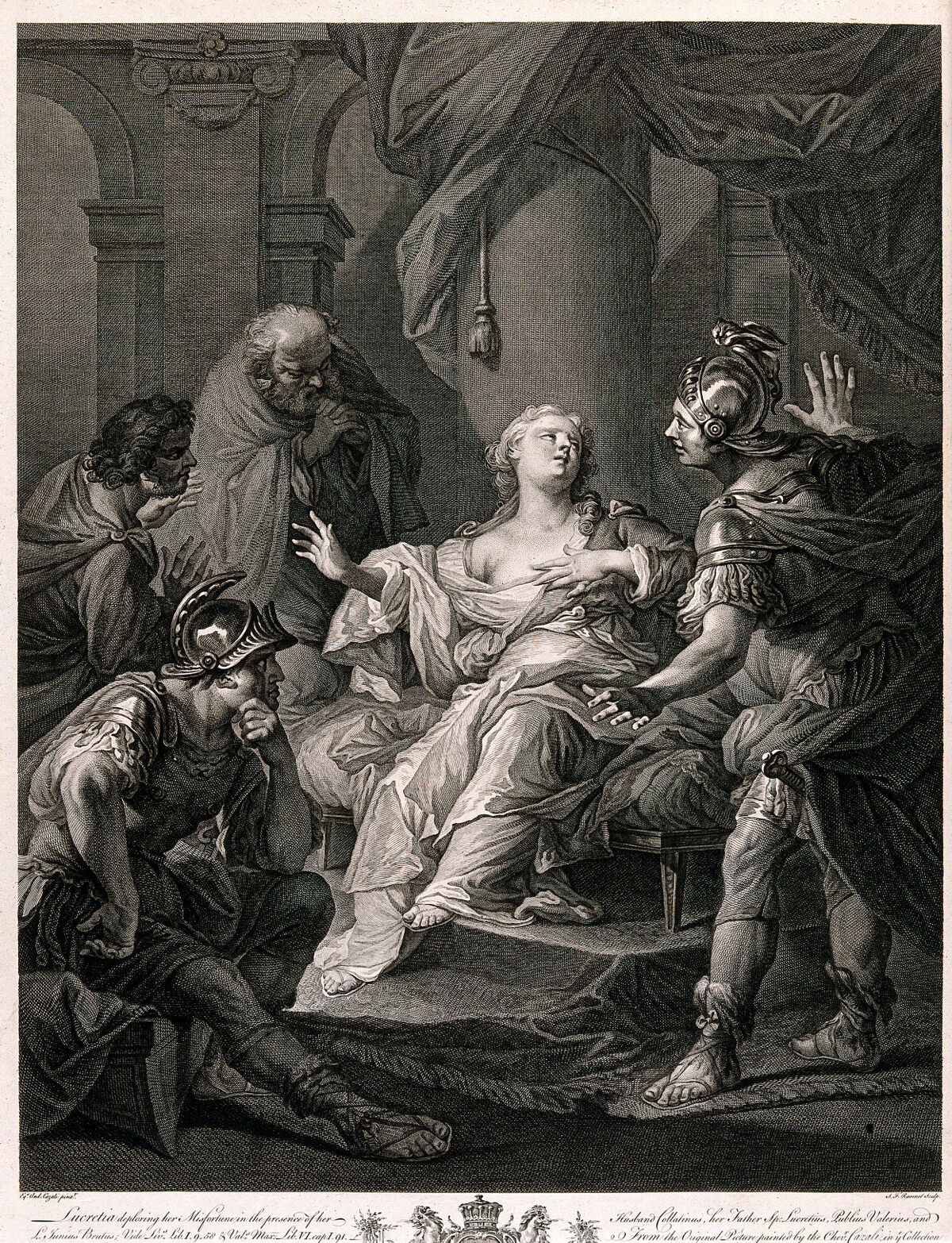
Born In · incoming
Andrea Casali
Artist
Wellcome Collection

Died In · incoming
Augustin Theiner
Author
Available in the BEIC digital library and uploaded in partnership with BEIC Foundation .
Born In · incoming
Clino Trini Castelli
Designer

Died In · incoming
Giuliano Gemma
Artist
Transferred from it.wikipedia (Original text : Fotogramma )

Born In · incoming
Gualtiero Busato
Artist
Own work

Born In · incoming
Pino Quartullo
Person
YouTube : Pino Quartullo interprete e regista di “ANCHE GLI ASPARAGI HANNO UN’ANIMA di Achille Campanile – View/save archived versions on archive.org

Born In · incoming
Vincenzo Pucitta
Person
This file comes from Gallica Digital Library and is available under the digital ID btv1b8423738d
In this article
Key facts
Key facts
• Name — Civitavecchia • Region — Lazio • Metropolitan City — Rome • Frazioni — Aurelia, La Scaglia • Mayor Party — PD • Mayor — Marco Piendibene • Area Total Km2 — 73.74 • Population Total — 51359 • Population As Of — 2026 • Saint — Saint Fermina • Website — www.comune.civitavecchia.rm.it
History
History
• Illustration — Civitavecchia in 1699 showing buildings of Roman harbour
Etruscan era
Etruscan era
The whole territory of Civitavecchia is dotted with the remains of Etruscan tombs and it is likely that in the centre of the current city a small Etruscan settlement thrived. The Etruscan necropolis of Mattonara, not far from the Molinari factory, is almost certainly from the 7th–6th century BC and was most likely connected with the nearby necropolis of Scaglia. An ancient port formed by small parallel basins capable of accommodating single vessels was still visible at the end of the 19th century near Forte Michelangelo. An Etruscan settlement on the hill of Ficoncella can still be seen. The first baths of the settlement were built there before 70 BC, and known by the Romans as Aquae Tauri.
Roman era
Roman era
The nearby monumental baths at Terme Taurine were built originally in the Roman Republican era, possibly by Titus Statilius Taurus, prefect of Rome. The harbour was greatly enlarged by the Emperor Trajan at the beginning of the 2nd century and became known as Centum Cellae, probably due to the many vaulted "cells" forming the harbour wall, some of which can still be seen. The first occurrence of the name Centum Cellae is from a letter by Pliny the Younger in AD 107. It has been suggested that the name could instead refer to the centum ("hundred") halls of the extensive villa of Trajan which was nearby. The harbour was probably built by Trajan's favourite architect, Apollodorus of Damascus (who also built the harbour of Ancona). The town was also known as Centum Cellae and was developed from the same time. Trajan's sumptuous villa pulcherrima (most beautiful, according to Pliny) must have been built at the same time but traces have yet to be found, although the Terme Taurine baths and the large cistern nearby are likely to have been included. Pliny was summoned by Trajan to his villa there for an exceptional meeting there of the consilium principis (advisory council) which normally took place in Rome, and which indicates the status of the villa as an imperial residence. The villa was also used later by the young Marcus Aurelius, probably in the years 140-145 who built a vivarium there and also in 173 by Commodus. Inscriptions from between the 2nd and 3rd centuries from a cemetery near the Roman harbour prove the presence of classiari, sailors from the navy, and also of a noble class. They also tell of the number and type of ships which were detachments of the fleets of Ravenna and of Misenum. In 251 Pope Cornelius was imprisoned in Centumcellae during the persecutions of Decius and his successor Trebonianus Gallus and died there in 253. In the 4th and 5th centuries the city and port became even more prosperous and busy, as Rutilius Namatianus described it in 414 as it became an important port of Rome due to the silting of Ostia. In the 530s, Centumcellae was a Byzantine stronghold and until 553 the city suffered in the wars between the Goths and the Byzantines.
Later history
Later history
It became part of the Papal States in 728 and Pope Gregory III refortified Centumcellae. As the port was raided by the Saracens in 813–814, 828, 846 and finally in 876, a new settlement in a more secure place was therefore built by order of Pope Leo IV as soon as 854. In the meantime, however, the inhabitants returned to the old town by the shore in 889 and rebuilt it, giving it the name Civitas Vetus. The Popes gave the settlement as a fief to several local lords, including the Count Ranieri of Civitacastellana and the Abbey of Farfa, and the Di Vico, who held Centumcellae in 1431. In that year, pope Eugene IV sent an army under cardinal Giovanni Vitelleschi and several condottieri (Niccolò Fortebraccio, Ranuccio Farnese and Menicuccio dell'Aquila among them) to recapture the place, which, after the payment of 4,000 florins, became thenceforth a full Papal possession, led by a vicar and a treasurer. The place became a free port under Pope Innocent XII in 1696 and by the modern era was the main port of Rome. The French Empire occupied it in 1806. The French novelist Stendhal served as consul for a time in Civitavecchia. On 16 April 1859, the Rome and Civitavecchia railway was opened for service. The Papal troops opened the gates of the fortress to the Italian general Nino Bixio in 1870. This permanently removed the port from Papal control. During World War II, the Allies launched several bombing raids against Civitavecchia, which damaged the city and inflicted several civilian casualties. On June 27, 1944, two American soldiers from the 379th Port Battalion, Fred A. McMurray and Louis Till, allegedly raped two Italian women in Civitavecchia and murdered a third. McMurray and Till were subsequently both executed by the United States Army by hanging five months later.
Climate
Climate
Civitavecchia experiences a hot-summer Mediterranean climate (Köppen climate classification Csa).
Demographics
Demographics
As of 2026, the population is 51,359, of which 48.2% are males, and 51.8% are females. Minors make up 14.2% of the population, and seniors make up 25.1%.
Immigration
Immigration
As of 2025, immigrants make up 7.5% of the population. The 5 largest foreign countries of birth are Romania, Bangladesh, China, Albania, and Germany.
Main sights
Main sights
• Illustration — Roman Torre di Lazzaretto • Illustration — Roman baths of Aquae Tauri
Roman city
Roman city
The modern inner harbour (darsena) rests on ancient foundations many of which can be seen and whose shape is still very much the same as it was in Trajan's time. It had a curved breakwater on the southern side and a straight one to the north with arches to reduce the waves which still exist. The Torre di Lazzaretto is the only remaining Tower of four large Roman round towers that served as beacons around the ancient harbour. Remains of warehouses can be seen between the large basin and the inner harbour (darsena), still used during the Middle Ages. A section of the Via Aurelia running along the harbour, 6 m wide and at a depth of 3 m, was excavated. Some of the Roman city wall is visible in the basement of the Fraternity of the Banner in the Piazza Leandra. Remains of an aqueduct and a large cistern, possibly part of Trajan's villa, are preserved. North of the city at Ficoncella are the Terme Taurine baths frequented by Romans and still popular with the Civitavecchiesi. The modern name stems from the common fig plants among the various pools. Also at Ficoncella nearby are the baths of Aquae Tauri from the earlier Etruscan and early Roman settlement. A larger building of 160x100 m enclosed the baths and is being excavated.
Other sights
Other sights
The massive Forte Michelangelo was first commissioned from Donato Bramante by Pope Julius II, to defend the port of Rome. The upper part of the "maschio" tower, however, was designed by Michelangelo, whose name is generally applied to the fortress. Pius IV added a convict prison, and the arsenal, designed by Bernini, was built by Alexander VII. Major cruise lines start and end their cruises at this location, and others stop for shore excursion days to visit Rome and the Vatican, ninety minutes away.
Economy
Economy
Civitavecchia is today a major cruise and ferry port, the main starting point for sea connection from central Italy to Sardinia, Sicily, Tunis and Barcelona. Fishing has a secondary importance. The city is also the seat of two thermal power stations. The conversion of one of them to coal has raised the population's protests, as it is feared it could create heavy pollution.
Transport
Transport
• Illustration — View of the port • Illustration — View of station platforms The Port of Civitavecchia, also known as "Port of Rome", is an important hub for the maritime transport in Italy, for goods and passengers. Part of the "Motorways of the Sea", it is linked to several Mediterranean ports and represents one of the main links between Italian mainland to Sardinia. Civitavecchia railway station, opened in 1859, is the western terminus of the Rome–Civitavecchia railway, which forms part of the Pisa–Livorno–Rome railway. A short line linking the town center to the harbour survived until the early 2000s. It counted two stations: Civitavecchia Marittima, serving the port, and Civitavecchia Viale della Vittoria. Civitavecchia is served by the A12, an unconnected motorway linking Rome to Genoa and by the State highway SS1 Via Aurelia, which also links the two stretches. The town is also interested by a project regarding a new motorway, the Civitavecchia-Venice or New Romea, nowadays completed as a dual carriageway between Viterbo and Ravenna (via Terni, Perugia and Cesena) and commonly known in Italy as the Orte-Ravenna.
Education
Education
The commune has multiple preschools, primary schools, junior high schools, and high schools. Polo Universitario di Civitavecchia is located in the city.
Twin towns – sister cities
Twin towns – sister cities
Civitavecchia is twinned with: • Amelia, Italy • Bethlehem, Palestinian Authority, since 2000 • Ishinomaki, Japan • Nantong, China
Notable people
Notable people
• Manuele Blasi (b. 1980), football player • Silvio Branco (b. 1966), professional boxer • Andrea Casali (1705–1784), Rococo painter • Alessio De Sio (1968), journalist, city mayor from 2001 to 2005, director of communication of "Hitachi" Rail Italy ex "AnsaldoBreda" • Raffaele Giammaria (b. 1977), racing driver • Marco Mocci (b. 1982), racing driver • Pasquale Lattanzi (b. 1950), former football player • Oscar Lini (1928-2016), football player • Ermanno Palmieri (1921-1982), football player • Giancarlo Peris (b. 1941), former track athlete • Roberto Petito (b. 1971), road bicycle racer • Giulio Saraudi (1938–2005), boxer • Eugenio Scalfari (b. 1924), journalist, founder of la Repubblica • Emiliano Sciarra (b. 1971), game designer • Roldano Simeoni (b. 1948), former water polo player • Vittorio Tamagnini (1910–1981), boxer
Text attribution
Licensing
Text attribution
Part of the biographical narrative on this page reuses licensed material. Its origin, revision and licence are recorded here.
The biographical narrative on this page is based on the Wikipedia article Civitavecchia, revision 1375422674 (EN edition), by its contributors. VALÉORINE has edited that text and built its own documentary record around it. The reused material is available under CC BY-SA 4.0, and this page's reuse of it is offered under the same licence. Everything else on this page — the chronology, the holdings, the evidence, the plates and the connections — is VALÉORINE's own record. Sources and licences.
Notes from the source article
Cited by Wikipedia
Notes from the source article
These works are cited by the source article, in its own numbering. They are recorded as its citations, not as sources VALÉORINE has verified.
- 1.ISTAT. Superficie di Comuni Province e Regioni italiane al 9 ottobre 2011.
- 2.ISTAT. Resident population.
- 3.Pliny Epist. 6.31
- 4.Civita Vecchia. 416–417.
- 5.Anna Maria Reggiani, la villa pulcherrima di traiano a CENTUMCELLAE, doi: 10.1387/veleia.19438 Veleia, 35, 129-149, 2018
- 6.Fronto, Epist. ad M. Caesarem 3.21.1
- 7.Historia Augusta, life of Commodus, 1.9
- 8.Hidden Treasures in the Darsena Romana in the Port of Civitavecchia. Port Mobility Civitavecchia. February 3, 2016.
- 9.Rutilius Namatianus, A Voyage Home to Gaul 217‑276
- 10.Procopius, De Bello Gothico VI, VII
- 11.Procopius, De Bello Gothico VIII.33‑35
- 12.Procopius, De Bello Gothico III.36‑40
- 13.Saint Leo IV. Encyclopedia Britannica.
- 14.History of Civitavecchia | Port of Rome – Civitavecchia.
- 15.Emmett Till, His Father, and the Scars on America's Soul. Esquire. October 19, 2016.
- 16.National Oceanic and Atmospheric Administration. Civitavecchia Climate Normals 1991–2020. World Meteorological Organization Climatological Standard Normals (1991–2020).
- 17.Temperature estreme in Toscana. Civitavecchia Santa Marinella.
- 18.ISTAT. Popolazione residente dei comuni. Censimenti dal 1861 al 1991.
- 19.ISTAT. Resident population - Time series.
- 20.ISTAT. Resident population by sex, municipality and citizenship.
- 21.Topographical dictionary - Centumcellae - Civitavecchia - Cistern and aqueduct. www.ostia-antica.org.
- 22.F. Stasolla et al., Nuove ricerche nel territorio di Civitavecchia. Un progetto per Aquae Tauri, in Scienze dell'Antichità 24.1 (2018), pp. 149-174.
- 23.Aquae Tauri, the Achelous project | Roman ports. www.romanports.org.
- 24.Il porto di Civitavecchia - Port-of-rome.org. www.port-of-rome.org.
- 25.Infos at R.A.M. website (search the list of ports).
- 26.Civitavecchia Marittima. www.ilmondodeitreni.it.
- 27.Article at ANAS website
- 28."Scuole dell'Infanzia ." Commune of Civitavecchia. Retrieved on December 21, 2014.
- 29."Scuole elementari ." Commune of Civitavecchia. Retrieved on December 21, 2014.
- 30."Scuola media inferiore ." Commune of Civitavecchia. Retrieved on December 21, 2014.
- 31."Scuole medie superiori ." Commune of Civitavecchia. Retrieved on December 21, 2014.
- 32.The Britain - Palestine Twinning Network. Twinning with Palestine.
- 33.The City of Bethlehem has signed a twinning agreements with the following cities Bethlehem Municipality.
- 34.www.bethlehem-city.org. ::Bethlehem Municipality::.
- 35.Emiliano Sciarra | Board Game Designer | BoardGameGeek.
Makers, houses and production
Knowledge graph
Makers, houses and production
The people, houses and objects recorded in connection with this place.
Born at
1- Gualtiero BusatoArtist
Established from a fact already recorded on a verified source.
The Encyclopedia exists whether or not anything is for sale. Corrections are recorded rather than overwritten, and every version of this record is kept. Published 26 September 2026.
Elsewhere in General
22,760 published records in this field, each with its sources named.
- CivitaPlace
- Civita CastellanaPlace
- CivitacampomaranoPlace
- Civitanova MarchePlace
- Cixi CityPlace
- CizrePlace
- ClackmannanPlace
- Claflin UniversityOrganisation
Best supported in this field
For owners
Own an object connected with Civitavecchia?
A specialist will read what you send and tell you what the house can establish, what it cannot, and whether the object is suited to sale. There is no charge and no obligation. The object stays with you throughout; nothing is shipped to us unless it is arranged in writing beforehand.