
Charles Wheeler
For the Australian painter see: Charles Wheeler (painter)
Also recorded as Charles Thomas,Sir Wheeler · Charles Thomas Wheeler Sir · Charles Wheeler (Sir) · Charles Thomas Wheeler
Charles Wheeler
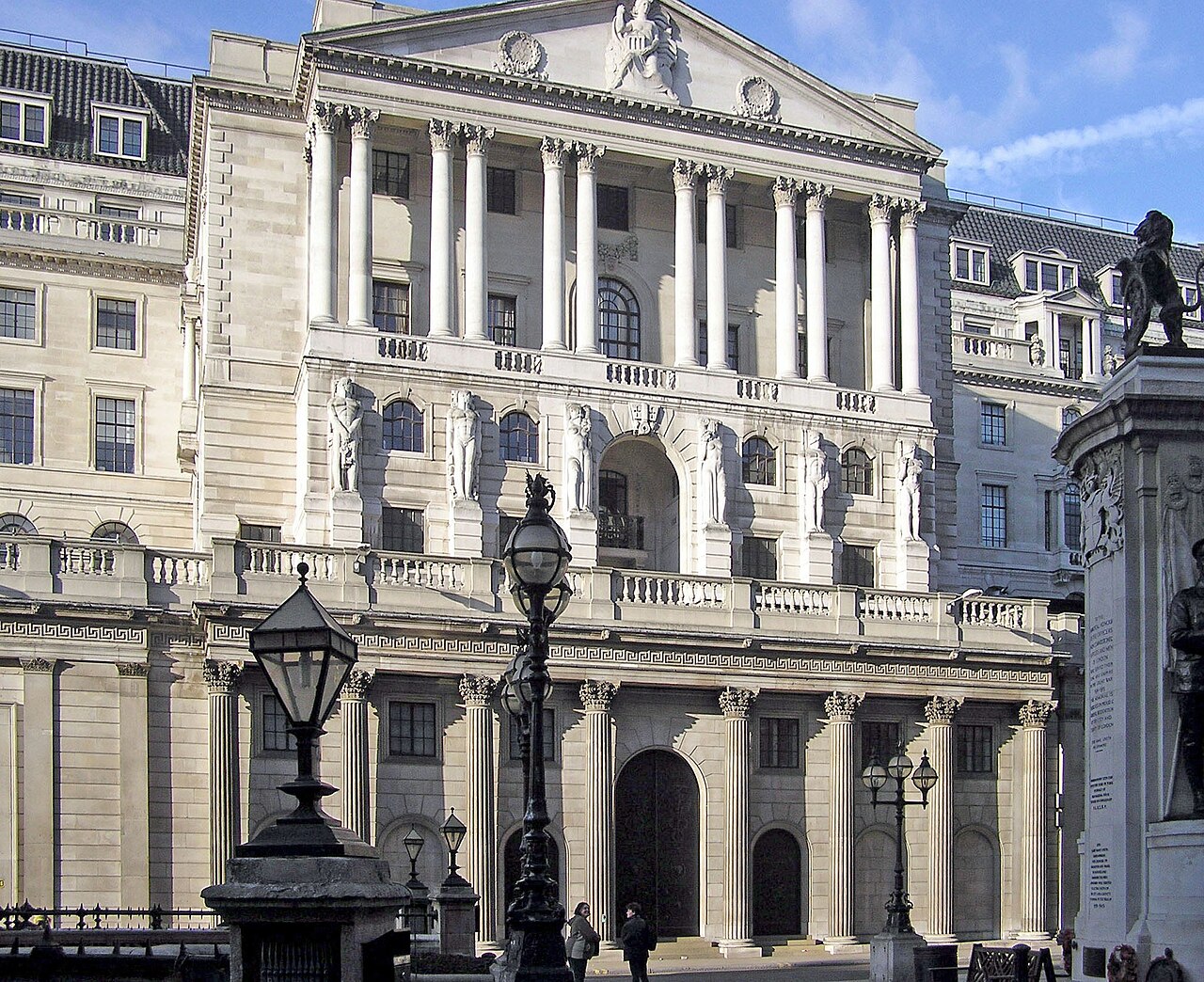
Adrian Pingstone · Taken by Adrian Pingstone in November 2004 and released to the public domain. · Public domain
- Name
- Sir Charles Wheeler
- Birth Name
- Charles Thomas Wheeler
- Born
- 14 March 1892
- Birthplace
- Codsall, Staffordshire, England
- Died
- 22 August 1974
- Place of death
- Five Ashes, Mayfield, Sussex, England
- Field
- sculpture, architectural sculpture
- Training
- * Wolverhampton College of Art
- Awards
- * Knight Commander of the Royal Victorian Order
- Nationality
- United Kingdom · United Kingdom of Great Britain and Ireland
- Occupation
- painter · sculptor · medalist
- Fields
- art of sculpture
Reference Check
Propose documentary evidence for Charles Wheeler. A contribution is never written directly as fact: identity, source, rights and evidence gates still decide.
Sign in to contribute
World of VALÉORINE
Documentary connections
Only confirmed graph relationships appear here. Images are shown only when their identity and reuse rights both pass the documentary gate.
Documentary evidence
Documentary basis
Authority files
wikidata · Q5083486
VALÉORINE Encyclopedia
The documentary record
Statements marked “Documentary record” are set in the article beside the passage they confirm. Each is read from the authority records of the institutions named here; select “Prove” to see the record it was read from, where in that record, and when.
Institutions cited
Deutsche Nationalbibliothek · Getty Union List of Artist Names
Complete reading chain (JSON)In this article
Biography
Biography
Charles Wheeler studied at University of Wolverhampton. The recorded working language is English. The field of work recorded is art of sculpture. Places of work recorded in the authority are London. Positions recorded include President of the Royal Academy of Arts. Work by Charles Wheeler is recorded in the collections of Tate, Art Gallery of South Australia, Wolverhampton Art Gallery and Towner Eastbourne. Distinctions recorded are Knight Commander of the Royal Victorian Order.
Key facts
Key facts
• Name — Sir Charles Wheeler • Birth Name — Charles Thomas Wheeler • Born — 14 March 1892 • Birthplace — Codsall, Staffordshire, England • Died — 22 August 1974 • Place of death — Five Ashes, Mayfield, Sussex, England • Field — sculpture, architectural sculpture • Training — * Wolverhampton College of Art • Royal College of Art • Awards — * Knight Commander of the Royal Victorian Order • Commander of the Order of the British Empire Sir Charles Thomas Wheeler KCVO (14 March 1892 – 22 August 1974) was a British sculptor who worked in bronze and stone who became the first sculptor to hold the presidency of the Royal Academy, from 1956 until 1966.
Biography
Biography
• Illustration — Admiral Philip Louis Vian by Charles Wheeler, 1942 Wheeler was the son of a journalist and was born in Codsall, Staffordshire, and raised in nearby Wolverhampton. He studied at the Wolverhampton College of Art, now Wolverhampton University, under Robert Emerson, between 1908 and 1912. In 1912 he won a scholarship to the Royal College of Art where he studied under Édouard Lantéri until 1917. Throughout the remainder of World War I, Wheeler was classified as unfit for active service and instead modelled artificial limbs for war amputees. Wheeler came to specialize in portraits and architectural sculpture. From 1914 until 1970 he exhibited regularly at the Royal Academy and became a Fellow of the academy in 1940 and became its president in 1956. His tenure as RA president was controversial for the decision by the academy to sell the most valuable painting in its collection, the Leonardo da Vinci cartoon of The Virgin and Child with St Anne and St John the Baptist. The possibility that the painting might leave Britain caused a public outcry and eventually it was sold to the National Gallery. From 1942 to 1949, he served as a trustee of the Tate Gallery and in 1946 was a member of the Royal Fine Art Commission. In 1968 he wrote his autobiography, High Relief. During the Second World War Wheeler was the only sculptor to be given full-time contracts by the War Artists' Advisory Committee. In both 1941 and 1942, Wheeler was commissioned to produce portrait busts of Admiralty figures. Due to material shortages and other issues, Wheeler produced only three bronze figures during the commission period.
Personal life
Personal life
In 1918, Wheeler met Muriel Bourne, youngest daughter of A. W. Bourne, and a sculptor and painter herself at the time. They married and had two children, their son Robin and their daughter Carol. In 1968, Wheeler moved to a Sussex farmhouse to evade the noise of constructions near their previous dwelling. He died on 22 August 1974, at the age of 82 and was buried in Codsall.
Works
Works
Notable works include by Wheeler include, • The 20-foot bronze doors and a major programme of sculptures, including the "Lothbury Ladies" and the gilded finial figure of Ariel for the Bank of England, with architect Sir Herbert Baker, 1922–45 • Fountain and memorial plates for Blackmoor War Memorial Cloister by Sir Herbert Baker. • Sculptures for Rhodes House, Oxford, with Baker, 1927 • Sculptures for India House, Aldwych, with Baker, 1928–30 • Sculptures for South Africa House with Baker, 1934 • The western fountain figures in Trafalgar Square, 1948 • The allegorical figures of the Seven Seas at the Tower Hill Memorial • The statue of Lady Wulfrun outside St. Peter's Collegiate Church, Wolverhampton • Assorted architectural sculptures and keystones for the Bank of England extension at One New Change • The monumental Earth and Water figures for the Ministry of Defence in Whitehall • The gilded bronze eagle on top of the Malta Memorial in Floriana, 1954
Life and work
Life and work
Charles Wheeler was born on 14 March 1892 in Codsall. Wheeler held the nationality of United Kingdom and United Kingdom of Great Britain and Ireland. Wheeler was educated at University of Wolverhampton. Wheeler worked as painter, sculptor and medalist. Wheeler was active from 1912 to 1974. Wheeler worked in London. Wheeler worked in English. Wheeler died on 22 August 1974 in Mayfield and Five Ashes. Wheeler is buried at St Paul's Cathedral.
Documentary record
Charles Wheeler, a painter, sculptor, medallist and draughtsman, was born in 1892 and died in 1974. Both events are recorded by the Deutsche Nationalbibliothek and the Getty Union List of Artist Names.
Life and career
Dated record
Life and career
Explore 1892–1974
The full dated record · 4 entries
1892
Charles Wheeler was born in 1892 at Codsall.
1956
Recorded as position held: President of the Royal Academy of Arts.
1974
Dies at Mayfield and Five Ashes.
1974
Charles Wheeler died in 1974 at Mayfield and Five Ashes.
Places
Named by the record
Places
Only places the record itself states, plotted where the house gazetteer settles their coordinates. Nothing is inferred from a name or a nationality.
Codsall.
Birth place
Mayfield and Five Ashes.
Death place
Catalogued output
Works documented in more than one form
6 titles are catalogued under more than one form, which is to say the registers hold them both as a work and as a distinct object, score, recording or edition. Where a title is documented in several forms the evidence behind it is correspondingly wider, and the article treats those forms as separate records of the same work rather than as separate works. Neuve-Chapelle Indian Memorial — catalogued as cenotaph and Commonwealth War Graves Commission maintained memorial. Winchester College War Cloister — catalogued as war memorial and cloister. Blackmoor War Memorial — catalogued as war memorial and cloister. Kipling Memorial, Burwash — catalogued as war memorial and commemorative plaque.
Plymouth Naval Memorial
1924 — catalogued as cenotaph and war memorial
St Mary's Hospital World War II Memorial Gates
1950 — catalogued as gate and war memorial
Catalogued output
Writings and published texts
These are catalogued publications carrying the name — editions and printings, distinct from the works they contain and from writing about the subject. The 1960s are the densest part of the run, with 3 titles, and that concentration is a fact about what the registers have catalogued rather than a judgement on the work itself.
12 editions carry dates between 1881 and 2024
The run opens with By-laws of the village of Mechanicville and closes with Cry Wolf
The entries follow Open Library
Bicycles in the making and on the road
1907
A souvenir of the exhibition italian art and Britain
1960
High relief
1968
The state of the union
1974
Essays for explication
1984
Snakewalk
1989
Wood-Working for Beginners
2017
Immigration Law and the Family
2020
Provisional Waivers
2020
Paintings, drawings and prints, 1924–1969
Catalogued output
Paintings, drawings and prints, 1924–1969
These are objects catalogued as visual works, each held or recorded by the institution named against it. 11 works carry dates between 1924 and 1969. The 1920s are the densest part of the run, with 4 titles, and that concentration is a fact about what the registers have catalogued rather than a judgement on the work itself. They belong to a run of 16 titles in all, from 1924 to 1969.
The run opens with Plymouth Naval Memorial and closes with Windswept Snow on a Frozen Pond
Portsmouth Naval Memorial
1924
"And so the story ends"
1927
Tower Hill Memorial
1928
Loos Memorial
1930
Jellicoe Memorial Fountain
1948
Bust of John Jellicoe, 1st Earl Jellicoe
1948
The Merchant Seamen's Memorial
1952
Statue of Thomas Paine
1964
Windswept Snow on a Frozen Pond
1969
Paintings, drawings and prints without a settled date
Catalogued output
Paintings, drawings and prints without a settled date
5 further works are catalogued under Wheeler's name without a date the collections agree on, which is why they are set apart from the dated run rather than placed in it.
Neuve-Chapelle Indian Memorial
Winchester College War Cloister
Blackmoor War Memorial
Kipling Memorial, Burwash
The Hollow in the Downs
Primary material
Context
The circumstances in which Charles Wheeler stands.
Literature
Further cited scholarship
4 scholarly and reference publications are cited here, each one identified by title and by the publication, publisher or institution that carried it, with its year where the register states one. The cited literature runs from 1992 to 2017, which is a measure of how long Wheeler has been a subject of scholarship rather than of how much has been written. The Encyclopedia cites this literature and does not summarise the arguments of works it has not read in full.
Wheeler-Bennett, Sir John Wheeler (1902–1975), Oxford Dictionary of National Biography, 2017
Thayer, Charles Wheeler (1910-1969), diplomat and author, American National Biography Online, 2000
Fighting the donkey's tail: Charles wheeler and ‘ultra‐modernism’, Journal of Australian Studies, 1992
Authority records
Text attribution
Licensing
Text attribution
Part of the biographical narrative on this page reuses licensed material. Its origin, revision and licence are recorded here.
The biographical narrative on this page is based on the Wikipedia article Charles Wheeler (sculptor), revision 1370771683 (EN edition), by its contributors. VALÉORINE has edited that text and built its own documentary record around it. The reused material is available under CC BY-SA 4.0, and this page's reuse of it is offered under the same licence. Everything else on this page — the chronology, the holdings, the evidence, the plates and the connections — is VALÉORINE's own record. Sources and licences.
Notes from the source article
Cited by Wikipedia
Notes from the source article
These works are cited by the source article, in its own numbering. They are recorded as its citations, not as sources VALÉORINE has verified.
- 1.Charles Wheeler, P.R.A. Royal Academy.
- 2.Wolverhampton's Blue Plaques.
- 3.Frances Spalding. 20th Century Painters and Sculptors. Antique Collectors' Club. 1990. 1-85149-106-6.
- 4.Ian Chilvers. The Oxford Dictionary of Art. Oxford University Press. 2004. 0-19-860476-9.
- 5.Artist biography, Sir Charles Wheeler. Tate. 2004.
- 6.Brain Foss. War Paint: Art, War, State and Identity in Britain, 1939–1945. Yale University Press. 2007. 978-0-300-10890-3.
- 7.Imperial War Museum. War artists archive, Charles Wheeler.
- 8.Sir Charles Wheeler (codsallhistory.com.
- 9.University of Glasgow History of Art. Sir Charles Thomas Wheeler PRA, KCVO, CBE. Mapping the Practice & Profession of Sculpture in Britain & Ireland 1851-1951. 2011.
References
Citations
References
Each reference names the institution holding it, so a reader may go to the document itself.
authority record
General reference
People, houses and institutions
Knowledge graph
People, houses and institutions
Teachers, collaborators, publishers and institutions recorded against this person, each on a stated basis.
Died at
1- Mayfield and Five AshesPlace
Established from a fact already recorded on a verified source.
Further particulars
Held on the record
Further particulars
Open the remaining particulars
Charles Wheeler worked in art of sculpture. Recorded position is President of the Royal Academy of Arts. He belonged to Royal Academy of Arts. He worked at London. Wheeler received Knight Commander of the Royal Victorian Order. Recorded with the occupation painter. Recorded as painter, sculptor and medalist.
Career and activity
Recognition and collections
Work by Charles Wheeler is
Tate, Art Gallery of South Australia, Wolverhampton Art Gallery and Towner Eastbourne
The Encyclopedia exists whether or not anything is for sale. Corrections are recorded rather than overwritten, and every version of this record is kept. Published 16 August 2026.
Elsewhere in Sculpture
6,174 published records in this field, each with its sources named.
- Charles ValtonArtist
- Charles van der StappenArtist
- Charles VirionArtist
- Charles WaterhouseArtist
- Charles-Antoine BridanArtist
- Charles-Auguste LebourgArtist
- Charles-François LebœufArtist
- Charles-Henri PourquetArtist
Best supported in this field
For owners
Own a work by Charles Wheeler?
A specialist will read what you send and tell you what the house can establish, what it cannot, and whether the object is suited to sale. There is no charge and no obligation. The object stays with you throughout; nothing is shipped to us unless it is arranged in writing beforehand.